Comment Of The Day (1): “Public Confidence And Trust (1): Observations On Gallup’s Trust In Occupations Poll”

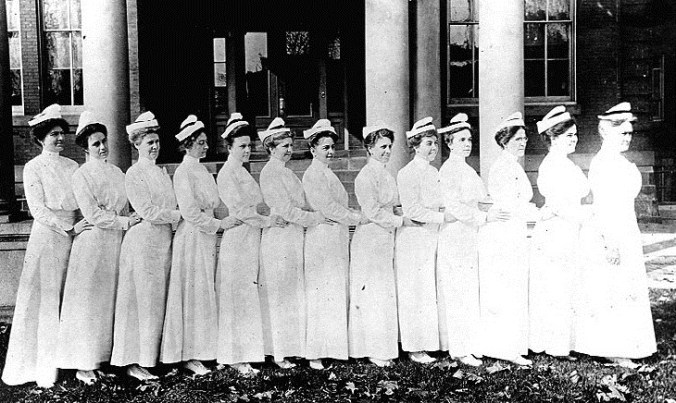
My post on the Gallup poll on public trust in various occupations and professions strayed into Charles Green’s wheelhouse, and the resulting home run comment enlightened us regarding why nurses keep “winning” the poll as the most trusted year after year after year.

Here is Charlie’s Comment of the Day on the post, Public Confidence And Trust (1): Observations On Gallup’s Trust In Occupations Poll:

Speaking just to the nursing angle: my work on trust has involved a diagnostic tool, the TQ (Trust Quotient), a self-assessment of the four components of trustworthiness in the Trust Equation:
(Credibilty + Reliability + Intimacy) / Self-Orientation.

70,000 people have taken it, and three results stand out above all others.

First, women are more trustworthy than men – a finding confirmed by informal polls in 397 out of 400 groups I’ve presented in front of.

Second, the most powerful factor of the four (defined as the highest coefficient in a regression equation) is Intimacy.

Third, the bulk of women’s outscoring men is their higher score on the Intimacy factor (again, intuitively true to the vast majority of groups I ask).

It’s in this context that I note the Gallup work (and other pollsters) finding of nursing at the top of the heap every year but 2002 (which was, not coincidentally, the year after 9/11 – and a year in which firemen, if only for that one year, took over the top spot.

Nursing is an 89% female profession. I ask my audiences, “Which of the four trustworthiness factors do you think nurses most embody: credibility, reliability, intimacy, or low self-orientation?” Most pick intimacy (with low self-orientation a frequent second).

Add ’em up: female, Intimacy, nursing – it’s a trifecta. Continue reading

Public Confidence And Trust (1): Observations On Gallup’s Trust In Occupations Poll

I’ve been following the Gallup organization’s yearly polls on public attitudes toward institutions and occupations for a long time. The results are in for 2017. I’ll discuss the ethics implication of the Gallup occupations poll first; Part 2 will cover the institutions.

The occupations poll tends to fluctuate more year to year, and is most interesting as viewed a competition. Who are most trusted and regarded as most honest? Who are least trusted? Nurses have been ranked #1 in public trust for 16 straight years. I guess this means not too many people watch “Nurse Jackie.” I assume the consistently high rating is because we tend to trust people we have to trust, thus confirmation bias, and because there haven’t been any major nursing scandals or “Angels of Death” in the news. As you will see from the chart, medical doctors are trusted much less. I think that’s the result of an illusion.

Only six professions rate as more than 50% “high” or “very high” for honesty and ethical standards: nurses, military officers, grade school teachers, medical doctors, police officers and pharmacists. The honesty rating of pharmacists dropped five points since 2016, however, and it an occupation that has sometimes finished right behind the nurses. Gallup guesses that the opioid crisis is to blame, and maybe that’s right, though I would think the doctors who prescribe the drugs are more to blame then the druggists who sell them.

Public views of the clergy have fallen like a Chinese space station. Before the Catholic Church child molesting scandal in 2001, the clergy was very trusted at the high 60% level. Now it is all the way down to 42%, though the total of high trust and average trust is still 85%. I think the film “Spotlight” hurt, as it should have.

Occupations that I would regard as having positive public trust include those whose high trust+average scores are higher than their low trust+average scores. That group, in addition to the occupations already named above, includes day care providers, judges, auto mechanics, nursing home operators and bankers. I think in all of these cases, the public has no real idea about how trustworthy these occupations really are. We just hope they are trustworthy, so again, we have a result that is polluted by wishful thinking. These people are entrusted with the welfare of our children, our cars, our parents and our money, plus the justice system. They better be trustworthy. Ignorance is bliss.

I confess amazement that Wells Fargo scandal didn’t result in lowered trust for bankers. Continue reading

How Cognitive Dissonance Works: A Case Study

Cognitive DissonanceJust last fall, the percentage of Americans identifying as Republicans and Democrats was essentially the same. Now, after months of the party being represented in the media by ugly, boorish, violent, dumb, name-calling Donald Trump, and the necessarily messy GOP debates that were the direct result of a major participant whose modus operandi consisted of mockery, lies and ad hominem attacks, this is the current split:

Party affiliation

Continue reading

On The Significance Of The AFA “Signups,” The First Of Many Other Shoes Drops

I am rushing out the door to remind D.C. lawyers about ethics, but I can’t let this pass:

  • Yesterday, James Taranto addressed some of the same issues that we covered on Ethics Alarms regarding the dishonest use of the ambiguous 7.1 million deadline sign-ups as a definitive measure of Obamacare’s success. Two of the culprits he quoted were E.J. Dionne and Paul Krugman, leading me to wonder why such performances don’t make it obvious even to knee-jerk Democrats that they are unreliable, biased, and dishonest to the core. Here’s Taranto on Dionne, for example:

It won’t surprise you to learn that Dionne did not demand accountability from Obama and the other politicians who sold ObamaCare on the fraudulent promise “if you like your plan, you can keep your plan.” Rather, he asserted that the administration’s claim of having “hit its original goal . . . of signing up more than 7 million people through its insurance exchanges” was a definitive refutation of any notion that ObamaCare is “doomed.” What about insurance cancellations, narrow networks, high deductibles, blown deadlines, work disincentives, adverse selection and the law’s continuing political unpopularity? Dionne dispenses with all these problems in one sentence: “To be sure, the law could still face other problems, blah, blah, blah.”

Why wouldn’t this kind of blind, manipulative, Jumbo-worthy partisanship annoy everyone?

  • Yesterday the Gallup people released this, an extensive survey that gives some perspective on what the 7.1 million really stands for. No surprises there, either, for anyone not in a Dionne-like mental state. From Fox:

“A major new Gallup survey suggests the ObamaCare sign-up numbers are not as soaring as the White House claims. The massive survey, released on Monday, shows the number of uninsured indeed has fallen to its lowest level in years, likely thanks to the Affordable Care Act. The Gallup-Healthways Well-Being Index measured the share of adults without health insurance. That shrank from 17.1 percent at the end of last year to 15.6 percent for the first three months of 2014.The decline of 1.5 percentage points would translate roughly to more than 3.5 million people gaining coverage. But the numbers, released a week after the close of the health law’s first enrollment season, also suggest a far more modest impact on coverage than statistics cited by the Obama administration….”

The survey also shows that not enough young uninsured are signing up, a critical problem.

  • Whether the Gallup numbers are considered worthy of reporting by the other news media outlets should be a fascinating test of their depth of bias and lack of integrity. I’ll be watching…

No time for tags now—more later….


Three Tales of Ethics-Free Horror in American Schools

Common sense-free, too!
Today we have three tales to drive you to private school, home school, or to move to Bolivia. The first poses a challenge for readers who object to “The Naked Teacher Principle.” I call it…

“The Porn Star Teacher Corollary”

In Oxnard, California, rumors were flying at Richard B. Haydock Intermediate School that one of the teachers could be seen in at least one porn film. Eventually other teachers  came forward and showed administrators an X-rated video on a smartphone that appeared to confirm  that the educator, who teaches science to seventh- and eighth-graders, was moonlighting in the pornography industry. She is on leave, and don’t bet that the teachers union won’t fight to protect her job. Meanwhile, the school district decided to make certain that as many kinds as possible would find Miss Brooks doing God knows what online, by sending this message to parents:

“It has been alleged that one of our teachers is depicted in at least one pornographic video and possibly others on the Internet. These allegations do not involve any Oxnard School District students… We are asking teachers to discourage the children from searching for and/or visiting these inappropriate sites. We ask that you be particularly vigilant over the next few days with respect to the Internet content being accessed by your child on his or her telephone or other Internet-ready device.”

Yeah, that should work.

Oh, I almost forgot. What is “The Porn Star Teacher Corollary”? It’s simple, really: “If you are or were a porn star, don’t teach in secondary school. If you teach in secondary school, don’t start making make porn films…whether you’re naked in them or not.”

The next two horrific sagas show school sensitivity at its rock bottom worst. First we have…

“Mother’s Day”

The Wingate Elementary School in Gallup, New Mexico discovered that 15-year-old student Shantelle Hicks was pregnant, so it kicked her out. This a school cannot do in 2012, and when a terse letter from the ACLU got her back into the 8th grade, the administrators had to get creative about how they would deal with this bad apple corrupting the good students. Two weeks after her readmission, they forced Shantelle to stand up in a  school assembly and announce her condition.  She says that until then, none of her classmates knew.  After that, according to her law suit, school officials told Hicks she was a detriment to her school mates, and requested she attend another school.

You just can’t train school administrators to come up with solutions like this.

It has to be an innate talent.

Finally, we have a chiller about another school that is alien to the concept of fairness, which I have dubbed, cheaply but appropriately,

What??”

St. Scholastica High School in Chicago expelled a senior for disciplinary problems that included not listening to her teachers, ignoring directions, and failing to respond to requests.

“This pattern of poor behavioral performance is an indication to us that she is unable to meet our behavioral standards,” Principal Colleen J. Brewer wrote in the girl’s expulsion letter.

You guessed it! The girl is deaf. She has hearing aids in both ears. A doctor who examined her found that her hearing problems were “severe enough that, even with hearing aids (it would) affect her ability to not only appreciate the spoken word but also nuances and interpretation of speech. This may lead to an attempt on her part to react to her on interpretation of a communication without realizing she is misinterpreting part or all of a conversation.”

And yes, there is another law suit here as well. Law suits, however, at best only get money for the damage done by teacher and school administrator incompetence. The damage to the children involved may never be repaired.

Gallup’s 2010 Ethics Poll: Little Trust Where We Need It Most

As it does periodically, Gallup has released the results of its surveys to determine what professions Americans regard as ethical, and which ones they don’t. Gallup notes that there has been very little change over the last two years; on its site, it compares the results to those of polls taken from 2004 to the present.

The professions that have positive ratings from the public are nurses, the military, pharmacists, grade school teachers, doctors, police, clergy, judges, and day care providers.

The rest are in the red, trust-wise, with TV and newspaper reporters coming in below auto mechanics and bankers, lawyers below them, business executives even below lawyers, and well below them, Congress, which comes in barely above car salesmen—and more people actually have a low opinion of Congress members than of car salesmen. Congress inches ahead because a larger number also think that members of Congress are ethical.

Probably federal workers… Continue reading