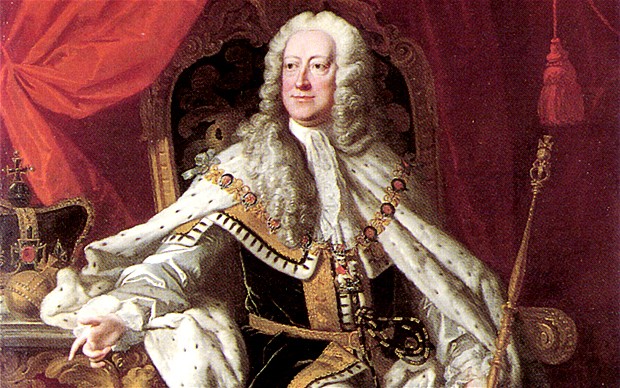
Tales of “The King’s Pass”: Pete Rose and Jeremy Clarkson

King

The King’s Pass has been much in the ethics news of late—Brian Williams, Bill O’Reilly, David Petraeus, Hillary. Let’s review, shall we?

11. The King’s Pass, The Star Syndrome, or “What Will We Do Without Him?”

One will often hear unethical behavior excused because the person involved is so important, so accomplished, and has done such great things for so many people that we should look the other way, just this once. This is a terribly dangerous mindset, because celebrities and powerful public figures come to depend on it. Their achievements, in their own minds and those of their supporters and fans, have earned them a more lenient ethical standard. This pass for bad behavior is as insidious as it is pervasive, and should be recognized and rejected whenever it raises its slimy head.  In fact, the more respectable and accomplished an individual is, the more damage he or she can do through unethical conduct, because such individuals engender great trust. Thus the corrupting influence on the individual of The King’s Pass leads to the corruption of others…

1. The BBC just demonstrated how the King’s Pass should be rejected—with courage and gusto.

Jeremy Clarkson, the main host of the popular BBC auto show “Top Gear,” spent March misbehaving. He got in a shoving match with a producer, verbally abused staff and was recorded trashing the network. When Clarkson topped it off with a physical altercation with a show staffer, the BBC decided not to renew his contract. BBC head Tony Hall said in a statement:

It is with great regret that I have told Jeremy Clarkson today that the BBC will not be renewing his contract. It is not a decision I have taken lightly. I have done so only after a very careful consideration of the facts…I take no pleasure in doing so. I am only making [the facts] public so people can better understand the background. I know how popular the programme is and I know that this decision will divide opinion. The main facts are not disputed by those involved.

The BBC is a broad church…We need distinctive and different voices but they cannot come at any price. Common to all at the BBC have to be standards of decency and respect. I cannot condone what has happened on this occasion. A member of staff – who is a completely innocent party – took himself to Accident and Emergency after a physical altercation accompanied by sustained and prolonged verbal abuse of an extreme nature. For me a line has been crossed. There cannot be one rule for one and one rule for another dictated by either rank, or public relations and commercial considerations… Obviously none of us wanted to find ourselves in this position. This decision should in no way detract from the extraordinary contribution that Jeremy Clarkson has made to the BBC. I have always personally been a great fan of his work and “Top Gear”…The BBC must now look to renew Top Gear for 2016. This will be a big challenge and there is no point in pretending otherwise. I have asked Kim Shillinglaw [Controller of BBC Two] to look at how best we might take this forward over the coming months. I have also asked her to look at how we put out the last programmes in the current series.

The show, without Clarkson, is toast, and Hall knows it. Nonetheless, he had the guts to do the necessary and ethical act: not allowing its indispensable star to abuse his power and popularity . Once Clarkson did that, “Top Gear” was doomed anyway; firing him now just minimizes the carnage. Although Hall has no responsibility to other networks and organizations, his decisive handling of the episode has saved other programs even as it destroys his own. It is a precedent and a role model for employers refusing to allow themselves to be turned into enablers  by stars assuming the King’s Pass works. When they say, “You can’t fire me, I’m irreplaceable! There’s no show without me!”, the response now can be, per the BBC: “If there’s no show without a jerk like you, then there’s no show. Bye!”

2. Once again, Pete Rose is sucking the ethics right out of people’s brains.

Ah, Pete Rose. He was the topic of the first ethics post I ever wrote, way back in 2004. Then, in 2007, he became my first and only Ethics Dunce Emeritus.

The Pete Rose case is simple. Baseball has an absolute, no exceptions rule that demands a lifetime ban of any player, coach or manager who gambles on major league baseball games. Such banned players can’t be hired by major league teams for any purpose, and cannot be considered for Hall of Fame membership., ever, even after they are dead. Everyone in baseball knows why this rule exists—baseball was nearly destroyed in 1919 when gamblers bribed the Chicago White Sox to throw the World Series—and the rule is posted in every clubhouse. Rose bet on baseball while a major league manager, and also bet on his own team. Thus he is banned.

The significance of the fact that he is, as a player, the all-time hits leader and was the face of the game is that it led Rose to believe that the game would never ban him, and that if caught, he would be treated with special leniency. His excellence on the playing field doesn’t mitigate his conduct, or justify minimizing the ban it earned, at all.

The New York Times published a story about Rose’s efforts to get baseball to lift the ban, now that a new Commissioner, Rob Manfred, is in office. You can read the article here, which is remarkable for the many jaw-droppingly unethical arguments put forth by the baseball people the article quotes, contrasted with the occasional quote that shows that a speaker comprehends the concepts of consequences, accountability, and why letting stars break the rules is suicidal to any culture. It would be an excellent ethics exam.

Here are the quotes; my comments follow in bold. Continue reading

Ethics Dunce: Skechers

http://www.youtube.com/watch?v=GYEGUzV-tOs

Do you know who the very first Ethics Dunce was? It was Pete Rose. This was in January of 2004, on the newly launched Ethics Scoreboard, and Pete had just admitted that he did indeed bet on baseball while managing the Cincinnati Reds, even though he had been loudly denying it (and smearing the reputation of Bart Giamatti, the baseball commissioner who banned him from baseball and entry into the Hall of Fame for it) for 10 years.

Now another decade has past, and Pete still doesn’t really get it. Helping him make money for not getting it is the “relaxed fit footwear” people, Skechers, with  jaw-dropping TV spot showing Pete in his own home (supposedly), padding down a hallway festooned with his many trophies, Silver Bats and other symbols of his days as “Charley Hustle,” as he revels in the comfort of his Skechers and the joys of being in “the hall.” Then his wife or girlfriend (with Pete, it’s hard to keep up…if she’s his wife now, then someone else is his girlfriend)) sticks her head out of a doorway and tells him, “Pete, you know you’re not supposed to be in the hall!”

HAR! What a hoot it is, being disgraced in your own sport for undermining its integrity! Pete has never quite comprehended what all the fuss is about—after all, his bets were always in favor of his team, never against it, and never affected his management decisions! He says. And why wouldn’t everyone believe him about that, just because he knowingly broke baseball’s biggest taboo (Pete can tell you Shoeless Joe’s batting average down to the 5th decimal: believe me, he knows all about the Black Sox), lied about it everywhere and often, and got himself thrown in jail for cheating on his taxes?

What would make anyone, in any company, think that an unapologetic lifetime sleaze like Pete Rose being associated with their product would make people run out and buy it? Continue reading

Greyhound Racing Is Dying. Good.

greyhound racing

The Washington Post informs us that greyhound racing, a  once popular form of gambling that as recently as 1991 brought in $3.5 billion and was operated at more than 50 tracks in 15 states, is in freefall and headed to oblivion. Betting on the dogs netted only $665 million in 2012, and just 21 tracks remain in seven states, with some of them already on borrowed time. Any decline in state sanctioned gambling is good news (yes, I am shedding no tears over the closing of one casino after another in Atlantic City, even the ones not owed by Donald Trump), but dog racing was always a particularly unsavory and unethical breed of the malady. Good riddance. The sooner that last greyhound has chased his last mechanical rabbit, the better off we are.

I have a bias here, it is true. My uncle, the youngest brother of my mom, was addicted to dog racing in Massachusetts, where the “sport” was banned in 2010, but not in time to save Uncle Charlie. He had a wife and two sons, and worked hard as a truck driver, but threw away an unconscionable percentage of his limited resources betting on racing canines. Maybe he would have crippled his prospects and harmed his family by finding other ways to waste his money if there had been no greyhound racing; probably he would have. Nevertheless, it was this corrupt, ugly, stupid gambling industry that wrecked his life. I hate it.

Dog racing was initially linked to allowing slot machines, another evil beast, to become legal, as little by little—first lotteries, then casinos—the states abandoned their ethical duties to embrace the cheap income that could be made by enticing the poor and the stupid to blow their paychecks on false hopes of a big jackpot. One they were hooked on the instant gratification of video poker and credit card one-armed bandits, however, greyhound racing became too slow a method of losing money. “It’ll take you half an hour to lose $50 at a racetrack. You can do it in five minutes sitting in front of a slot machine, ” said an insider interviewed by the Washington Post. This is called progress. Continue reading

Annals Of The Ethics Incompleteness Theorem: The Snuggle House And “The Dress Code Effect”

Awww! Who could object to a little snuggle?

Awww! Who could object to a little snuggle?

Almost any rule, low or ethical principle can be deconstructed using what I call border anomalies. The first time I was aware of it was as a Harvard freshman in the late Sixties, when all assumptions, good and bad, useful and not, were considered inherently suspect. The college required all students to wear jackets and ties to meals at the student union, and up until my first year, nobody objected. But that fall, my classmates set out to crack the dress code, so they showed up for meals with ties, jackets, and no pants, or wearing belts as ties, or barefoot. (Yes, there were a lot of future lawyers in that class.) Pretty soon Harvard gave up, because litigating what constitutes ties, jackets and “proper dress” became ridiculously time-consuming and made the administration look petty and stupid. Of course, there are good reasons for dress codes—they are called respect, dignity, community and civility—-but never mind: the dress code couldn’t stand against those determined to destroy them by sending them down the slippery slope.

If any rules are to survive to assist society in maintaining important behavioral standards, we have to determine how we want to handle the  effects described by  the Ethics Incompleteness Theory, which holds that even the best rules and laws will be inevitably subjected to anomalous situations on their borders, regarding which strict enforcement will result in absurd or unjust results. The conservative approach to this dilemma is to strictly apply the law, rule or principle anyway, and accept the resulting bad result as a price for having consistent standards. The liberal approach is no better: it demands amending  rules to deal with the anomalies, leading to vague rules with no integrity—and even more anomalies. The best solution, in my view, is to regard the anomalies as exceptions, and to handle them fairly, reasonably and justly using basic principles of ethics, not strictly applying  the rule or law alone while leaving it intact. Continue reading

Ethics Quote Of The Week: Washington Post Columnist Michael Gerson

casino_large

“Most theorists of self-government have maintained that certain modest virtues are necessary to democracy and free markets: deferred gratification, diligence, a prudent concern for the future. There is an ongoing American debate about the degree to which government can or should promote such virtues. But here is an extraordinary case of government actively undermining the moral underpinnings of market capitalism for its own benefit. It holds out the promise of sudden wealth without work or productive investment, engaging in a purposeful and profitable deception. A corrupting fantasy becomes a revenue stream, dependent on persuading new generations to embrace it. Perhaps we have given up on government as a source of moral improvement. Does this mean we must accept a government that profits by undermining public virtues? Nearly 20 years ago, William Galston and David Wasserman wrote, “While history indicates that gambling is too ubiquitous to suppress, moral considerations suggest that it is too harmful to encourage. The most appropriate state stance toward gambling is not encouragement, but rather containment.”’

——- Washington Post op-ed columnist Michael Gerson, on the implications of a new report by the Institute For American Values titled, “Why Casinos Matter.” Continue reading

Being Clear on Pete Rose and the Hall of Fame

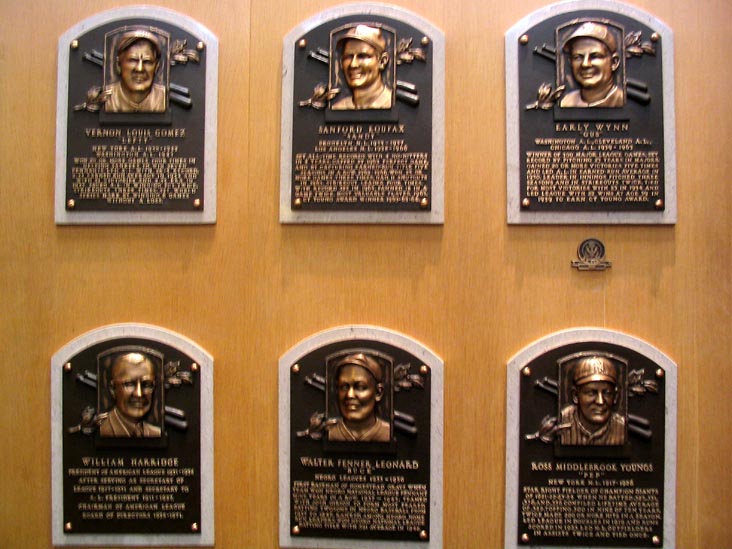
Hall OFLast week, I raised the greasy topic of Pete Rose, in fact defending Pete against the unethical efforts by Topps to avoid invoking his name on their cards, as if he were baseball’s Voldemort. Somehow, the comments morphed into debate about whether Pete deserves to be in the Hall of Fame, and I fear that my position regarding Pete’s qualifications was muddled in the various exchanges.

No, Pete doesn’t deserve to be in the Hall of Fame, for two very clear reasons. His conduct in betting on baseball games, including his own team’s games, while he was a Major League manager requires that he be banned from baseball for life under Rule 21 of Major League Baseball’s official rules, and the Major League Baseball Hall of Fame in Cooperstown has its own rule that makes any player so banned ineligible for enshrinement. Rose is prevented from admission to the Hall by those rules, which were in place when his conduct brought them into play. He doesn’t deserve to be in the Hall, because the rules say so. Pete Rose broke a cardinal rule that potential Hall candidates cannot break. The ethical reason he should not be in the Hall is accountability, or as Tony Baretta used to say on the old TV show, “Don’t do the crime, if you can’t do the time.”

Is there anything at all about Rose’s career record as a player that doesn’t qualify him for the Hall, indeed, over-qualify him? No. Unlike Barry Bonds or Mark McGwire, his statistics are beyond challenge or criticism. He didn’t cheat. He was a great and admirable player in every way.

Was there anything in his conduct as a player on the field, as a player off the field, or off the field as a retired player, that constituted such egregious misconduct that it would justify refusing his admission the Hall of Fame under its so-called character clause? [ “Voting shall be based upon the player’s record, playing ability, integrity, sportsmanship, character and contribution to the team(s) on which the player played.”]

Here is where I want to clarify my position. My answer to this is “No.” Continue reading

Maryland’s Question 7: A Lesson in Progressive Corruption

Think of the children!

Maryland is supposedly one of the most progressive states in the country. One can make one’s own calculations about what it means that such a state is ready to wholeheartedly embrace government-sanctioned gambling as the easy and cowardly solution to its fiscal problems, despite the fact that the populations most harmed by gambling are the very people good progressives are supposed to care about most. My assessment is that resorting to gambling for state revenue is irresponsible, callous, venal and hypocritical. But an unholy alliance of cynical liberals, who argue for gambling because its ill-gotten tax revenue will support education (and we all know that the more money you pay teachers, the better educated our children will be), greedy business interests, and libertarians, who regard gambling as “victimless,” is now poised to add casino table gambling to the state’s sanctioned traps for its poor, desperate, dumb, corrupt and addicted. should Maryland’s voters approve “Question 7” on the ballot November 6th.

How progressive. Continue reading

Massachusetts: A State Lottery Shows Its Corrupt And Irresponsible Core

“Hey! No fair! Smart people aren’t supposed to play the lottery!”

On one level, I love this story, for it confirms what I have been arguing for over a decade. State lotteries represent an unethical capitulation of governments to laziness, cowardice and greed, as they choose  emulate casinos to entice the poor, desperate and stupid to give away their money rather than do their duty and make hard political choices about taxes. The inherent corruption this engenders was beautifully demonstrated by the lottery scandal recently revealed in Massachusetts.

A group of science and math whizzes, many of whom had MIT credentials, formed a gambling syndicate to beat the lottery, and did, generating almost $8 million in winnings after exploiting a flaw in the lottery rules to execute a system that virtually guaranteed profit. Their domination of the lottery continued over seven years, and was known about by lottery officials, who did nothing. Why? Because the money was coming in, and they didn’t understand that they were facing a net loss. Continue reading

Comment of the Day: “Ethics Quiz: The Bank, the Addict, and the Broken Egg.”

The recent post about Ronald Page, the gambling addict given an open, no limits ATM privilege by Bank of America, with predictable results, suggests two opposite reactions. That’s why it was an Ethics Quiz. I expected my answer that it would be wrong to imprison Page for a crime committed because BOA’s negligence triggered his addictive behavior to be countered by the response Karl Penny expresses, persuasively, here. This is his Comment of the Day on “Ethics Quiz: The Bank, the Addict, and the Broken Egg.”

“Jack, I do volunteer work in prisons with people who have all sorts of substance abuse issues. In addition, I grew up in a family of alcoholics. I say that not to garner sympathy or whatever, but to establish credentials, however unofficial. Addicts know what they are doing, even while they are doing it, they know it. They know it when they are sober, and they know it when they’re drunk (alcoholics, gamblers, drug abusers, etc—they’re all drunks—not very PC, but brutally honest). They are human beings imbued with all that goes into being human and, as such, they command my compassion and concern. But. They know. Continue reading

Ethics Quiz: The Bank, the Addict, and the Broken Egg

There was a little software problem when Bank of America acquired LaSalle Bank and the two were transferring account data. As a result, LaSalle depositor Ronald Page found that he could make unlimited ATM cash overdraft withdrawals, even though he had only $300 in his checking account.  This tempting state of affairs lasted for seventeen days, and then from December 1, 2008 to May 31, 2009, Page gambled like a man on fire.  Unfortunately for Page and Bank of America—but fortunately for several casinos—Page is a gambling addict. He withdrew, and gambled away, $1,543,104.00

Now the U.S. Attorney’s Office in Detroit says he is seeking to send him to jail for 15 months  after he pleaded guilty to charges of theft of bank funds. He is also going to be required to pay back the money, with interest, guaranteeing poverty for life.

Your Ethics Alarms Ethics Quiz question:

Is this fair? Continue reading