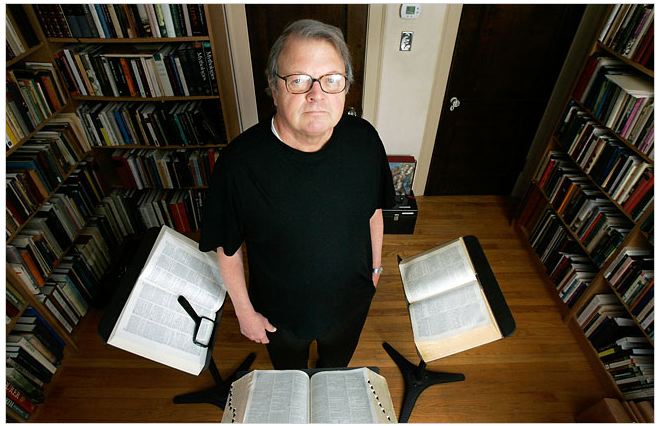
I could tell that Garry Wills’ weak and logically distorted defense of Catholics who support abortion was a disgraceful display for a distinguished historian; indeed, almost any objective reader could. I was hoping one of the commentariat would delve into the substance of his desperate historical and theological argument, and Rich in CT delivered with gusto.
Here is his Comment of the Day on the post, “From Garry Wills, A ‘Bias Makes You Stupid’ Cautionary Tale.
Garry Wills is either pompously ignorant of the theological topics he purports to write about, or he is lying.
His article is scatter-shot, meant to intimidate and confuse unprepared Catholic Apologists who might attempt rebuttal. It offers so many arguments that it is difficult to cohesively refute because it changes topic so quickly. Yet, it touches each topic so quickly because its analysis or portrayal of the content is blatantly distorted or outright wrong. It falls apart entirely upon any sort of careful review.
I shall address it point-by-point, rearranging it slightly to form a more logical, cohesive rebuttal.
No one told “Matthew” or “Mark” or “Luke” or “John” or Paul, or any other New Testament author, that he should condemn this sin of all sins.
Matthew portrays Herod as a monster for slaughtering the young children of Bethlehem. Luke has the infant John leap for joy in Elizabeth’s womb in the presence of Mary (obviously, Luke would approve of injecting saline into the fetal John’s heart to end his nascent life…). Most importantly, no Pharisee attempted to trap Jesus by asking whether he approved of abortion.
Early Christians did not disagree on abortion, so it was not addressed in scripture. Saint Paul writes extensively about the disagreements in the early church. No one wrote to him asking if abortion were permitted, so he did not need to address it.
Other early Christian writings, however, did address the topic: the first century catechism, the Diache, specifically condemns abortion and infanticide. Many over the centuries have argued abortion should not be condemned, but never denied that the Catholic Church taught it was a grave sin from the beginning.
Even major figures of religious history do not tell us that the fetus is a person. St. Augustine says he searched Scripture trying but failing to find out when in the procreative process personal life begins.
 Ethics Alarms