Unethical Quote of the Month: OkCupid

Not OK...

Not OK…

“Hello there, Mozilla Firefox user. Pardon this interruption of your OkCupid experience. Mozilla’s new CEO, Brendan Eich, is an opponent of equal rights for gay couples. We would therefore prefer that our users not use Mozilla software to access OkCupid. Politics is normally not the business of a website, and we all know there’s a lot more wrong with the world than misguided CEOs. So you might wonder why we’re asserting ourselves today. This is why: we’ve devoted the last ten years to bringing people—all people—together. If individuals like Mr. Eich had their way, then roughly 8% of the relationships we’ve worked so hard to bring about would be illegal. Equality for gay relationships is personally important to many of us here at OkCupid. But it’s professionally important to the entire company. OkCupid is for creating love. Those who seek to deny love and instead enforce misery, shame, and frustration are our enemies, and we wish them nothing but failure.”

—Dating website OkCupid, calling for a boycott of Mozilla, including Firefox, its webserving software, because of the past political/social/religious views of Mozilla CEO Brendan Eich

Full disclosure: 1) I use Firefox. 2) I detest boycotts,and 3) I am biased against them by nature, because they are almost always coercive, extortive, and unfair.

This statement, however, has more wrong with it than just its advocacy of a boycott.

Continue reading

Twelve Post-Veto Ethics Observations On The Arizona “Religious Freedom” Bill

veto2

1. As we now know, Governor Brewer vetoed AZ SB1062, the so-called “religious freedom” bill that was widely (and accurately) interpreted as support for discrimination against gays. In the previous post, I suggested that her delay in doing so sent a message that was as hostile to gays as the law itself: if she felt the law was ethically wrong, then she should have and would have announced that she would not sign the bill long ago. Instead, she waited to see how much economic damage the law would do to the state, and then vetoed it, not because this was the right ting to do, but because it was the pragmatic thing to do. (As the satiric Borowitz Report put it, “The state of Arizona found itself in the middle of a conundrum today as it awoke to the awkward realization that gay people have money and buy stuff.”) USA Today noted that, to the contrary,”Some political insiders believe Brewer has allowed furor over the legislation to build to thwart social conservatives’ attempts to push a similar bill later.” I doubt it, but if so, Brewer allowed her state and her fellow Republicans to be represented nationally as homophobic for as long as possible to spare herself the inconvenience of vetoing a second bill.

2. Despite the extravagant debate over the bill, almost no commentators actually published the bill’s text in the commentary. The reason appears to be that since the bill is really an amendment of an existing law, it takes a modicum of intelligence to figure out what’s going on. Here it is (the original law is in black; the new text is in blue; what has been removed in the amended version is struck through): Continue reading

Ethics Dunces (Bigotry Division): Arizona Republicans

Message received.

Message received.

I don’t know what Arizona Republican legislators are running from now: they have accomplished their mission. They’ve made it abundantly clear that they don’t like or respect the rights of gays, bi-sexuals and transsexuals, and want to leave no question in the minds of anti-gay bigots (or good and gentle religious people  across the state who want to discriminate against gays because they thing doing so is “moral”) that the nationwide cultural shift to approval of gay marriage, a.k.a, equal rights under law, hasn’t changed this: Arizona Republicans back your dislike of these perverts’ sinful, corrupting lifestyle, whatever the law is.

The disingenuous and offensive argument being made by Republican supporters of the modifications of  an 1999 Arizona law called the Religious Freedom Restoration Act (RFRA) is, in essence, that Arizona businesses can already discriminate against gays, and so can those of lots of other states. This isn’t an anti-gay law! It’s a religious freedom law! Yes, and the Civil War was about States rights. The new bill’s clear motivation—Timing! Timing!— is to strengthen the hand of businesses, organizations, corporation and non-profits that object, allegedly or actually on genuine religious grounds, to serving, employing, or dealing with gays. More than that, however, the goal is to line up the legal, moral and ethical authority of the state behind those who want to treat gays in this fashion, whatever the reason, rather than behind the rights of the LBGT community to be treated like all other citizens. Continue reading

Bob Newhart, Legatus And GLAAD: “What’s Going On Here?” Is Tricky To Answer

"Hey, Bob---What's going on here?"

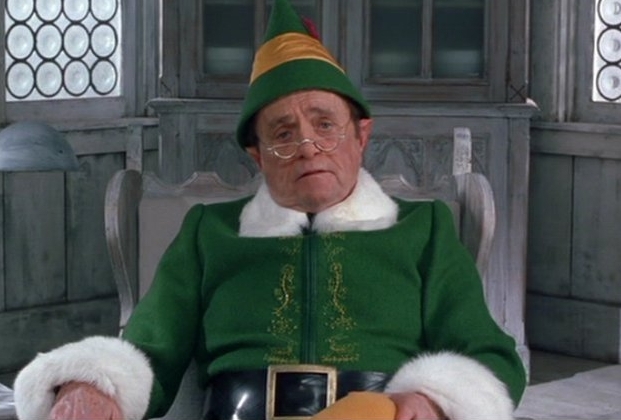
“Hey, Bob—What’s going on here?”

The news item about comedian Bob Newhart cancelling an appearance for the Catholic executives networking group Legatus under pressure from GLAAD is fascinating.

From the perspective of Ethics Alarms, it illustrates a peculiar phenomenon I experience often, where a prominent story seems to have been designed by the Ethics Gods specifically to combine and coalesce several issues that have been discussed here recently. For Bob’s travails neatly touch on the issues of pro-gay  advocacy groups attempting to restrict expression they disagree with( The Phil Robertson-A&E Affair, Dec. 19), a comedian being pressured to alter the course of his comedy (Steve Martin’s Tweet Retreat, Dec. 23) and an entertainment figure being criticized for the activities of his audience (Mariah’s Dirty Money, Dec. 23). You would think I could analyze the Newhart controversy by just sticking my conclusions from those recent posts, plus some of the more illuminating reader comments, into my Ethics-O-Tron, and it would spit out the verdict promptly.

It doesn’t work that way, at least in this instance, and that prompts the other observation. In most ethics problems, the starting point is the question, “What’s going on here?”, which forces us to determine the factual and ethical context of the choices made by the participants. Here, the question can be framed  several diverging ways, leading to different assessments of the ethics involved. Thus, asking “What’s going on here?” in the Bob Newhart Episode, we might get: Continue reading

Ethical Quote Of The Month: Justice Richard Bossun of The New Mexico Supreme Court

First-Amendment-on-scroll1

[The quote that follows is from the concurring opinion in the just-decided case of  Elaine Photography v. Willock, which challenged the proposition, discussed and endorsed on Ethics Alarms in several posts, that a business could not and ethically should not refuse service to same-sex couples.]

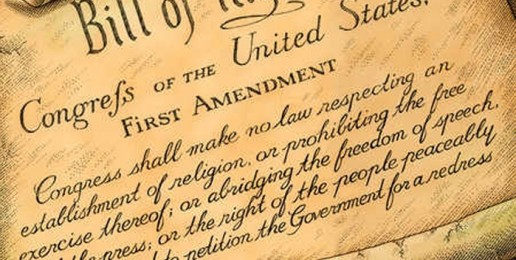
“On a larger scale, this case provokes reflection on what this nation is all about, its promise of fairness, liberty, equality of opportunity, and justice. At its heart, this case teaches that at some point in our lives all of us must compromise, if only a little, to accommodate the contrasting values of others. A multicultural, pluralistic society, one of our nation’s strengths, demands no less. The Huguenins are free to think, to say, to believe, as they wish; they may pray to the God of their choice and follow those commandments in their personal lives wherever they lead. The Constitution protects the Huguenins in that respect and much more. But there is a price, one that we all have to pay somewhere in our civic life.

“In the smaller, more focused world of the marketplace, of commerce, of public accommodation, the Huguenins have to channel their conduct, not their beliefs, so as to leave space for other Americans who believe something different. That compromise is part of the glue that holds us together as a nation, the tolerance that lubricates the varied moving parts of us as a people. That sense of respect we owe others, whether or not we believe as they do, illuminates this country, setting it apart from the discord that afflicts much of the rest of the world.”

——- New Mexico Supreme Court Justice Bossun, concurring with opinion in Elaine Photography v. Willock, which rejected the claim that legally requiring a photography shop to take photographs of a same-sex marriage was a violation of the First Amendment.

You can read the Volokh Conspiracy take on the case here, and here; Ken White has his usual trenchant observations at Popehat.

From an ethics perspective, however, Justice Bossuns’s words need no enhancement. I could not agree more, nor say it better.

______________________________

Graphic: Illinois Family


The Julie Principle

The combination of Memorial Day reflections on my late father’s character and a letter to relentlessly ethical advice columnist Carolyn Hax leads me to expound on what we will henceforth call the “Julie Principle.”

Hax’s non-religious correspondent wanted to know what she should do about a good but annoyingly Evangelical friend, who would not cease inviting her to attend church, despite knowing that such an activity held no appeal whatsoever. Hax’s answer, which you can read here, touched on many approaches to the problem. To my dad, the answer was simple. Continue reading

Comment of The Day: The Same-Sex Marriage Wars

supreme-court-gay-marriage-demonstration

The Inquiring Mind left a plaintive and provocative comment on an earlier post regarding the gay marriage controversy, now once again above the fold, and it was apparently swallowed by my spam file. I haven’t see much of an uptick in Ethics Alarms comments lately (and tgt is on semi-hiatus), but the spam has gotten out of control: apparently this post was deleted, even though I try to check the spam comments (about 500 a day now) to make sure legitimate ones don’t get thrown out with the bath water. I apologize to IM, and am posting the recovered comment partially in compensation, and also because he expresses a sentiment that I have heard and read from others.

I’ll be back at the end; in the meantime, here is Inquiring Mind’s Comment of the Day regarding the tactics of gay marriage advocates:

“Jack, since the aftermath of Prop 8, I have always wondered – is the thuggery/coercion and thought control a “bug” associated with the push for gay marriage, or is it a “feature” that comes with the enactment of gay marriage?

“I just want to review the conduct of gay-marriage supporters: Continue reading

The Portman Reversal: Why He Did It DOES Matter

reversalI feel it necessary to return to the topic of  Senator Rob Portman’s reversal of his long-held and much-publicized opposition to same sex marriage and homosexuality in general in the wake of his son’s disclosure that he is gay.

Anyone who required further evidence that current events analysis, not to mention public consciousness, is almost untouched by an understanding of ethics, need look no further than the near universal pronouncements in the editorial pages and the Sunday talk shows that “it doesn’t matter” why  Portman suddenly decided that he was in favor of gay marriage once the issue affected someone he cared about.

It is not yet 11:00 AM in Virginia, and I have already read and heard this reaction so many times that the flashing red light on my head that signals an imminent explosion is flashing bright. It doesn’t matter? It doesn’t matter that Senator Portman firmly, strongly, extensively and consistently declared in public forums, to interviewers and in op-ed pieces that the sanctity of the institution of marriage as well as the moral fiber of the nation depended on withholding the right to marry from millions of law-abiding American citizens, but that the minute one such citizen, someone he actually gave a damn about, risked being adversely affected by his supposedly heart-felt and principled position, he changed his “principles” like he was changing his socks? That doesn’t matter? Continue reading

No Hero He: Sen. Portman Demonstrates How To Make Doing The Right Thing Look Terrible

PortmanQuayleTracy

Guess Who’s A Hypocrite?

Sen. Rob Portman’s sudden reversal of his long-held and vocally expressed revulsion toward everything gay—including marriage—is being hailed by some as a virtuous, generous, open-minded and courageous act. It is nothing of the sort.

Portman’s change was precipitated by the fact that his own son….that is, a real person he  cares about…revealed that he was gay, requiring Portman to choose between following through, in ways that would, for the first time, have unpleasant personal consequences, on his supposedly deeply held, faith-based opposition to gay rights in America, or to abandon those core moral beliefs in the time it takes to throw out an ill-fitting pair of pants. What Portman has gone through is a classic “foxhole conversion,” in the manner of the atheist who suddenly finds God when death is near and it seems wise to hedge his bets.

There is nothing courageous or admirable about this at all. To the contrary, it proves that Portman’s earlier position condemning people like his son was based on political expediency, ignorance, recklessness, cold disregard for anyone not like him, or dishonesty, and I really don’t care which.

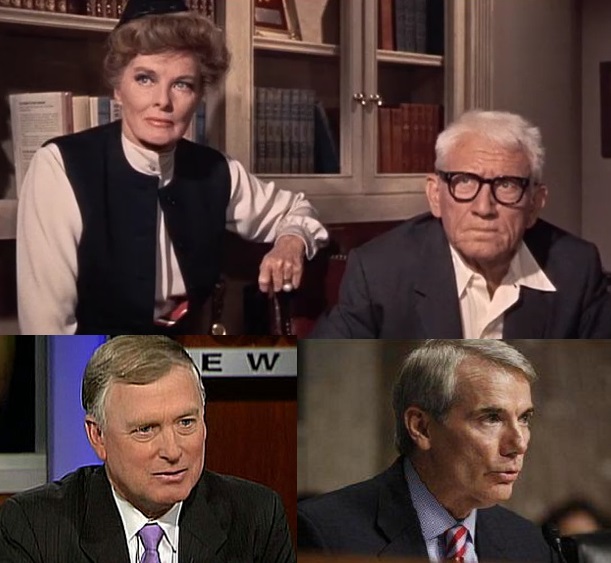
We have seen such conduct from the Right before, memorably in Dan Quayle’s admission that despite his absolute conviction, or so he had said, that abortion was morally wrong and ought to be illegal even in cases of rape or incest, he would, hypothetically, support his teen-aged daughter’s decision to have an abortion because he loved her. We have seen it from the Left, too, as in the situation memorably dramatized in the film “Guess Who’s Coming To Dinner?” Individuals who advocate political, economic, moral and policy positions that they would oppose in the jerk of a knee if they had real, personal consequences are undercover hypocrites. They have not applied the Golden Rule;  how they would feel if the were in the position of those whose lives they so cavalierly would affect has never entered their consciousness. What this flip-flop tells us about Sen. Rob Portman is that nobody should respect or take notice of what he thinks or says he thinks, and that having such a man casting one of a hundred votes in the U.S. Senate means that the body is, at best, only 99% responsible, competent or trustworthy. Continue reading

The Washington Post Gives Up On Independent Ombudsmen: 1) Too Bad, Because It Needs One Desperately and 2) No Wonder, Since Its Last One Was A Bozo

Agreed: He's an improvement over the last ombudsman. But the Washington Post readers deserve better.

Agreed: He’s an improvement over the last ombudsman. But the Washington Post readers deserve better.

The Washington Post, which in 1970 became the first newspaper to employ a full-time “independent ombudsman” to explore reader complaints and exercise ethical oversight, has given up on the concept, pronouncing it a device “created decades ago for a different era.” You know–that era when people trusted the news media, and occasionally were given good cause to do so. Now the Post will rely on a “reader representative” named from the newspaper’s staff.

So much for “independence.”

Giving up on ombudsmen after having Patrick B. Pexton filling the role for the last two years is a little like giving up eating after Thanksgiving at my late Aunt Anna’s house. Her green, slimy, Wonder Bread turkey stuffing had to be tasted (but, oh God, never swallowed!) to be believed. Similarly, Pexton was an utter disgrace as an ombudsman, making excuses for unethical Post excursions into partisan hackery, and apparently completely unaware that his own biases mirrored those of his paper, which supposedly placed him in his job to offer perspective, not cover. And just as I seriously considered never again taking the risk of putting food in my mouth after that memorable holiday dinner in 1966, I can understand the Post thinking, as Pexton’s two year contract mercifully expired last week, thinking, “If we can’t do better than this clown, why have the position at all?” Continue reading