The Perfect Ethics Story: The Dilemma Of The Extra iPads

Your ethical dilemma just arrived!

Your ethical dilemma just arrived!

Now here is an example of a consumer episode in which everyone involved behaved with exemplary ethics, and without hidden agendas. There is no need to draw this out—Consumerist does a great job telling the story, and you should read it here. A quick summary:

  • A woman who ordered one iPad from Best Buy received five.
  • Her e-mail to the store about what she should do was unanswered.
  • Legally, she was within her rights to keep the extra merchandise, but (correctly) worried about possible consequences to the worker who made the shipping error,
  • She consulted the consumer advice maven at Consumerist, who tracked down someone at Best Buy to deal with the problem.
  • Best Buy’s rep contacted the consumer, thanked her for her honesty, and sent her this letter: Continue reading

The Asperger’s Child, the Company With A Heart, and the Cheapskate Parents: A Cynical Ethics Tale

This is a sweet and gooey ethics tale with, I fear, a fishy center.

James, luckily captured in spontaneous celebration over the completely unexpected gift from the LEGO company

James, luckily captured in spontaneous celebration over the completely unexpected gift from the LEGO company

James Groccia of West Boylston, Massachusetts was nine years old when he told his parents that his dream gift was an Emerald Night Train LEGO Set. His parents, seeking to build his character before he could build his dream train. told the boy that he had to save up for the expensive set, which cost $100. James has Asperger’s Syndrome, which means that he obsesses about things that interest him to an extreme degree, and he made the Lego set the object of his tunnel vision. After two years of meticulous saving, he finally had enough money saved to purchase his prize—-and discovered that it had been discontinued. Now the  Emerald Night Train could only be obtained from collectors or in expensive online auctions, costing far more money than James had saved. The boy was devastated.

At the suggestion of James’ Asperger’s counsellor, his mother helped him write a letter to LEGO, explaining his devotion to the toy and asking if the company could track one down for him. It responded, with regret,  that indeed the Emerald Night Train LEGO Set was out of stock and was no longer made. Then, a few days before James’s birthday this October, a box addressed to James arrived at the family home. Yes, Virginia, it was a brand-new model of the Emerald Night Train! The accompanying letter from Lego said, Continue reading

The Spectacularly Unethical Angela Buchanan, Making Life A Little Meaner For Us All

According to court documents, Angela Buchanan, 30, of Lufkin, Texas, desperately wanted to be in a romantic relationship with a long-time female friend. She contacted the friend on Yahoo Messenger in March, explaining that she was diagnosed with breast cancer in 2008 and was now suffering from a pre-cancerous mass. She told her concerned friend that she was being treated by a local gynecologist. Then the gynecologist contacted the friend too, also on Yahoo Messenger.  The doctor confided to the friend that the pre-cancerous mass in Buchanan’s breast could possibly be delayed or even reduced and cured by an increase in hormone production, which, the doctor helpfully suggested, could be stimulated by sexual intercourse. The doctor recommended that the friend agree to participate in sexual activity with Buchanan in order to bolster this vital hormone production—if she really wanted to save her friend’s life, that is. Continue reading

Ethics Hero: Reebok

Of course it’s for publicity.

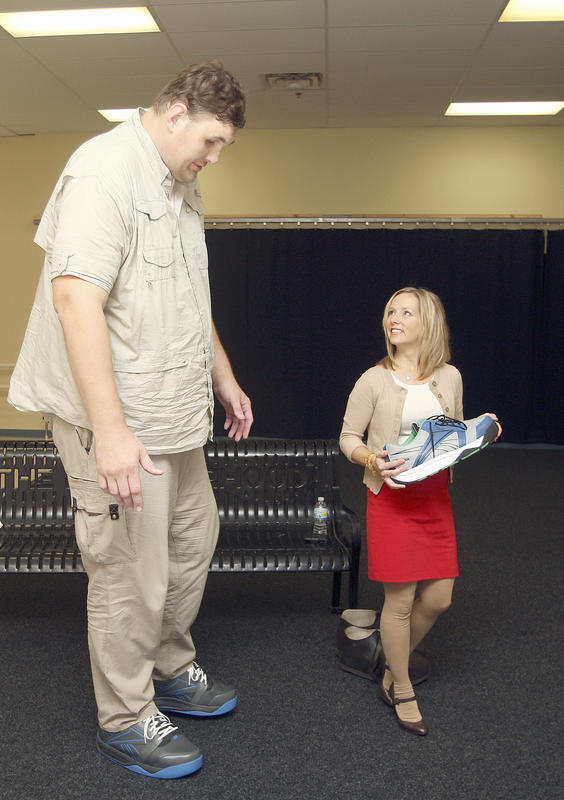
The woman is 6’2″. OK, she’s only 5’1″, but still: that’s one big shoe..

Sure it’s marketing. Certainly it contributes to Reebok’s prestige and good will, and will help sell its shoes.

Never mind. There are many ways that the athletic sportswear company could have promoted itself without helping someone who desperately needed it. Instead, it made three free custom pairs of size 24, 10E sneakers for Igor Vovkovinskiy, the tallest man in the U.S. He was suffering, and now he can walk without pain.

The 7’8″ Rochester, Minnesota man had undergone 16 foot surgeries in six years because he could not find shoes that fit his giant feet.  Reebok heard about his plight and decided to help him. The special shoes took months to manufacture, and each pair would have cost about $15,000 if Igor had to pay for them. In fact, he was taking contributions to help him afford pain-free footwear. Now, he says, he can finally walk again

Capitalism doesn’t have to be ruthless and cold. It just needs to be creative, and pay attention. It is possible to maximize profit and still do good for people along the way, sometimes with the very same act.

Good for Reebok, and good for Igor Vovkovinskiy. Capitalism at its best.

_______________________________

Facts : New York Daily News

Graphic: Star Tribune

A Choice, A Doubt, and One of a Million Moments

In the end, a life is made up of more than a million choices, large and small, that we make according to a witch’s brew of factors. There is timing, and how we are feeling at the moment, and there are random factors, our emotions, past experiences and needs, and, just maybe, some ethical analysis involving altruism, the Golden Rule, a careful balancing of outcomes, and solid principles of right and wrong. We hope to make good choices, and yet even a good one can have disastrous effects, leaving us illogically hesitant to make the same choice the next time. We hope, if we strive to be ethical and learn from our mistakes while not learning the wrong lessons—cowardice, fecklessness, self-obsession, fear of responsibility and risk, procrastination—from our failures, to reach the finish line having made existence better for more of our fellow human beings than we made miserable, and having been a net benefit to civilization while we were part of it.

Yet there really are a million or more such choices,  many of them present themselves without any warning, and the results of the choice are often unknown. The only one keeping score is you, most of the time. I was presented with such a choice tonight, and I fear that I chose badly. Continue reading

Lori Stilley And The Deception That Makes Society Cruel

Lookin’ pretty healthy there, Lori!

If you want to identify the opposite of an ethical human being, you need look no farther than New Jersey resident Lori E. Stilley.

Stilley, who is 40, told her family and friends in February of 2011 that she had been diagnosed with Stage III bladder cancer, and that things were looking grim. She had  undergone radiation and chemotherapy treatment, she said, and posted about her dire condition on Facebook and a personal website. Later, she said the cancer had progressed to Stage IV. Alas, she lacked health insurance health insurance, too. So her concerned friends and relatives raised money for Stilley, including a T-shirt sale, a fundraising banquet, a third fundraising event and a raffle. There was a meal calendar organized, so friends could bring the probably mortally ill woman food every day. Continue reading

Ethics Quiz: The Case of the Unauthorized Clean-Up

The photo on top is how the lot looks today, thanks to a generous citizen. Philadelphia wants it put back to the way it looked in the lower photo. Wait…WHAT?

Can an act that benefits everybody still be unethical? That’s the underlying conundrum in this week’s Monday Warm-Up Ethics Quiz.

In the Point Breeze neighborhood of Philadelphia, a city-owned lot was in nightmarish condition, filled with trash, weeds and rats. Ori Feibush owned a coffee shop that backed onto the lot, and had repeatedly petitioned the city to do something about it, like clean it up. Feibush, who also is a real estate developer, says he submitted seven written requests to buy or lease the land, calling the Philadelphia Redevelopment Authority about it 24 times. There was no response to any of this, and the city claims that it has no record of any inquiries.

Finally, Feibush couldn’t stand the mess any more. He spent more than $20,000 of his own money to clean up the lot, removing more than 40 tons of junk, garbage, and trash. Point Breeze residents are thrilled.

The city, however, is threatening to take legal action against Feibush for trespassing, explaining through a spokesman that “Like any property owner, [the Philadelphia Redevelopment Authority] does not permit unauthorized access to or alteration of its property. This is both on principle (no property owner knowingly allows trespassing) and to limit taxpayer liability.” It is demanding that Feibush return the land to its original condition—that is, fill it up with garbage so it is an eyesore, dangerous, and useless again.

Your Ethics Quiz:
Who is in the wrong, the city, or Ori Feibush? Continue reading

Ethics Quiz: The Vetoed Wish

“When you wish upon a star…it depends how sick you are!”

This one is so convoluted with cross-cutting issues that I’m not going to even try to make the call until I read some responses.

McKenna May is four-years-old and has survived leukemia. Her mother and grandmother submitted her wish to go to Walt Disney World to the Make-A-Wish Foundation, which, according to its mission statement, selects children with life-threatening medical conditions and grants their wishes. McKenna’s wish was granted by the charity, but then withdrawn  because her father, William May, who is divorced from McKenna’s mother, refused to sign the required approvals. He believes that the Make-A-Wish funds should be spent on children who are terminally ill, and not children like McKenna, who have been cured. McKenna’s mother, Whitney Hughes, says that the real reason May has killed his daughter’s dream is to punish Hughes for restricting his visiting rights.

Your Ethics Alarms Quiz Question:

Assuming May is not doing so out of spite, is his decision to pass up his daughter’s dream trip to the Mouse Kingdom so that a more needy child can be helped an altruistic and noble gesture, or an unethical act of disloyalty and betrayal to his young daughter? Continue reading

Ethics Hero: Jeffrey Warren

You’ve probably heard or read the story by now.

Wait! Maybe he’s Cherokee!

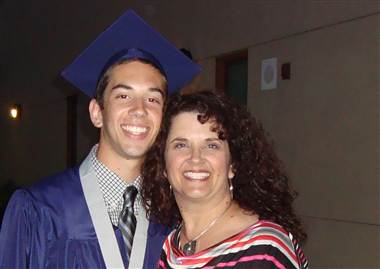
17-year-old Jeffrey Warren rose to accept the $1,000 college scholarship awarded by the local Martin Luther King Senior Citizens Club during seniors night at Martin Luther King High School in Riverside, California, and provoked both laughter and awkward gasps. He was obviously white—as white as Elizabeth Warren—and the scholarship for intended for black students, though Warren didn’t know that when he applied.

Later, Warren decided to give back the money. His family said they didn’t want the African-American women who gave out the award to be foiled in their attempt to help young black scholars, and that it was the right thing to do. I would say that it was a right thing to do, and showed exemplary kindness, compassion, empathy, generosity, charity and altruism. Jeffrey had every right to accept the money. The Club’s requirements were vague, and did not make it clear that he was not eligible when he applied. If he and his parents had wanted to make a political and philosophical statement about the hypocrisy of a race-based scholarship in the name of Martin Luther King, this was an ideal opportunity, and an argument could be made that this would have been the “right” thing to do as well, if not “righter.” Continue reading

A Golden Rule Tutorial By Martin Short

Boy, Kathy Lee, are you lucky!

Visiting the late version of the Today Show to plug a film, actor/comedian Martin Short was not expecting to have to answer awkward questions about his wife, Nancy Dolman, who, after all, has been dead since she succumbed to ovarian cancer two years ago. Then again, he might have, since his host, the flighty Kathy Lee Gifford, could not reasonably be expected to uphold the basic standards of professional journalism, which include knowing whom you are interviewing and avoiding mortifying one’s guests. Sure enough, Gifford left her index cards to wax enthusiastic about her “good friend’s” marriage, as if she and the Shorts regularly hung out together. Kathy Lee said, “He and Nancy have one of the greatest marriages of anybody in show business. How many years now for you guys?” Short, who is a pro, managed to conceal his discomfort and pleasantly responded, “We … for 36 years.

Gifford then went into full Kathy Lee mode, which resembles a boa constrictor squeezing a goat.  “But you’re still, like, in love?” she asked. Short responded, “Madly, madly in love.” Continue reading