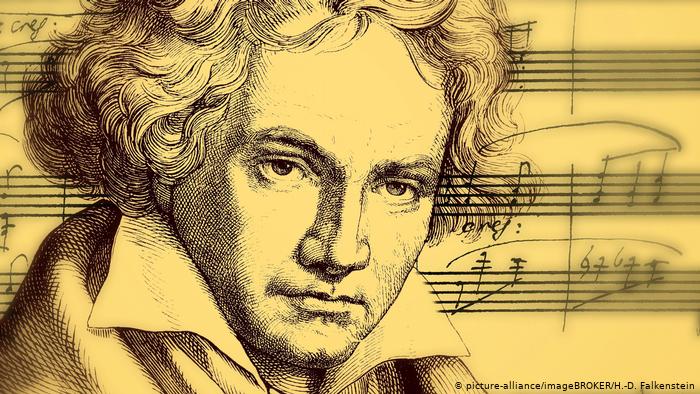
Scholar and essayist Heather Mac Donald has written a thorough, fascinating and depressing study of how, as absurd as this sounds (and is), the fact that a drug-addicted petty criminal died under a white cop’s knee in Minneapolis has led to the death throes of classical music. The plot is familiar: seizing upon and exploiting white guilt and using the all-purpose weapons of race-baiting and threats of “cancellation,” various alliances of progressives, activists, academics, journalists, politicians and easily recruited naive rich liberals band together to claim that institution X is a feature of white supremacy and must be eliminated, shunned, replaced or destroyed. Taken by surprise and lacking the integrity, courage and fortitude to fight for Western cultural values, the groups that should be the guardians of our icons and institutions easily fall into postures of submission.
Mac Donald’s essay, “Classical Music’s Suicide Pact,” is in two parts (I and II), both published in City Journal, where she writes regularly. Perhaps the most telling part of the work is this one, at the end of Part II:
“Though the keepers of our tradition know that classical music is a priceless inheritance, fear paralyzes them as that legacy goes down. Among the leaders contacted for this article were conductors Daniel Barenboim, Dudamel himself, Riccardo Muti, Franz Welser-Möst, Valery Gergiev, Gianandrea Noseda, Charles Dutoit, James Conlon, Neeme Järvi, and Masaaki Suzuki; pianists András Schiff, Mitsuko Uchida, Lang Lang, Evgeny Kissin, and Richard Goode; singers Anna Netrebko, James Morris, and Angel Blue; and composers John Harbison and Wynton Marsalis. All either declined to comment or ignored the query. Company managers were just as tight-lipped. The Met’s Peter Gelb refused an interview; the Philadelphia Orchestra’s Matías Tarnopolsky, Jonathan Martin of the Cincinnati Symphony Orchestra, and Jeff Alexander of the Chicago Symphony Orchestra were also unwilling to speak. Simon Woods’s assistant said that he was caught up in moving to New Jersey and thus unavailable. (A source said that he had been in New Jersey for months already.) Those music professionals who did speak to me, with few exceptions, required that they be referred to in so generalized a category that it would contain thousands of members.”
This is, of course, fear, but also a betrayal of the culture. Things that are important and deserve protection must be protected, and those in a position to do so have an obligation to the public and the culture not to hide from controversy and confrontation, but to engage in both. But artists are notoriously lacking in fortitude, and this is especially so when what is required of them involves defying the Left, which is where most artists have gravitated for centuries.
Continue reading →




 Ethics Alarms