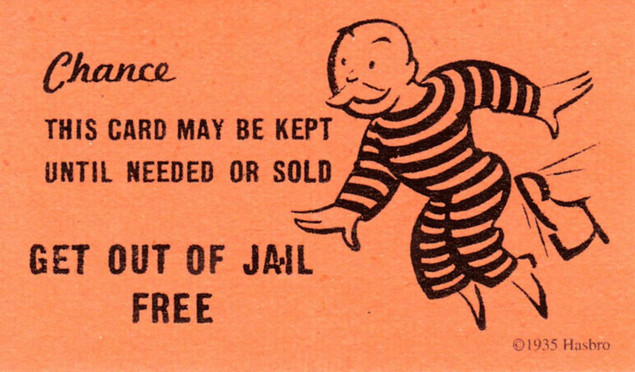
If you are good enough and valuable enough, do you deserve one of these?
A recent—and off-topic—comment caused me to begin thinking about “The King’s Pass,” #11 on the Ethics Alarms Rationalization hit parade,and perhaps the most perplexing of them all. The commenter referenced the 2010 discovery that Supreme Court Justice Clarence Thomas had inexplicably neglected to mention his activist wife’s annual income on his annual financial disclosure filings, meaning that he had filed a false affidavit and violated the law. Thomas claimed that he had made a careless mistake—for five years—and the matter was allowed to drop except for the angry agitating of the Anti-Clarence Thomas Furies, who are constantly searching for any way to get a conservative black justice off the Supreme Court short of assassination.
The episode had left a bad taste in my mouth, and I was happy to be reminded of it, bad mouth tastes being essential to triggering ethics alarms. I went back to read my post on the matter, and sure enough, I had followed the principle of rejecting The King’s Pass, and asserted that Thomas should be punished appropriately and formally…but that really ducked the question. Lawyers have lost their licenses to practice for single episodes of swearing to false information when it was far more obvious that a mistake had been made than in Thomas’s case, as when a hapless Maryland lawyer carelessly signed a legal document that had misrecorded his address. The logic of this no-tolerance ruling was that a lawyer, above all people, should never swear to a falsehood, and that doing so, even once, was a serious breach of duty calling into question his fitness to practice law. I think the penalty for this particular act was excessive—it is cited locally as a cautionary tale—but I agree with its underlying principle, which should apply with even more vigor when the lawyer in question is a judge, and not merely a judge, but a Supreme Court Justice.
Continue reading
 Ethics Alarms