
Ethics Challenge: Two Mothers, Young Love and Deception

A good friend—call her Julia— with a teenage daughter (she’s 16) recently  asked me for help with an ethical dilemma.

Julia’s daughter is quiet, seemingly conservative, and socially restrained. She has never had a boyfriend, and has been on few dates, until now. She has been seeing a young man—call him Ishmael— her own age (well, he’s 17) who seems to match her to perfection in every respect. He’s sensitive, polite, and witty,  and on top of everything, he’s really cute, the object of every one of her friends’ and rivals’ awe.

Of course, there is a problem. Ishmael’s mother is fanatically protective: he is not supposed to date until he is 18, and has to check in with her every hour when he is out of the house. The relationship with my friend’s daughter only exists through an elaborate subterfuge, involving complicit friends and relayed phone messages. Once, in order to facilitate a special date to go to a concert, Julia allowed the boy to sleep overnight (in the guest room), when he was supposedly staying a male friend’s house.

My friend wanted to know if she should tell the boy’s mother about his web of lies. A parent has a right to have his or her own rules respected, and not undermined by other parents. The Golden Rule, applied to Ishmael’s mother, yields a demand that she be told; Julia would want to be told if her child was systematically defying her.

On the other hand, she firmly believes that the mother’s restriction on her son are excessive, and she has never known her daughter to be so happy.  She is worried that informing the mother will cause a serious rift with her daughter, and perhaps worse. “What is the ethical course?” she asked me. “What should I do?” Continue reading

From Hero to Idol: Congratulations, Scotty McCreery!

Way back in March, long before the 2011 edition of American Idol had winnowed its hopeful singers down to the final thirteen, 17-year-old Scotty McCreery earned an Ethics Hero here by bravely taking responsibility for the mistreatment of another contestant in the group segment of the audition process at a time when the judges seemed to be in the mood to make someone pay for it. The incident has been forgotten, but it showed Scott to be a young man of unusual integrity and courage. Little did Ethics Alarms realize  that he was also the singer to beat, and nobody beat him. Last night, he was crowned the American Idol.

Fame and fortune changes people, as we all know, and too often for the worse. Still, McCreery’s prospects of holding on to his core values look strong, because his character looks strong, and everyone, whether or not they follow American Idol and whether or not they groove to Scotty’s milieu, Country-Western music, should applaud the entry of a talented and ethical young man into the popular culture.

Congratulations, Scotty. In March we knew you were good; we didn’t know you were this good.

Ensign Scandal Revelations: Sen. Coburn’s Betrayal

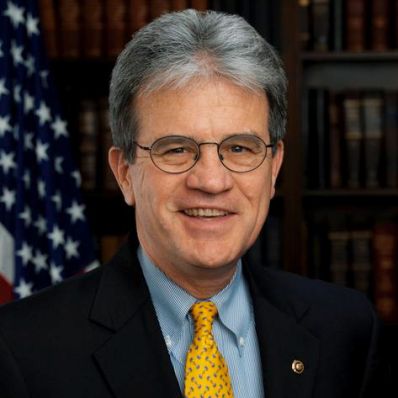
Oh dear, Sen. Coburn...didn't anyone tell you that corruption is contagious?

The bipartisan Senate committee, investigating the sexual harassment/ extortion/ lobbying scandals that led Sen John Ensign (R-Nev.) to resign his seat issued its report this week. It found “substantial credible evidence that provides substantial cause to conclude that Senator Ensign violated Senate Rules and federal civil and criminal laws, and engaged in improper conduct reflecting upon the Senate, thus betraying the public trust and bringing discredit to the Senate.” The committee referred the matter to the Justice Department and the Federal Election Commission.

The report also found, however, that another Republican Senator, Tom Coburn of Oklahoma, was hip-deep in the  mess, serving as an intermediary between Ensign and his top aide, Doug Hampton, who was in the process of extorting  Ensign  for having an affair with Hampton’s wife. Sen. Coburn also played a central role in arranging for Ensign’s parents to cough up the hush money to satisfy Hampton’s demands.  Whether Coburn knew about the more serious offenses that Ensign seems to have committed, such as lying to investigators and using his influence to create business for Hampton’s lobbying firm as part of the pay-off for Ensign sleeping with Hampton’s wife, is unknown, but never mind: helping with the cover-up is bad enough. Continue reading

Me, Wrestling With Bias, And Losing

A large part of being ethical involves being aware of your biases and minimizing their impact on your conduct. As I recently was reminded, this sounds easier than it is in practice.

Searching yesterday for an Ethics Alarms topic, I came across an interesting, if not earth-shaking, issue of legal ethics that had obvious applications to other professions. Tracking down the source of the story, I discovered that the original idea was posted by a lawyer-blogger who in the past has gone out of his way to denigrate me professionally and personally on the web. He has also insulted me directly. Outside of that, though, he is by all accounts a terrific lawyer, an astute commentator on the legal profession, and, I’m sure, the salt of the earth.

Still, I don’t feel like sending readers to his site. Not only did the guy, unfairly, set out to harm me professionally, but he probably would do so again. I have no reason to do something that benefits him, nor is there any reason for me to try to curry favor with him: he owes me an apology, and I know I am never getting it.

I could link to one of the blogs and websites that picked up and elaborated on his post, but that would be unfair: I try to link to the originator of a useful ethical discussion as a matter of fairness and recognition. Continue reading

The Ethics Final: Ending My Mother’s Life Today

Some of our most important ethical decisions are made with the least analysis. At least that was the way it was for me this morning at 10:34, when my sister and I directed that my 89-year-old mom, Eleanor Coulouris Marshall, be taken off of life support. Continue reading

Ethics Night on “American Idol,” As An Ethics Hero Is Born

Ethics Hero, Scotty McCreery

“American Idol’s” group portion of its winnowing process always is the most fascinating chapter of its yearly saga, as the singing competition briefly shifts into full reality show mode. I’ve never been convinced that it was a fair method to judge aspiring singers who were competing as solo acts, as it frequently results in superior vocalists being dumped because they couldn’t sing harmony, learn choreography and lyrics under pressure, or play well with others. I know you have to get that mass of ambition and ego reduced to 24 people somehow, but group day is the equivalent of throwing darts at a dartboard.

It makes for great ethics scenarios, though. The format guarantees it, as the contestants have to form groups of four or five in a cruel process reminiscent of choosing sides for pick-up baseball games, guaranteeing that some people will end up feeling like the fat kid who always gets chosen last, if at all.

Last night there were several featured ethics dramas, with the judges, as they have been all season, being less than consistent in their responses to them. Continue reading

Depressing News from the Superpower Poll

A poll by the Marist Institute for Public Opinion recently asked U.S. residents which superpower they would most like to have.  28 percent said they would like to have the ability to read people’s minds, the same proportion that said they would prefer the ability to time travel.

There is no question about it: reading minds is by far the most unethical power on the list. In fact, there is nothing ethical about reading minds, which is a violation of individual privacy and autonomy, disrespectful, unfair, and primarily useful for unethical purposes, like manipulating the behavior of others. It is an inherent violation of the Golden Rule, and uses other human beings for the mindreader’s benefit.

The fact that so many Americans would choose this power (the other options, other than time travel, were flying, invisibility, and the ability to teleport) is an indication, I think, of declining trust and trustworthiness, increasing suspicion and fear, selfishness, and a callous disregard for the rights of others. No wonder time travel is the co-favorite. People want to go back to a time when we could trust each other.

A Missing Dollar, a Jackpot, and Seven Lousy Friends (UPDATED)

Gordon Gekko was full of it. Greed isn’t good, and the Hacienda Hills Country Club lottery ticket affair proves it. It is also an example of when the legal resolution of a controversy is very complicated, but the ethical verdict is a cinch.

For nine years, 72 year-old Jeanette French was part of the group of retirement community residents and employees at the Villages’ Hacienda Hills Country Club that pooled money each week to buy Florida lottery tickets, each putting in a dollar. She didn’t make it to the Golf Shop where the group met one lottery day, but that French didn’t think that was a problem: the established practice was that another member of the group would put in a dollar for the missing member, who would pay him or her back the next day. The day that Jeannette had other commitments, her group bought what turned out to be the winning ticket, to the tune of $16 million in the Florida lottery.

Yippee! Jeanette’s seven good friends, however, now argue that she has no right to a share of the winnings, because nobody put in that dollar for her. Continue reading

CNN’s Rick Sanchez Firing Statement: Fair or a Missed Opportunity?

CNN promptly fired “Rick’s List” host Rick Sanchez after a bizarre satellite radio rant in which he accused “The Daily Show” host John Stewart of being a “bigot” (presumably because he often picks on Sanchez, who is a Cuban-American) and insinuated that both Stewart and bigwigs at CNN were not inclined to give Sanchez a fair shake because they are Jews.Of course he had to go.

The question is, how should the network have handled the firing? It opted for traditional: a straightforward statement that Sanchez wasn’t a CNN employee any more, and a gracious note of thanks and good wishes:

“Rick Sanchez is no longer with the company. We thank Rick for his years of service and we wish him well.“

Blogger Sam Rubin, however, feels that CNN “blew it.” Here is the statement Rubin feels CNN should have made, taking a stand and being aggressively critical while showing Sanchez the door: Continue reading