A Three-Year-Old’s Privacy, Sacrificed For A Story

"Dad???"

Showing the excellent ethical instincts that frequently characterize his blog for the Wall Street Journal (though not always), James Taranto accurately identifies blatantly callous and unethical conduct by the New York Times, its reporter, and the adult subjects of a Father’s Day feature called”And Baby Makes Four.”  The story, intended to highlight the proliferation of non-traditional family structures in modern America, focused on a 3-year old boy whose mother conceived him using the sperm of a gay friend.

The Times named and interviewed both the mother and the friend, who often babysits the toddler but professes no desire to ever be a father to him in the parental sense. The Times story describes how the sperm-donor watches the clock in boredom, waiting to be relieved of his child-care duties, and how observing the child—his son— play sometimes fill him with “profound despair.” Continue reading

Unethical and Unfair Advertising With No Laws or Rules Against It…So That Makes It OK, Right?

Justice Holmes warned about people like this.

From Wisconsin we have a perfect example of how new technology creates opportunities for the unethical to find new ways to exploit it, uninhibited by either basic fairness or formal ethics rules that were written before the technology was available.

The Wisconsin law firm Cannon & Dunphy purchased the names of the two named partners of their biggest competitor in personal injury law, the firm Habush, Habush & Rottier, for a sponsored link, meaning that  every search for “Habush” or “Rottier” produces an ad for Cannon & Dunphy at the top of all the search results.  incensed that their names were being used to promote their competitor, Robert L. Habush and Daniel A. Rottier sued, alleging a breach of privacy and a misuse of their publicity rights. Milwaukee County Circuit Judge Charles Kahn Jr. rejected the suit, holding that purchasing a competitor’s name as an advertising key word on the Internet is reasonable commercial use. Continue reading

Dan Savage’s Curse on Rick Santorum: Funny! But Wrong.

Former Senator Rick "Frothy Mix"

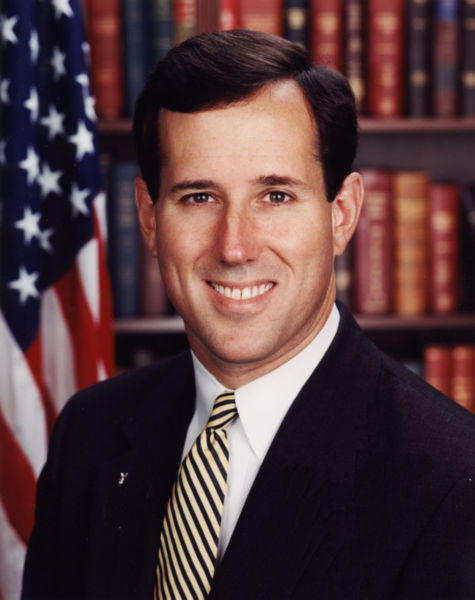
Rick Santorum, the former GOP senator and stalwart of social conservatives, recently announced his candidacy for the Republican presidential nomination in 2012. Santorum’s chances of becoming president are somewhere between Newt Gingrich’s White House prospects and an ice swan’s odds of being a centerpiece in Hell, but they aren’t helped any by the results of a devastating prank inflicted on his image by syndicated sex columnist Dan Savage.  When you Google “Santorum,” the first result listed is this:

Santorum 1. The frothy mix of lube and fecal matter that is sometimes the byproduct of anal sex. 2. Senator Rick Santorum. Continue reading

Global Warming Advocates Flunk Ethics, and Credibility…Again

Never mind!

The evidence for global warming is pretty overwhelming, though still possessing some holes, and the likelihood is that much of the change is man-made. That’s about as far as the scientific evidence goes, however, without getting into serious controversy. The dire climate chance projections continue to be questionable at best, which poses problems for environmentalists who want to use climate change as a wedge to shut down industry, and alarmists who are frightened out of their wits by science they really don’t understand. Rather than demonstrate that the science is unbiased and credible by acknowledging the uncertainty, the global warming community, including elected officials with agendas, radical anti-industrialists, various research, political and advocacy groups and a depressing number of scientists who know better—and Al Gore…can’t forget Al!—have resorted to outrageous scare tactics and apocalyptic “projections.” Continue reading

Allied Against Consumers and Ethics: Google and the Sociopathic Businessman

Today the New York Times extensively documents the unethical business strategy used by the owner of a web-based eyewear business.

After making the discovery that Google does not distinguish between positive and negative mentions of a business on the Internet, he resolved to treat complaining customers as badly as possible to encourage complaints about his company on consumer sites. I do mean “as badly as possible”: the Times relates the accounts of customers who received insulting phone calls, threatening mail, and other harassing and bullying communications from the entrepreneur, who uses multiple aliases. The method works well: since on-line diatribes, complaints and bad reviews have piled up over his poor service, outrageous conduct and often shoddy merchandise, the man’s business is booming. Its name consistently nears the top of Google’s search results when a potential customer types the name of his or her favorite eyewear designer and “eyeglasses,” sometimes placing higher than the designer itself. Continue reading

Googling Potential Jurors in Court: Not Unethical, Just New

I sometimes facetiously tell legal ethics classes that the average judge is ten years behind the average lawyer in technological acumen, who is five years behind the average 13-year-old. The law and legal ethics consensus is always playing catch-up with technological developments, and every time technology is put to a new or unexpected use in a trial, some judge may react to it like a Cro-Magnon encountering his first flame.

This happened recently in the case of Carino v. Muenzen (N.J. Super. Ct. App. Div.) During jury selection, plaintiff’s counsel began using his laptop computer to go to the Web and seek  information on prospective jurors. Defense counsel objected,  and the following exchange took place: Continue reading

“Birthers”: Unethical, or Merely Deranged?

Retired Air Force Lieutenant General Thomas McInerney, a military expert who appears as an analyst on Fox News, has submitted an affidavit in support of Army Lieutenant Colonel Terrence Lakin, who is refusing to deploy to Afghanistan because of his belief that President Barack Obama was not born in the United States. Lakin faces a court-martial for his refusal. Thus has General  McInerney officially admitted to being a “birther,” one of the legion of conspiracy theorists who deny Constitutional eligibility for the White House.

From McInerney’s affidavit: Continue reading

“Google Tried to Kill Me!”

Personal injury lawyers, along with their close trial lawyer cousins, the medical malpractice and product liability lawyers, have an unjust reputation. The American tort system is the fairest in the world, and the work of trial lawyers saves lives while it is getting compensation and damages for people who have been injured by the careless, negligent, reckless or malicious acts of others.

Unfortunately, rare cases like that of Lauren Rosenberg overshadow all of this, which is just one of the reasons her lawsuit against Google is objectionable. When you walk down the middle of a highway and get hit by a car, you may have some justification for suing the driver of the car. But suing the website that suggested that you walk on the road? That’s the theory of Laura and her lawyer. According to PC World, Rosenberg was trying to get from 96 Daly Street, Park City, Utah, to 1710 Prospector Avenue, Park City, Utah, and looked up the walking directions on her Blackberry using Google Maps . Google suggested a half-mile walk down “Deer Valley Drive,”  also known as “Utah State Route 224,” which should have been a clue. But Google-trusting Laura started walking down the middle of the highway, and sure enough,  a car hit her.  Her complaint says: Continue reading

Ethics Hero (sort of, maybe, a bit): Google

Google is a little like the turncoat in an action movie who almost sinks the hero but then makes a surprise return at the climax to save the day. In 2006, many of us were disgusted when Google agreed to help the oppressive Chinese government censor speech and information in exchange for getting a crack at the biggest market on the planet. We heard the company’s rationalizations about compromising their principles now to help open up Chinese society, but the truth always was that “Do no evil” Google was willing  to do evil for four years in exchange for a lot of yen.  At last the company finally decided that it couldn’t look at itself in its virtual mirror anymore, abandoned its agreement to help China control what its people could read and say, and moved its server to Hong Kong.

Google has garnered a lot of praise on-line and elsewhere for its decision. The company did the right thing, it is true, but it would have been far more admirable if it had taken the same position four years earlier, and refused to play the part of China’s cyber-muzzle in its quest for big bucks.

That feckless guy in the action movie who comes back in the last reel isn’t really a hero, you know. The only reason he is in a position to act like one is that he did the wrong thing in the first place. We’re glad he had a change of heart, sure. But let’s not get carried away.

__________________

Update: In the category of getting “carried away,” here is a stunning example from “Op-Ed News”:

“…again Google has found itself in a situation where its ethics are being challenged by one of the most oppressive governments (In our opinion) in the Global Community, and rather than backing down, Google has chosen to stand-up for their belief that moral values and ethics trump corporate profit, an occurrence so rare these days that we believe Google  deserves special recognition for refusing to compromise their core ethics of “Don’t be Evil,” even in a situation where it could result in the loss of huge profits in China’s booming economy and what may one day be one of the largest Internet markets in the world…”

The author, William Cormier, conveniently ignores the fact that Google’s decision that “moral values and ethics trump corporate profit” has only come after four years of letting profit trump its values. What does he think Google has been doing the last four years? Does he really believe China just started  censoring Google searches? You can read his entire, hilarious hosanna to Google here.

So Much For “Don’t Be Evil”: YouTube and Google Ethics on Display

The Business Insider has posted evidence gathered by Viacom in its lawsuit against Google, consisting primarily  of e-mails and instant messages. It is far from conclusive on the legal issues, which revolve around YouTube and Google’s unauthorized use of copyrighted material. It is very conclusive, however, regarding how often any ethics alarms went off with various Google and YouTube executives as they contemplated bottom line issues: rarely.

Here is a startling example.  In a 2005 e-mail exchange YouTube co-founder Steve Chen reasoned thusly: Continue reading