Thanks and Mea Culpa

The discussion on Ethics Alarms has been especially lively, diverse and interactive this week, and I want to thank all who participated for their time, passion, reason and civility. My goal has always been to foster better ethical analysis through dialogue, and I consider what I read the past several days to be a significant advance. I am grateful to everyone, especially so because it has been a hectic and difficult period for me.

I also am aware that the typos have been proliferating again, and I apologize to all. It is irritating, not to mention confusing, to have to read posts with errors, and it is unprofessional for me to allow the errors to occur. There can be no excuse for it, and I am truly sorry. Unfortunately, I can’t type, I have always been a poor speller, and I am an even worse proof-reader of my own work. Believe it or not, I proof each post at least four times, and use two different spell-check programs. I have begun to re-proof every day’s output before I go to bed, and it is astonishing how often I find typos that slipped through. Skipping a word that I heard in my head (and then read when it isn’t there) is the most common mistake, followed by typing “ed” instead of “es” at the end of words. The typos are more common when I am on the road, like this week, and have to work on my old, small, netbook with the missing keys.

I will continue to make improving this long-time flaw a top priority, and I remain very grateful for those of you, especially the two Jeffs and my old editor Patrice, who have been especially alert and kind enough to  flag my mistakes. Meanwhile, I continue to return to past posts—all 2, 232 of them, and search for typos to fix. And, dammit, I find them, too.

Once again, thanks, everybody, both for your contributions and your patience.

Ethics Hero: Martin Scorsese

One of the most respectful and compassionate acts a human being can perform is to rescue the memory and achievements of a great man or woman from obscurity. Not only does this confer deserved longevity on the legacy of someone who has contributed something good and lasting to civilization and culture; it also is a gift to the rest of us, enriching our knowledge and perhaps providing us with inspiration as well.

This is what Martin Scorsese does for the early French film pioneer Georges Méliès in his new movie, “Hugo.”  The film is a fictionalized account of how Méliès, a producer, director, actor and special effects innovator, was rediscovered by film-lovers and his countrymen after years of discouragement and depression. In a nice piece of irony and symmetry, Scorsese’s film duplicates the phenomenon his movie describes. Forgotten after World War I, Méliès and his work were celebrated late in the 20’s, and he received long overdue acclaim and recognition, including France’s Legion of Honor. After his death in 1938, his contributions to the art and craft of cinema faded from public awareness a second time. Once again, thanks to “Hugo,” the public is learning Méliès’s name and being delighted and inspired by his creations. Continue reading

An Ethical Holiday

I’m going to concentrate on trying to make the beginning of the holiday water-slide (which always starts on November 23, my wedding anniversary—this is our 31st, as I was married when I was 13) as memorable as possible, so unless something earth-shattering occurs, Ethics Alarms will be at status quo until sometime tomorrow. In the meantime, I want to wish all of you a very happy Thanksgiving.

Like many holidays, Thanksgiving is firmly rooted in ethics. One doesn’t have to be religious to acknowledge the fact that we have much to be grateful for, even in difficult times personally, nationally, and culturally. Gratitude is closely linked to modesty, humility and proportion in the hierarchy of values. American tradition urges us never to be satisfied with things as they are, but we should always be humbled by the fact that there are so many ways things could be far worse. There is no better time to begin a personal tradition of kindness and generosity toward others to last the year, or a lifetime.

In Southwest Washington, D.C., a section of town plagued with poverty, crime and violence, convenience store owner Ephrame Kassayegave out 375 turkeys as gifts to the community, in thanks and recognition of their loyalty. He said he was grateful for his patrons, and wanted to show it. That’s what Thanksgiving should mean, and that’s why it isn’t just a way-station between Halloween and Christmas. If nothing else, we all have each other in our families, communities, nation and world to make our lives richer, and if one day on the calendar helps remind us of that when we are feeling angry, anxious, envious and sad, it’s a day well spent. Life’s worth the trouble. Pass it on.

Have a wonderful Thanksgiving, everybody.

Now THIS Is Disloyalty…

Good ol' whatshisname. We'll never forget him.

…also ingratitude, venality, and crassness.

Baseball’s  Kansas City Royals are putting the name of their ball park, now Kauffman Staudium, up for corporate bidding. Soon the stadium that stood as a monument to the late Kansas City community leader Ewing Kauffmann, who owned the Royals in their very first season (1969), built the state-of-the-art home for them that is still a source of civic pride, and turned the team into a model franchise and perennial pennant contender in record time, will be named “Kansas City Masterpiece Stadium” or something else that makes it a giant billboard. Meanwhile, little will be left to remind future baseball fans and Kansas City residents of the life and dedication of the man who was responsible for the city having a major league team at all. Continue reading

Ethics Hero: Robert Downey, Jr.

Superhero on the outside, Ethics Hero on the inside.

Show business Ethics Heroes are about as rare as credible presidential candidates; after all, Hollywood is one of two environments where the ethical culture is even more warped and cynical than Washington, D.C. (The other: the Columbia drug cartels.) Yet a genuine Ethics Hero emerged at the 25th annual American Cinematheque Award gala, when honoree Robert Downey, Jr., now a major star and industry power player, threw his prestige and influence behind a genuine industry pariah, Mel Gibson, in an act of kindness, gratitude, and reciprocity.

After Downey accepted his award before a cheering crowd of important performers and artists, he unexpectedly devoted his moment in the spotlight to recall how Mel Gibson, when Downey’s career had been devastated by habitual substance abuse and Gibson was a megastar, constantly supported him, encouraged him and refused to give up on him, though the Hollywood community had. The “Iron Man” star explained how Gibson, in 2003, gave Downey a starring role in “The Singing Detective,”  which had been developed for Gibson himself, because nobody else would give the troubled actor another chance.  Gibson even paid the insurance premiums for Downey, because the studio would not accept the risk of hiring him, given his history of drug addiction and legal problems. All  Mel asked in return, Downey recalled, was that Downey resolve to help out the next actor who had hit bottom and had no friends in the Town Without Pity. Continue reading

Celebrate Columbus Day, Honor Columbus

Today is Columbus Day, not that one would know it to read the typical paper or to watch most newscasts. The Italian explorer’s reputation and legacy have been relentlessly eroded over the years by temporal chauvinists who apply spurious social and historical hindsight to justify unfair criticism of civilization’s heroes. Christopher Columbus deserves the honor this holiday bestowed on him.  He was a visionary and an explorer who, like all transformative figures, possessed the courage and imagination to challenge conventional wisdom and seek new horizons of achievement.

Holding Columbus responsible for the predation of the Spanish and the devastation of native populations that were among the unanticipated consequences of his achievement is the equivalent of blaming Steve Jobs for technology’s elimination of occupations and the fact that our children are fat and have the attention span of mayflies. And of course, anyone who believes that the Stone Age populations of the Americas would have continued to prosper in Avatar bliss without Columbus’s intrusion is ignorant of both human nature and world history. Continue reading

A Fan’s Obligation: 12 Life Lessons From Being a Red Sox Fan

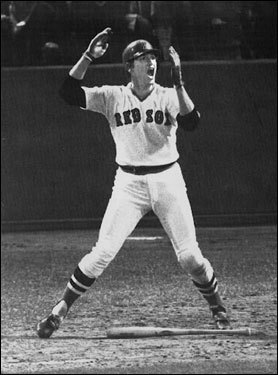
Thanks Carlton. I won't forget.

This is not going to be a fun day.

The Boston Red Sox, the baseball team to which I have devoted a remarkable amount of my time, passion and energy over a half-century, are threatening to complete late season collapse of embarrassing and historic proportions. A spectacularly bad month of September has the team holding on to its once assured post-season play-off slot by its fingernails, and the squad appears to be dispirited and unhinged. Today the Red Sox play a double-header with the New York Yankees, the team’s blood-foe, and its prospects don’t look good. I, of course, must watch both games.

Following a losing baseball team is emotionally hard—I listened to or watched every game the Red Sox played in a six year period in which they never had a winning season— but following a collapsing winning team is much, much worse. It feels like a betrayal, yet at the same time the fan feels guilty for being angry with the players, who undoubtedly are suffering more than you are. This is, after all, their career. Still, you have had your hopes raised over many months; you have, if you are a serious fan, attached your self-esteem to your team’s fortunes. Watching it tank is like watching a presidential candidate you have argued for, and gone to rallies for and contributed to make an ass of himself in a debate. (And no, I’m not a supporter of Rick Perry.) Continue reading

Ethics Quiz: Does The Golden Rule Ever Make You a Sucker?

For Ken Anderson, an alternative tattoo instead of "Mother"

With great trepidation, I visit our friends to the North for the second time in a week…this time, for an Ethics Quiz.

Ken Anderson, 47, of British Columbia, has been fighting a lawsuit by his aged mother, Shirley Anderson, since 2000. Using a rarely used section of B.C.’s Family Relations Act, she is demanding that he pay her $750 per month in “parental support.” The law declares that adult children are responsible for legally supporting parents who are “dependent on a child because of age, illness, infirmity or economic circumstances.”

Anderson isn’t keen on the request, since both his parents abandoned him when he was a mere tyke of 15, leaving him behind as they moved away with two younger siblings. He lived with other families and then quit school to find work. Now he’s married with two kids, and makes his living driving a truck. Continue reading

Labor Day Ethics Dunce: The Muscular Dystrophy Association

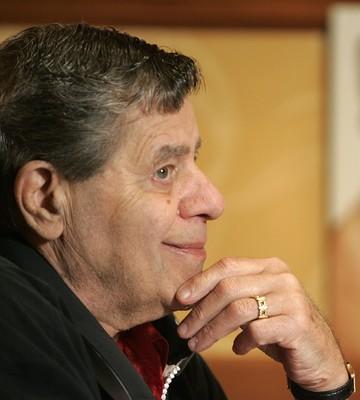
Jerry Lewis earned the right to say good-bye on his terms--even if they were the wrong ones.

Nobody expected it to be easy for the Muscular Dystrophy Association to part ways with Jerry Lewis, who gave everything he had to building the organization over nearly six decades. Now 85, Lewis, a famously difficult talent with an outsize ego even by show-business standards, was bound to insist that he be allowed to all but drop dead at his post, mid-Labor Day telethon. In recent years, that seemed a real possibility, as Jerry’s health and age made him more a figure of pity and curiosity than a viable host.

Nonetheless, Jerry Lewis has raised, by the MDA’s own calculations, about $2,5 billion dollars, beginning when Eisenhower was president and TV was a novelty. The organization owes him, well, everything. They certainly owed him the opportunity to exit on his own terms, even if it was too late, even if it was self-indulgent on his part, and even if, though this is highly unlikely, it cost the organization more in lost contributions than kicking him to the curb will. Continue reading

Historical Theft at the King Memorial

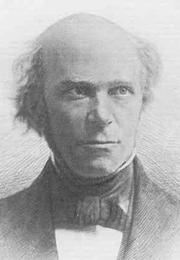
Rev. Theodore Parker

The new Martin Luther King Jr. Memorial is not just the King-in-Carbonite monolith that has caused so much controversy. There is much more to the National Mall’s latest addition, including inscriptions in marble of quotes from the martyred civil rights leader’s writings and speeches. There are more than a dozen examples of his oratory, a quotation from King’s 1963 “Letter From a Birmingham Jail,” and an excerpt from King’s Nobel Peace Prize acceptance speech in 1964.

Among them, this:

“The arc of the moral universe is long, but it bends toward justice.”

But Rev. King didn’t say it. Theodore Parker, an influential and eloquent Boston minister and abolitionist, did. King never pretended otherwise; it was one of his favorite quotes, and he used it often, but he usually credited its originator. Continue reading