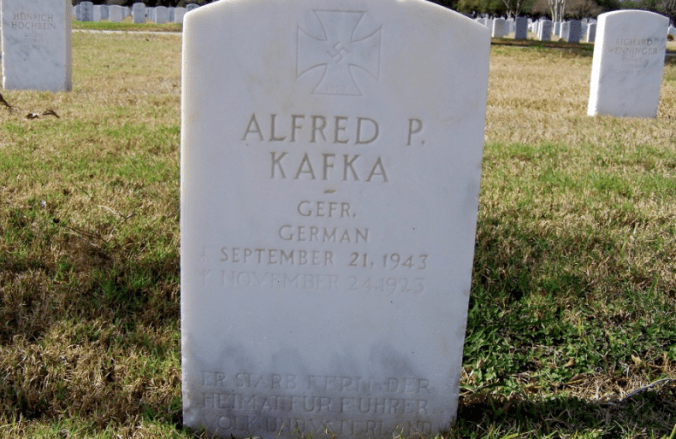
If you encountered that gravestone in a cemetery, would it move you to file a protest? Or to start an advocacy group dedicated to having the marker removed or taken down?
There are two such gravestones marking the resting places of German prisoners of war in Fort Sam Houston National Cemetery in San Antonio, and another one is in Fort Douglas Post Cemetery in Salt Lake City. They are located among the graves of American veterans, some of whom fought against Germany in World War II. A retired colonel visiting his Jewish grandfather’s grave at the Texas cemetery saw one of the markers with the swastika symbol, and his complaint moved the Military Religious Freedom Foundation, which obviously does not have enough on its plate, to demand that the Veterans Administration “do something.”
Apparently in the throes of a strong attack of common sense and possessing functioning ethics alarms, the VA’s National Cemetery Administration has responded to the protest by stating that it “will continue to preserve these headstones, like every past administration has. All of the headstones date back to the 1940s, when the Army approved the inscriptions in question.”
Mike Weinstein, the founder of the MRFF and a former Air Force officer, deeply feels the pain of having to allow buried soldiers have the emblems of the nations they fought for on their headstones, and is apoplectic about the decision. “It’s intolerable,” he said. “This should not require explaining why this is wrong.”
Baseball writer Bill James once wrote that when someone says that that their proposition shouldn’t require explaining, it usually means that they have no valid arguments.
“But..but…” Wienstein sputters, if you translate the German phrase on the the headstones, they read, “HE DIED FAR FROM HOME FOR FUHRER, PEOPLE AND FATHERLAND”! I know I always enjoy translating the foreign languages on headstones over the graves of strangers just in case I can find them offensive. Continue reading
 Ethics Alarms