Baby-Switching Ethics

http://www.youtube.com/watch?v=djB_bqUrI9A

The song from H.M.S. Pinafore tells the story amazingly well.

In Johannesburg, South Africa, a horrendous situation resembling the plot-resolving song from “H.M.S. Pinafore” may be reaching an unusual resolution for such cases—a sensible and ethical one. The families never suspected until one of the mothers underwent tests when her ex-husband refused to pay child support. One of the mothers wanted her biological child back, while the other wants to keep the child she had raised. A judge now has to decide.

The court asked the University of Pretoria’s Centre for Child Law to investigate and make a report n what would be in the children’s best interests. The experts’ answer: “The recommendation is that the children should stay with the parents who have raised them and should also be permitted to have contact with their biological parents.”

Exactly. Let’s hope that the court follows the recommendation, the only ethical one. Four years old is too old for this wrong to be set right without making it worse. What about three years old, though? Where do we draw that line? Furthermore, I am assuming that the two families are more or less equally fit, able and qualified to raise children. What if the investigation showed that one family was clearly more advantageous for a child: better educated parents with more resources and experience with children, living in a safer community? Then what would be the calculation of “the right thing”? The benefit of one child would be the detriment of the other, a zero sum game. In such a case, would fairness govern, rather than the best interests of the children? Why should one child be cheated out of the better life awaiting him, because of a nurse’s mistake? Fortunately, we don’t have those details, so we can make a confident abstract ethics judgement without confounding factors and issues. Continue reading
Writers Writing About Ethics, Without Any

Sorry, can’t use you.

Writer Joe Konrath has written one of those blog posts about ethics that makes me want to defenestrate myself, a post that expounds on rationalizations as a substitute for ethical analysis because he is incapable of the latter, arriving at fatuous and misleading conclusions. Naturally his post was picked up and expounded upon by another blogger, Ben Galley, who has even launched an ethics-challenged website called Ethiks to promote similar ethics rot.

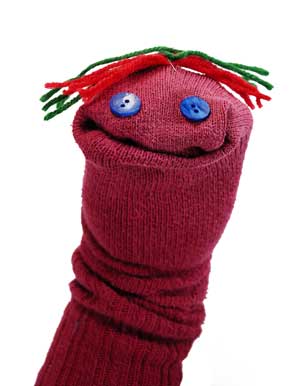
Both writers are holding forth about recent scandals in the publishing world, involving so-called “sock puppetry,” where a writer anonymously praises his own books on-line or trashes the work of competitors, and writers paying for positive reviews. Both are also laboring under juvenile ethical delusions, and obnoxiously so, among them:  that “everybody does it” is a valid excuse for cheating, that the fact that a critic of unethical behavior might engage in such behavior himself under certain conditions invalidates the ethical criticism, and that unethical people insisting that unethical conduct isn’t puts such conduct in a “grey area.” None of these is true; none of these is remotely true.

The ethically-clueless tenor of both posts can be gleaned from this section, by Galley:

“Ethics in life are a grey area. No less in the book industry. To borrow JA’s analogy, the claim of “I would never kill” goes out of the window pretty quickly when protecting your family against a murderous intruder. The line of ethics is never a straight one, often zig-zagging through a charcoal no-man’s land of right and wrong. The question is this: Where does the line lie for you? It’s nothing less than personal. Some people simply shrug at the thought of sock-puppetry. Others go a shade of red and grit their teeth. Sadly, we can write all the codes and edicts we like, the point is that not everyone will a) agree, nor b) abide.”

Let me see: wrong, wrong, irrelevant, wrong, not necessarily, no it isn’t, NO, it REALLY ISN’T, and so what?

Most ethical questions are not gray at all: these definitely aren’t. They are clear as clear can be. “Sock puppetry” is dishonest and unfair. An author paying for positive reviews, and a critic accepting payment from an author to review his work, is blatantly dishonest and a conflict of interest. There is no “gray” about it; they are just wrong. Anyone who draws the “line” anywhere else is wrong too. It doesn’t matter whether everyone agrees: those who don’t agree are unethical. So are those who can’t “abide.” Their unethical conduct doesn’t alter right and wrong.

Konrath’s piece wastes our time with a long argument claiming that unless one is as pure as the driven snow, not only can’t you call unethical conduct what it is,  the fact that you can’t calls into question whether the unethical conduct is really unethical at all. Here’s his “quiz,” which Konrath presents triumphantly as if it is a real brain-buster, when anyone with a modicum of honesty, decency and common sense should be able to score 100% without straining a neuron.

Here it is, with my answers in bold: Continue reading