Brian Williams Ethics Train Wreck Update: David Brooks’ Ethics Confusion

Huh?

Huh?

David Brooks’ New York Times op-ed column decrying the widespread criticism of Brian Williams’ serial lying show us that Brooks himself is frighteningly confused regarding such basic ethical values as accountability, trust, trustworthiness and accountability. That’s good to know, don’t you think? Now the question is why anyone in their right mind would care what such an ethically muddled political and cultural analyst thinks about anything.

Yesterday, the Washington Post revealed yet another example of Williams’ fabulism: his bizarre story about roaming gangs at the local Ritz Carlton in the wake of New Orleans’ devastation by Katrina. Never mind, argues Brooks: the problem isn’t with Williams, it’s with his critics.

Brooks’ New Times column begins with a strange, exaggerated and unethically inclusive first paragraph about how  fame drives people to wrongdoing. “The desire for even more admiration races ahead. Career success never really satisfies. Public love always leaves you hungry,” he writes. “Always?” Who is he talking about, himself? The famous people being described here are emotionally and spiritually unhealthy famous people–addicts to fame, narcissists, desperate hostages to celebrity. I have no doubt that Williams fits that description,  but many prominent, accomplished and celebrated people do not. They are known as “trustworthy.” Having impugned many thousands of well-adjusted pubic figures past and present to lay the groundwork for an “everybody does it” defense of Williams (EDI is running neck and neck with the other favorite rationalization being used by Williams enablers: “It’s not the worst thing.”), Brooks attacks anyone not famous who resents being lied to:

“The barbaric part is the way we respond to scandal these days. When somebody violates a public trust, we try to purge and ostracize him. A sort of coliseum culture takes over, leaving no place for mercy. By now, the script is familiar: Some famous person does something wrong. The Internet, the most impersonal of mediums, erupts with contempt and mockery. The offender issues a paltry half-apology, which only inflames the public more. The pounding cry for resignation builds until capitulation comes. Public passion is spent and the spotlight moves on.”

This paragraph is astounding, and embarrassing too. Someone violates a public trust, and the public has the audacity not to trust him any more! What barbarism! Is Brooks even passing familiar with the concept of accountability? Not on the evidence of this drivel, he isn’t. An honorable man or woman in a position of trust who so publicly disgraced himself as Brooks has should immediately and voluntarily resign. Once, long ago, that was the natural, traditional, expected and required response to such a scandal, but this was in the days when celebrity and power was not so frequently accompanied by greed. Williams is paid about ten millions dollars a year, and that’s apparently too much to give up merely to demonstrate integrity, remorse and acceptance of responsibility for wrongdoing, especially when there are allies like Brooks out there ready to shift the blame.

There would be no need to purge someone who has proven themselves untrustworthy in a high position of trust if the individual would be accountable and courageous and purge himself, as he (or she—I’m looking at you, Kathleen Sibelius) is obligated to do. How can Brooks not understand this? The offender offers a “paltry apology,” and Brooks blames the public for correctly concluding that such an offender doesn’t understand the seriousness of what he did, isn’t really sorry, and will do it again. So the “pounding cry for resignation builds until capitulation comes.” Yes, David, that’s the way it’s supposed to work. This isn’t barbarism. This is civilization. This is enforcing standards. This is ethics, this is accountability.

Brooks doesn’t comprehend any of it, apparently:

“I do think we’d all be better off if we reacted to these sorts of scandals in a different way. The civic fabric would be stronger if, instead of trying to sever relationships with those who have done wrong, we tried to repair them, if we tried forgiveness instead of exiling.”

We’d all be better off if we let people who lie to us stay in the position that will allow them to keep lying to us? Continue reading
The Ethics Scandal Is No Longer About Brian Williams. It’s About NBC, And Journalism

"Uh, do you think we should say something to Brian?"

“Uh, do you think we should say something to Brian?”

Yesterday Brian Williams announced that he was removing himself temporarily as anchor of the NBC nightly news broadcast, as NBC revealed that it was conducting an independent investigation, which certainly sounds like eyewash to me (and others.) The ethics issue, however, has expanded rapidly to the point where Williams’ fate—and at this point, I think he’s doomed—is almost incidental to the larger broadcast and news media ethics issues involved.

Maureen Dowd and others have revealed that NBC executives had been well aware that Williams was, to put it kindly in Dowd’s terms, “inflating his resume” and yet declined to stop it. In other words…

…they were aware he was lying to the public, which means that

…they were aware that he lies in public, which meant that

…their face, voice, anchor and head of their news division was a liar, indeed perhaps even a pathological liar, meaning that

…Williams was unquestionably  untrustworthy, and

…a constant risk to misinform the audience, and

…they still didn’t remove him because his ratings were good and he was making money for the company.

Continue reading

Watching The Super Bowl Is Unethical. You Know That, Right?

Super2015

I was going to call this post “Ten Reasons Why Watching The Super Bowl Is Unethical,” then “TOP Ten Reasons Why Watching The Super Bowl Is Unethical.” Ethical people should only need one good reason though, and while you can rationalize it away to slave your conscience and to avoid having to renege on that RSVP to tomorrow’s Super Bowl party, it is there, undeniable, and ugly.

So you don’t even have to argue that the fact that the most successful NFL team for more than a decade is also the one repeatedly caught cheating is irrelevant because “everybody does it,” or that the large number of felons, thugs and spouse abusers the teams employ (one ex-player—why, a Patriots’ ex player, in fact!—just went on trial for murder) doesn’t matter because the players aren’t really role models, or that the fact that the NFL corrupts and warps our universities by turning them into football’s minor leagues is overstated because such scandals as the University of North Carolina conspiring to let athletes take imaginary courses aren’t really the NFL’s fault. All you have to do is accept the fact that when you support the NFL, it’s TV ratings and the companies that profit from them, you are not merely killing people, you are cheering while you do it.

Disgusting.

What the hell’s the matter with you?

Yesterday I rewatched the 2013 PBS Frontline documentary, “League of Denial.” (That’s the link to the video; the transcript is here.) It was more horrifying the second time, especially in view of how the NFL has managed to stonewall, tap-dance and delay its way through another season without seriously admitting the extent of its head injury problem. One could even argue that the Ray Rice fiasco and other scandals helped the NFL by deflecting attention away from its biggest ethical deficit. Today, CNN, which is duly promoting the Super Bowl all weekend, reported on Roger Goodell’s “state of the NFL” press conference. It didn’t mention the concussion issue at all, just spousal abuse. It’s working, Roger!

As thoroughly and irrefutable shown by the documentary and the book it was based on, football causes dementia and death. The earlier you start playing it, the worse the effects are. The NFL has systematically waged a public relations war of denial and deception, taking carefully calculated half-measures that will not address the problem, relying on America’s love of the game to allow the industry to continue making billions by paying young men to maim themselves. In hearings before Congress, U.S. representatives compared the NFL to cigarette manufacturers denying that cigarettes were addictive and that they caused health problems. The comparison is fair, but once the truth was known about tobacco, the non-smoking public quickly realized that it shouldn’t be cheering lung cancer on. Cigarette ads on TV were banned; programs that children watched were pressured to avoid showing characters smoking. But then, nobody gets a visceral rush watching human beings slowly kill themselves by puffing away: is that the difference? As long as you get a kick out of the process of athletes turning themselves into future drug addicts, depressives, neglectful fathers, abusive husbands, drooling imbeciles and suicides, it’s okay to keep watching and cheering?

Keep telling yourself that. It’s intellectually lazy and ethical abdication, and that’s all it is. Watching the Super Bowl can’t be wrong because so many people do it, right? You know, since you’re here, what’s the matter with that argument.

You can also try the argument that the players are accepting the risk, so it’s OK for you to encourage them, in fact help pay them to liquify their brains for your amusement. That would be employing three more rationalizations on the Ethics Alarms Hit Parade: Continue reading

Accountability Check: No, Sarah Wasn’t “Sacrificed” And She Has Nobody To Blame But Herself

Yeah, that's all you need, Sarah...

Yeah, that’s all you need, Sarah…

When one woman who drives me crazy sets out to defend another one using ethics-crushing illogic, I cannot withhold my hand.

Or gorge.

The wimpiest pseudo-conservative op-ed columnsit who ever roamed the Earth, Kathleen Parker, has delivered a column titled “The Sacrifice of Sarah Palin.” Its thesis? “Blame for her general collapse beginning in 2008 can be placed in large part upon her own party, which used her and cast her aside.”

Well, Parker proves with her fatuous essay that blame can be placed on Republicans, but she doesn’t prove that it should be. Sarah’s reputation is on life support after delivering a speech at the Iowa Freedom Summit that included passages like these… Continue reading

Ethics Dunce: Phylicia Rashad

COSBY-AND-RASHAD

Phylicia Rashad, the African American actress best known for playing “Claire Huxtable,” Bill Cosby’s wife on his legendary sitcom, was resolute about not be dragged into the crisis facing her on-screen hubby, as woman after women has come out with allegations that she was raped, sexually assaulted or drugged by funny, ol’ Bill. She should have stayed that way. Unfortunately, she allowed a Hollywood celebrity reporter to pull some quotes out of her, and now she has a crisis of her own. Now we know she values loyalty, group identification, show business protocol and her own financial interests over decency, fairness, honesty, justice, compassion, respect for women, and truth.

Or, I suppose, she might be an idiot.

Rashad’s take on Cosby’s problems was also odd, as it focused very little on the man being accused of such heinous acts. She didn’t say, or at least such remarks weren’t reported, that he was a wonderful human being, or that she could not imagine the man she worked so closely with all these years doing what so many alleged victims claim. She said that she “loves” him. In show business, this is like the host of a TV talk show saying a guest is a close personal friend: it is routine, and means nothing.  Rashad’s defense of Cosby consisted of dismissing his victims’ stories as baseless, and this:

“What you’re seeing is the destruction of a legacy. And I think it’s orchestrated. I don’t know why or who’s doing it, but it’s the legacy. And it’s a legacy that is so important to the culture….Someone is determined to keep Bill Cosby off TV. And it’s worked. All his contracts have been cancelled…This show represented America to the outside world. This was the American family. And now you’re seeing it being destroyed. Why?”

Why. Huh. That’s a head scratcher isn’t it? Yes, why would the entertainment value of family situation comedy about a wise, loving father , the wife whom he adores and his brood of adorable, normal, kids, including three, and ultimately four, teenage girls be diminished in the least by overwhelming evidence that the actor playing said father is a sick, ruthless, sexual predator and the King of Hypocrites? Continue reading

“Drunk Girl In Public”: This Trend Will Ruin Trust, Spontenaity, Kindness and Fun, and There Is Absolutely Nothing We Can About It Except Complain

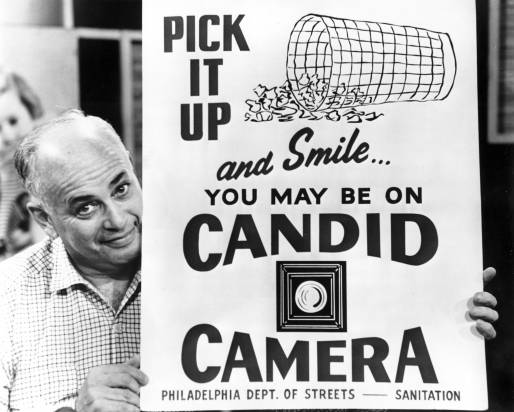
I guess it all began with Allen Funt.

If Allen knew what he would be starting, he would have opened a deli.

If Allen knew what he would be starting, he would have opened a deli.

Back in the Fifties, he came up with the idea of using a hidden camera to record the reactions of innocent bystanders “in the act of being themselves.” He staged situations, sometimes Twilight Zones set-ups like a door that opened for everyone but the target, and filmed the results, first for a guest segment on TV talk shows and finally on his own, long running hit, “Candid Camera.” Funt would never have dreamed of using actors and faking the reactions, because first, he didn’t need to; second, if he was caught, it would ruin him; and third, he was an honest professional. The idea, however, has thoroughly metastasized in all directions, to “practical joke shows,” reality shows, and such monstrosities as ABC’s “What Would You Do?” and James O’Keefe. Perversions were limited as long as the shows were restricted to television, but now YouTube makes everyone a potential producer, and among the thousands trying to create a viral video, there are many, perhaps most,  who are not decent, ethical professionals like Allen Funt, but just greedy jerks who will gladly cheat, lie to and humiliate others to gain fame and fortune. Continue reading

“The Firm” Ethics: Mitch Should Have Known What He Was Getting Into

I was just watching “The Firm” again after many years—my old friend and the terrific actor, the late Bart Whiteman, played “Dutch”—to get the ick of “Cabin Fever 3” out of my head. (It was part of last night’s Halloween triple feature at my house.)

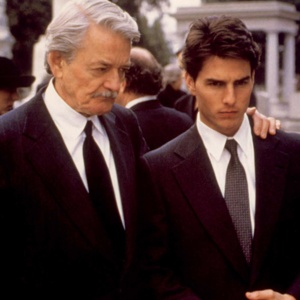
Pay attention, Tom...

Pay attention, Tom…

In an early scene in the film, Harvard Law student Mitch McDeere (Tom Cruise) is being courted by big law firms offering perks and cash. Then a small Memphis firm he never heard of —later, he learns that it is run by the Mob— blows him away with an offer he can’t refuse. The firms partners tell him that they wanted him so much, they bribed the clerk at Harvard’s placement office to learn what salaries the other firms had offered Mitch, then matched it plus 20% more. Tom is impressed, and flattered, and greedy, and takes the offer, even though the firm had openly revealed itself as unethical and proud of it.

He should have seen this as signature significance of a dangerously unethical culture in a profession with high ethical obligations, and walked out the door. A young lawyer with well-maintained ethics alarms would have. Who knows? Maybe this was a test the corrupt firm used to weed out ethical associates.

I always thought Mitch was just unlucky, but in the film, at least, he ended up in a bad firm because an ethics alarm wasn’t working.


What’s The Ethical Response To Giving Birth To A Mixed-Race Child You Didn’t Bargain For? If Only Abe Lincoln Was The Lawyer…

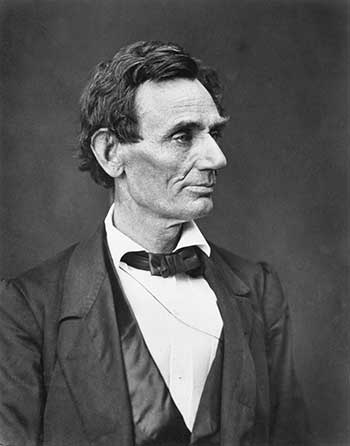
What does Abe have to do with a sperm bank mix-up in 2014? Read on...

What does Abe have to do with a sperm bank mix-up in 2014? Read on…

I can certainly sympathize with the plight of Jennifer Cramblett, the birthing half of a loving, and white, same-sex couple who sought the assistance of a sperm bank to conceive a child, and who ended up giving birth to a mixed-race baby girl because of the kind of clerical error that sets up movie comedies starring Adam Sandler or Cedric the Entertainer. This is like what happened to Chevy Chase in “Vacation,” when he ordered one car and had a different one arrive at the dealer’s months later. Well, the car was a lot worse, because it was ugly, but it drove fine. Well, let me think about that: lots of babies, even babies sired the usual way by attractive parents without alien sperm, are ugly. This baby wasn’t ugly: Cramblett says she’s beautiful. Has all ten fingers and toes. No apparent deformities.

Hmmm.

Maybe this situation is more like the cherry red Nova that got delivered as my first car, when I had ordered something else. I got a discount for going ahead and taking the Nova, and never regretted it: best, most reliable car I ever had, and I had it in the days when I was still having fun in cars.

Come to think of it, what’s Cramblett so upset about? She has a healthy, lovely child and a stable family. OK, that sperm bank owes her a refund, and maybe some “I’m sorry you got the wrong color” money. But would I not only sue the sperm bank for the lifetime of pain it had supposedly subjected me to by causing me to have a mixed race child, but also use the law suit to garner media fame? Of course not. There is no way to simultaneously claim that having a mixed-race daughter is a hardship worthy of substantial damages, and to argue that the race of her daughter doesn’t matter, because she is unconditionally loved.

The couple’s lawsuit against the sperm bank screams “Hey! This could be a jackpot for us!”  The couple’s lawsuit explains that Jennifer Cramblett was raised to accept stereotypical beliefs about blacks. It says she is culturally unprepared to raise a mixed-race child. It argues that their community is, in effect, bigoted, and that—get this—it’s hard to get their daughter’s curly hair cut. In other words, it’s just hell having a mixed-race daughter, but they love her very much and would never trade her for anything in the world.* Got that? Continue reading

Of Black Lungs and Concussions: How Can An Ethical Person Be A Football Fan?

So now you know. And,,,?

So now you know. And…?

The worst thing about pro football is not its wife-beating, gun-toting, child-beating players, or that the league happily has been willing to ignore these little flaws while promoting such flawed men as heroes to America’s young. Nor is the worst thing about pro football the fact that one of its teams has a politically incorrect nickname. No, the worst thing about pro football is that it makes billions from inducing young men to cripple their cognition long before nature would even consider doing it to them, and corrupts its huge national audience by inducing it to not only cheer this process, but pay for it.

Sally Jenkins, in a frank, stark column for the Washington Post, compared the NFL to the coal industry of yore, when minors were dying of black lung and terrible working conditions, and the government had to step in:

Since the NFL insists on behaving like the coal industry circa 1969, the only solution to its problems is for Congress to step in and regulate the business of these 32 billionaire plunderers. This week, the Department of Veterans Affairs brain bank announced that 76 out of 79 deceased NFL players had chronic traumatic encephalopathy, a degenerative brain disease. The price for owning a team just went up. Jerry Jones, Bob Kraft, Dan Snyder, Steve Bisciotti and all the rest, if you want to enrich yourselves at the expense of the ravaged health of others, be prepared to pay for it. Your future is endless litigation and government interference.

The CTE thunderbolt follows closely on the league’s callous handling of domestic violence cases. A new raft of medical investigations and lawsuits say that CTE caused some of these devastating domestic explosions, such as Jovan Belcher’s 2013 murder-suicide. CTE leads to aggression, paranoia, impaired judgment and depression….Here’s the deal: Concussions are the black lung of the NFL. And the league knows it.

Sure it does, but my problem is, so do its fans. The nation needed coal, still needs it in fact, so regulating that industry was reasonable, imperative, and practical. The country doesn’t need to have a deadly sport to watch every Sunday (Thursday, Monday…). Once it could claim that it was innocent, that helmeted players were protected, and that the tragically crippled were aberrations. Not any more. Continue reading

Ethics Hero: Minnesota Twins Pitcher Phil Hughes

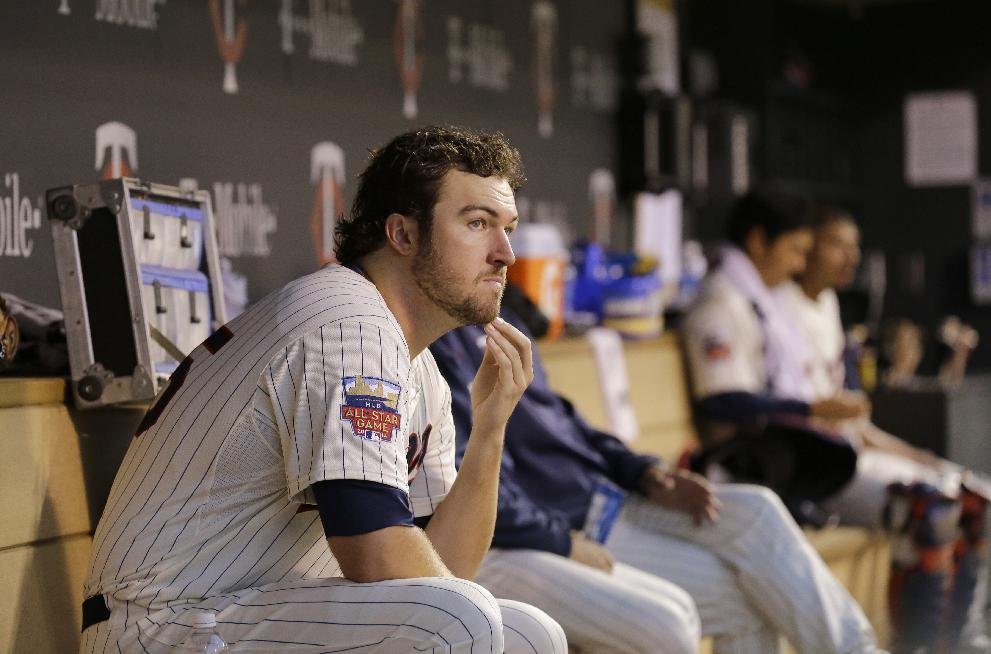
Phil Hughes

This is the final day of the regular baseball season, and an appropriate time to salute a major league player who placed principle over cash….even if I disagree with him

Phil Hughes was a bargain pick-up during the off-season for the Twins, a failed pitching phenom for the Yankees widely viewed to be on a fast slope to oblivion. He surprised everyone with a wonderful season for the otherwise woeful Minnesota team this season, potentially setting the all-time strikeout-to-walk ratio record, and began his final start of the campaign needing to throw eight and a third innings to reach 210 and trigger a $500,000 bonus in his contract.He would have made it, too, pitching eight dominant innings against the Diamondbacks and allowing just one run.  Then there was a downpour, with Hughes needing one more out to get the  extra $500,000.

After more than an hour’s rain delay, the game was resumed, but as is the practice in baseball, Hughes did not return to pitch: too long a delay, his arm too cold, too much risk of injury, especially after throwing so many pitches.  Hughes accepted the bad luck without complaint or rancor, saying that “some things aren’t meant to be.” Continue reading