Workplace Ethics: 62 Things That Are Legal, But 22 Of Them Are Unethical

"Oh, sure, he's hell to work for, but he never breaks any laws, so you'll be fine."

“Oh, sure, he’s hell to work for, but he never breaks any laws, so you’ll be fine.”

I have been remiss in not adding the terrific blog Evil HR Lady to the Ethics Alarms links, and will finally do so as soon as I post this entry. No profession deal s with ethical nuances and dilemmas more frequently than human resources professionals, and they can be very difficult, even gut-wrenching. In a recent post, EHRL searched through the archives of questions she has answered over the past years, and compiled an eye-opening list, especially for non-lawyers, of the conduct employers could engage in legally, which is to say, get away with and not be successfully sued, to employees, together with some questionable kinds of conduct that are legal for employees to do to each other.

She listed 62 of them, many of which are reasonable ( it’s okay to fire an employee for “being a jerk”) and some are obvious, or should be;  it is legal to quote the Bible in the office, for example. What is legal is not always good, fair, or right, however, and I perused the list with an eye out for legal workplace conduct that was legal but still unethical. About a third of the types of conduct on the Evil HR Lady’s list made mine. What follows is the sub-list of the 62 things it is legal to do at work, the 22 things it may be legal to do at work, but which are still unethical. The reasons for my unethical verdict follow Evil HR Lady’s items.

Here’s the list of the unethical 22 workplace practices: Continue reading

Thanks, Lenddo, For A Brave, New…Crummy…World

I hate you, Jeff, and I hate your friends.

I hate you, Jeff, and I hate your friends.

Some ideas that brilliant young people have in the technology field should have remained unthought, and if thought, promptly rejected on the grounds that however clever and profitable, they will make the world a crummier place. This is one of those ideas:

From CNN Money we learn that Lenddo, a new financial lending companies (apparently none of the brilliant young people work in the marketing department—Lenddo???)  has figured out that one’s Facebook friends, and how friendly you are with them,  are a revealing indicator of your credit worthiness. If one of those FB friends is late paying back a loan to Lenddo, their data indicates that it means you are more of a credit risk than if that friend was right on time. Not only that, if the delinquent friend is someone you frequently interact with on the social network, it means you are even more likely to be a deadbeat.

“It turns out humans are really good at knowing who is trustworthy and reliable in their community,” happily crows Jeff Stewart, a co-founder and CEO of Lenddo. “What’s new is that we’re now able to measure through massive computing power.”  Fascinating, Jeff!

You suck. Continue reading

Racism, the Media, and Reverend Wright Distortions

He’s b-a-a-a-a-a-c-k! (Sort of….)

This has been happening to me a lot lately. I see a political story with ethical implications, and decide to pass. I think, “Nah, this is another ‘the news media is in the tank for Obama story”—it’s pretty obvious; I don’t need to go there.” Then the story starts to churn, the news media, left and right, distorts it thoroughly through spin and stupidity, and pretty soon I can’t stand it any more.

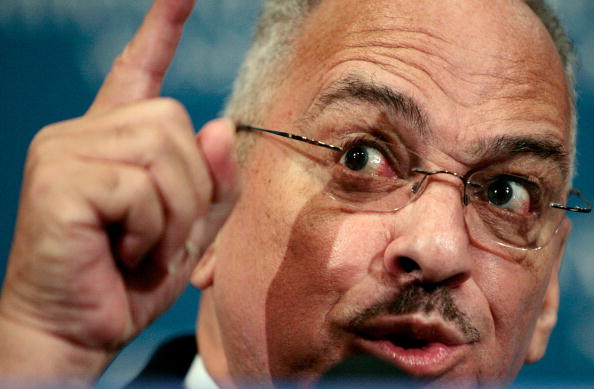
The controversy over a proposed, and rejected, Super-Pac ad blitz focusing on the President’s controversial relationship with Rev. Jeremiah Wright—demagogue, radical, racist—began when a leaked copy of a proposal prepared for conservative billionaire Joe Ricketts was leaked to the New York Times. The Times’ decision to put the proposal on its front page was sadly typical, and irresponsible. We don’t what wacky proposals circulate in the back rooms of both parties and their allies, and I don’t see why we would want to know, unless, as in this case, the objective was to suggest a series of things that aren’t true. Prime among them was that the Romney campaign was preparing to mount a full-bore attack on the President’s character. Nothing has suggested that, except the Times, whose story forced the presumed GOP nominee to apologize for a mode of attack 1) he had nothing to do with and 2) had never been approved anyway.

This was unfair, slanted and biased conduct by the Times, and the point at which I decided, “Oh, heck, we’ll be seeing the Times and the Washington Post, not to mention the broadcast media, pulling this until November. People either will recognize it for the partisan bias  it is, or they won’t.”

Then came Carol Costello on a typical morning for CNN, when she or the regular morning host Soledad O’Brien spend every AM sneering at Republicans and looking at the camera all dewy-eyed whenever President Obama’s name comes up. Costello, who I have concluded sets my teeth on edge even worse than the smug O’Brien, began her day with this: “Today’s question: Will racial politics work in 2012?” Continue reading

The Girl Scouts, the Loyal Wife, and “Wisconsin Sickness”

Just what I want to see on my daughter's Girl Scout troop leader's husband's website! And you?

The Girl Scouts have been going through a strange period lately. There was the controversy over a transgender troop member, a boy who identified as a girl.  Then it was revealed that the organization’s literature was promoting Media Matters as a means of civic education.  This, however, takes the cake.

Stacy Hintz, a 28-year-old mother from West Bend, Wisconsin,was removed from her volunteer position as a Girl Scout troop leader because of her husband’s website. The site is called Wisconsin Sickness, is slick, professional, unique, and 100% batty. Here is its introduction:

“Whatever the reason, there is a deep and passionate psychosis that runs through the unstable synapses of those of us from Wisconsin, land of serial killers and cannibals. And we’re proud of it. Wisconsin Sickness, a Mental Shed project, is all about bringing the independent, underground Wisconsin scene together and spreading the sickness like a virus.”

And really, that’s nothing: wait until you see the site, which, among other things, celebrates Ed Gein, the serial killer/cannibal/necrophiliac whose horrific crimes and, uh, interior decorating style inspired “Psycho,” “The Texas Chain Saw Massacre,” and dozens of lesser horror films. Continue reading

Unethical Quote of the Week: WSJ Blogger James Taranto

This werewolf attack on Nazi soldiers doesn't weaken the case that Sen. Kerry didn't deserve his medals.

Alternate title:  “Smearing John Kerry”, Part II. The quote:

“The Swift Boat Veterans for Truth disputed whether John Kerry deserved some of his five medals. A large part of Kerry’s defense was an appeal to the authority of veterans who supported him–one of whom has now been revealed to have received a medal he doesn’t deserve. This doesn’t prove the Kerry detractors were right, but it certainly doesn’t weaken their case.”

—James Taranto, the usually astute and witty author of the conservative Wall Street Journal blog, “Best of the Web.” He is referring to the child porn conviction and retraction of the Silver Star of  Wade Sanders, who rose to Sen. Kerry’s defense during his 2004 race against President Bush, when The Swiftboat Veterans for Truth claimed that Kerry had lied about his war record.

A pure slime-job, this…well beneath Taranto’s standards, though he does dip low now and then, and as reprehensible an example of attack by unfair innuendo as you are likely to find, from McCarthy to Olbermann to Beck.

“It certainly doesn’t weaken their case.” No, because it has absolutely nothing to do with their case (which was weak and unfair to begin with), and since Taranto is undoubtedly smart enough to know that, this sentence, and the post containing it, was only written to suggest otherwise. Let’s see…what else “doesn’t weaken” the case of those who claim that the honors bestowed on Kerry for wartime valor by the United States of America were undeserved? Hmmm. We have… Continue reading

Smearing John Kerry

Quick---Who is this man, and why should his problems be news?

Guilt by association isn’t always an unethical suggestion. If all of your closest companions are members of the Mafia, I think it’s fair for me to question your values and taste in friends, if not to assume that you might leave a horse head in my bed. More often than not, however, guilt by association is unethically used for character assassination by applying the unfair presumption that an adversary’s associates’ misdeeds can reasonably be attributed to the adversary as well.

You will seldom see as pure and despicable an example of this than the current effort by some on the political Right to smear Sen. John Kerry based on recent revelations about Wade Sanders, like Kerry a Silver Star awardee, who introduced the Massachusetts Senator at the 2004 Democratic Convention.  Sanders knew Kerry when they both were Swiftboat commanders in Vietnam, and  when the Swiftboat Veterans for Truth questioned the legitimacy of Kerry’s record of heroism during that war in their infamous series of attack ads, Sanders led the counterattack. Now Wade Sanders is in Federal prison, serving a 37-month sentence for possessing child pornography, and the Navy Times reports that Secretary of the Navy has revoked Sanders’ Silver Star due to “subsequently determined facts and evidence surrounding both the incident for which the award was made and the processing of the award itself.”

What does any of this tell us about John Kerry? Absolutely nothing. Continue reading

Hall of Fame Ethics: The Jeff Bagwell Dilemma

Members of the Baseball Writers Association of America have been turning in their ballots for the Hall of Fame, their collective totals eventually determining which retired major league baseball stars will have plaques in Cooperstown. If you follow baseball closely, you are aware of the big debates this year: Is Tim Raines worthy? Will Bert Blyleven finally make it? Has Alan Trammel been unfairly neglected? What about Jack Morris and Roberto Alomar? If you don’t follow baseball, you couldn’t care less, and I pity you. One controversy this year, however, should be of interest to non-fans as well as fans, because it involves the proper application of the ethical principles of fairness and equity in an environment of doubt. It is the Jeff Bagwell dilemma. Continue reading