Ethics Observations On The Brooklyn Police Shootings

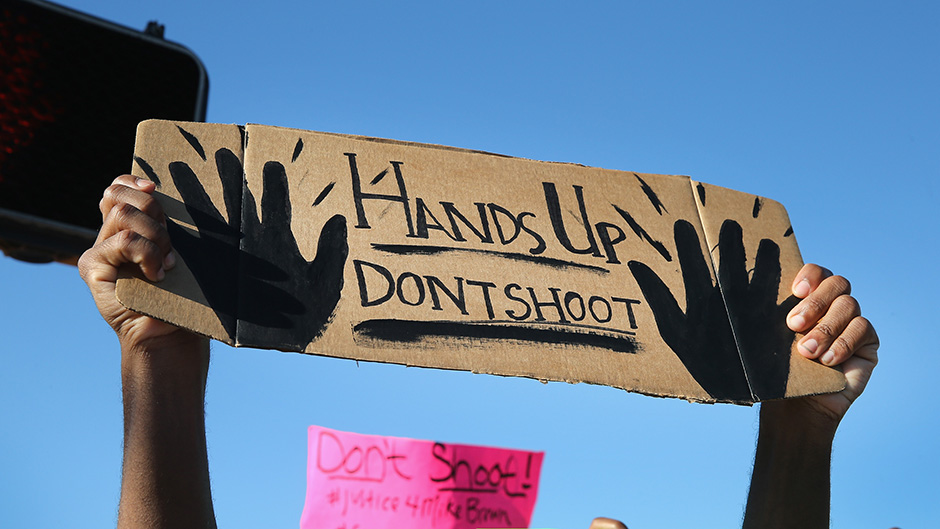
Hands up

Via Vox: Two Brooklyn police officers were shot and killed execution-style today by a lone shooter, an African American male named Ismaaiyl Brinsley, who had posted two messages on Instagram suggesting that he was putting “wings on pigs today” because “they take one of ours, we take two of them.”  The message was accompanied by hashtags referencing Eric Garner and Mike Brown. The shooter later killed himself, and had allegedly shot an ex-girlfriend as well.

Five Observations:

1. The dangerous escalation of rhetoric and the persistent  misrepresentation of facts by civil rights advocates, activists, journalists and pundits made this kind of episode nearly inevitable. You cannot flood the airwaves with constant references to “police shooting unarmed black men” as if there was an organized racist liquidation of blacks by police in the streets and not risk sparking violence from the hysterical, the deranged, the angry, the lawless and the desperate.

2. The irresponsible “hands up” protests did not cause these deaths, but they probably helped create the conditions that led to them. The shootings of the  two NYPD police don’t make the false “hands up” lie—which continues to assert that Michael Brown was executed when the evidence indicates he was not, and that there was racial bias involved, when there is no evidence of this at all—any more unethical, reckless or irresponsible than it already was. It was wrong from the beginning. It was wrong to assert these things before what happened in Ferguson had been investigated, and it was wrong to keep asserting them after it was clear that they were unsubstantiated or false. It is still wrong. It is still dangerous. Continue reading

The Michel Martin Question I Didn’t Answer This Morning, and More On The Bill Cosby Scandal

On pointIn the segment on “Beverly Johnson And The Bill Cosby Scandal” I just completed for NPR’s “On Point” program, out of Boston with the magnificent Michel Martin hosting, I emulated the Sunday morning talk show guests I so revile for answering questions by making their own points that have little or no relevance to what was asked. Michel asked me, as the time left in the hour-long program was ticking down, what ethical obligations consumers—that is, the audience for his concerts, TV shows and albums—have regarding Cosby, in light of the rape allegations against him.

I was still stunned by the comments made by three callers, encompassing several ethically confused assertions that you know I would find annoying:

  • That the victims should not be coming forward so late;
  • That Cosby is “innocent until proven guilty” (GRRRRR…);
  • That it’s “easy” for women to make unsubstantiated allegations against celebrities, and
  • That there is a parallel between the allegations against Cosby and the Rolling Stone campus rape story.

That last one especially had my head threatening to explode, which would not be good for my relationship with NPR, so I think I can be forgiven for missing Michel’s query. Yes, the UVA rape allegation is exactly like the Cosby scandal, other than the fact that the accusers in Cosby’s case have come forward publicly while “Jackie” has not; that its two dozen (so far) alleged victims for Cosby and one in the UVA case; that one situation is a classic example of abuse of power, wealth and influence and the other is not; that Cosby settled one claim rather than air the allegations in a court of law; and that virtually every part of “Jackie” claim has failed to hold  up under scrutiny and investigation, whereas Cosby, the one individual who could offer evidence to counter the allegations against him, has done nothing but have spokesmen and lawyers issue blanket protests and denials.

Yup. Identical.

My answer to Michel should have been this:

“It’s up to Cosby fans, If they still can still laugh and cheer at Cosby’s nice guy schtick and “America’s Dad” persona knowing that he’s a serial rapist, fine: laughter is good, get it where you can. Personally, I can’t laugh at someone whom I know has engaged in horrific acts, hurt women who admired and trusted them, and by his own conduct left another cultural hero lying face-down in the mud. I can’t forgive it, I can’t get past it, and I’m certainly not going to keep laughing. this is no different from the NFL fans who keep wearing Ray Rice jerseys, or for that matter, Democratic women who continue to swoon over Bill Clinton. If they do, they either:

  • Can’t get over their cognitive dissonance, and at some level refuse to believe what cannot be rationally denied, or…
  • Don’t think the conduct involved—punching women, exploiting women, raping women—is worth getting upset about, or…
  • Buy the absurd personal/public dichotomy, and can still cheer wife-beatering athletes, star-struck intern-exploiting leaders, and raping comedians.

All of these are sad and impossible to justify, but they are common. Does the continued support of a Cosby ratify his conduct? Not in the eyes of his undeterred fans, but in the culture? Of course it does. If Bill Cosby’s career escapes relatively unscathed by this, and he is not held accountable by society, the verdict of the culture will be a particularly extreme version of The King’s Pass: if you are rich enough, powerful enough and seen as contributing enough to society, then you will be held to a lower standard, and can get away with, if not murder, serial rape.”

Continue reading

Scheduling Note: Cosby, Michel Martin, NPR, and Me

Beverly Johnson

Beverly Johnson

Beverly Johnson, the super-model whose Vanity Fair article about being drugged by Bill Cosby decades ago when she was summoned for an “audition,” will be a guest on the Boston NPR station, WBUR, as former “Tell Me More” host Michel Martin stands in. After Johnson, a panel will discuss various issues legal, ethical and cultural about the Cosby allegations, and I’m on it, along with Renee Graham, music and pop culture critic for NPR’s Here & Now. Op-ed contributor at the Boston Globe, and Debra Katz, partner at the law firm Katz, Marshall and Banks. You can catch up on some of the ethical implications of the Cosby mess here, and some more details about the show here. If you can get the show on the radio or web, you’ll hear it at 10 AM, E.S.T.,  this morning.
Continue reading

Unethical (and Cynical) Donation Of The Year: The St. Louis Rams’ Forgiveness Bribe To The Backstoppers

"Agreed, then: you can call us racist murderers, as long as you keep the donations coming...."

“Agreed, then: you can call us racist murderers, as long as you keep the donations coming….”

Let us be undiplomaticly clear about what the five St. Louis Rams players did when they came onto the field at the start of a Monday Night Football games with their hands in the air like the fictional, idealized, sanitized, imaginary and politically useful version of Michael Brown—you know: the angelic young college-bound African-American male who did nothing whatsoever to cause the circumstances of his own death.

The players were saying, on national television, with millions of people watching, that Officer Darren Wilson executed Mike Brown in cold blood; that the St. Louis police do such things, want to do such things, and will do such things, because they routinely target young black men for harm; and that police generally, around the nation, are virulent racists. That’s what the gesture meant, and that is what it was devised to convey. Continue reading

The Rams’ “Hands Up!” Gesture: Of Course The Players Deserved be Disciplined

rams protest 1201

The five St. Louis Rams who entered their NFL game last week with their hands up aren’t going to be disciplined by the league, for reasons that have nothing to do with the appropriateness of their conduct. The NFL is up to its faceguards in bad public relations already, and understandably wants to avoid wading into the Ferguson quagmire and being perceived to be taking sides, a move with no up-sides at all. Sportswriter Sally Jenkins also took issue with the St. Louis police demanding that the players be punished, in an emotional statement that seemed to threaten vague consequences if they were not. She was right to point out that government entities may not use threats of non-performance of their duties to members of the public in order to control their speech, like, say, the Federal government is doing now to try to force Dan Snyder to change the name of his Washington, D.C. NFL team.

Jenkins’ conclusion, however, was an ethics mess:

“Five members of the St. Louis Rams made an edgy gesture on Sunday, and you may not agree with them. But they merely joined a long tradition of athletes using their celebrity for symbolic public protest, and the NFL was right to reject the call to punish them. Punish them for what, after all? For showing an alertness and sensitivity to current events in their community, and holding an opinion on them?”

1. The “long tradition” argument is “everybody does it,” and nothing better. Professional athletes are paid to play games and entertain. Few of them have any qualifications or expertise that elevate the value of their opinions on public policy and politics above that of the regulate citizens watching them, and it is an abuse of their position and an exploitation of the venue for any athlete to exploit both to make a personal statement. Earlier, Jenkins says that to punish the Rams players “would also smack of 1968, when Tommie Smith and John Carlos were expelled from the Olympic Games for their black-gloved salutes,” as if that’s an argument. Smith and Carlos should have been expelled. The Olympics wasn’t theirs to co-opt for national political statements, no matter how valid or worthy. The Rmas players can hold opinions, and nobody is saying otherwise. Once they are in uniform and on the field, however, their opinions are not for display. They don’t own the forum. Continue reading