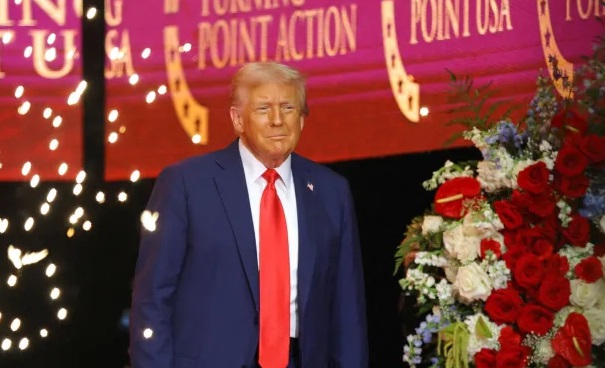
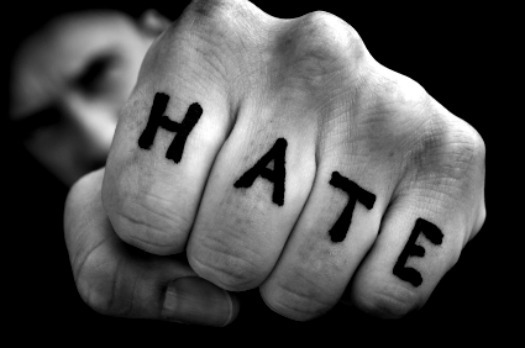
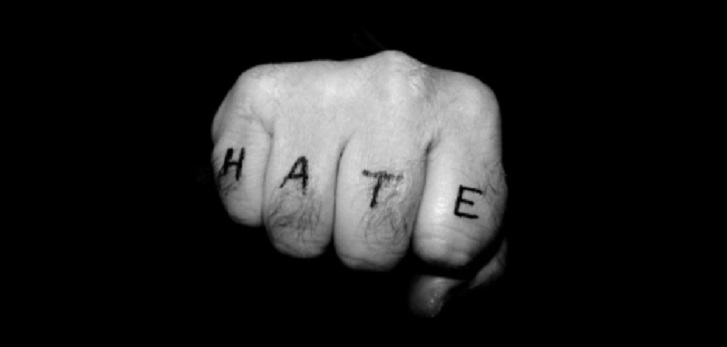
“He did not hate his opponents. He wanted the best for them. That’s where I disagreed with Charlie. I hate my opponent and I don’t want the best for them.”
President Trump, in his eulogy for assassinated conservative activist Charley Kirk at the massive memorial service in Phoenix
Can a quote be both ethical and unethical at the same time? You have to hand it to Donald Trump: his statement above at the Kirk memorial service had progressive heads exploding all over the map, and some conservative heads too. It was a genuinely provocative line, rich with contradictory meanings and implications. Did the President intend it that way? Who knows? They will be arguing about Trump’s brain in history and psychology tomes for a hundred years. I find myself hearing Wilford Brimley’s voice echoing through my brain in his iconic scene from “Absence of Malice”: “Mr. Gallagher, are you that smart?” Except in this case, it’s “Mr. Trump.”
Of course the line triggered the Trump-Deranged into self-identification, as with this guy…
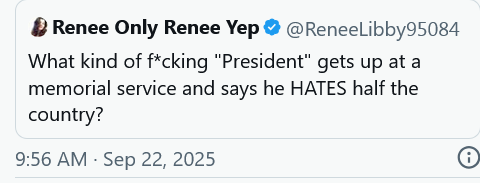 But Trump didn’t say he hated half the country. Now Joe Biden came a lot closer to doing that when he accused Republicans of being fascists who are existential threats to democracy, though it was in a national speech to the nation not a memorial service. (I think that’s worse, myself.) We can’t be sure whom Trump regards as his “opponent.” Those who want him dead, as about a quarter of all Democrats according to one poll? Those who tried to impeach him twice and put him in prison using contrived prosecutions? Those who call him Hitler? The journalists and pundits who have been lying about him since he was elected in 2016 and before? Continue reading

 Ethics Alarms