Ethics Quote Of The Week: Matthew McConaughey

Matthew-McConaughey

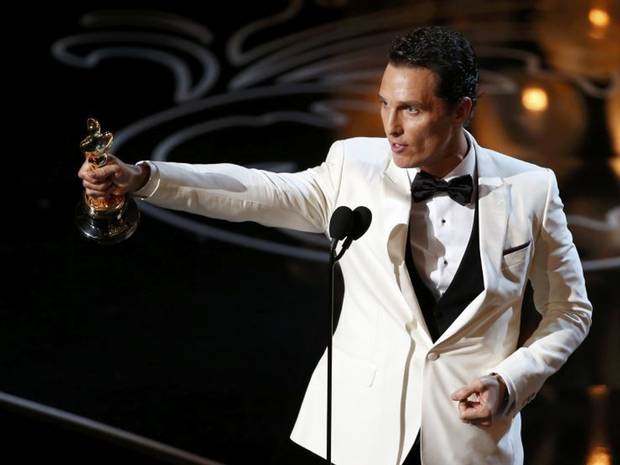
It happens but rarely: an Oscar acceptance speech with something of substance to communicate, other than a list of thank-yous. Yet last night was one of those rare occasions, as actor Matthew McConaughey used his well-deserved award for Best Actor to express his views on how to lead an ethical life:

Here is the text of his speech—much thanks to reader Phil Kraemer, who located it:

Thank you. Thank you, thank you, thank you, thank you to the Academy for this—all 6,000 members. Thank you to the other nominees. All these performances were impeccable in my opinion. I didn’t see a false note anywhere. I want to thank Jean-Marc Vallée, our director. Want to thank Jared Leto, Jennifer Garner, who I worked with daily.

There’s a few things, about three things to my account that I need each day. One of them is something to look up to, another is something to look forward to, and another is someone to chase. Now, first off, I want to thank God. ‘Cause that’s who I look up to. He has graced my life with opportunities that I know are not of my hand or any other human hand. He has shown me that it’s a scientific fact that gratitude reciprocates. In the words of the late Charlie Laughton, who said, “When you’ve got God, you got a friend. And that friend is you.”

To my family, that who and what I look forward to. To my father who, I know he’s up there right now with a big pot of gumbo. He’s got a lemon meringue pie over there. He’s probably in his underwear. And he’s got a cold can of Miller Lite and he’s dancing right now. To you, Dad, you taught me what it means to be a man. To my mother who’s here tonight, who taught me and my two older brothers… demanded that we respect ourselves. And what we in turn learned was that we were then better able to respect others. Thank you for that, Mama. To my wife, Camila, and my kids Levi, Vida and Mr. Stone, the courage and significance you give me every day I go out the door is unparalleled. You are the four people in my life that I want to make the most proud of me. Thank you.

And to my hero. That’s who I chase. Now when I was 15 years old, I had a very important person in my life come to me and say “who’s your hero?” And I said, “I don’t know, I gotta think about that. Give me a couple of weeks.” I come back two weeks later, this person comes up and says “who’s your hero?” I said, “I thought about it. You know who it is? It’s me in 10 years.” So I turned 25. Ten years later, that same person comes to me and says, “So, are you a hero?” And I was like, “not even close. No, no, no.” She said, “Why?” I said, “Because my hero’s me at 35.” So you see every day, every week, every month and every year of my life, my hero’s always 10 years away. I’m never gonna be my hero. I’m not gonna attain that. I know I’m not, and that’s just fine with me because that keeps me with somebody to keep on chasing.

So, to any of us, whatever those things are, whatever it is we look up to, whatever it is we look forward to, and whoever it is we’re chasing, to that I say, “Amen.” To that I say, “Alright, alright, alright.” To that I say “just keep living.” Thank you.

You have to wonder about the various tweeters and pundits who objected to McConaughey’s candor about his inner compass as “bizarre” (Time) or egomaniacal (several). Yes, by nature and necessity actors are unusually self-absorbed; the latter complaint is akin to faulting a dog show winner as inarticulate. What was admirable and inspiring about  McConaughey’s speech was his exuberant explanation of how his personal hero is always who he will be in the next ten years.

I doubt that this is an original formula, but I have never heard it before, and it is the essence of ethics: we strive to keep learning, getting better, and aspiring to be the best people we can be, or life is pointless. Ironically, this was also the lesson of “Groundhog Day,” the comedy masterpiece of the late writer-director Harold Ramis, whose name and career were evoked more than one during the Academy Awards broadcast. Having other people as heroes doesn’t accomplish much, unless we aspire to and learn from their values and conduct, and eventually  capable of similar heroism ourselves.

As for all those who are criticizing the actor for his religious sentiments: back off. Religion has played a major role in minting some good and remarkable human beings, and McConaughey seems to be one of them. If he chooses to thank God in his moment of exhilaration and triumph, that should be beyond reproach.

Ethics Quiz: Awarding An Accused Rapist The Heisman Trophy

jameis2Heisman Trophy winner Jameis Winston was cool, collected and funny delivering the “Top Ten” on David Letterman last night, but to me, the hijinks seemed out of sync with reality, fairness and justice somehow.

The 19 year-old-Florida State University star quarterback became the youngest Heisman Trophy winner ever when he was named college football’s most outstanding player Saturday night in New York. He is also the youngest accused rapist to be awarded the Heisman.

That award  symbolizes football’s ongoing ethics problem. The pro game’s brutal, uber-macho and “the ends justify the means” culture that has players maiming each other as the crowd cheers and multiple felons on the field in most games has reached into the lower reaches of football, with both colleges and high schools breeding arrogant, entitled jerks who get special treatment through their pampered academic careers and too often emerge from from the football machine as polished sociopaths. The Penn State horror story was a symptom of this. Is Winston’s award another?

It hasn’t been featured in many of the exultant stories about the Heisman winner, but a year ago, on December 7, he was accused of rape by an FSU co-ed. Last week the prosecutors—just in time for the Heisman!—declared that they had not found enough evidence to convict him, which means that they did not have enough evidence to ethically prosecute him. The accuser’s attorney, Patricia Carroll, immediately condemned the decision and the  investigation that led to it, detailing multiple irregularities in the the handling of evidence and testimony. Writes Slate’s legal reporter Emily Bazelon: Continue reading

Scott Carpenter And Being Unfair To #2

scott-carpenter

Scott Carpenter died last week, at the age of 88. Did you notice? Did you even remember who Scott Carpenter was?

I remember who he was and what he did, but I didn’t know that he had died. The world stops when the actor who played Tony Soprano dies, but an aged American hero and explorer? The news media says “Meh.” If Carpenter was still famous or a celebrity at all, it was only in the vague, foggy sense that obscure rock artists from the 60’s and expired pop icons are famous. I think Tony Dow, Barbara Feldon and Mama Cass are about as familiar to today’s public as Scott Carpenter, if not more. I just asked my son, who is 18 and better schooled in history and culture than most of his contemporaries. He knew Mama Cass was a member of the Mamas and the Pappas. The rest? Crickets.

Yet Scott Carpenter was, unlike those people, important. He was  one of the original Mercury astronauts, and in 1961, he orbited the Earth. After he left NASA he became a different kind of explorer, challenging “inner space,” the ocean’s mysterious depths. He launched an undersea habitation called Sealab II, where he and three other men conducted experiments on how well humans  function in a high-pressure undersea conditions for extended periods. Carpenter was a deep-water pioneer, mining on the sea bottom and harvesting exotic fish and other sea creatures. He salvaged and refloated a sunken jet fighter; he built an undersea petroleum-exploration platform.

Scott Carpenter, however, wasn’t famous by the time he died, because one of his fellow astronauts and good friends, John Glenn, orbited the Earth before him. Glenn went on to become a U.S. Senator based on his fame and heroic reputation (it helped that he was a combat pilot and decorated military hero as well). Carpenter did something important, dangerous, selfless, difficult and heroic, but he did it second, after John Glenn. We don’t remember second, and the distance between the accolades and honors heaped on #1 and the shrugs that follow #2 is disproportionate and unfair. Continue reading

Your National Hispanic Heritage Month Assignment: Remember The Amazing Elfago Baca (February 10, 1865 – August 27, 1945)

Baca statue

As frequent readers of Ethics Alarms know, I fervently believe that history is important, and that we all have a duty to remember and honor the remarkable Americans who have gone before us, their exploits, triumphs, struggles and achievements, both for our sakes—for we can learn much from them—and theirs. I am constantly discouraged by the inspirational stories and fascinating historical figures who have nearly been forgotten. The schools don’t teach our children about them, and popular culture ignores them. This weakens the flavor and the power of our shared culture: it is wrong, that’s all.

Today, as I realized we were in the midst of National Hispanic Heritage Month ( September 15-October 15), I want to do my part to help keep alive the name and the story of a Mexican-American who may have faded from memory because the events of his life seem more fictional than real. Indeed, for most of my life, until a couple of years ago, I thought Elfago Baca was a creation of Walt Disney’s creative staff, who wrote a ten episode mini-series about him called “The Nine Lives of Elfago Baca” for the “Disneyland” show (“Now…from Frontierland!”) in 1958. I loved that series, but it never occurred to me that the series’ tales of a gunslinging, lawyer-sheriff in Old New Mexico could possibly have any connection to reality.

But they did. The real Elfago was, if anything, even more improbable than his fictionalized counterpart, portrayed by a very young and athletic Robert Loggia, who is best known as the toy magnate who plays “Chopsticks” on the giant keyboard with Tom Hanks in “Big.” Continue reading

Comment of the Day: “Ethics Hero Emeritus: Henri Salmide, 1919-2010”

Henri Salmide

Henri Salmide, Hero: Unknown in the US, and only barely recognized in Germany or France. Greatly appreciated on Ethics Alarms, however.

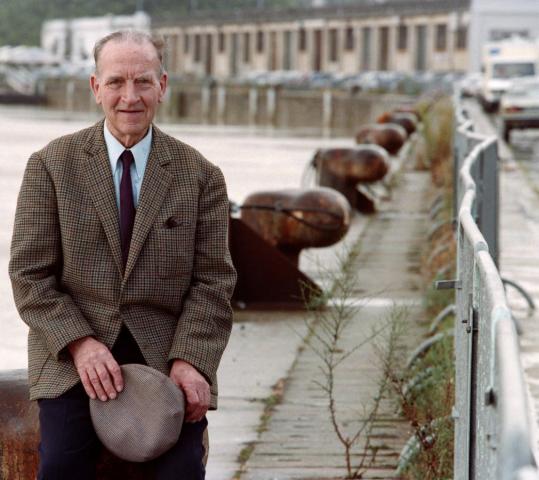
German visitor Reinhard Gross sent me a useful clarification on the 2010 Ethics Alarms tribute to Henri Salmide, who as a German soldier in World War II saved the French port of Bordeaux by defying orders to blow it up and blowing up his German superiors instead. You can read the post on Salmide, an Ethics Hero Emeritus, here, and his New York Times obituary here. It’s an inspiring story, and if you are not familiar with Salmide, you should be.

Salmide lived the rest of his life as a French citizen in Bordeaux, and until late in life was seldom noted for his heroic act in France, so strong was the bias against him as a former German soldier. I asked Reinhard what the attitude in Germany was toward Salmide, and his Comment of the Day was the response. It also provides some insight on the the long and painful process the German culture must work through, as the German people come to terms with the dark Nazi period, when their society and its values were so horribly warped, with such tragic consequences for Germany and the world.

Here is Reinhold Gross’s Comment of the Day on the post Ethics Hero Emeritus: Henri Salmide, 1919-2010…and I thank him for reminding me of Henri Salmide’s courageous and ethical act: Continue reading

The Ethics of Cheering Alex Rodriguez

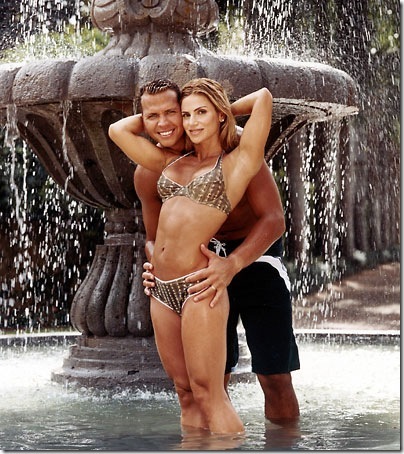
Poor Alex Rodriguez and his wife...

Poor, downtrodden, Alex Rodriguez and his wife…

Baseball’s most embarrassing super-star, the steroid cheat Alex Rodriguez, in playing for the New York Yankees while appealing his long suspension by Major League baseball. As he is unquestionably a repeat liar and a serial violator of the game’s rules against PED’s (performance enhancing drugs), as he signed a contract, in part generated by the results of his cheating, that will both enrich him by millions and handicap his team competitively while conferring few, if any benefits, as he would qualify, by most objective standards, as the antithesis of a sports hero, the fact that Arod, as he is called, still was cheered by a vocal minority in Yankee Stadium when he made his season debut this week is intriguing. What does this mean? Can it be ethical to cheer Rodriquez now?

These are deceptively complex and difficult questions. The threshold  issue is whether cheering or jeering any sports figure, or any public figure at all, is an act with ethical content rather than just a communication of an opinion. Is it conduct, or just “words”? I think, in the context of the Rodriquez situation, a sound argument can be made that it is conduct. Registering group approval or disapproval of prominent conduct by someone of status and influence is a crucial societal function in setting standards, registering disapproval, and prompting shame, regret, apology and reform—none of which, so far at least, seem to register with Arod.

That is pretty clearly what the boos convey, but what about the cheers? If the boos are ethical—they are if the disapproval is proportionate, rational, fair, and just—then are the cheers automatically unethical? Not necessarily. Here are some of the things those cheers could be expressing: Continue reading

Ryan Braun’s Unethical Apology

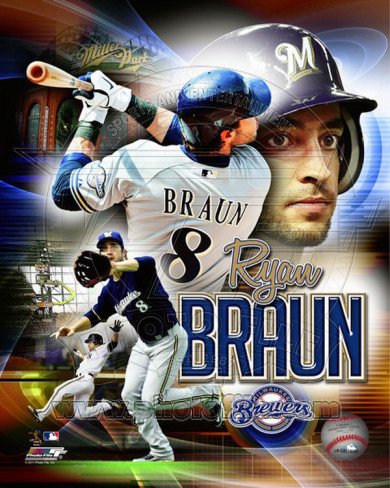
ryan-braun-2011Ryan Braun, the Milwaukee Brewers star who has just accepted MLB’s decision to suspend him without pay for the remainder of the 2013 season for violating baseball’s anti-drug policies, issued the kind of public statement that helps us understand why the athlete thought using banned substances to improve his performance was acceptable. It is the statement of someone’s whose ethical instincts are not merely underdeveloped, but malfunctioning on an epic scale.

Braun released this mea culpa in the wake of the announcement of his disgrace, which also pretty much ends the already faint chances of his team for a successful season:

“As I have acknowledged in the past, I am not perfect. I realize now that I have made some mistakes. I am willing to accept the consequences of those actions. “This situation has taken a toll on me and my entire family, and it is has been a distraction to my teammates and the Brewers organization. I am very grateful for the support I have received from players, ownership and the fans in Milwaukee and around the country. Finally, I wish to apologize to anyone I may have disappointed – all of the baseball fans especially those in Milwaukee, the great Brewers organization, and my teammates. I am glad to have this matter behind me once and for all, and I cannot wait to get back to the game I love.”

This is about what one would expect from a guy who avoided being busted for steroids by the skin of his teeth two years ago on a technicality, and reacted by not only playing the martyr, but also by impugning the character of the man who handled his incriminating urine sample. Let’s look at this non-apology apology’s various and nauseating features. As usual, my comments are in bold : Continue reading

Ethics and “Casey At The Bat”

casey-at-the-bat-1888-granger

Today is the 125th anniversary of the publication of “Casey at the Bat,” arguably the most popular and famous of American poems, the creation of humorist Ernest L. Thayer in 1888.

The poem carries many  lessons relevant to ethics and life within its tale of the hometown hero who fails spectacularly just when heroics are most needed and anticipated, such as…

  • Don’t promise what you cannot be sure of delivering.
  • Good faith failure isn’t unethical, a sin or a crime, but it still carries with it the need for someone to accept responsibility for it.
  • The focus of disaster is always on the last individual who might have prevented it, but that is neither fair nor logical. The Mudville Nine lost the game, not Casey.
  • Expecting miracles, last-minute rescues, heroic intervention and infallible rescuers is foolish and irresponsible.
  • Respect your adversaries, for your own sake as well as theirs.
  • “Pride goeth before a fall.”

Today, however, I am struck by how neatly the poem reminds us that in baseball there is no spin, no rock to hide under and no Fifth Amendment to claim. When a player fails, or makes a mistake, or misbehaves, it is usually all out on the field, watched in person by thousands, seen on TV by millions, and recorded forever. There is usually no way to deny or hide responsibility, and indeed part of the professionalism of baseball is accepting that, facing the media and the public, and saying, “That was on me. I failed. I’ll do better next time.”

Most of the time, that’s all the crowd asks after failure. Honesty and accountability.

As long as Casey doesn’t keep striking out, that is.

Here’s the poem, recited by the now-forgotten Bob Hope sidekick Jerry Colonna, he of the rolling eyes:

________________________________________

Spark: Craig Calcaterra

Graphic: Fine Art America

Of Hero Ethics, Credit, Fame, And Angel Cordero

Angel Cordero, unsung hero. And in good company.

Angel Cordero, unsung hero. And in good company.

Apparently a Cleveland man named Angel Cordero is every bit as deserving of accolades in the rescue of the three kidnapping victims of Ariel Castro [of alleged kidnapper and rapist Ariel Castro, that is. Reflect on this case the next time someone puffs themselves up to reprimand you for a missing “alleged” and lectures you about how the accused are “innocent until proven guilty.” Yes, we know—and that means we can’t lock them up and throw away the key until they have had a fair trial and been officially proven guilty beyond a reasonable doubt in the judgment of a jury. It does not mean,  in a situation where there is literally no possible interpretation of the facts that would not end with the conclusion that the man who owns the house where three women have been kept prisoner for ten years and who have told interviewers that he beat them, starved them and raped them, that to state the obvious is some kind of human rights violation. By the way, O.J. is guilty too.] as the more colorful, more publicized–and more ridiculed—Charles Ramsey.

I want Cordero to receive the credit and admiration he deserves. I don’t want him to feel bitter and unappreciated. If the media, public and popular culture is inclined to bestow its goodies on the heroes of this horrible story, I hope he gets his fair share. Still, I also hope that he would be sufficiently large of soul and solid of values to adopt the attitude that what is important is that the women were rescued, and not who gets credit for it, now or in the future. Continue reading

Charles Ramsey Is A Hero. Show Some Damn Respect.

Nice---he saves the women, and you mock him. Who's the real jerk here?

Nice—he saves the women, and they mock him. Who’s the real jerk here?

Charles Ramsey is a hero without qualification. He saw someone in peril and acted, kicking in his neighbor’s door to help a woman and a child who were strangers to him. This assertive and proactive conduct led to the rescue of three young women missing for a decade. Yet because Ramsey is unrepentantly expressive in the manner of his community and peer group, and is not the typical white, middle class American who tends to dominate the internet, videos of his account of the event, replete with colorful slang and vernacular and his own expressive flourishes, have become objects of mockery and ridicule on the web, with a nasty racist edge. He is now a viral meme, especially his signature quote about knowing something is wrong when “a little pretty white girl” runs into “a black man’s arms.”

Wrong. I love Ramsey, and love his open, clear, emotional, story-teller’s manner. He is articulate in the true spirit of the word—interesting, vivid, clear and genuine. John Kerry should communicate so well. Mitch McConnell should hire him as a coach. If Al Sharpton could convey such sincerity, we’d all be in trouble. Continue reading