Ethics Dunce: Safeway…Ethics Hero: Ryan Young. Justice? Waiting…

“You’re suspended, Kent.”

I’ve asked many times on Ethics Alarms why so many Americans stand by, inert and passive, when a fellow citizen is in peril.  Maybe the stunning ethics blindness exhibited by Safeway in a recent incident is part of the answer.

Ryan Young, who works in the meat department of a Safeway grocery store in Del Rey Oaks, California, was on the job when he witnessed a man beating a pregnant woman, apparently his girlfriend. Young told the man to stop, but he continued with his assault, shoving and kicking the her.  Young jumped over his counter, pushed him away, and ended the attack.

His reward was to be suspended without pay. Safeway has a policy that directs employees to summon security personnel and not to personally intervene when they see a crime or fight in progress. Even though police confirm that Young may have saved the woman and her unborn child from serious injury, the company is insisting that Young’s conduct warranted discipline, not praise. Continue reading

Happy 2012! Your New Year’s Ethics Quiz: “Firing Super-Clerk”

Last week, convenience store clerk Eric Henderson was confronted by two female robbers in Pensacola, Florida who demanded that he hand over the cash in his Circle K register.  Henderson  grabbed the gun pointed at him by one of the women, slammed her to the ground, and then chased the two into the street where they fled in a getaway car.

Henderson was promptly fired by Circle K  for violating a company policy that forbids heroics by employees in the middle of attempted robberies. Now Henderson has gone to the media, which is pointing out that he had been unemployed for two years (Occupy Circle K! But how long he had been out of work should have no bearing on the decision whether to to fire him) and that according to Henderson, the unarmed robber was urging her armed companion to shoot him. (Aside: Some of the news accounts also included this hilarious line: “The 30-year-old grabbed the gun pointed at him by one of the alleged robbers… Alleged robbers? Can we all agree that when there is an actual  gun to be grabbed, the term “alleged” is idiotic? What else is someone who points a gun at a convenience store clerk? A practical joker? Some one who wants to trade a Glock for Twinkies?)

Your New Year’s Day Ethics Quiz: Was Circle K right to fire Eric? Continue reading

Integrity, Politics, and Medal of Honor Ethics

The Medal of Honor

Rep. Duncan Hunter of California, a Marine veteran who sits on the House Armed Services Committee, is leading an effort to loosen the standards being applied to the awarding of the Medal of Honor for combat in Afghanistan and Iraq.  In an Oct. 4 letter to Defense Secretary Leon Panetta, Hunter argued that Medals of Honor are being denied in cases where they appear to be well-deserved and that the process of approving awards takes too long. He asked the Defense Department to conduct a review of hundreds of such cases. “Properly recognizing these actions through the awards process is not just important to the individuals involved, but it is also essential to upholding the tradition of the armed forces and inspiring others to step forward,” Hunter wrote.

Great: now we have an advocate for heroism inflation. Continue reading

Smearing John Kerry

Quick---Who is this man, and why should his problems be news?

Guilt by association isn’t always an unethical suggestion. If all of your closest companions are members of the Mafia, I think it’s fair for me to question your values and taste in friends, if not to assume that you might leave a horse head in my bed. More often than not, however, guilt by association is unethically used for character assassination by applying the unfair presumption that an adversary’s associates’ misdeeds can reasonably be attributed to the adversary as well.

You will seldom see as pure and despicable an example of this than the current effort by some on the political Right to smear Sen. John Kerry based on recent revelations about Wade Sanders, like Kerry a Silver Star awardee, who introduced the Massachusetts Senator at the 2004 Democratic Convention.  Sanders knew Kerry when they both were Swiftboat commanders in Vietnam, and  when the Swiftboat Veterans for Truth questioned the legitimacy of Kerry’s record of heroism during that war in their infamous series of attack ads, Sanders led the counterattack. Now Wade Sanders is in Federal prison, serving a 37-month sentence for possessing child pornography, and the Navy Times reports that Secretary of the Navy has revoked Sanders’ Silver Star due to “subsequently determined facts and evidence surrounding both the incident for which the award was made and the processing of the award itself.”

What does any of this tell us about John Kerry? Absolutely nothing. Continue reading

Remember Gettysburg

Today is July 1, which is being treated across the United States as the gateway to a long weekend and the Fourth of July, and little more. July 1 is also, however, the anniversary of the first day of the Battle of Gettysburg, the most important and most deadly battle of the many important and deadly conflicts in the American Civil War. The two American armies that clashed in the Pennsylvania town sustained more than 50,000 casualties on the Gettysburg battlefield, which may be the saddest and noblest place in America.

If you have not made at least one pilgrimage to the battlefield, you owe it to yourself, and to the memory of the combatants, to go. Continue reading

Ethics Quote of the Week: James W.Hudson

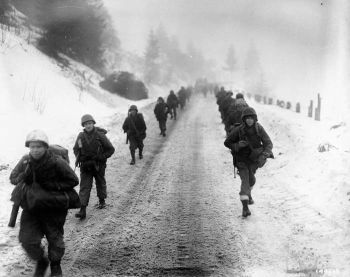
Who ARE those guys?

“Tell the world about your guy in the rocking chair who was once gung ho, climbing mountains and dodging a ruthless enemy bent on his torture and destruction. Climb on his knee yourself, if you must, but get his story.”

—-James W. Hudson, as quoted by the Washington Post in his obituary today. Hudson, 93, was an OSS operative during World War II who was dropped behind German lines to set up an intelligence network and disrupt supply networks.

James Hudson was one of those guys for sure. Continue reading

Flashback: “What Hugo Alfredo Tale-Yax Can Teach America”

The Late Hugo Alfredo Tale-Yax

[Not many people were checking in on Ethics Alarms when I wrote this post in response to yet another example of bystanders choosing to do nothing when a human being was in peril. Some of the comments to the Alameda post, those making excuses for the 75 faint-hearted or apathetic citizens in that city who would rather gawk at a tragedy than try to stop it,  caused me to recall the essay, which explores related issues.  I wrote it, but I had nearly forgotten about the story; when I re-read it today, I got upset all over again.Here, for the second time, is “What Hugo Alfredo Tale-Yax Can Teach America.”]

The one with the premium-grade ethics alarms bled to death on the sidewalk. The people who never had theirs installed at all took pictures. Is this the way it’s going to be? Continue reading

Maybe Lies Aren’t Protected Speech After All…

This week, in United States v. Robbins (W.D. Va.); a district court disagreed with previous court opinions this year holding that the Stolen Valor Act, which makes it a criminal act to falsely represent that one had been awarded a military honor for valor on the field of combat, was a violation of the First Amendment guarantee of free speech: Continue reading

Ethics Reality Check: Elizabeth Edwards Was No Hero

Elizabeth Edwards, the estranged wife of pariah John Edwards, lost her long battle with cancer last week. The columns and broadcast tributes extolling her courage and character have been ubiquitous. She handled her illness with dignity, and the public revelation of her husband’s betrayal as well as could be expected. As is often the case when a public figure dies, however, the accolades have been excessive: calling Elizabeth Edwards a hero goes too far. When  her opportunity for true heroism arrived, she not only rejected it, but chose a course of narrow self-interest that put the nation at risk. We can attribute this to ambition, human frailty,  a mother’s warped perspective, or a bad decision under stress, but whatever the cause, her actions were the antithesis of heroism. Continue reading

Free Speech or Theft? The Law and Ethics of Stolen Valor

The U.S. District Court in Colorado ruling in the case of  US v. Strandloff, has found the “Stolen Valor Act,” 18 U.S.C. § 704(b) & (d), to be an unconstitutional infringement of free speech.  Rick Strandloff represented himself as a wounded decorated Iraq War veteran in order to rally support for veterans and opposition to the war. The original Stolen Valor Act of 2005 criminalized the wearing of military medals an individual was never awarded; later, it was expanded to included the crime of falsely saying or writing that one has been given military honors for valor. The Act says, in part, that it is a crime to…

…falsely represent [oneself], verbally or in writing, to have been awarded any decoration or medal authorized by Congress for the Armed Forces of the United States, any of the service medals or badges awarded to the members of such forces, the ribbon, button, or rosette of any such badge, decoration, or medal, or any colorable imitation of such item …

Deciding an issue like this inevitably comes down to both law and ethics. Not all speech is protected by the First Amendment, and deciding how many kinds of speech we can sensibly and reasonably prohibit requires a court and a culture to think about just how bad—how wrong–certain kinds of speech may be, based on their actual and potential harm. Continue reading