Vox’s Hypocritical Attack On President McKinley

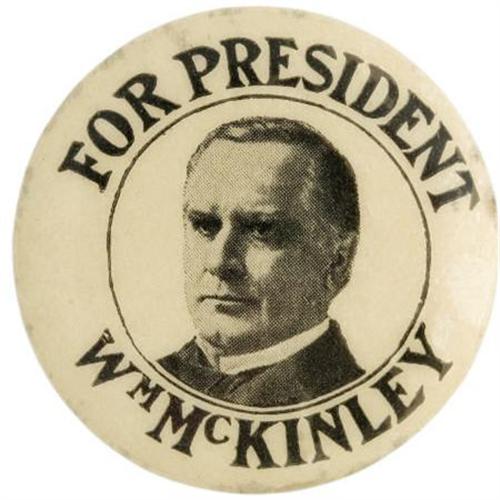
Mckinley ButtonNow we get to it: William McKinley doesn’t “deserve” to have a mountain named after him. That’s the hilarious argument of progressive-mouthpiece Vox, and it really is the height of hypocrisy, naked partyism, and a window into the corrupt and shameless mentality of the liberal pundit establishment.

President McKinley led the nation out of a terrible depression, and Vox explains that he deserves no credit for it at all because he was lucky. Well, in leadership and history, you get credit for luck,  because doing everything brilliantly and still seeing your army, organization or nation go down the tubes isn’t being a great leader no matter how you spin it. This, as I have written before, is the central, operating myth being drummed into Americans’ minds by President Obama’s minions and journalist-enablers: it isn’t what really happens that matters, it’s what the President wanted to happen. It’s not the bad consequences of policies that we should pay attention to, but the good intentions under which they were undertaken.

That is, in a word, batty. But that’s what the echo chamber wants us to believe. It has reached its apotheosis of absurdity with the proposed Iran deal, which is being defended on the grounds that it is aimed at preventing a nuclear armed Iran, even though that is a goal it can’t plausibly achieve. But it is intended to make the world less dangerous, and that’s what matters.

I have tried to assess how many past Presidents would respond to this theory with “What?,” how many with “You must be joking!” and how many with, “Oh, sure, it’s worth a shot.” In the latter category, so far, I have Carter, Pierce, because he’d be drunk, maybe Ford, because he might not understand the question, and perhaps Wilson—certainly after his stroke. Continue reading


Carolyn Hax And The Unanswerable Ethics Dilemma

secrets

My favorite advice columnist, innate ethicist Carolyn Hax, courageously and wisely addressed an ethics problem that is the equivalent of squaring the circle or finding the end of pi. The question posed by a commenter:

My mother says she will not tell me who my father is and will take the secret to the grave with her. Is there ever any good reason for not telling someone who their father is?

This is not merely a difficult question but also a portal question leading us to a myriad of specific ethics dilemmas. Hax offers a few, some of which aren’t very good:

  • If she doesn’t know for sure herself.

Well, of course: also if she can’t communicate due to her mouth being sewn shut, her arms amputated, she never learned Morse Code and it lousy at charades.]

  • If he committed crimes so heinous that she fears they would change the way you see yourself.
  • If he was and is still married to her sister, cousin, best friend.

Or if the mother is the father…?

  • If revealing his name would reveal something embarrassing about her or her past choices or the circumstances of your birth.

Nope. Embarrassment about the truth is not a valid reason for withholding it from someone who has a legitimate and justified reason to know it.

  • If she promised him she would take the secret of his identity to her grave.

Too bad: that’s never a good reason. A commitment to the dead does not, can not and must not have priority over obligations to the living. That’s an unethical promise; the daughter cannot be ethically made to suffer for it.

If he’s a sperm donor and she thinks there’s something wrong with admitting that.

  • The mother thinking it’s a good reason isn’t the same as it being a good reason. Come on, Carolyn.

My favorite is if the father is Satan, and the mother wants her daughter to have as normal and happy a life as possible until the inevitable day when Dad calls on her to assume her destiny as the DARK EMPRESS OF THE DAMNED! Continue reading

A Lesson In Moral Luck And Consequentialism

car-key

If I accomplish nothing more through Ethics Alarms than to cure some intelligent readers of the seductive fallacy of consequentialism and the insideous influences of moral luck, then the long, aimless trail of squandered opportunities, under-achievement, diffuse focus, quixotic quests, Pyrrhic victories and lost causes I call my life will not have been entirely in vain.

Last week I was again in the throes of consequentialism hate. The Boston Red Sox, in the midst of a terrible start to their season, brought up minor league prospect Eduardo Rodriguez for a spot start. He was spectacular, allowing no runs and looking like the team ace Boston has been searching for all season. Immediately after the game, articles popped up in the baseball media excoriating the team for not bringing him up from the minor leagues long before. It was obvious back in Spring Training, said unnamed scouts, that he should be with the big club. It was negligence and stupidity, said other pundits, that it had taken this long to promote him. Strangely, there had been no published arguments to this effect before his impressive debut. And would any of these “I could have told you so” pieces have been written if Rodriguez had been bombed out of the game in the early innings, as literally any starting pitcher may be in a given game?

No. That’s the marvel of hindsight bias, the human tendency to presume that what could have been known should have been known after it is known.  Consequentialism is its more destructive cousin. These same analysts will conclude that the decision to bring up the pitcher was a brilliant one, if tardy, because he performed well. If he had done badly, the decision would have been, in all likelihood, decreed ” a mistake.” This was the fallacy that Jeb Bush was recently pilloried for not embracing regarding his brother’s decision to invade Iraq.

And moral luck? That’s the phenomenon that makes hypocrites and fools of us all, pointing us to the suffocating arms of Dame Consequentialism. If two decision-makers take exactly the same course in exactly equivalent circumstances, the one who is the beneficiary of good fortune—moral luck—will be hailed as a genius. The unlucky soul whose identical plans are derailed by unpredictable misfortune will be handed the mantle of an incompetent failure.

Situations where reasonable decisions and actions are declared “mistakes,” or, as is more germane here, “unethical” according to how uncontrollable events and contingencies occur subsequent to the conduct itself are legion. I am always looking for the counter example, where wrongful conduct has a good result, and is there for forgiven, ignored, or even praised. Well, I found one, and it just happened to me.

I had an important though brief client meeting scheduled this morning, and I had managed to forget the exact time. It was either at 10:45 or 11:00, and I had to be on time, because he was on a tight schedule. My wife was annoyed at me for my scheduling, since she had to use the car to get to a long scheduled appointment of her own at noon and my meeting was 30 minutes away. To make things worse, I couldn’t reach my meeting partner to determine the right time ( a postponement was impossible). To complete the fiasco, I misplaced the car keys, delaying my departure until after 10:30. I was informed, as I left the house with my newly discovered keys (never mind where they were; it is too embarrassing), that if I didn’t have the car back by 11:45, I was dead.

I assumed I would be dead. Continue reading

The Jeb Bush “Gotcha!”: Unfair Question, Dumb Answers

Enough about Iraq, Jeb: When did you stop beating your wife?

Enough about Iraq, Jeb: When did you stop beating your wife?

In the vast history of unfair questions, even including such immortals as “When did you stop beating your wife?,”none is more unanswerable in a substantive way than the question Jeb Bush was asked on Fox News—yes, that’s the same Fox News that supposedly lobs softballs for any Republican. The question: “Knowing what we know now” would he have authorized the Iraq war?

What possible use is that question, other than as an exercise in complete hindsight bias? If the answer is no, it appears to validate the dishonest criticism of the war decades ago, by those who attributed new knowledge about the infamous WMD’s to the original decision, which wasn’t about weapons of mass destruction in the first place. If it is yes, it is evidence of insanity.

Now we know that the invasion would be botched, the U.N. would cravenly and irresponsibly withhold support for enforcing its own resolutions, that our hillbilly soldiers would torture Iraqi prisoners and take photos of it, that the new Iraqi government would be incompetent and corrupt, that the news media would assist Democrats in re-writing the history of the decision, and most of all, that even after the situation in Iraq had finally been stabilized, an incompetent President would prematurely pull out our troops, causing the government to implode and ISIS to thrive.

George W. Bush had even said when he was President that if he had known that no WMD’s were there, he would not have invaded Iraq. That was also a dumb answer at the time, and I believe a dishonest one. But today, W. would give the same answer, and knowing what we know now, it would be both correct and honest. That’s if he were silly enough not to say, as his younger brother was too dim to say, this:

“I’m not answering that. It’s pointless. Would Lee have ordered Pickett’s Charge, knowing how it would turn out? Would I have left the dock as captain of the Titanic, knowing that it would hit an iceberg? Would I have approved the Space Shuttle program, knowing that two shuttles would meet with disaster? “Would you still go to see ‘Our American Cousin,’ Mrs Lincoln?” A decision can only be judged based on what the known situation is at the time. It cannot be fairly judged based on the results of the decision, immediately or years later. That’s consequentialism; it’s a logical fallacy.

and

“Nor can I answer the question of what I would have decided in my brother’s place, because I do know how things worked out, and he, of course, could not know. So asking that question is unfair to me, and answering it would be unfair to him. “

But Jeb was too dim to say that. So first he answered… Continue reading

Southwest Airlines And The Suicide Threat

Not exactly "friendly skies"

Not exactly “friendly skies”

We tend to assume someone was at fault when a terrible event results from the execution of a standard policy that was not appropriate to the crisis at hand. Who’s to blame in this nightmarish scenario?

Karen Momsen-Evers was on a Southwest Airlines plane about to take off from New Orleans to Milwaukee, where she lived. Then her husband Andy sent her a text asking her for forgiveness for his imminent suicide. “I go to sleep at night thinking what could I have done, what should I have done,” Evers said. She texted back “No,” but the text arrived as flight attendants were doing their final cabin checks. She wanted to call him. The flight attendant ordered her to turn her phone off, and when she insisted, was told that the FAA regulations prohibited any further use of her cellphone. “The steward slapped the phone down and said you need to go on airplane mode now,” Momsen-Evers told reporters.

Once the flight reached cruising altitude, the desperate woman explained the situation to another attendant. She begged her to have someone make an emergency phone call, but the attendant insisted there was nothing she could do.

So Karen Momsen-Evers sat in her seat, looking at the text and sobbing, all the way to Milwaukee. When she arrived home she was met by police officers, who told her Andy had killed himself. Continue reading

Wasting A Heart

Heart transplant patient

I don’t have a solution to an ethics fiasco like this or know how it could be avoided, but there have to be some lessons buried here somewhere.

In 2013, 15-year-old Anthony Stokes was denied a place on the waiting list for a life-saving heart transplant  at Children’s Healthcare of Atlanta at Egleston because, the hospital explained, he had “a history of noncompliance, which is one of our center’s contraindications to listing for heart transplant.”

This means that doctors doubted that Anthony would take his medicine or go to follow-up appointments. In other words, he was too unreliable and irresponsible to be entrusted with a heart that could save the life of someone else more likely to make good use of it. When a doctor told the family that Anthony’s low grades and time spent in juvenile detention factored into the assessment, however, that gave the family an opening to save the boy’s life. They played the race card. Anthony was being sentenced to death because he was poor and black, and a white patient would naturally be a better risk. The media ran with the narrative, and there was national outrage. Fearing a public relations disaster, the hospital reversed its decision, and Stokes got his heart.

From the Washington Post today:

Tuesday afternoon, [Anthony] Stokes died after a vehicle he was driving jumped a curb, hit a pedestrian and collided with a pole in a car chase with police, according to WSBTV. The pedestrian was hospitalized for her injuries, but Stokes’s car was nearly split in half by the sign, according to the Atlanta Journal-Constitution.

Police said he had to be cut out of the Honda by first responders and rushed to a hospital where he later died…Stokes was driving a car that matched the description of one used by a person suspected of breaking into an elderly woman’s home. The chase began after officers responding to her 911 call attempted to pull Stokes over, according to WXIA.

Pensive and Rueful Observations: Continue reading

Instant Ethics Train Wreck: The Alabama Gay Marriage Stand-off

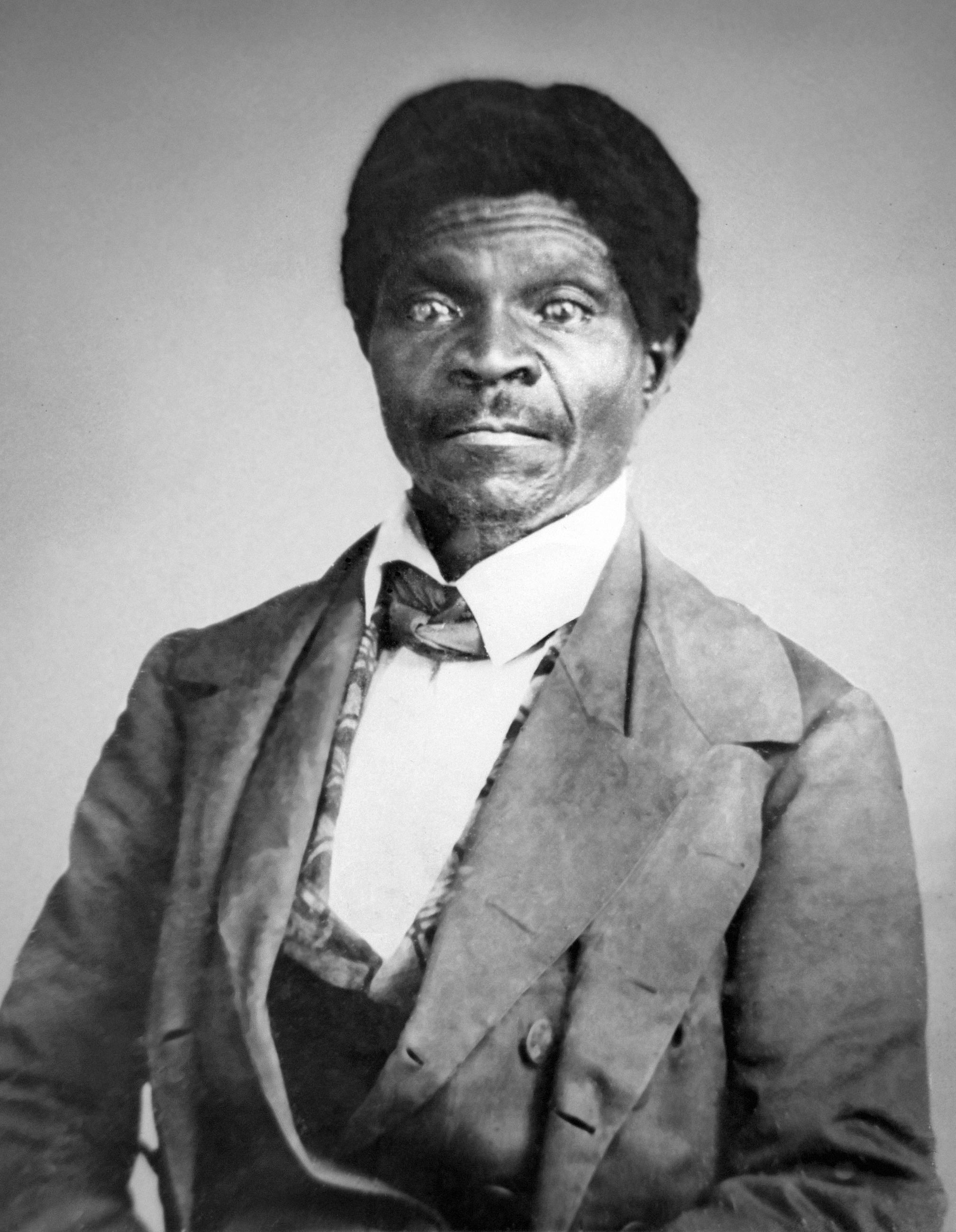
What does Dred Scott have to do with the Alabama gay marriage mess? Absolutely nothing.

What does Dred Scott have to do with the Alabama gay marriage mess? Absolutely nothing.

This summer, the Supreme Court will again take up the issue of the Constitutionality of state gay marriage bans, having left the question open (why, I don’t know) after striking down the Defense of Marriage Act in 2013. Since that ruling, the states have been busy little bees, some passing laws banning same-sex marriage, some doing the opposite, then fighting out multiple appeals at various levels of the judicial system. Three things are certain: the cultural and legal acceptance of same-sex marriage looks unstoppable; all states need to agree on what a legal marriage is; and some faith-based same-sex marriage opponents will not give in until the last dog dies.

Beginning at the end of last week, a messy situation in Alabama involving all of these factors burst into a full-fledged ethics train wreck. The links in this post will let you immerse yourself in the mess if you choose: I’m going to try to be clear. Here is what has transpired so far:

1) A federal judge, District Court Judge Callie V. Granade,  struck down the state’s ban  on same-sex marriages in January and said that Alabama could start issuing licenses last week unless the U.S. Supreme Court stepped in and stayed her order. A stay was immediately requested by the Alabama Attorney General, who properly defended the state’s law.

2.) The 11th Circuit Court of Appeals refused to step in and stop her order from going into effect.

3) The U.S. Supreme Court also refused the stay request, allowing marriages to proceed in Alabama.

4) Roy Moore, chief justice of the Alabama Supreme Court, reminded everyone that probate judges report to him, not the federal judge and not the Attorney General, and do not have to issue marriage licenses to gay couples until he tells them to. He told them not to.

5) Some Alabama probate judges followed Moore, and some went ahead and issued the licenses. Mass confusion reigned.

6) Meanwhile, the refusal of the U.S. Supreme Court to issue a stay pending its ruling on state same-sex marriage laws later this year was widely interpreted as tantamount to SCOTUS deciding the case before it was even argued.

7) Justice Clarence Thomas, in a dissent from the  majority’s rejection of the stay (we don’t know what the vote break was), argued that “This acquiescence may well be seen as a signal of the Court’s intended resolution of that question. This is not the proper way to discharge our . . . responsibilities.”

8) Justice Ruth Bader Ginsberg, meanwhile, appeared to endorse gay marriage in an interview.

9) Attempting to break the impasse, U.S. District Judge Callie V.S. Granade ordered Mobile County, Alabama to start issuing marriage licenses to same-sex couples, paving the way for resistant officials across the state to follow suit, in a decision stating that the state’s ban on same-sex marriage had been struck down and that ­Mobile County’s probate judge had to adhere to that decision.

10) Chief Justice Moore remains unmoved, but now most of the probate judges are following the federal order.

Got that?

Good, now you can explain it to me.

What a mess.

Here are the ethics verdicts on the participants so far: Continue reading

Accountability Check: No, Sarah Wasn’t “Sacrificed” And She Has Nobody To Blame But Herself

Yeah, that's all you need, Sarah...

Yeah, that’s all you need, Sarah…

When one woman who drives me crazy sets out to defend another one using ethics-crushing illogic, I cannot withhold my hand.

Or gorge.

The wimpiest pseudo-conservative op-ed columnsit who ever roamed the Earth, Kathleen Parker, has delivered a column titled “The Sacrifice of Sarah Palin.” Its thesis? “Blame for her general collapse beginning in 2008 can be placed in large part upon her own party, which used her and cast her aside.”

Well, Parker proves with her fatuous essay that blame can be placed on Republicans, but she doesn’t prove that it should be. Sarah’s reputation is on life support after delivering a speech at the Iowa Freedom Summit that included passages like these… Continue reading

Comment of the Day: “A Failure To Understand Legal Ethics Kills”

armchair quarterback2

It shouldn’t shock anyone to see yet another Comment of the Day here authored by texaggo4. He has been the most prolific commenter—other than me, and he’s ahead of me so far in 2015— since the legendary tgt went into voluntary keyboard retirement, and has led all visitors in commentary the past two years. Last year, he contributed a staggering 3, 048 comments, more than twice as many as runner-up Steven Mark Pilling, who was hardly a piker with 1,082. (The rest of the top five: Ablativemeatshield/Scott Jacobs close behind at 1, 079—he would have finished #2 if he hadn’t quit the field in a pro-pot snit; Beth, with 881, and dragin-dragon at 809. Thanks, everyone, and all other commenters too. That’s a lot of quality content, some of the best on the web anywhere.)

The list is especially relevant to this COTD, as tex rebuts an accusation of “Armchair quarterbacking” against Beth from new commenter gokafilm. Beth had offered a comment to the post about Tampa lawyer Gienevee Torres, who called 911 to report a deranged client—he was wearing pajamas and thought she was God– who had just left her office with his 5-year-old daughter after making an ominous comment. The police decided that the man was harmless despite her warning, and the man eventually dropped the girl off a bridge. Beth wrote:

“I am furious at this lawyer — not the police. She should have said something like, “Yes, I am God. He commands you to give me your child and leave my office now and run to the nearest hospital.” I would have happily stood before the Bar Committee defending my actions if it meant that I had saved a child’s life.”

Gokafilm replied:

Easy to say Beth from the safety of your home/office/wherever. She had to be concerned for her safety and her staff as well. This most likely is a split second decision. Get the individual out and call the authorities…Did she not have a responsibility to herself and her staff to consider their safety as well? What’s to say he wouldn’t have harmed them if they forcibly tried to keep the girl. This lawyer did the right and only thing she could have. Got the individual out of her office, and contacted both 911 and DCF in order to protect the child. Any other conclusion is merely arm chair quarterbacking from the safety of your computer screen.

Another term for “armchair quarterbacking” is hindsight bias, the tendency to judge a difficult decision unreasonably harshly when it doesn’t work out well. “Obviously” conduct is “wrong” after the results are known. My response to Beth’s comment was that the whole, horrible incident was moral luck: if the lawyer had done the same thing and the girl had been rescued as a result of her violating client confidentiality, everyone would have said that her actions were appropriate and even heroic.

On the other hand, post-event analysis is invaluable; this website is based on it. The argument that nobody should criticize an individual’s conduct “unless he’s walked a mile in his shoes” is a lazy cop-out that impedes cultural wisdom and learning from the mistakes of others. I don’t completely agree with many, perhaps most, Comments of the Day, but I concur with this one.

Here is texaggo4’s Comment of the Day on the post, A Failure To Understand Legal Ethics Kills: Continue reading

Ethics Alarms Encore: “Tom Yawkey’s Red Sox Racism, and How Not to Prove It”

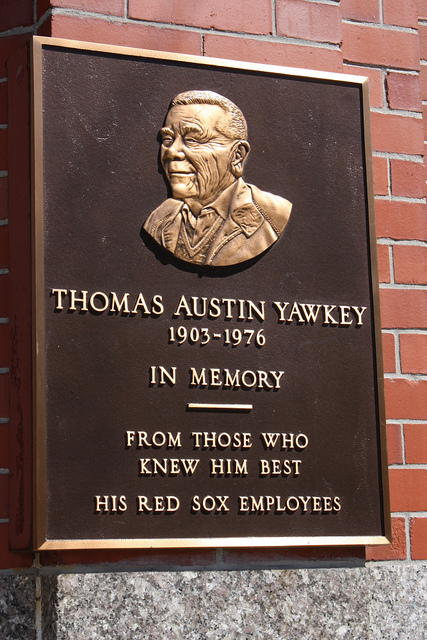
Yawkey TributeEvery now and then a comment out of the blue reminds me of a post that I had forgotten. That was the case here. Reading it again for the first time in five years, I was struck by how the crux of the post is still relevant today (that crux has nothing to do with baseball), and indeed how the intervening five years have made what I thought was a bad trend a genuine political and cultural malady.

And the World Series is going on, and I feel badly about the Red Sox having such a miserable season. This post, which few read when it was first published as the blog was attracting (let’s see…) less than 200 views a day as opposed to nearly 4000 a day now, is a good one, and I enjoyed it.  That “self-professed ethicist” has his moments…. Continue reading