Unethical Quote Of The Week: Jeff Shesol

“Berg is not uncritical of Wilson’s biggest lapses — his tolerance of segregation, his suppression of civil liberties and his “highly questionable” actions (or paralytic inaction) after the stroke he suffered in 1919, during his grueling campaign to win Senate approval of the League of Nations.”

—Former Clinton Speechwriter and author Jeff Shesol, in his Washington Post book review of historian Scott Berg’s new biography of Woodrow Wilson, “Wilson.”
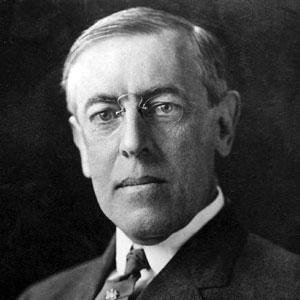
All right, he was a racist, but he was GREAT racist, right, Jeff?

All right, he was a racist, but he was GREAT racist, right, Jeff?

There is a nasty piece of dishonesty in this quote, all the more sinister because it slides right by, altering your understanding of history and reality without you even knowing it. (Is it any surprise that Shesol wrote speeches for Bill Clinton?) Did you catch it?

It is the phrase, “[President Woodrow Wilson’s] tolerance of segregation.”] Continue reading

What America Has Learned From Sarah Palin

Thanks for the enlightenment, Sarah!

When Ethics Alarms last left Sarah Palin, she had delivered a description of Paul Revere’s famous ride on the evening of the 18th of April in 1775 that would have earned her an F in speech class and, at best, an Incomplete in American History.  Incredibly, however, Palin and her indomitable supporters have tried to turn the tables on her critics, aided by several history pedants, by claiming that her collage of words and thoughts was really a sophisticated account of Paul’s evening that her historically ignorant critics failed to appreciate.

Uh huh. Let’s revisit her statement, shall we? She said:

“[Revere] warned the British that they weren’t going to be taking away our arms, by ringing those bells and making sure as he was riding his horse through town to send those warning shots and bells that we were going to be secure and we were going to be free.”

This was, by any standard, an eccentric representation of Paul Revere’s ride, and a spectacularly inarticulate one. In assessing whether Palin’s statement can, by any stretch of the imagination, be said to indicate that she either said what she meant to say or has the vaguest idea of what Revere’s ride was all about, we answer these questions: Continue reading

Incompetence Follies: Fractured History For Virginia’s Fourth Graders

Bob and Ray, the great deadpan comedy team that mastered the form of the comedy interview on radio, recordings and TV, once has a routine about a longshoreman without a high school diploma who had written a voluminous “History of the United States.”

“But the book is riddled with errors!” protested Bob Elliott, playing the interviewer. “For example, here on page 214, it says that Abraham Lincoln was born in 1926 in Bailey’s Mistake, Maine!”

“Well, it’s a big book with a lot of pages,” shrugged Ray Goulding, as the longshoreman-historian. “I’m sure I missed some typos. You can’t catch everything!”

I was reminded of the Bob and Ray skit when I learned that a history book used in 4th Grade in Virginia elementary schools, Our Virginia: Past and Present, teaches that thousands of African Americans fought for the South during the Civil War, a discredited claim  often made by groups seeking to play down slavery’s role as a cause of the South’s rebellion. Continue reading

The Siena Research Institute’s Lousy Independence Day Gift: Misleading, Biased and Incompetent Presidential Rankings

The Siena College Research Institute persuaded over 200 presidential scholars to participate in a survey designed to rank America’s forty-three Chief Executives. There is great deal to be leaned from the resulting list that the Institute proudly released on July 1; unfortunately, very few of the lessons have anything to do with the men on it.

The list shows us that:

  • A survey is only as good as its design
  • Historians who call themselves “presidential scholars,” working together, could do no better in their supposed area of expertise than to arrive at a ranking that would get most 7th Graders a C in junior high school History, raising serious questions about how history is taught in our universities, but perhaps explaining why Americans choose to be so ignorant of their nation’s past.
  • Historians are, as a group, biased toward liberal causes, against conservatives, and in favor of people who are like them.
  • They are unable to recognize their biases, even when a list like this one makes them stunningly obvious.

Lists are mostly for fun and to start arguments. When one purports to make historical judgments, however, and the individuals doing the judging are supposed to be experts, there is still a responsibility to try to do the task fairly, competently, and responsibly. Continue reading

History Lesson: Stephen Ambrose

Over the past two decades, historians have gone from obscure scholars to media stars, as the 24 hour news cycle prompted TV news shows to bring the best-selling non-fiction authors out of the archives into the studios. There the masters of the past were suddenly opining on the present, as the likes of Douglas Brinkley and Doris Kearns became as ubiquitous as Pat Buchanan or George Will. The supposed wisdom and solemn reliability of historians has put them in other unlikely roles too, such as Truman biographer David McCullough lending his soothing baritone to the narration of Kan Burns’ epic Civil War documentary.

One of the catalysts for this development was the late historian Stephen Ambrose, who hit on a formula to make history both provocative and lucrative.. Ambrose turned himself into the troubadour of World War II, inspiring dramatic renditions of his books, such as “Band of Brothers,” and launching a “Greatest Generation” industry. Shortly before Ambrose died in 2002, a brief scandal erupted when it was revealed that one of his histories was significantly plagiarized (Kearns had one of her books similarly discredited), but he handled the potential disaster deftly, admitting that he inadvertently published some verbatim notes, and died soon enough thereafter that the scandal did little to suppress sales of the “Band of Brothers” DVDs. The truth was, however, that more than one of his books stole from other sources.

Now new evidence is making it clear that Ambrose, the historian pop star, was indeed a full-fledged fraud, raising the question, “Who are these guys?” And why should we trust them? Continue reading