Daryl Hannah Asks, “How Can ‘Love Story’ Get Away With” Portraying Her As A Villainous Creep? Simple: Hollywood Has No Ethics, And Never Had Any.

Poor Daryl.

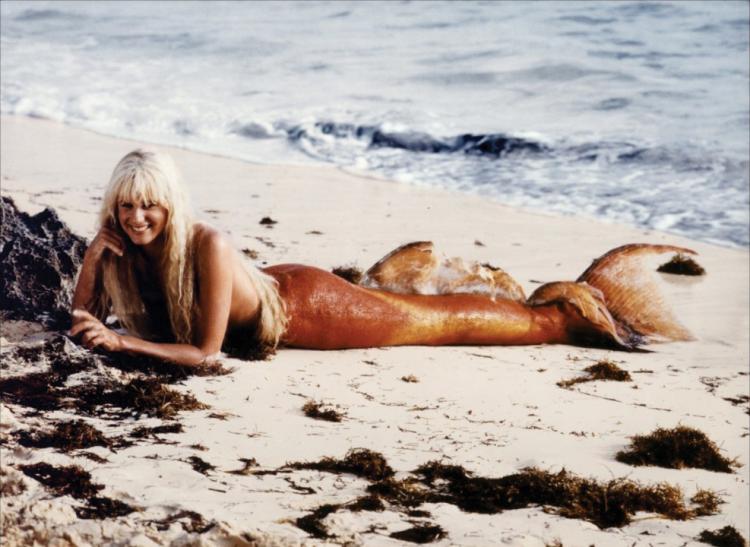
Nobody apparently told her about the industry she worked in for all those years. In an angry op-ed in the New York Times (gift link), Hannah, once one of the late John F. Kennedy Jr.’s girlfriends, protests that the FX TV series “Love Story” about the romance between John-John and Carolyn Bessette exploits her while warping the truth and marring her reputation.

“The actions and behaviors attributed to me are untrue,” Hannah writes. “I have never used cocaine in my life or hosted cocaine-fueled parties. I have never pressured anyone into marriage. I have never desecrated any family heirloom or intruded upon anyone’s private memorial. I have never planted any story in the press. I never compared Jacqueline Onassis’ death to a dog’s.”

I believe her, maybe, but it doesn’t matter. Fictionalized versions of living people’s lives, when those people are celebrities, are immune from lawsuits unless they can be shown to have represented the falsehoods as true (by definition, a fictionalized series does not do that), and done so with malice. One of the show’s producers explained why Hannah’s character was cast as a villain: “Given how much we’re rooting for John and Carolyn, Daryl Hannah occupies a space where she’s an adversary to what you want narratively in the story.” Oh. Then its all right to show her doing and saying things she didn’t do or say.

Ethics Hero: “Landman” Creator and Writer Taylor Sheridan

The Billy Bob Thornton star vehicle “Landman,” following the stressful life of a West Texas “landman” and operational executive for an independent oil company in West Texas, has a lot going for it, mostly Thornton, who is one of our most interesting and versatile actors. The Paramount streaming series is already better, in my view, then the last two oil dramas I watched, the over-rated “Giant” and the relentlessly unpleasant “There Will Be Blood,” in great part because as with all of his roles, Thornton brings a great deal of humor to the proceedings.

I have not finished the series’ first season (I sure hope there is a second), but I was struck by the long scene above in which Tommy Norris (that’s Billy Bob) gives a quick primer to his company’s attorney on the facile conventional wisdom of the anti-fossil fuel lobby. The rant begins (at the 57 second mark), as Tommy denies the “cleanness” of wind power, and he takes off from there. It was an instant classic that quickly went viral on social media: as soon as I heard it I knew I could find the speech on YouTube and resolved to post it today.

There are also a lot of rebuttals to the speech on line, and that’s great: the ethics point is that for once Hollywood isn’t stuffing smug 21st Century woke politics into its audience’s brains, but is presenting a dissenting analysis. More more amazing yet, this one comes from a series’ protagonist and an appealing one at that.

Taylor Sheridan, who created “Landman,” cast Thornton and wrote and directed the speech deserves thanks and credit for packaging a provocative point of view that is sure to spark debate. Debate is ethical. What isn’t ethical is cultural indoctrination, which is how Hollywood has mostly been approaching the oil issue for decades.

Not surprisingly, the Wikipedia entry linked above states that the series contains “misinformation about renewable energy… “exposed as common propaganda tropes by Big Oil.” This is why Wikipedia should be considered a member in excellent standing with the Axis of Unethical Conduct. If Democrats had won another term in the White House, we would probably see “Landman” forced to include a disclaimer on Tommy’s speech.

Of Hollywood Hubris, Bait and Switch and Flat Learning Curves: Just What We Need, a Woke “Gone With The Wind” With Space Invaders

I don’t know, Dana, I really don’t.

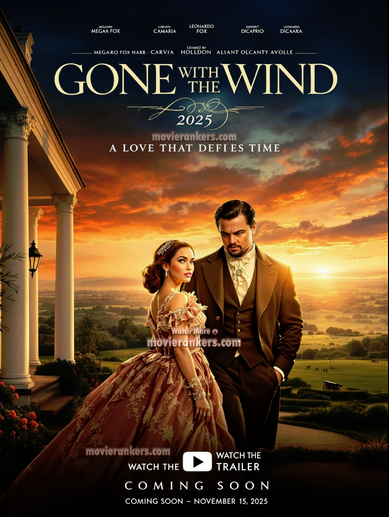
I have no idea what’s going on here. On a website called “Gone With The Wind (2025)” we get puffy blather about a stirring, high budget re-make of the politically incorrect classic, still the most successful movie of all time, ready to open at the end of 2025. It stars black Scarlett (Zendaya) and a black Rhett Butler (John Boyega). The site does not permit copying or screen shots. The director is Barry Jenkins, whose output so far has been only stories about social justice, racism, and black protagonists. The site’s description, however, tells us that this is a “Gone With The Wind” remake that will bring “fresh perspectives and contemporary sensibilities (oh-oh!) to this “modern adaptation.”

Although the web page is headlined “Gone With The Wind” (2025) Official Trailer, no trailer to the new film is on it. Several versions of the trailer for the original 1939 version are there to see, however.

Puzzled, I searched for a trailer for “Gone With The Wind” (2025), and got …

…. the trailer for “Gone With The Wind : Invasion!” Is that really a movie? Is it a spoof? Is the website a tease (that is, unethical fake or hoax) that pretends the new film is a remake? And what the hell is this:

Please rank in order of commercial viability: A GWTW starring Leonardo DiCaprio as Rhett and Megan Fox as Scarlet, a woke remake, and one with invading aliens. It’s a tough assignment.

I would normally assume that no one in Hollywood is so stupid as to make a woke update of “Gone With The Wind,” but then there were recent re-makes of “The Ten Commandments” and “Ben-Hur,” both of which bombed like the siege of Vicksburg. I assume that there are enough stupid people in Hollywood to make a science fiction version, since they got away with “Cowboys and Aliens” (barely) starring Daniel Craig and Harrison Ford in 2011.

Whatever is going on, it’s wrong.

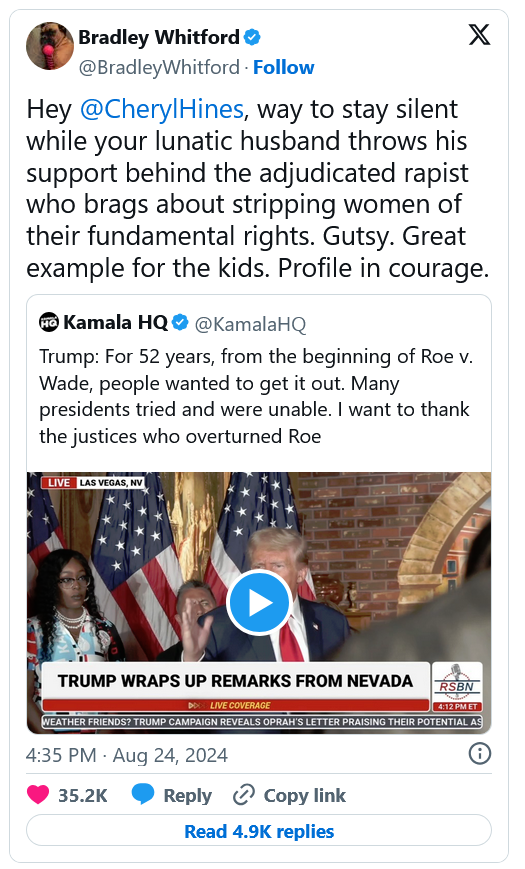
Unethical Tweet of the Month: Actor Bradley Whitford

Just remember, the Ethics Alarms position is to strive as much as possible to remain unbiased regarding a performer’s art regardless of his or her demonstrated political orientation or revealed personal character flaws. I enjoy Bradley Whitford as an actor.

But only an unethical, bullying asshole would write a tweet like that.

Continue reading

Additional Morning Thoughts: “Smith Vs. Rock At The Oscars” [Updated]

Last Night, I was shutting down my computer when I saw the Rock-Smith story, and dashed out a post at about 1am. Those were literally immediate reactions, and I knew nothing else about the broadcast except that Smith was allowed to stay, and that he later won the Oscar for Best Actor for a movie I didn’t see and am unlikely to, especially after his behavior last night.

I had some additional thoughts after my first coffee this morning.

  • Some people are suggesting that the episode was staged, even Ann Althouse, an Oscars fan for some reason. Ann needs to get out more. Trust me on this: it wasn’t staged. I am a stage director; I have staged such things. Actors are notoriously terrible at faking contact, and Chris Rock isn’t exactly a professional stunt man. Smith hit him with the flat of his hand, which saves him from broken bones: if it had been staged, it would have been a fist.

Furthermore, what happens near the beginning of any live show vastly influences the audience’s reaction to the whole evening: if the episode was staged, it would have been at the beginning, otherwise there was no point. That bit of ugliness toward the end clouded the ceremonies both for the live audience and the home audience, and especially undermined Smith’s  Best Actor moment. In addition, as Althouse finally convinced herself as she wrote her post, it put Smith’s wife in a bad light as well as the actor, embarrassed Rock, and made no sense except as a temper tantrum (or protective husband grandstanding) by Will Smith. Later, the Academy put out a pro forma statement that it didn’t condone violence, which would have been reasonable coming from anywhere but Hollywood.

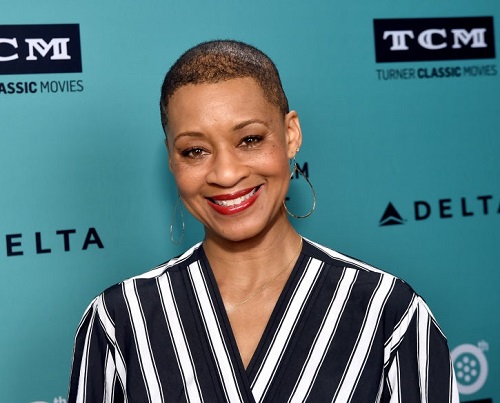
  • I hadn’t seen what Jada Pinkett Smith looked like at the Oscars when I wrote the post last night, nor heard exactly what Rock said. She has shaved her head…you know, like me. And Bruce Willis. And the TCM co-host, Jacqueline Stewart. See?

Continue reading

The Scott Rudin Reckoning

Rudin

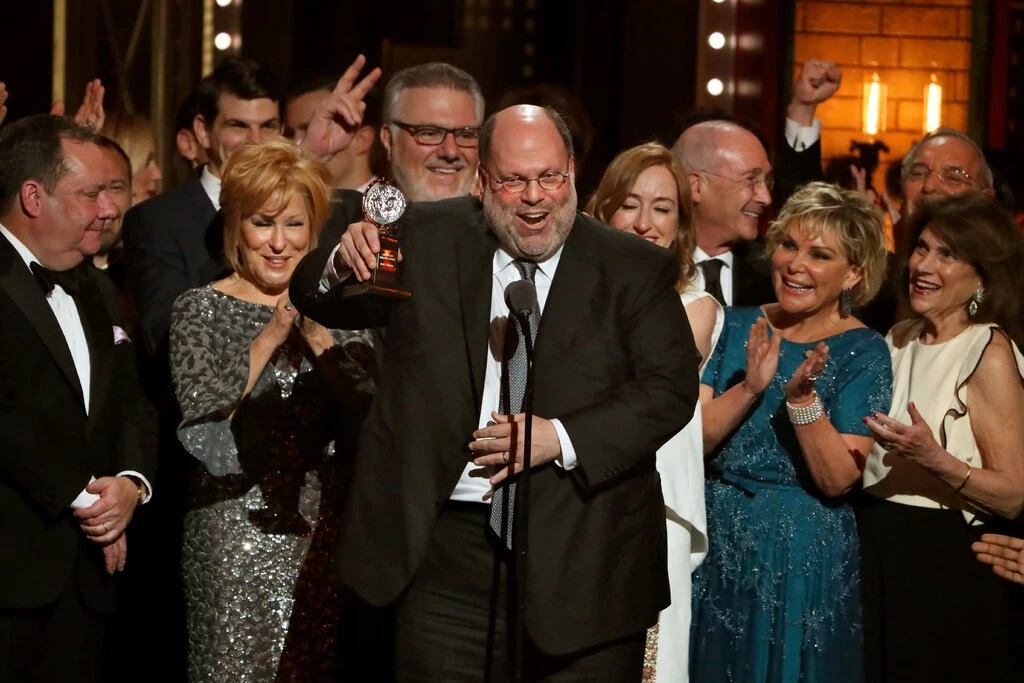
If you are not a active follower of show business, you may not recognize the name Scott Rudin. Heck, I am an active follower of show business, and I only began actively registering his name in my RNA lately because of the sudden shift in his fortunes. Rudin, in case you’re normal and barely noticed, has long been one of the most celebrated and powerful producers in Hollywood and Broadway. His productions have made billions; he has created too many stars to list, and his work has earned an Emmy, a Grammy, an Oscar and 17 Tony Awards. The problem, except that it wasn’t a problem until recently, is that Rudin is a toxic, bullying, abusive jerk who makes working with or for him a living hell. He’s not a sexual predator, like Harvey Weinstein, so his misconduct has not been strictly illegal. Moreover, while he is an extreme case, his obnoxious type has hardly been rare in show business. One could say it is closer to the norm.

Yet suddenly, Hollywood, Broadway and the entertainment business have begun a cultural shift. It was undoubtedly spurred by #MeToo, but in the end it may be more significant that #MeToo. This highly influential industry is beginning to reject the King’s Pass. As much as I hate to say anything good about show business culture, this is an unquestionably ethical development that could have wide reaching effect far beyond movies, plays, TV shows and music.

The King’s Pass is described in the Ethics Alarms Rationalizations List thusly:

11. The King’s Pass, The Star Syndrome, or “What Will We Do Without Him?” One will often hear unethical behavior excused because the person involved is so important, so accomplished, and has done such great things for so many people that we should look the other way, just this once. This is a dangerous mindset, because celebrities and powerful public figures come to depend on it. Their achievements, in their own minds and those of their supporters and fans, have earned them a more lenient ethical standard. This pass for bad behavior is as insidious as it is pervasive, and should be recognized and rejected whenever it raises its slimy head.  In fact, the more respectable and accomplished an individual is, the more damage he or she can do through unethical conduct, because such individuals engender great trust.

It is one of the most pervasive of all ethical perversions, and throughout human history, as reliable as an aspect of human nature. If you are successful and valuable to organizations and people, you can get away with bad, even terrible conduct that ruins lesser mortals. The rule reigns in business, academia, politics, government, sports and, of course, entertainment. One can speculate on why Scott Rudin’s unexpected fall has become a possible catalyst for weakening the iron grip of The King’s Pass, but for the moment, let’s focus on the fact that he has.

Continue reading

Ethics Dunces: The Academy Of Motion Picture Arts And Sciences, Or “Good-Bye, Oscar!”

The Academy of Motion Picture Arts And Science signed the death warrant of the Oscars, or, in the alternative, the film industry itself. This would warrant the “Madness! Madness!” clip, but I’m getting sick of it since that last moment in “Bridge Over The River Kwai”  been relevant almost every day since early June.

It was in June, in fact, that the Academy said it would add a diversity component to the Oscar requirements. I wrote than that it was an anti-artistic development. Yesterday, the dreaded other shoe dropped, and it was far more dilapidated and stinky metaphorical footwear  than I could have imagined, even with the complete contempt for Hollywood and the intellect of its leadership I have developed over the years. I am certain the race-hucksters and minority activists are dancing with joy, having destroyed the Oscars in order to “save” them. Yes, it’s a victory: the Woke Mob has succeeded in wrecking another American  institution and source of enjoyment for the  public. The only question is which institution: merely the Awards, or Hollywood itself.

To be optimistic, I assume it’s just the Oscars, in which case the Academy just committed suicide. The Awards show once was a shared cultural experience, then the actors started getting political and partisan, then the integrity of the process began to look fishy, and over time, culminating in the nominations miraculously including more African American nominees because a activists complained about too many white people receiving the honors. If I had bothered to think about the Oscars at all, they would have been high on my list of casualties of the George Floyd Ethics Train Wreck. Of course Hollywood would leap at the invitation to mandate the “right” kind of discrimination.

When you read the hilariously pompously named “Academy Aperture 2025” below, it should become immediately clear that the Academy has abandoned its mission of encouraging, promoting and rewarding excellence in cinema, and now will be giving out awards for meeting interest group dictated quotas and dubious social justice criteria. Whether the movies are any good or not will be secondary. Artists are being given incentive to seek political objectives at the cost of artistic integrity and worth.  Well, good luck with that: I doubt many Americans will care about such awards, especially since they barely care about the Oscars now. The Academy Awards seem to be following the doomed path of the Miss America Pageant, which capitulated to the feminists, ceased to be about attractive women in bathing suits, and thus eliminated the only justification, already slim,  for its existence.

I think I understand how the Academy came to make such a bone-headed decision: it is dominated by progressives, and as they have devolved from  passion to fanaticism to  obsession, progressives have become deluded into  accepting the concept that politics and political correctness determines virtue and value in all things.  It is an indefensible decision that betrays the essence of art, but I understand it.

I assume that most film-makers, and all of those with integrity— will choose to follow their artistic vision whether it allows the requisite number of “diversity” boxes to be checked or not. I assume that eventually, maybe quickly, a widely praised and a hugely successful film will be snubbed for not having the required number of handicapped and trans key grips, and the Awards will be mocked out of existence. We shall see: the studios, being award-hungry and run my morons, will initially insist that films meet the Oscars’ restrictive criteria, and then, when the box office suffers, most of them sill conclude, “To Hell with this: let’s make movies people want to see.”

Hollywood has bet its chips on joining the Black Lives Matter mission of creating a race-based culture where color and ethnicity, and secondarily gender, dictate advancement, financial rewards, influence and power. This is part of the indoctrination process, and if it results in bad art, so be it.

I think it’s a foolish bet, but time will tell.

Now hold on to your butts, as Samuel L. Jackson says in my favorite dinosaur movie: here are the standards that, beginning in 2024, films  will have to meet on order to  to qualify for the Best Picture category… Continue reading

Independence Day With Ethics Alarms 2… Observations Upon Re-Watching “Gettysburg”

I began the Fourth of July this year by watching the last 90 minutes of “Gettysburg,” Ted Turner’s epic 1993 film.  My wife and I had begun watching on July 3, the date of Pickett’s Charge and the final day of the 1863 Civil War battle, but the more than four-and-a-half hour running time took me to Independence Day.

This was the extended version, the Director’s Cut, which adds 17 minutes of deleted  scenes to the version shown in movie theaters, itself one of the longest movies ever offered to the American public. We had last watched the un-extended film from beginning to end on a VHS tape almost 30 years ago.

Observations:

  • “Gettysburg” is an ethics movie, and a great one. I don’t know why this didn’t come through to me the first time I watched it. Primarily it celebrates the Seven Enabling Virtues discussed in yesterday’s post, but the film teaches us a lot about leadership, integrity, compassion, duty, loyalty, and conflicts of interest.

If the film isn’t routinely shown in schools, and I’m sure it isn’t, that is a lost opportunity. A whole course of study could be based on the film alone, and it would be more educational than most history courses.

  • Some of the added minutes extend the Pickett’s Charge re-enactment, and the length of the sequence adds to its horror and wonder. How could anyone enthusiastically follow orders to attempt such a deadly march into enemy artillery and rifle fire, while lined up like tin rabbits at a shooting gallery, in an open field, even having to climb over fences?

The film makes it clear, and this is accurate, that it was the men’s trust and admiration, almost worship, of Robert E. Lee that made such insane valor possible. At Gettysburg, Lee abused that trust. He was warned that the plan was madness, and he was so certain of his own invulnerability that he persisted.

  • The film made me realize that it is likely that Lee’s famous “It was all my fault!’ refrain to his returning shattered troops signified his realization that  his vanity and pride had been the direct cause for the Pickett’s Charge fiasco, and indeed the entire engagement. After the fiasco, the film shows Lee as a shattered man. General Longstreet, who repeatedly advises Lee to go around the Union entrenchment and take up a position on high ground between Pennsylvania and Washington, reminds Lee that even after the failed Confederate assault on Little Round Top on July 2, it is not too late for his plan to work. Lee replies that such a maneuver would be tantamount to a retreat, saying that he had never left the field of battle with the enemy  in control, and is not about to start.

If General Lee was capable of listening to what he was really saying, he would have realized that he was using a personal motive to justify a decision that could not be justified rationally. Continue reading

The Cancel Mob Comes For Kirk Douglas

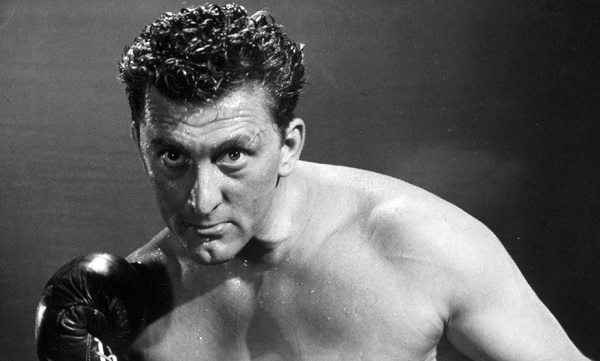
I nearly wrote a tribute post for Kirk Douglas, the seemingly indestructible Hollywood Golden Age star who finally passed away at the age of 103 this week. He certainly had some impressive ethics moments. When Douglas’s production company set out to make  a big budget film version of “Spartacus,” the actor-producer not only hired blacklisted writer Dalton Trumbo  to do the screenplay, but also allowed Trumbo to use his own name name in the credits. “We all had been employing the blacklisted writers,”  Douglas wrote in his 2012 memoir, “I Am Spartacus!: Making a Film, Breaking the Blacklist.” “It was an open secret and an act of hypocrisy, as well as a way to get the best talent at bargain prices. I hated being part of such a system.” Some have speculated that Douglas’s defiance of the blacklist cost him one or more Oscars.

Later, after his film career had waned, Douglas worked with his wife on a project to build 400 playgrounds in Los Angeles. Together they established the Anne Douglas Center for Homeless Women, the Kirk Douglas High School for at-risk  students to get their high school diploma, the Kirk Douglas Theater. In 2015, the Douglases donated $15 million to the Motion Picture & Television Fund in Woodland Hills toward the construction of the Kirk Douglas Care Pavilion, a $35 million facility for the care of people in the industry with Alzheimer’s disease. Continue reading

Why Do We Pay Any Attention To These People And What They Think At All?

Wait. what’s the matter with non-traditional casting?

Hollywood continues to presume to tell the public what their priorities and values should be, despite indisputable evidence that the entertainment industry is large run by narrow, venal, intellectually limited, under-educated people, and always has been. My now-deceased friend Bob McElwaine, who was born in Hollywood as the son of a silent film producer, was baby-sat by Clara Bow and played pick-up football games against Mickey Rooney as a child, had wonderful anecdotes about his time as a writer and  publicity agent during Hollywood’s Golden Era. He often would relate these jaw-dropping tales without attribution out of loyalty and his vows of confidentiality—it was his refusal to go public with these stories that led to his memoirs being rejected by publishers. They wanted dirt, and Bob refused to spread dirt or even embarrassing anecdotes about those who had trusted him, even after the clients and employers were dead.

Bob said that he witnessed this conversation in one studio executives ‘s office while trying to stifle giggles. A producer burst in full of excitement saying he had an idea for a blockbuster film. This was during the Fifties, when biblical spectaculars were the rage. “The Lord’s Prayer!” he said. “I know just the scriptwriter for it! Can you imagine the box office?” The studio chief laughed out loud. “The Lord’s Prayer! That’s ridiculous!” he chided. “Why, I bet you don’t even know The Lord’s Prayer.” Continue reading