Comment of the Day: Anti-Bullying Mis-steps: The Perils of Changing Cultural Norms (Part 2)

From Penn, excellent and valuable insight on “The Hunger Games” controversy, going into relevant issues and facts that my post did not. Here is his Comment of the Day on the post, Anti-Bullying Mis-steps: The Perils of Changing Cultural Norms (Part 2):

“The purpose of this argument scares the hell out of me. As one press-screener’s review had it, and as the trailers make clear, “The Hunger Games” tells the story of a televised fight to the death between(sic) a group of youngsters in which only one can survive.” If I believed there were any merit to the MPAA system, yes, R is what it should be. [“This Film is Not Yet Rated” is the movie to see on this subject.] Continue reading

Anti-Bullying Mis-steps: The Perils of Changing Cultural Norms (Part 2)

If "Hunger Games" should be able to bypass the ratings because kids can learn from it, then why shouldn't a film like "A Clockwork Orange," a better film, should also get a pass?

When society decides makes altering attitudes about any conduct a priority,an immediate danger is that it will destroy other societal safe-guards and damage other valid cultural norms in its tunnel-vision.

“Hunger Games,” a film about the consequences of bullying based on a best-selling novel, is about to hit theaters with an R rating, meaning that teens, the prime target of the nation’s anti-bullying effort, can’t see the film without their parents’ permission. Katy Butler, a young bullying victim, has led a national effort to get the film’s ratings reversed. Predictably, politicians have jumped on the bandwagon.

“Over 13 million American youths will be bullied over the course of this year alone, making it the most common form of violence experienced by young people in our nation,” begins a letter from Rep. Mike Honda (D.- Calif.) to his colleagues, in support of Butler’s campaign. “We cannot hope to control this epidemic … without discussing tough issues publicly and bringing them to the forefront of the consciousness of the American public.”

“YES! RIGHT ON! OF COURSE!” Except that what Butler and Honda are proposing essentially undermines the entire purpose of movie ratings, and if their efforts succeed, there is no way anyone will be able to argue that the system has a shred of integrity at all. Continue reading

Clark Gable, Loretta Young, and the Betrayal of Judy Lewis

Clark Cable is the one on the right.

Judy Lewis died this week, at the age of 76. She survived and flourished despite being brought up in a community that conspired to hide the truth from her, and famous parents who refused to acknowledge her as their own. The community was Hollywood, and its treatment of Judy Lewis demonstrates the depth of its ethical failings. Her parents were Clark Gable and Loretta Young, and it is difficult to look at them the same way once you have learned what they did to their daughter.

Lewis was a love child, conceived during a movie set fling in 1935 when Gable, married at the time, and the single Young co-starred in “The Call of the Wild”. When Young became pregnant, she hid herself away, had her child, and entrusted her to a nunnery until the little girl was two. Then Young faked an adoption. Throughout her childhood, Lewis (the last name she took from Loretta Young’s first husband, who refused to adopt her) did not know the true identity of her famous parents, or why Gable, then known as “The King” of Hollywood, mysteriously showed up at her boarding school one day for an unannounced visit—the only time she ever saw him in person. Continue reading

Ethics Hero: Robert Downey, Jr.

Superhero on the outside, Ethics Hero on the inside.

Show business Ethics Heroes are about as rare as credible presidential candidates; after all, Hollywood is one of two environments where the ethical culture is even more warped and cynical than Washington, D.C. (The other: the Columbia drug cartels.) Yet a genuine Ethics Hero emerged at the 25th annual American Cinematheque Award gala, when honoree Robert Downey, Jr., now a major star and industry power player, threw his prestige and influence behind a genuine industry pariah, Mel Gibson, in an act of kindness, gratitude, and reciprocity.

After Downey accepted his award before a cheering crowd of important performers and artists, he unexpectedly devoted his moment in the spotlight to recall how Mel Gibson, when Downey’s career had been devastated by habitual substance abuse and Gibson was a megastar, constantly supported him, encouraged him and refused to give up on him, though the Hollywood community had. The “Iron Man” star explained how Gibson, in 2003, gave Downey a starring role in “The Singing Detective,”  which had been developed for Gibson himself, because nobody else would give the troubled actor another chance.  Gibson even paid the insurance premiums for Downey, because the studio would not accept the risk of hiring him, given his history of drug addiction and legal problems. All  Mel asked in return, Downey recalled, was that Downey resolve to help out the next actor who had hit bottom and had no friends in the Town Without Pity. Continue reading

Ethics Quiz: Is There An Ethical Obligation To Help An Actress Lie About Her Age?

An actress who is, so far, unidentified is suing Amazon.com in federal court for over $1 million in damages for disclosing her age on its Internet Movie Database website, and refusing to remove the reference when she requested, then demanded, that it do so.

She says that IMDb misused her personal information after she signed up for the “industry insider” IMDb Pro service in 2008. Soon she saw that her legal date of birth had appeared on her online acting profile. IMDb refused to remove it.

Now, she says, she is being discriminated against in Hollywood for her age (40), as is its custom. Producers won’t hire her for younger roles, because she’s now regarded as “too old.” Yet she can’t get older roles either, because she still looks much younger. The lawsuit seeks $75,000 in compensatory damages and $1 million in punitive damages.

Your Ethics Quiz question of the day:

Did the Internet Movie Data Base do anything unethical by publishing the actress’s real age without her permission? Continue reading

Corey Feldman’s Frightening, Important, Unethical Revelations

Corey Feldman in his prime

Corey Feldman could be the poster boy for troubled ex-child stars. The quirky, funny kid who had major roles in “Stand By Me,” “The Goonies,” and “The Lost Boys” was exploited by his parents, damaged by the industry, and left with an addiction to attention and fame. Feldman, like many other child stars, was never able to transition into adult parts, and now he is 40, still with the hunger for attention and validation that characterizes the breed. He has tried reality shows and low-budget films, and now he is trying to get himself back in the news by making sensational accusations.

In an interview on ABC’s Nightline, Feldman dropped a genuine bombshell, saying…

“I can tell you that the No. 1 problem in Hollywood was and is and always will be pedophilia. That’s the biggest problem for children in this industry. … It’s the big secret.” Continue reading

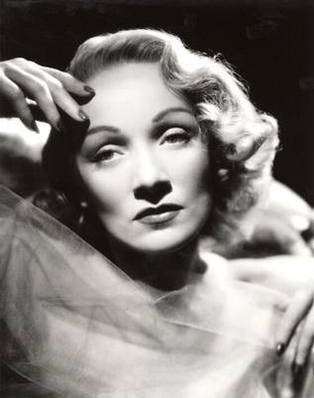
Ethics Hero Emeritus: Marlene Dietrich (1901-1992)

The great Marlene Dietrich, Ethics Hero

It was on this date in 1992 that the magnificent Marlene Dietrich died, in her sleep, in her Paris apartment at age of 91. She had hidden her face from the world since she had stopped performing over a decade before, saying that the public should remember her as she had been. Sadly, Dietrich is one of those former icons of Hollywood whom the public is slowly failing to remember anything about at all; most are more familiar with Madeleine Kahn’s send-up of her in the Western spoof “Blazing Saddles” than they are with Marlene herself. That is wrong, for she deserves better. Not only was Marlene Dietrich a unique performer and important cultural figure, she was also an Ethics Hero.

She was a rising German stage and screen actress when director Josef von Sternberg cast her as Lola-Lola, the beautiful, cynical leading character in “Der blaue Engel,” (The Blue Angel), Germany’s first talking film. The movie made Dietrich a star. Von Sternberg took her with him when Hollywood beckoned and signed her with Paramount Pictures. There Dietrich built her image and legend by perfecting her femme fatale film persona in a series of classic films directed by her mentor: “Morocco” (1930), “Dishonored” (1931), “Shanghai Express” (1932), “Blonde Venus” (1932), “The Scarlet Empress” (1934), and “The Devil Is a Woman” (1935).

Meanwhile, she had already begun fighting Hitler’s regime. Continue reading

Ethics Star and Ethics Hero Emeritus: Elizabeth Taylor, 1932-2011


You did good, kid! Thanks.

I appreciated Elizabeth Taylor, who died yesterday, as a movie star, though I was never a fan. That she was astonishingly beautiful, there is no doubt, an actress who defined the word “voluptuous” when it didn’t mean”implants.” Like many of the Golden Age stars, acting was secondary with Taylor, who had such on-screen presence that she could steal a movie ( “Cat on a Hot Tin Roof”) from the likes of Paul Newman, Burl Ives, Judith Anderson, and yes, Tennessee Williams by just lounging around in a slip. Her best adult performance was probably her first, “A Place in the Sun”; her Oscars were more or less frauds, the first (“Butterfield 8”) as a film community gesture of sympathy for her health problems, and the second, for “Who’s Afraid of Virginia Woolf,” as one of those nods for playing against type without embarrassing yourself that Hollywood likes to bestow on its favorites. Continue reading

Oscar Ethics: Was Melissa Leo’s Campaign Wrong?

On a difficult day, I am not up to writing about heavy ethics issues, so instead I will comment on an ethics controversy that is as inconsequential as possible—one involving the Oscars.

Melissa Leo, a front-running Best Supporting Actress nominee for her role in “The Fighter,” courted controversy by violating one of the Academy Awards’ unwritten rules: “Don’t promote yourself for an Award—it’s tacky!” Leo personally placed Hollywood trade ads showing her in full glamor mode, a sharp contrast to her character in “The Fighter.” The text simply said “Consider,’ then below that, “Melissa Leo,” and in small print off to the side, the web address http://www.melissaleo.com. She argued that she needed to promote herself because her competitors were getting the benefit of big studio publicity, while she was not. Continue reading

Golden Globe Ethics: Ricky Gervais’s Hosting Dilemma

Hollywood is buzzing and griping about the manner in which Ricky Gervais chose to host the Golden Globe Awards last night. The L.A. Times pronounced him “too nasty,” and it was clear as the night went on that his pointed and often personal jibes at the film and television egomaniacs filling the ballroom at the Beverly Hilton were often infuriating or embarrassing his targets. There was even speculation during the show (via Twitter) that he had been fired mid-ceremony. Continue reading