Ethics Quote of the Month: Illya Somin

“Democracy is supposed to be rule of the people, by the people, and for the people. But in order to rule effectively, the people need political knowledge. If they know little or nothing about government, it becomes difficult to hold political leaders accountable for their performance. Unfortunately, public knowledge about politics is disturbingly low. In addition, the public also often does a poor job of evaluating the political information they do know. This state of affairs has persisted despite rising education levels, increased availability of information thanks to modern technology, and even rising IQ scores. It is mostly the result of rational behavior, not stupidity. Such widespread and persistent political ignorance and irrationality strengthens the case for limiting and decentralizing the power of government.”

Illya Somin, Professor of Law at George Mason University School of Law, from his paper and 2013 book of the same name, “Democracy and Political Ignorance.”

Those were the days...

Those were the days…

Somin, who writes frequently on the mostly libertarian law wonk blog The Volokh conspiracy, is a political scientist, but big government progressives should restrain themselves from dismissing his statement (and my endorsement of it) as right wing or partisan rhetoric. Facts and logic should not be partisan or ideological, and it seem inarguable to me that Somin’s statement is correct, and that certain ethical truths follow. If one is going to dispute his conclusion, one must be able to fairly contest the assertions leading up to it. Let’s examine them in that light:

  • “Democracy is supposed to be rule of the people, by the people, and for the people.” Yes, we can agree on that, can’t we?
  • “But in order to rule effectively, the people need political knowledge.” True… at least this was the conviction of Madison, Adam Smith and virtually all of the political philosophers who championed democratic government. I have never heard it seriously questioned. Continue reading
Ethics Note To Senator Cruz: You Can’t Begin A Principled Stand With A Lie

Little is more damaging to the public’s trust and faith in government than when elected officials engage in gratuitous lies—statements that can only convince those who don’t bother to check the facts underlying them, made for their momentary impact on the theory that the effect is worth the eventual exposure of the lie for what it is. Such lies are detestable, because they not only reinforce the impression that politicians lie when their lips are moving, they also convey the message that lies are merely tools of the politicians trade, and not even particularly shameful or worthy of criticism. When a politician engages in such transparent dishonesty, he or she is saying, quite literally, that lying is no big deal.

It is a big deal. It is especially a big deal when the point of the lie is to fool the public into believing something the politician is doing is a big deal itself, when it is really a sham.

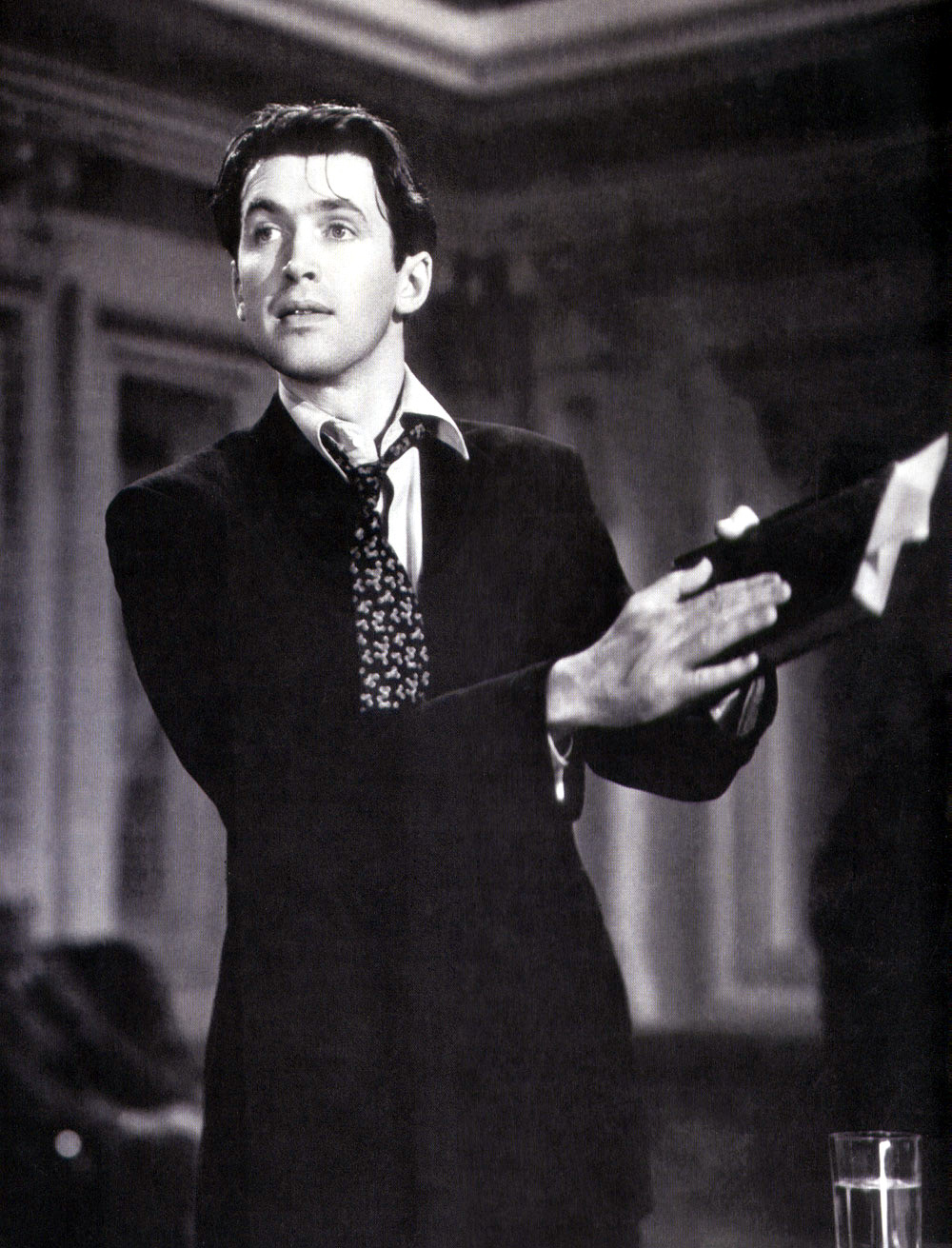
Welcome to Sen. Ted Cruz and his fake filibuster, also known as Ted Cruz’s Bad Jimmy Stewart Impression.

"Ted, I knew Mr. Smith, and you're no Mr. Smith. You're not even Rand Paul..."

“Ted, I knew Mr. Smith, and you’re no Mr. Smith. You’re not even Rand Paul…”

Evoking memories of the Frank Capra classic, “Mr. Smith Goes To Washington,” Sen. Cruz told the world that he was going to talk on the floor of the Senate against Obamacare until he couldn’t stand any more…you know, just like the Jimmy’s idealistic junior Senator in the film, who finally collapses of exhaustion to end his filibuster but whose courage makes the corrupt, manipulating senior Senator from his state confess that he was trying to fund a lousy health care b…no, wait, it had something to do with a kids camp and influence peddling. I haven’t seen the film in a while.

Cruz, however, unlike Stewart, is not engaging in a filibuster, because he is not trying to block a vote or anything else: Senator Majority Leader Harry Reid has scheduled a vote on funding the Affordable Care Act for today, whereupon Cruz has to sit down and shut up whether he can still stand or not. Continue reading

Online Review Ethics: Yelp And The Law Firm

"...and so do our own employees!"

“…and so do our own employees!”

Is it professional misconduct for members of a law firm or the non-lawyer assistants for which they are responsible to post fake reviews of their work to a consumer website? I would argue that could be: it is almost certainly deceptive advertising, which is prohibited to a greater or lesser degree in all state ethics codes, and it is dishonest and misleading communications of the sort that has drawn discipline for some attorneys in other circumstances. Whether or not such a slimy, if common practice (at least among other professions, like wrtiting) is sufficient to raise “a substantial question as to that lawyer’s honesty, trustworthiness or fitness as a lawyer in other respects” will be determined by lawyers themselves, and you would be amazed at what many of them  don’t consider sufficient to do this. I am admittedly extreme on this issue: I don’t think lawyers should lie, and take a dimmer version of even harmless deception than most in my field. This is profession that depends on trust, and the more someone lies—I don’t care about what—the less trustworthy they are.

These issues arise because the online consumer site Yelp appears to have caught employees of the law firm The MacMillan Group posting fake positive reviews about itself, on behalf of fictional clients. Continue reading

Comment of The Day…And An Ethics Quiz, Too! : “Ethics Quiz: The United Airlines Give-Away”

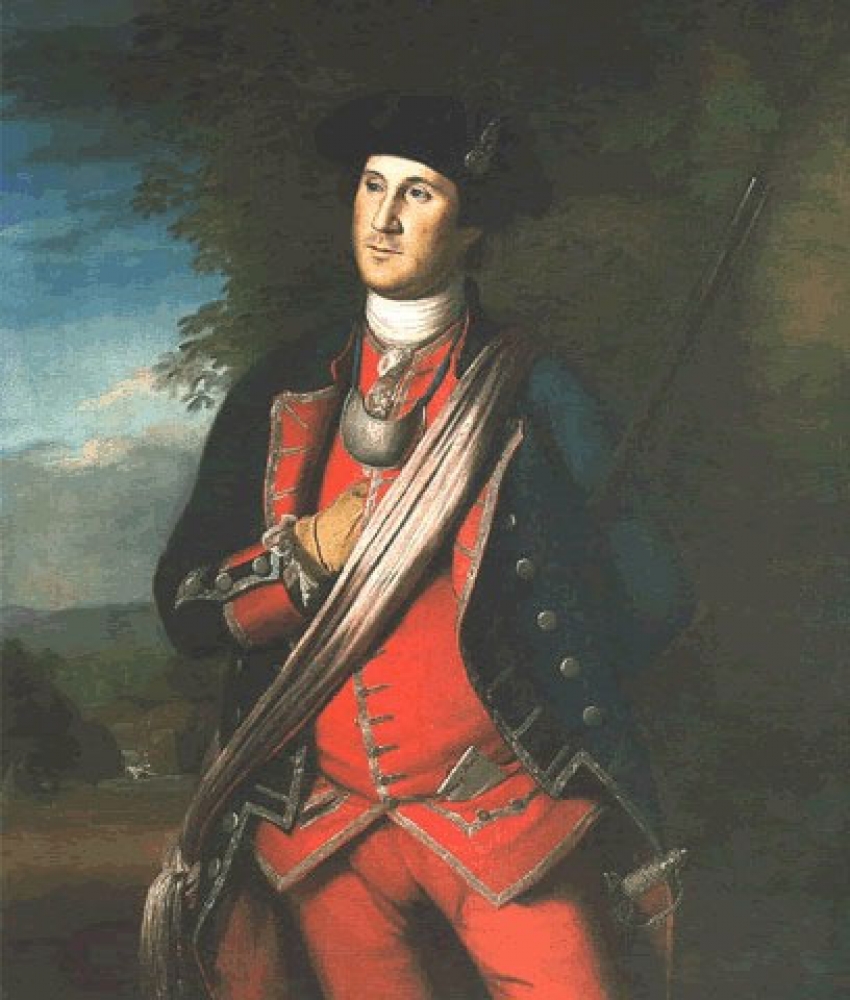
"Oh, this piece of junk? Yeah, who knows who its supposed to be---some guy named Veal or Beale or something painted it, I think. It's been in the attic. Make me an offer!"

“Oh, this piece of junk? Yeah, who knows who it’s supposed to be—some guy named Veal or Beale or something painted it, I think. It’s been in the attic. Make me an offer!”

The Ethics Quiz regarding whether or not it was unethical to take full advantage of United Airlines’  accidental fire sale on tickets spawned several good hypotheticals, including this one, from Tyrone T., an occasional Ethics Alarms commenter who, I happen to know, thinks about these matters as his occupation. I know the answer to this one (I’ve seen it before), so I’ll hold off until you’ve thought about it a while.

Here is Tyrone T.’s Comment of the Day on the post “Ethics Quiz: The United Airlines Give-Away”:

“So, if you are hired by your client to find the cheapest fare, can you act ethically and refuse to take advantage of the error? Consider the following:

“Alexander Mundy is a lawyer and an acknowledged expert in American painting. He has several clients who regularly retain him to negotiate the purchase of museum quality art. Recently, a client hired Mundy to negotiate the purchase of a portrait of George Washington as a young man.

“The client explained, ‘I saw it on a house tour five years ago and tried to buy it then, but the woman who owned it said it was a family heirloom and wasn’t interested in selling. I heard that she died recently and her husband is having an Estate Sale. You have authority to purchase the painting for up to $500,000.’

“Mundy goes to visit the old widower and asks whether he would be willing to sell ‘that picture of the young man there.’ Continue reading

The Authority Trap: Elizabeth O’Bagey’s Three Ethics Strikes

Woman-pulling-off-a-mask

It is not, you see, enough to have a good idea, an original argument, or a brilliant solution.There must be reason for important people, people who make decisions that affect lives, to pay any more attention to you than they do anyone else who claims to have such things, because its is often difficult for even intelligent and experienced individuals to distinguish genius from well-expressed garbage. There must be something that elevates that unique and valuable perspective you bring to a problem above the swirling mess and noise generated by the blabbering and shouting competition, and the thing is, if you really have a valuable perspective to contribute, you owe it to not just yourself, but to your country, even humanity.

There is one asset, if you are otherwise unknown, that will provide that elevation besides the inherent virtues of your brilliant idea, and that is authority...a book, a connection everybody knows and respects, or, perhaps most of all, academic credentials. And there are two things that will make it impossible to raise your special contribution above the throng, and they are a conflict of interest, and a reputation for hiding the truth. These are the murderers of trust.

This brings us to the strange case of Elizabeth O’Bagy, a senior analyst at the Institute for the Study of War, who managed to get the Wall Street Journal to publish her analysis of the civil war in Syria, and her conclusions, based, we were to assume, on her study, analysis and time in the country, regarding the benefits of U.S. employment of military force in the region. Continue reading

Ethics Hero: Glen James

Glen James, role model.

Glen James, role model.

This is straightforward: Glen James, a Boston man who lives in shelters and has no money, found a backpack over the weekend that contained $2,400 in cash, $39,500 in traveler’s checks, passports, and other personal items. James flagged down a passing Boston police officer and gave him the backpack.  As is often the case with stories like this, he doesn’t think what he did was a big deal: after all, isn’t this what anyone would do?

We all know the answer to that question. Continue reading

Ethics Quiz: The United Airlines Give-Away

"Hey everybody! Free fights!!!"

“Hey everybody! Free fights!!!”

Via Forbes:

“For fifteen tense minutes on Thursday afternoon, United Airlines’ fare booking engine was operating at full steam. Someone, likely a Flyertalk user, noticed that fares between Washington DC and Minneapolis were pricing at $10 and posted his finding onto the forum. Attention grew rapidly, with over 100 replies in just an hour, and the news spread to Twitter. The glitch in the system appeared to offer $0 fares plus $5 in tax for many domestic flights, and was apparently caused by human error. Some forum readers reported finding $10 flights between Washington DC and Hawaii, while others scooped up over a dozen tickets to destinations all over the country.”

Your Ethics Alarms Ethics Quiz of the Week,

(as if you couldn’t guess), is:

Was it ethical for people to take advantage of this computer glitch and purchase tickets at an impossible discount?

I bet you also know what my answer is. Continue reading

Ethics Hero: Miss America Contestant Theresa Vail

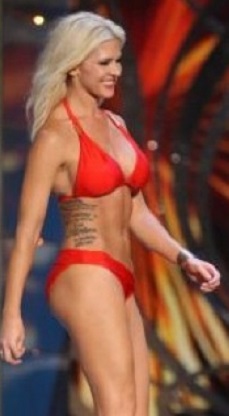
theresa-vailMiss Kansas, also known as Theresa Vail, would be a standout in current 2014 Miss America pageant just based on her unusual set of experiences and talents: the 22-year-old student at Kansas State is a member of the Kansas Army National Guard’s Medical Detachment, a serious bowhunter, a former motorcycle racer, an  M16 marksman, a boxer, an auto mechanic, and an opera singer.* What is ethically of interest, however, is that she wore a bathing suit that  revealed her two tattoos.

This just isn’t done in beauty pageants, not that many contestants are the tatooing sort. Tatoos have traditionally been regarded as ruining a contestant’s “perfection,” and aesthetically, I have to agree: a beautiful woman is still beautiful with something scribbled on her side, but it is hardy an enhancement. But Vial, in announcing her decision on her blog, made a compelling ethical argument for letting her tats show:

“What a hypocrite I would be if I covered the ink. With my platform, how could I tell other women to be fearless and be true to themselves if I can’t do the same?…But I am who I am, tattoos and all.”

That is as good a definition of integrity as you will find. Brava.  Where integrity lies, you can usually find honesty, trustworthiness and courage as well. Continue reading

For Those Of You In The Los Angeles Area…

NPR…I will be on NPR. live, around 11:45 Pacific time as part of a discussion about the Matt Cordle video confession, which I posted about here.

Leadership Trust: Is This Finally The Public’s Tipping Point On President Obama?

giant-jengaTipping points are events that establish major shifts in public attitudes and the culture, and what determines a tipping point varies from circumstance to circumstance. When the switch is flipped on public trust, a leader is done for, at least in a democracy. This is why, in a parliamentary system,  prime ministers call for elections at such times, or even resign. It’s a tradition the U.S. might do well to consider.

The tipping point on the George W. Bush presidency was glaringly obvious: it was the botched handling of Hurricane Katrina, even though that particular fiasco was mostly an example of effective  blame-shifting by New Orleans mayor Ray Nagin. Bush had already accumulated many legitimate reasons to doubt him, but the traditional American eagerness to like and trust whoever holds the same job as Washington, Lincoln and FDR had kept his presidency afloat…until it drowned in Katrina. All was downhill from there.

Interestingly, nobody at the time argued that Americans should support the lousy response to Katrina because not doing so would cripple the Bush presidency going forward. But I digress..

Now it appears that the Obama proposal/decision/ argument—who knows what it really is?—to engage in a limited missile attack on Syria may be the public tipping point on Obama’s leadership, the moment when the veils fall and the nation reluctantly but decisively admits that the man it elected—twice—as its leader cannot be trusted. If so, it is remarkable this took so long, testimony to how much we all wanted our first African-American President to succeed. The tipping point for me was years ago. Following the Bush experience, I thought that the bungled government handling of the Gulf oil spill would clinch it, but no. Then came the Benghazi mess, with an ambassador and other Americans murdered without any decisive response other than deceptive spin and obfuscation to avoid electoral consequences—the I.R.S. tea party harassment (still being investigated, and looking worse all the time)—the NSA revelations, and the growing evidence that while the Affordable Care Act may not be the cataclysmic socialist disaster conservatives claim it is, it is also far from what the President promised. No tipping point though, until Syria, and the consequences flowing directly from the President’s undisciplined off-the-cuff rhetoric—a constantly repeated flaw in his leadership style.

Now, as tipping points do, this current controversy is resuscitating all of the past incidents, and serving as the catalyst for a reappraisal of Obama’s leadership. The looming conclusion is that he cannot be trusted.

Occasionally am beaten to the punch by a pundit or blogger who delivers an essay that says exactly what I was preparing to write, even as I was almost finished writing it. Such a pundit is Forbes contributor Merrill Mathews, who delivered an article on that publication’s website over the weekend, titled “What Happens When You Can’t Believe A Thing The President Says?” (My title was going to be “When Trust Is Gone”).

Some key quotes from the article: Continue reading