Ethics Quote of The Week: Umpire Marty Foster

“I saw the pitch and of course don’t have the chance to do it again. But had I had a chance to do it again, I wouldn’t call that pitch a strike.”

—– American League Umpire Marty Foster, in the wake of the controversy over his game-ending strike call in the Texas-Tampa Bay game last night.

In other words, “I missed it. I was wrong.”

Strike Three?

Strike Three?

Good for Foster. His wildly inaccurate call was strike three on Rays batter Ben Zobrist, who thought that he had worked a base on balls. This would have placed Rays runners on first and second with two outs, creating a reasonable opportunity for the Rays to tie or win the game.  Instead, the Rangers got a gift. Rays manager Joe Maddon, in interviews and in a tweet to his followers, said, “That can’t happen in a major league game,” meaning that the call was beneath major league umpiring standards.  Of Maddon, Foster said,  “He was frustrated and I understand .He acted probably the best he can under that situation.”

Obviously, there have been many, many worse calls, nearly as bad calls, and only a smidge better calls, and there will be this season. In the vast majority of those, umpires have and will remain mum, maintaining that they were in the best position to judge the pitch or the play, and that even video showing their gaffes are misleading. Foster, however, did the hardest thing for many of us: admitting a mistake. Admitting so, to himself as well as the world, doesn’t make him a worse umpire; it makes him a better one.

Note: I apologize for the sparse postings the last few days. I am involved in a night and day project that is preventing me from doing thinking and working on anything else…even baseball. Naturally, the only game update I happened to watch, at 2:20 AM, was an ethics story.

___________________________________

Sources: NBC Sports (and Graphic); Townhall
U.S. Education: A Lost And Untrustworthy Profession

lostThe extent and sheer audacity of the 2009 Atlanta schools testing scandal, now resulting in teachers and administrators facing prison time, shows (or perhaps I should say “should show”) the complete folly of calling for more funding as the solution to the rotting U.S. education system. Indeed, I would argue that budgets should not be increased one penny anywhere until the educational establishment demonstrates that it is capable of policing itself, holding members of its profession to higher standards, which is to say, standards, of ethical conduct and professionalism, and can prove that it is more interested in the goal of teaching students than it is in pensions, job security, and cash. Continue reading

Ethics Hero: Lawyer/Blogger Scott Greenfield

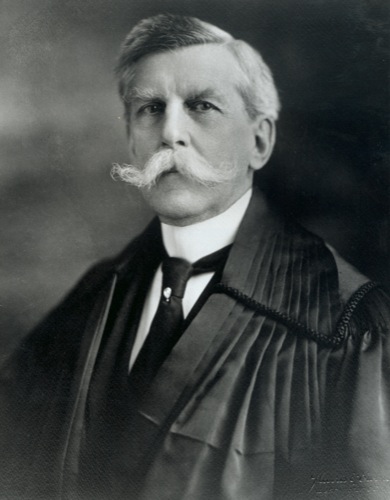
No question: Justice Holmes would think Scott Greenfield is a good man.

No question: Justice Holmes would think Scott Greenfield is a good man.

Criminal defense lawyer and caustic, if trenchant, blogger Scott Greenfield stakes out a noble and correct stand on legal ethics and ethics generally in a superb post titled, “What Tastes Good To You?” Read the entire post, but his essay springs from a question that has been posed in various forums (including,  in slightly different form,the Jack Lemmon comedy “How To Murder Your Wife”), to wit:

If you could commit any crime and get away with it, what would it be? 

Greenfield’s answer, the ethically correct one, is “none” : “Just because we can get away with it isn’t a reason to do wrong.” Thus does he definitively separate himself from what Justice Oliver Wendell Holmes referred to as “the Bad Man” in his famous 1897 essay, “The Path of the Law.”  For Holmes’ “bad man” never breaks a law, but only because he abhors punishment.From this starting point, Greenfield considers a professional debate about whether the legal marketing tactic (as determined by the courts) of buying up another firm’s name as a web “key word” to lead customers to one’s competing firm is “unseemly,” which is to say, unethical, though not technically unethical under the professional rules of conduct. One of the defenders of the practice describes the division on the issue to a difference in “taste,” leading Greenfield to aim carefully and fire: Continue reading

“There Is No Debt Crisis” ? Boy, That’s A Load Off My Mind!

"So far, so good!"

“So far, so good!”

The confluence of head-exploding statements and news keeps coming, with the worst being the recent unconscionable announcements out of the mouths of the President and some of his political adversaries that “there is no debt crisis.”

This is exactly like the old joke about the man falling from a 40 story window, being asked by someone on the tenth floor, shouting through a window as he passes, “How are you doing?” “So far, so good!” he answers. Yet these ridiculous, idiotic or intentionally dishonest statements by President Obama, Speaker Boehner, and others are being cited by the news media as reassuring! No, there’s no debt crisis, if you regard that falling optimist as not being in a smashing-to-pulp-on-the-sidewalk-crisis. The debt increased by a trillion dollars last year, and looks as if it will increase by close to a trillion more by October, 2013. The government has no leadership on the issue, and the various sides appear incapable of forging a solution, with the current Administration actually going out of its way to try to make less than 2% in budget cuts under the absurd sequester hurt as much as possible, to convince a math-deficient public that cutting the size of government is not only impossible but undesirable. This scenario doesn’t demonstrate that there’s a debt crisis? Continue reading

A Party Of Portmans, Of Cynics, Of Losers, Or No Party At All

GOP-ButtonThe just released GOP post mortem on the 2012 election is either wishy-washy, cynical, ambiguous or confused, depending on your level of charity. Personally, I would call it useless, as any internal assessment is likely to be when an organization knows that it will be dissected by unfriendly critics and used against them by outright enemies. It is also depressing.

In its essence, the report is about “messaging,” a.k.a marketing, a.k.a. “making people like what you’re peddling by not really letting them know the truth about it.” Undeniably, the Democrats have been better at this in recent years, as passing Obamacare without ever explaining what was in it either to the public or the legislators voting for it, running in 2008 as the tonic for all of George W. Bush’s supposed assaults on human and Constitutional rights and then pretty much adopting all of them and a couple more, like drone strikes, and perhaps most of all, making “transparency” a centerpiece of the 2008 campaign and then delivering a governing style that is anything but. “Messaging” to political parties means “lying” to the so-called “low information voter,” and no doubt about it, the Democrats were better at lying—not necessarily more prolific at it, now, but better—than Republicans in 2012

They must be so proud.

Thus the post mortem lurches between vague appeals to messaging and disturbing assertions that principle and integrity are just too darn risky in 2013 America. For example, the report notes that Republicans were tarred as the party of the rich–hardly a new label, based on those 1920’s political cartoons I have on file, but apparently more Americans don’t like rich people, and would rather be poor people who take the rich people’s money, or something…the report isn’t quite clear on why being rich in America is now somehow a bad thing. The report, therefore, seems to suggest a range of alternatives: Continue reading

Jumbo of The Month: “The Bible” Producers On The Obama As Satan Problem

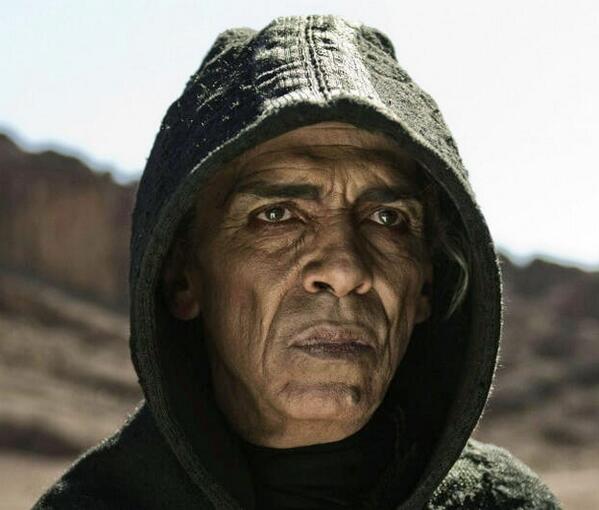
Elephant?

Elephant?

Responding to criticism that the character of Satan in The History Channel’s popular Bible series looks a bit like President Obama—which it does—executive producer Roma Downey said, absurdly, in support of her fellow producers who pronounced the claim as “utter nonsense”:

“Both Mark and I have nothing but respect and love our President, who is a fellow Christian. False statements such as these are just designed as a foolish distraction to try and discredit the beauty of the story of The Bible.”

The essence of a Jumbo, the occasional award given here, is a brassily dishonest statement that evokes the memory of Jimmy Durante in the musical “Jumbo,” caught in the act of trying to steal the largest elephant in the world, and asking the sheriff innocently, “Elephant? What elephant?” as the huge pachyderm looked over his shoulder. Continue reading

“Being White In Philly” And Mayor Nutter’s Unethical Attack

phillymagcoverPhiladelphia Magazine published an article this month titled “Being White in Philly.” Written by Robert Huber, who includes his personal reflections as well as interviews with white Philadelphians, the piece raises troubling and real problems in current U.S. race relations in an open and fearless way that does not usually characterize the media’s handling of the topic. The letters from readers, which you can also read at the link provided above, demonstrate that the article drilled directly into a nerve, and exposed feelings by white citizens, not just in Philadelphia but elsewhere in America, that need to be considered, analyzed, and dealt with whether or not one believes that they are justified or fair. Huber uncovered some of the most stubborn obstacles to a post-racial U.S., and they persist because we remain reluctant to discuss them

It’s an excellent piece of journalism that reminded me of my late roommate in law school, a young, Irish Catholic ex-Marine from the “rough” parts of Philly, who opened my eyes about racial attitudes like no one else I have ever known. He was intelligent, observant, and beyond any question, a racist, and openly admitted it. He also vividly describe the Philadelphia experiences that he felt justified his racism. I could see his handsome smile as I read Huber’s piece. The article itself, however, is not racist in any way.

Mayor Michael Nutter, however, either out of careless reading, racial identification, foolishness or willful blindness, decided to attack the article and the magazine for running it.  He wrote a furious letter of protest to Philadelphia Magazine, a letter which, as I will shortly demonstrate, crossed bright lines of ethical reasoning and appropriate conduct by a government official. Philadelphia Magazine’s editor, Tom McGrath responded perfectly:

“I applaud the mayor for asking for an inquiry into the state of racial issues in Philadelphia. The need to have a deeper discussion about race in Philadelphia is exactly why we ran our story in the first place. Like any reader, the mayor is entitled to think and say what he wants about the story. That said, his sophomoric statements about the magazine and mischaracterization of the piece make me wonder if he’s more interested in scoring political points than having a serious conversation about the issues. Furthermore, his call for a “rebuke” of the magazine by the PHRC is rich with irony. This is the same mayor who just yesterday was shouted down by an unruly mob in City Council; now he himself wants shut down conversation about an important issue in our city. In short, the mayor loves the First Amendment–as long as he and the government can control what gets said.”

Now let’s consider, piece by piece, Nutter’s letter to the magazine, and why it deserved McGrath’s criticism, and more. My comments will be in bold. Continue reading

The Portman Reversal: Why He Did It DOES Matter

reversalI feel it necessary to return to the topic of  Senator Rob Portman’s reversal of his long-held and much-publicized opposition to same sex marriage and homosexuality in general in the wake of his son’s disclosure that he is gay.

Anyone who required further evidence that current events analysis, not to mention public consciousness, is almost untouched by an understanding of ethics, need look no further than the near universal pronouncements in the editorial pages and the Sunday talk shows that “it doesn’t matter” why  Portman suddenly decided that he was in favor of gay marriage once the issue affected someone he cared about.

It is not yet 11:00 AM in Virginia, and I have already read and heard this reaction so many times that the flashing red light on my head that signals an imminent explosion is flashing bright. It doesn’t matter? It doesn’t matter that Senator Portman firmly, strongly, extensively and consistently declared in public forums, to interviewers and in op-ed pieces that the sanctity of the institution of marriage as well as the moral fiber of the nation depended on withholding the right to marry from millions of law-abiding American citizens, but that the minute one such citizen, someone he actually gave a damn about, risked being adversely affected by his supposedly heart-felt and principled position, he changed his “principles” like he was changing his socks? That doesn’t matter? Continue reading

No Hero He: Sen. Portman Demonstrates How To Make Doing The Right Thing Look Terrible

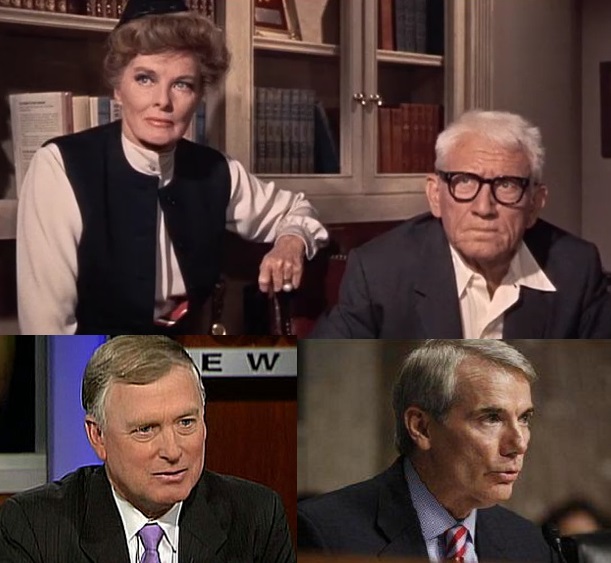
PortmanQuayleTracy

Guess Who’s A Hypocrite?

Sen. Rob Portman’s sudden reversal of his long-held and vocally expressed revulsion toward everything gay—including marriage—is being hailed by some as a virtuous, generous, open-minded and courageous act. It is nothing of the sort.

Portman’s change was precipitated by the fact that his own son….that is, a real person he  cares about…revealed that he was gay, requiring Portman to choose between following through, in ways that would, for the first time, have unpleasant personal consequences, on his supposedly deeply held, faith-based opposition to gay rights in America, or to abandon those core moral beliefs in the time it takes to throw out an ill-fitting pair of pants. What Portman has gone through is a classic “foxhole conversion,” in the manner of the atheist who suddenly finds God when death is near and it seems wise to hedge his bets.

There is nothing courageous or admirable about this at all. To the contrary, it proves that Portman’s earlier position condemning people like his son was based on political expediency, ignorance, recklessness, cold disregard for anyone not like him, or dishonesty, and I really don’t care which.

We have seen such conduct from the Right before, memorably in Dan Quayle’s admission that despite his absolute conviction, or so he had said, that abortion was morally wrong and ought to be illegal even in cases of rape or incest, he would, hypothetically, support his teen-aged daughter’s decision to have an abortion because he loved her. We have seen it from the Left, too, as in the situation memorably dramatized in the film “Guess Who’s Coming To Dinner?” Individuals who advocate political, economic, moral and policy positions that they would oppose in the jerk of a knee if they had real, personal consequences are undercover hypocrites. They have not applied the Golden Rule;  how they would feel if the were in the position of those whose lives they so cavalierly would affect has never entered their consciousness. What this flip-flop tells us about Sen. Rob Portman is that nobody should respect or take notice of what he thinks or says he thinks, and that having such a man casting one of a hundred votes in the U.S. Senate means that the body is, at best, only 99% responsible, competent or trustworthy. Continue reading

Self-Serving Twitter Plagiarism From Shia LaBeouf

"How To Be A Jerk"

“How To Be A Jerk”

Actor Shia LaBeouf has two impressive achievements, neither anything to be proud of, but impressive nonetheless. In a showdown with World Champion Hollywood creep Alec Baldwin, LaBeouf, against all odds. managed to come off as the bigger jerk. In the process, he created, or at least gave unprecedented publicity to a new ethical transgression: Twitter plagiarism.

You will recall LaBeouf, if you recall him at all, as the former Disney Channel child star who had movie hits with “Disturbia” and the “Transformers” franchise, as well as gaining a form of lasting notoriety as Indiana Jones’ son in the fourth and lamest installment of that classic series. He also has established a reputation for being trouble, and this week it was revealed that he had been fired (the old “artistic differences” excuse) from what was supposed to be his Broadway debut in the new play “Orphans,” starring Baldwin. The exact reasons are unclear, but incompatibility with Baldwin was part of it.

How do I know that LaBeouf, rather than the famously volatile Baldwin was at fault? Simple, really. Baldwin is the show’s star; he has theater credentials; he’s an established pro. It is part of LaBeouf’s job to get along with him, not the other way around. He could also learn something from Baldwin, who, though it seems hard to imagine, was once an even bigger jerk than he is now—so big, that at one point his career had gone from losing the Jack Ryan franchise (to Harrison Ford) to playing the conductor in the sad and awful movie version of “Thomas the Tank Engine.” Baldwin knows where Shia is headed, and could help stop him from going there.

In the wake of his canning, LaBeouf took to his Twitter feed and posted various e-mails leading up to his fate. One of them was erudite and almost poetic:

“A man can tell you he was wrong. That he did wrong. That he planned to. He can tell you when he is lost. He can apologize, even if sometimes it’s just to put an end to the bickering.”

Hey! Jerk or not, this guy can write! He has a brain!

Well, no, not really: he has a computer, and can cut and paste. His words were lifted from Tom Chiarella’s essay in Esquire, “How To Be A Man.” Continue reading