Ethics Heroes: Doug Wilder and Artur Davis


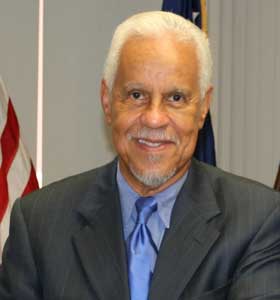
Like everyone else, Doug Wilder knows what ““they’re going to put y’all back in chains” meant. Unlike most Democrats, he has the integrity to admit it.

Democratic flacks and media mouthpieces for the Obama campaign have thoroughly disgraced themselves and insulted the intelligence of the American public by twisting words and logic to argue that Joe Biden’s “put y’all back in chains” rhetoric was something other than the divisive race-baiting it was. Eventually, in such episodes of lock-step partisan dissembling, there are a noble and courageous few who refuse to go along, and black leaders Artur Davis, a co-chair of President Obama’s 2008 campaign, and Doug Wilder, the first African-American governor (of Virginia, where Biden made his comments) have stepped to the fore. Continue reading

Ethics Quiz: Was CNN’s Soledad O’Brien Unethical to Crib From A Liberal Blog, or Just Unlucky To Get Caught?

Conservative media sources are calling CNN’s Soledad O’Brien biased and unobjective (Soledad O’Brien? Biased? Nawwwww!) because a CNN cameraman inadvertently caught her cribbing from the leftward blog “Talking Points Memo” for ammunition as she questioned  Virginia House of Delegates Republican member Barbara Comstock regarding new-GOP Veep nominee Paul Ryan’s budget proposals. The blog post she was reading from was called “The Myth of Paul Ryan The Bipartisan Leader.” At one point, O’Brien claimed to be reading a release from Senator Wyden’s (D-OR) office, but  she was actually reading an excerpt from the blog that included a quote from Wyden. Newsbusters, the conservative counterpart to the Left’s Media Matters, regards this is a real gotcha!, concrete proof of  the unethical coordination between the mainstream media, progressive attack blogs, and the Democratic party.

Your Ethics Quiz for today: Was O’Brien’s use of the Talking Points piece to debate Comstock unethical journalism? Continue reading

Of Fareed Zakaria, Scraping, Plagiarism and Hypocrisy

Is it “Oops!”, “Damn!” or “Better luck next time”?

I once had a dear friend in the DC theater community who committed an industry taboo when he mounted a play before, rather than after, obtaining the performing rights. His company was in the red, and his intent was to get some advance sales to pay the licensing fees that he otherwise couldn’t afford. It was a desperate, foolish scheme and an unethical one, as he readily admitted, and my friend paid dearly for it, as he was fired as the head of the theater company he had founded, and rendered a pariah in the community. What always infuriated him, however, was the instant condemnation and pious pronouncements he received from his peers in the theater world. “I know for a fact that everyone of them either would have done the same thing or had done the same thing, or worse, to keep their theaters running,” he told me.  “I was wrong and I know I was wrong, but for them to act as if I am some kind of a monster when I know they are really thinking, ‘Yikes! I better be more careful, that could have been me!’ is driving me crazy.”

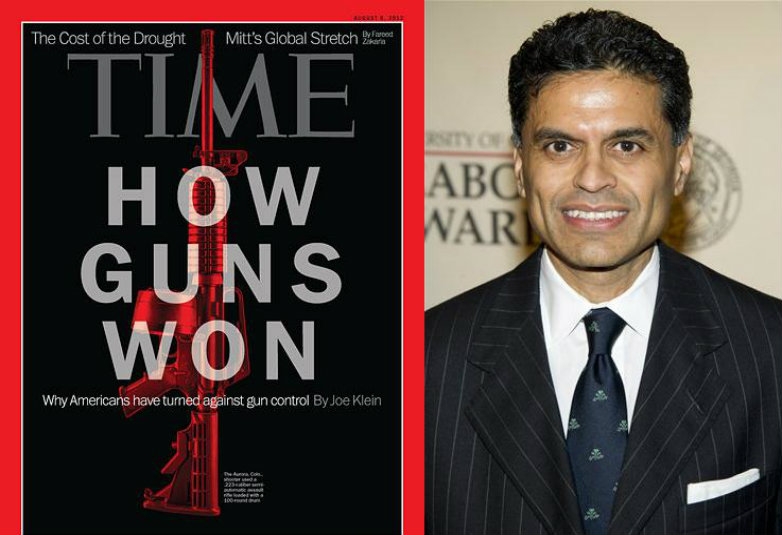
I wonder if disgraced CNN host and Time writer Fareed Zakaria is thinking the same thing as his colleagues in the news media and assorted web commentators are describing him as a plagiarist and an untrustworthy fraud in the wake of his suspension for lifting a paragraph from another writer’s work  and putting it in his own Time essay without attribution. After the parallel passages were flagged on the conservative website Newsbusters (you didn’t think he would have been outed by a liberal site, did you—or that Newsbusters would have been looking for plagiarism from a rightward  journalist?) both Time and CNN suspended Zakaria indefinitely.

This was the appropriate response. Zakaria is an opinion journalist, or a pundit: the idea that he is surreptitiously cribbing from others undermines his credibility substantially and perhaps fatally. That is not an entirely fair description of what Zakaria did, however.  What he engaged in was “scraping,”  the web-age technique where an author cuts and pastes a passage or more from another work and uses it as the foundation for a portion of a supposedly original article. When the passage in question is substantive, contains the ideas and conclusions of the author  whose work is being scraped, or is the product of another writer’s research, that is indeed plagiarism. When the passage being scraped is something the borrowing author could have written himself, however, it is more accurately described as lazy. It is still wrong, but it does not necessarily rise to the level of intellectual theft that can reasonably justify calling the author untrustworthy. Continue reading

The Despicable Ryan Holiday

Sub-title: “Buy This Book—You’re An Idiot”

You know those science fiction movies where a scientist can’t get anyone to listen to him about the threat of a man-made virus getting out of control and destroying the world decides to prove his point by creating a virus that then gets out of control and destroys the world? Or the ones about the government computer geek who drives people crazy complaining that the nation’s systems are vulnerable to cyber-attack, so he creates a bug to prove his point and it sends the country back to the stone age?

Ryan Holiday is like those guys. Fortunately, he isn’t a scientist or tech whiz, just an unscrupulous writer and a liar, so his unconscionable stunts to “prove a point” don’t risk ending civilization. Ethically, however, he is no better than those fictional characters, and arguably he is worse. At least those brilliant boobs were trying to prevent a catastrophe. Holiday is just trying to sell his book.

The book is about the news media’s vulnerability to bad information, so Holiday, a 25-year-old marketing director for American Apparel, decided to prove his thesis with an “experiment.” He got himself listed as an “expert” on an online resource for reporters, and when they contacted him, he lied to them. One of the media sources that fell for his deception was the New York Times, which subsequently published this after a story using Holiday’s lies made it into the News That’s Fit to Print, when it wasn’t: Continue reading

Comment of the Day: “Is a Transgendered Woman Ethically Obligated To Tell Her Boyfriend That She Used To be Male?”

You never know. My post about the ethics of withholding the fact of one’s past and altered gender from a potential spouse sparked the most passionate, erudite and instructive debate among readers that Ethics Alarms has seen in a long time, involving an all-star squad of some of this blog’s best minds. The prize goes to Zoebrain, though, who scores the Comment of the Day with this three part contribution. It’s long; don’t let that discourage you. It, and the whole thread, which you can find here, is well worth your time, because you will learn something. I did.

“May I give an extended set of replies here please? You see, this isn’t a hypothetical for me, it’s an actual. Continue reading

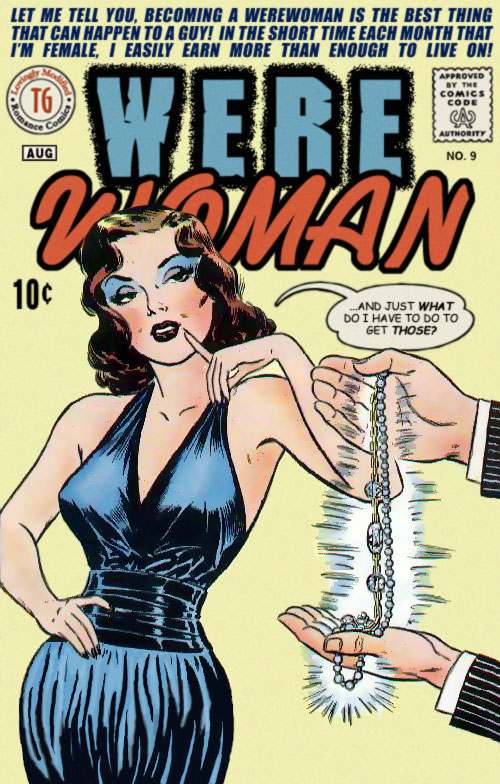
Is a Transgendered Woman Ethically Obligated To Tell Her Boyfriend That She Used To be Male?

“Is this a bad time to tell you that I used to be a man?”

Sometimes I wonder if Emily Yoffe’s Slate advice column (“Dear Prudence”) is like the old Penthouse Forum, where it was clear to any reader who hadn’t purchased the Brooklyn Bridge twice that a team of giggling writers was coming up with the feature’s bizarre letters about orgies with amputees and people having sex in piles of fresh fish. But never mind: her most recent column makes an interesting ethical assertion is response to a woman who is troubled that her transgendered cousin refuses to tell her serious boyfriend about the jockstrap in her past:

“I think you should tell your cousin she’s living in a dream world and that she’s being unfair to John, even if he has a lack of desire for children. Of course, it could be that John flees, or it could be that he says, “She’s more than woman enough for me.” But it’s his right to know the crucial piece of history.”

I agree with Yoffe that the cousin is deluded if she thinks she can keep her past gender hidden forever if the relationship continues, and that the revelation of a secret of such magnitude is bound to be more disruptive the longer it is hidden. But is she correct that he has a right to know about it? Elsewhere Yoffe suggests that not telling him is dishonest. Why?

I understand the theory that couples shouldn’t withhold personal information from one another in the interest of mutual trust. Surely each member of a committed couple has an obligation to reveal any personal information that has the potential to affect the other. Is there an obligation to reveal personal information that one knows a boyfriend or girlfriend will be shocked to learn, or that will tap into visceral fears or biases? Author William Saroyan left his wife on their honeymoon when she revealed to him that she was Jewish, which highlights the irony of the problem: if a woman knows that a secret may cause a lover to reject her, however irrational that reaction would be, then is she ethically obligated to tell him but not obligated if she is sure he wouldn’t care? In other words, is one only ethically obligated to reveal the secrets that will destroy a relationship?

That seems strange. Continue reading

Comment of the Day: “Ethics Quiz: The Peculiar Ethics of Carnival Games”

Reader John Owens supplies  perspective and expertise on carnivals and local fairs in his Comment of the Day regarding the post “Ethics Quiz: The Peculiar Ethics of Carnival Games.”    Here it is: Continue reading

Ethics Quiz: The Peculiar Ethics of Carnival Games

The AARP website has a post about rigged carnival games, a topic that I have always found intriguing from an ethics perspective. The games…The Basketball Shoot, The Balloon Dart Throw, The Ring Toss, The Milk Bottle Pyramid, The Duck Pond and the rest…are rigged, and I can’t remember a time when I didn’t know they were rigged. It didn’t stop me from playing the silly things. A carnival is a state of mind, a flashback to the days of P.T. Barnum and flim-flam artists. An ethical carnival? Isn’t that an oxymoron? We eat terrible food, pay to go on disappointing rides, listen to barkers who we know are lying through their teeth, and play games that are scams in order to win cheesy prizes worth a fraction of what we paid out to win them and that we wouldn’t dream of buying outside a carnival anyway. That’s the carnival experience. It’s all unethical, and we consent to it.

Or is this just a rationalization? Is capitulation the proper ethical course, or should we carefully regulate carnival games, make sure all of the food is cholesterol-lite and sugar-free, and force the barkers to issue disclaimers and warnings like the recitations in TV drug commercials?

That’s your Ethics Alarms Ethics Quiz for the day, my friends:

Do traditional unethical practices become ethical in the culture of a carnival and similar environments, where the public voluntarily participates in and consents to its own victimization?

With cotton candy dancing in my head, corn dogs singing their siren song and images of the Wild Man of Borneo howling in my fevered brain, I have to confess that my inclination is to say, “Yes.”

And you?

_______________________________________________

Spark: AARP

Graphic: Photolibra

Ethics Dunce: The Internal Revenue Service

Question:

What is the monetary value of something that can’t be sold?

Answer:

Nothing.

That’s an easy one.

So why is the IRS claiming that the heirs of the New York art dealer Ileana Sonnabend  owe $29.2 million in taxes on an art work that U.S. prevents from ever being converted into cash? Continue reading

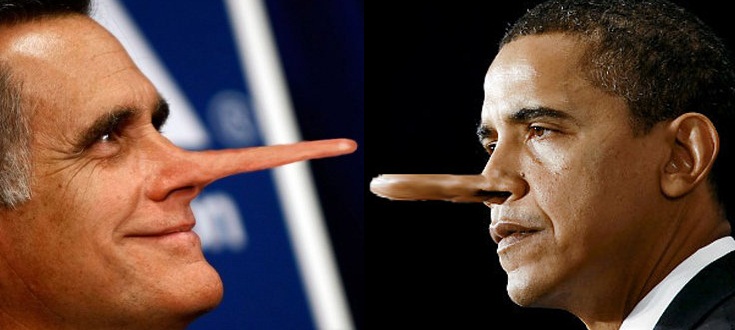
Liars For President

I don’t know about you, but I don’t want a liar as President. I’m not talking about the kind of lies that are periodically unavoidable in leadership and governance, as much as we would like to pretend they are not. I’m talking about “I did not have sexual relations with that woman” type of lies, intentional falsehoods designed to deceive the public for  political advantage with no benefit to the nation or its occupants whatsoever. Unfortunately, we are about to elect a liar as President, because lying in political campaign ads, and particularly negative ads, is sunk deep into the system like an inoperable brain tumor. It is fair to say that every President since George Washington has done it, and thus the public accepts it, and the news media shrugs it off. Continue reading