Brain Freeze Ethics and Rick Perry

In a moment of awkwardness that is sure to get as much attention and YouTube views as the donkey bray that knocked Howard Dean out of the 2004 presidential race, Gov. Rick Perry insisted in last night’s GOP candidates debate that it was crucial to eliminate three government agencies (he meant “departments”) and couldn’t come up with the third. “Oops,’ he said sheepishly, after he had done a credible impression of Monty Python’s “Spanish Inquisition,” which could never quite recall all of their “methods.”

Perry’s brain freeze isn’t likely to improve his standing, though anyone inclined to be fair should be wary of declaring a sudden attack of aphasia conclusive proof that Perry is unqualified to be president: just try re-capturing that elusive word or name on the tip of your tongue when you are in front of an audience, not to mention national television. It has happened to me more than once, and I suspect that anyone who does much public speaking or performing watched Perry’s crash last night with instant horrible memories of similar experiences best forgotten.

But this morning on CNN, Perry’s response to a question about his flub did disqualify him for national office. He was obviously appearing on the morning news show for damage control, and planned what his response would be to the inevitable question. And what was Perry’s plan?

Duck responsibility, and blame everyone else.

“Well, I wasn’t getting any help from either side…” were the first words out of the Governor’s mouth. Continue reading

The University of Illinois Law School Statistics Scam and the Responsibility of Being a Corporate “Person”

The scandal itself is self-explanatory. The ethical issue I am most concerned with is not, but it is more important than the scandals.

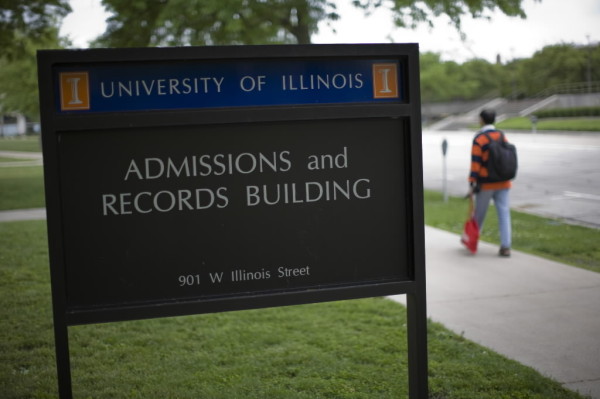
The University of Illinois has confessed that its law school reported and published inaccurate admissions data in six of the last ten years. An investigation determined that the law school reported false LSAT and GPA data for the class of 2008 and the classes of 2010 through 2014, and fabricated the acceptance rate data for the classes of 2008, 2012, 2013 and 2014, as a result of  both overcounting the number of applicants and undercounting the number of admissions offers the law school made. The purpose of all this, of course, was to enhance the school’s rankings to bring it better applicants, which translate into more successful alumni and bigger gifts.

Solely responsible for the deceptions, the school says, was Paul Pless, the law school’s assistant dean for admissions and financial aid during that period, who resigned last week. Naturally, the 114-page report concludes with recommendations to improve the school’s oversight and controls and ensure a “culture of integrity and ethical conduct.”  This will help persuade the American Bar Association, which is looking into the matter, not to punish the law school, since it has now seen the light…having been caught. Pless, you see, was most of the problem. Continue reading

Ethics Exercise: Being Fair To Herman Cain Now

The other shoe.

In the wake of Sharon Bialek’s  press conference describing an alleged incident involving of attempted quid pro quo sexual harassment by Herman Cain in 1997 [read the account here] , and the Cain camp’s instant and unequivocal denial, fair Americans are posed with a classic ethics challenge: how do they assess her accusations while being fair to the accused? It is a daunting problem, with many components. How do can we compare Cain’s credibility with Bialek’s? What, relevance, if any, does the timing of her appearance have? How are the previous, still anonymous, un-detailed allegations of hostile work environment harassment to be factored in to our calculations?

Addressing this conundrum requires wading into a jungle of biases, presumptions and  caveats. Among them:

1. Is Bialek credible? Continue reading

When Telling The Truth Is An Outrage

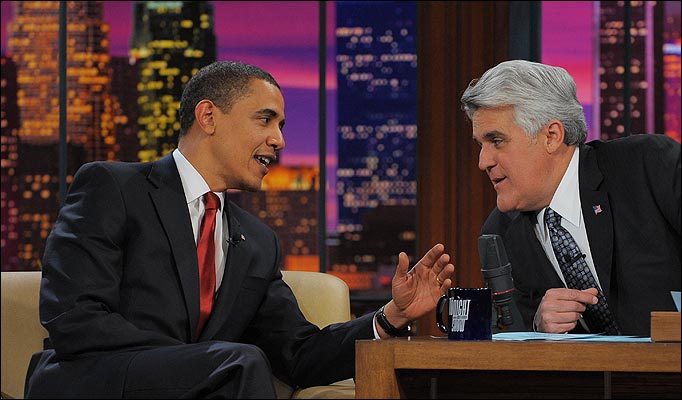
"Imagine, Jay...the Republicans want to defeat me!"

President Obama visited the Tonight Show last night, and Jay Leno, as is traditional and proper on such occasions, sucked up to him with gusto. In one exchange, the President and Jay tut-tutted about Sen. Mitch McConnell’s infamous statement that the Republican Party’s objective would be to make Obama a one-term president. “How is that a goal?” Jay asked.

Is he serious? Well, okay, I know he’s a comedian and all, so maybe he’s not serious, but all the pundits and journalists and Democrats who have been squealing to the skies for two years about how McConnell’s remark proves that his party is unpatriotic, evil or racist are presumably serious, and it is disingenuous. Continue reading

Donna Brazile Opens An Ethics Can Of Worms On “The Good Wife”

Is this the real Donna Brazile or the fake one?

The increasingly common practice of using real political figures playing themselves in dramas made me queasy from the beginning, and now I know why.

“The Good Wife,” CBS’s excellent legal drama now highlighting that network’s Sunday nights, has made such blurring of the real and fictional something of a trademark, featuring such real-life political power-player as Fred Thompson and Vernon Jordan in past episodes, not merely in cameos, but participating in substantive scenes as their real-life selves. Last night, Democratic Party strategist Donna Brazile, who had earlier in the day participated in Christiane Amanpour’s roundtable on ABC, played herself in the episode’s fictional meeting between her and  Eli Gold (Alan Cumming), the ethics-free campaign manager for the Good Wife’s Creepy Husband, Peter Florrick (Chris Noth). I must say, Donna Brazile made an extremely convincing Donna Brazile. She has a future in acting, as long as she can play herself. The problem is what fictional Donna Brazile told fictional Eli Gold, and the immediate, and confusing real life ethical issues it raises. Continue reading

Robert Samuelson’s Brilliant, Ethical, Hopeless Proposal

Great idea, Robert. Too bad it requires courage and honesty.

I don’t generally regurgitate other writers’ essays, but in this case I am making an exception. Robert Samuelson, rare among op-ed columnists in that he is a truth-teller without party bias, has a column today that proposes a joint act of integrity and heroism by Barack Obama’s immediate predecessors. His idea, if implemented, could have a major impact on breaking the impasse in Congress that threatens the nation’s future. It could be accomplished without bureaucratic red tape, and is profoundly responsible and ethical. And it would burnish the legacies of two former presidents who could use some burnishing.

Will it happen? Never. That’s the disturbing part. Continue reading

Getting Scrod* in Boston: The Ravages of Seafood Fraud

“Why, certainly that’s a red snapper, sir! Just came off the boat today!!”

If there is an opportunity for profitable dishonesty that nobody is paying attention to, the overwhelming likelihood is that it will flourish to the point of becoming standard practice.

Isn’t that discouraging? I hate to write that sentence, as I hate to think or accept the conclusion behind it. Yet when I come upon a topic like seafood fraud (or fish fraud), it is hard to deny.

The Boston Globe just published the results of a wide-ranging, five-month investigation into the mislabeling of fish in the Greater Boston area and other parts of Massachusetts. The shocking results showed that Bay State consumers:

“…routinely and unwittingly overpay for less desirable, sometimes undesirable, species – or buy seafood that is simply not what it is advertised to be. In many cases, the fish was caught thousands of miles away and frozen, not hauled in by local fishermen, as the menu claimed. It may be perfectly palatable – just not what the customer ordered. But sometimes mislabeled seafood can cause allergic reactions, violate dietary restrictions, or contain chemicals banned in the United States.

“The Globe collected fish from 134 restaurants, grocery stores, and seafood markets from Leominster to Provincetown, and hired a laboratory in Canada to conduct DNA testing on the samples. Analyses by the DNA lab and other scientists showed that 87 of 183 were sold with the wrong species name – 48 percent.” Continue reading

The Selfish Brother, the Stranded Passengers, and the Key To Ethical Problem-Solving

Carolyn Hax is an advice and relationship columnist, not an ethicist. Still, her ethical instincts, values and ethics problem-solving technique are impeccable. This week, she schooled her readers on the most important step in approaching any ethical dilemma: define the problem correctly.

An inquirer asked Hax,

“Am I being selfish in insisting that my parents can stay with us for only two weeks after the birth of our first child? My brother thinks so and isn’t speaking to me.”

As the letter proceeded, crucial details appeared.  The writer’s parents had suffered some kind of financial crisis that required them to move into the brother’s home. The brother’s wife is pregnant. It looks like the stay will be six months, and the brother wants his sibling’s family, new baby notwithstanding, to do its fair share. Two weeks out of six months doesn’t seem fair to Bro.

Hax nailed the problem with the letter immediately: Continue reading

What Would Happen If, While Submitting To a TSA Search, You Started Singing “The Piña Colada Song”?

"Would you cut the comedy please? I'm trying to feel you up!"

A retired Air Force Lt. Colonel apparently was arrested at a TSA airport checkpoint after she refused to stop reciting the Fourth Amendment of the Bill of Rights (“Searches and Seizures”) while she was being screened. You can read her account here.

I’m not going to jump on the bandwagon of the various commentators from both sides of the political spectrum who are leading condemnation of the incident. My interest is in the ethics of the encounter and its subsequent reporting, as I do not see this as an example of official abuse and suppression of rights.

I object to much of how the Department of Homeland Security and the TSA has handled airport screening policy since 2001, as I discussed in this post and elsewhere. I agree that the public should not meekly accept what it regards as unjustified intrusions on their privacy, dignity and health, and that complaining, petitioning the government, putting pressure on elected and appointed officials and leveling criticism in various forums is a necessary and reasonable response. Nevertheless, the episode described in the accounts of this arrest has been mischaracterized. It was a situation in which TSA agents were placed in an impossible situation for the purpose of generating third-party indignation. The woman engaging in the protest also targeted individuals who can only be called innocent parties, the TSA screeners. They have a job, they have procedures to follow, and they have to follow them. They also have a lousy job, having to brush up against the privates of strangers while being glared at or verbally abused.

My question, as with many protests, is, “What was the objective here?” To be as annoying as possible? To cause a scene? To let everyone in the vicinity know that the woman objected to the procedures? To come as close to interfering with the screening process as possible without justifying an arrest? To get her name in the papers? To delay her fellow passengers, most of whom just want to get through the vile process and make their flights?

Or to get arrested? Continue reading

Comment of the Day: “Dear AIG: I’m Not Going To Be Able To Keep Criticizing Occupy Wall Street For Destructive Class Warfare If You Act Like This”

Michael, who now leads the field in Comments of the Day, picks up another with his commentary on my post about AIG’s continuing habit of living large on taxpayer funds. Here are his reflections on the post  Dear AIG: I’m Not Going To Be Able To Keep Criticizing “Occupy Wall Street” For Destructive Class Warfare If You Act Like This:

“A company can allow any expenses they want. That being said, since they are now majority owned by the US government, we need to ask who is giving the go ahead to things like this? Why haven’t they been fired? The Wall Street culture is so entitled and so out of touch with the reality of the common Americans that it is almost beyond belief.

“The Occupy Wall Street group could have a lot of legitimate gripes, but they don’t seem to have anyone with half a brain in the group. Instead of hearing “I want them to take the money from rich people and give it to me” form a college aged girl wearing $500 worth of clothes or “I have gone to every protest I can find for the last 40 years” from the aging hippies, why not try one of the following angles: Continue reading