More Tebow Ad Ethics: Allred’s Complaint

The much-anticipated Super Bowl ad telling the story of how quarterback Tim Tebow was born because his mother rejected a doctor’s advice to have him aborted for medical reasons is spinning off ethical issues at a dizzying rate.

Some are easily settled, as Ethics Alarms has already noted. There is nothing wrong with a Super Bowl ad raising substantive issues in the middle of beer commercials and tackles, as some have (incredibly) argued. There is nothing unethical about CBS changing its policy regarding issue-oriented commercials.  The fact that the network rejected such ads in the past does not make it hypocritical now. CBS, having ended a blanket prohibition, must now be fair and reasonable in deciding which issue ads to accept. Let’s see how it goes before we cry foul.

And there is nothing “anti-choice” about a woman’s story of how she chose not to abort her son, and is glad she did. It is not even an anti-abortion ad, unless the pro-abortion movement literally believes that it is wrong not to have an abortion. She had a choice, and she made it. The message of the ad does encourage thought about the consequences of having the procedure, which is unequivocally good.

Now, however, Hollywood lawyer and woman’s rights advocate Gloria Allred has suggested that Tebow and his mother are spinning a tale that is inspiring, powerful, and full of baloney, and she has sent CBS a letter of protest. Continue reading
What Rudyard Kipling Taught My Father

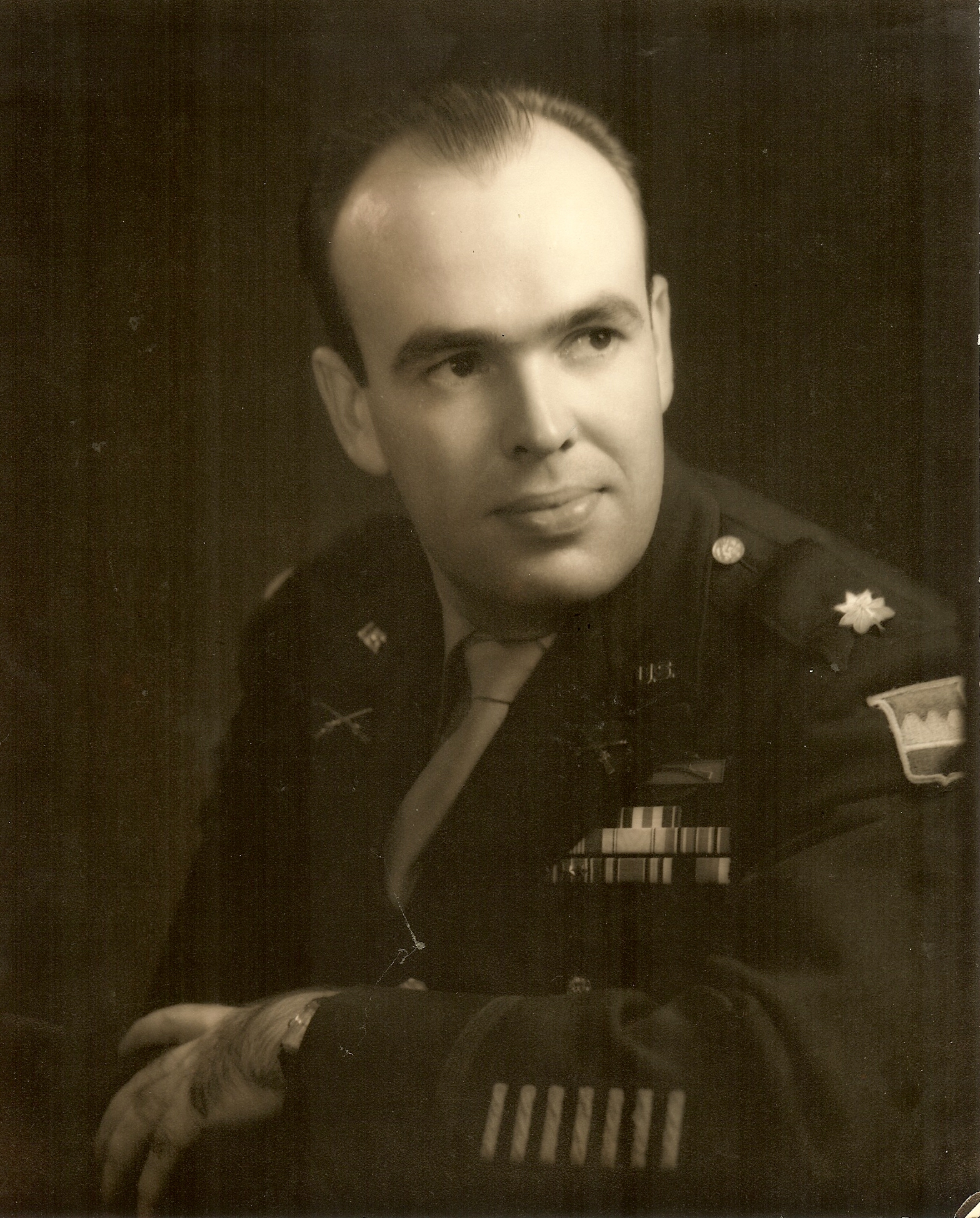
Jack Marshall Sr Army portrait

Today the Army buried my father, Major Jack Marshall, Sr., with full military honors. He had earned them, for he was a hero in World War II. Let me correct that: every soldier who serves in battle is a hero, but my Dad had a few special distinctions, like a Silver Star and a Bronze Star to go with his Purple Heart.  He  sustained a crippling wound to his foot from a hand-grenade, healed enough to jam what was left of it into a boot, and went on to fight in the Battle of the Bulge.

Under the clearest of blue skies, with the cemetery covered in snow, a caisson drawn by black horses, one without a rider, carried my father to a gravesite ceremony where the American flag draping his casket was carefully folded by six soldiers and given to my mother, following a 21-gun salute. My father was a hero off the battlefield as well, a profoundly ethical and courageous man throughout his life, and how he got that way is worth examining. Continue reading

Ethics Quote of the Week

“Edwards, who wore expensive Italian suits, had panicked prior to a debate in front of an American union group. The label inside his jacket read “Made in Italy.” Sensing he might be about to step in a political cow pie if one of the unionists inquired, he asked Young about the label inside his own suit jacket. Young’s read “Made in the USA.” Edwards ordered Young to immediately take both jackets to a tailor and switch the labels. Later Edwards played back a videotape of the debate and complained to Young about how his suit appeared to be wrinkled where the labels had undergone the old switcheroo.”

————– Former John Edwards aide Andrew Young in his soon-to-be-released  book, The Politician

There are those who argue that small deceptions like this are meaningless. They are wrong. Continue reading

State of the Union Ethics Alarms

President Obama’s State of the Union message didn’t quite set off accusations of mendacity on the scale of President Bush’s yellow cake uranium comment in 2003, and Rep. Joe Wilson didn’t yell out “You lie!” (thanks for that, Joe), but the President did make some assertions that, if not intentionally inaccurate, were recklessly misleading. The most striking one was contained in the President’s attack on the recent Supreme Court decision in Citizens United v. Federal Election Commission He said:

“With all due deference to separation of powers, last week the Supreme Court reversed a century of law that, I believe, will open the floodgates for special interests, including foreign corporations, to spend without limit in our elections.”

This prompted Justice Joseph Alito, sitting with his colleagues, to say quietly, to himself or to Justice Sotomayor who was next to him, “Not true, not true.” And he was right: much of the statement wasn’t accurate. (Was Alito’s mouthed protest any sort of civility breach? No. Obama couldn’t see it; it is possible nobody heard it at all. Justice Alito was not mouthing the words for lip-readers in the television audience. No ethics foul. However, Alito may want to practice his poker face in the future.  Next time, he won’t be so surprised: for a President to directly criticize the Supreme Court in his address is almost as rare as a Congressman shouting “You lie!”) Continue reading

James Cameron, Poul Anderson, and Posterity’s Loss

James Cameron, whose ground-breaking film “Avatar” will soon be the top-grossing movie of all time, is currently being bashed in some of the more obscure corners of the blogosphere for plagiarism. This time the criticism is not based on his blatant borrowing from Russian science fiction, but for his lifting of ideas from an American master of the genre, Poul Anderson. Anderson wrote a novella in 1957 entitled “Call Me Joe” that chronicled the adventures of a paraplegic who becomes telepathically merged with a manufactured alien life form created to explore a planet. He is exhilarated by the sensations and power of his artificially-created body, and eventually is seduced into abandoning his humanity completely to become a significant figure in the development of a new civilization. Along the way, he battles vicious alien creatures. Sound familiar? Yes, these are major components of “Avatar” as well. Continue reading

“The Ethicist” Strikes Out Again

I’ll make a deal with Randy Cohen,”The Ethicist” of The New York Times Magazine: I’ll stop criticizing his column when he stops justifying dishonesty. Lately, Cohen has not only been advising his correspondents to avoid telling the truth but headlining the questions where he does so.

Lie proud, Randy!

This week’s endorsement of forked tongues surrounded the sensitive issue of designating a guardian for one’s child. Parents had asked their good friends, another married couple, if they would agree to care for their daughter in the event that the parents perished while she was a child. After the couple enthusiastically agreed, the parents learned that their friends were not sufficiently responsible with their finances, and liked to “live large.” They no longer trust the couple with their daughter’s welfare, and want to re-assign the responsibility of being emergency guardians to relatives. This will require the parents to change their wills.

Their question to “The Ethicist”: Do they have to tell their friends? Continue reading

Final Ethics Alarms on the Coakley-Brown Race: Fairness and Honesty Take a Holiday

Some concluding Ethics Alarms from the Brown-Coakley Senate race, many with the same dispiriting lesson: hyper-partisan zealotry is causing many Americans to abandon their senses of fairness, proportion, and common sense : Continue reading

“The Ethicist” Jumps the Rails!

An ethical dilemma is a situation that requires us to choose between an ethical course and one that fulfills a non-ethical want or need, like getting a promotion, winning the love of our soul-mate, or improving our financial status. Choosing the ethical option often has negative consequences, but it is still the ethical option. Thus it is more than a little disheartening to read the advice columnist who calls himself “The Ethicist” supporting the unethical option—the one that rejects an ethical value in favor of self-interest. Continue reading

Erroll Southers: Right Result, Wrong Reason

Erroll Southers, President Obama’s nominee to head the Transportation Security Administration, withdrew his name today, citing political opposition. His nomination had been held up by Republican Sen. Jim DeMint, who wanted Southers’ assurances that TSA workers wouldn’t be unionized. That’s a legitimate issue, but Southers should have lost his nomination when it became clear that he had lied to Congress about an incident in which he had breached his own agency’s security to do investigative work on his estranged wife’s activities. Continue reading

Obamacare Ethics: Prof. Gruber’s Conflict and Democratic Deceit

Professor John Gruber, meet Armstrong Williams. Obama Democrats, meet the Bush Republicans. The names and faces may change, but the unethical tricks remain the same. Continue reading