The Worst Humanitarian Award Winner of the Year

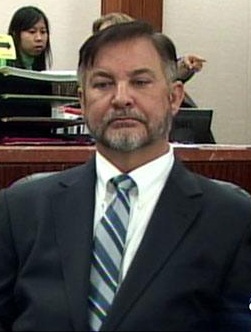
Michael Brown---wife-beater, humanitarian.

Michael Brown founded Houston’s Brown Hand Center, which specializes in the treatment of carpal tunnel syndrome. He is now on trial for assault, after being arrested last year for attacking his his wife, twisting her arm behind her back and, among other things, hurling his 2010 Joanne King Herring Humanitarian Award at her.

I have often thought that those who give out humanitarian awards for specific instances of good conduct have an ethical obligation to make sure that recipients conform to the definition of “humanitarian” in their overall conduct. One of the definitions of humanitarian is “ethical.” Official pronouncements that an individual is ethical can be very effective false advertising for the character of someone who is anything but. Mr. Brown illustrates my concerns.

By 2010, when Brown received his award, he had already pleaded no-contest in 2002 to aggravated assault for beating then-pregnant wife, Darlina Brown, with a bed post. Call me a stickler, but I think there should be an automatic “Beating a pregnant woman with bedpost” disqualification provision for humanitarian awards. Then, in 2006, Dr. Brown’s medical license was revoked after he tested positive for cocaine use. So to summarize, at the time he was deemed worthy of the honor of being the 2010 humanitarian of the year, Brown was already an admitted wife-beater and an ex-doctor found unfit for the continued practice of medicine.

What a guy!

How about a rule that if you try to kill someone with your humanitarian award, it is automatically revoked?

Too strict?
 

Comment of the Day: “Death Photo Ethics”

Tim LeVier elaborates on the ethical awkwardness of President Obama’s stated rationale for not releasing Osama’s death photos, the topic of the post, Death Photo Ethics: Continue reading

Death Photo Ethics

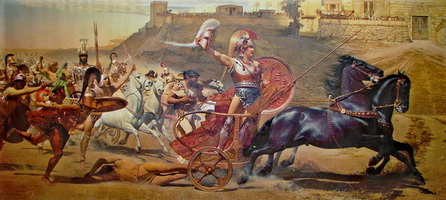
Even before Achilles dragged the corpse of Hector behind his chariot through the dust around the walled city of Troy, the tradition of demoralizing the enemy by degrading and displaying the bodies of its dead heroes was well-established. The United States was horrified when this was done to our fallen servicemen in Somalia, and it is one of the most barbaric and unnecessary practices of war.  While the Geneva Convention doesn’t mention the displaying of enemy corpses, a 2005 publication by the Red Cross called Customary International Humanitarian Law does. It was written to address issues that international treaties omitted, and its Rule 113 reads:

“Each party to the conflict must take all possible measures to prevent the dead from being despoiled. Mutilation of dead bodies is prohibited. Continue reading

Ethics Hero: George Clooney

An ethical challenge that all of us face now and then involves being present in a gathering when a host, a friend, a colleague or someone else makes an objectively bigoted or outrageously unfair and disrespectful  statement about a group that is not represented and thus unable to defend itself. At such times we all have a duty to confront and correct the speaker and condemn the sentiment, but the execution is difficult, and requires tact, knowledge, clarity and courage. Doing and saying nothing, however, gives the speaker and his slander support and tacit endorsement.

Fortunately, thanks to the magic of on-line video and George Clooney, we now have a lovely “How To” clip that demonstrates the right way to discharge one’s ethical duty in these awkward situations. Continue reading