On Trump’s Fight Fight Fight Perfume

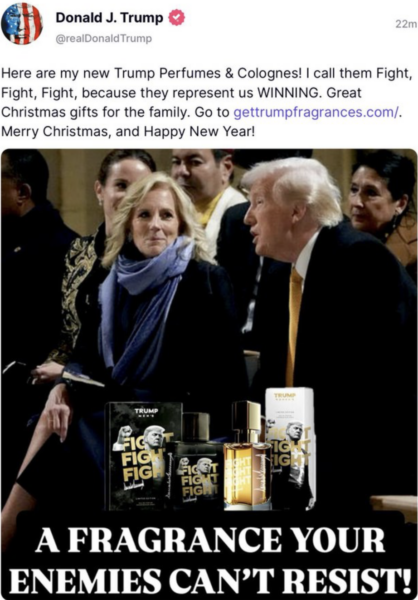
No doubt about it, one of the “norms” that President-Elect Donald Trump is shredding, stomping on and setting on fire is the tradition of Presidents not using their office, visibility, popularity and influence to sell products, with their names as brands. I’m not sure doing this had even occurred to previous White House residents; it certainly never occurred to the Founders…or me, to be honest.

Naturally, because it’s Trump, the usual Axis snipers are horrified. A particularly stinky response issued from New York Times Trump-hating columnist Frank Bruni‘s poison keyboard, titled “Take a Whiff of Eau de Trump. It Reeks.” [Gift link! Ho Ho Ho!]This is what the Axis propaganda machine is left with: playground-level insults for the elected President before he can even take the oath. Honeymoon? Respect? Good faith? Patriotism? Unity? Bi-Partisanship? Nah! What are they?

Continue reading

“Ick” or Ethics? The Miracle Baby

Awww. Isn’t that romantic? Two inmates charged with murderer managed to conceive a love child while in prison without ever meeting each other face to face.

Daisy Link, 29, is charged with second-degree murder after being accused of killing her boyfriend in 2022. Joan Depaz, 23, (pronounced “JO-an”] is facing trial for first-degree murder. Both are being held at Metrowest Detention Center in Miami.

Link began talking to Depaz through the connecting vents in their cells. They fell in love. Then the love birds decided to have a child together. So Depaz deposited his semen in Saran Wrap about five times a day for about a month. The packages were pulled through the vents by Link using bedding material. Link inserted the fresh sperm using a yeast infection applicator. Eventually…success! She became pregnant, and now Depaz’s mother is raising the baby girl born in June.

Officials are conducting an internal affairs investigation. Yes, I’d agree that this is prudent.

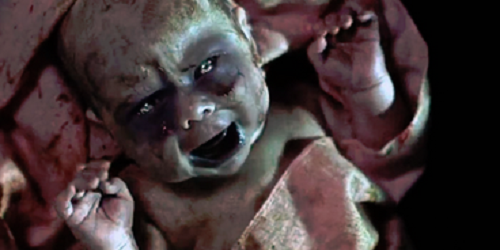
What a lucky kid. She gets to grow up with the prospect of having both parents locked up until she’s out of high school, after being raised by a family that already spawned one killer, and is stuck with some problematic material from the gene pool. Memories of “It’s Alive” are creeping through my fertile but twisted brain.

Still, you never know: where there is life, there is hope. Some remarkable people have been born under less promising conditions. I think.

______________

Pointer: JutGory

“Ick or Ethics” Ethics Quiz: The Robot Collaborator

As Jackie Gleason, aka. “The Great One,” used to say to begin his popular variety show on CBS (“Jackie Gleason? Who’s he?”), “And awaaaaay we GO!”

Rie Kudan, accepting the prestigious Akutagawa Prize for promising new Japanese writers, told the audience that her novel, “The Tokyo Tower of Sympathy,” was co-authored by ChatGPT and other AI programs. She revealed that her novel, which is about artificial intelligence, had approximately 5% of its dialogue composed by the popular bots and added by her “verbatim” to the text. “The Tokyo Tower of Sympathy” has met with unanimous raves by critics: “The work is flawless and it’s difficult to find any faults,” said Shuichi Yoshida, a member of the prize judging committee. “It is highly entertaining and interesting work that prompts debate about how to consider it.”

It seems clear that the author’s public admission (“I made active use of generative AI like ChatGPT in writing this book. I would say about five per cent of the book quoted verbatim the sentences generated by AI.”) was designed to fuel that debate.

I think we can all agree that this was shrewd on the author’s part. But is what she admitted to ethical?

Your Ethics Alarms Ethics Quiz of the Day is…

Is having an AI program write all or part of your book or novel ethical, or merely something that feels wrong right now that we’ll eventually accept?

Continue reading

“Ick” vs. Ethics: The Nazi Gems Collection

Once again, we encounter the conundrum of so-called “dirty money.”

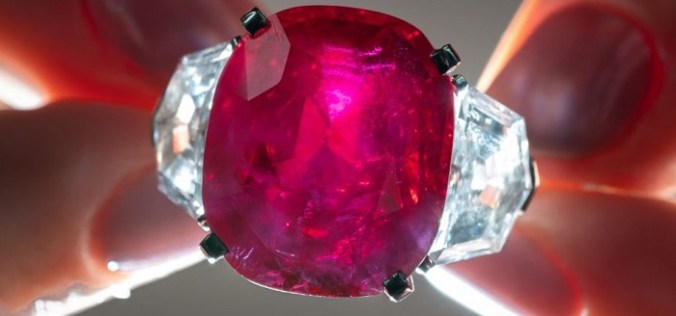
In May, the auction house Christie’s sold a collection of jewels and jewelry from the estate of Heidi Horten, an Austrian philanthropist. The auction earned $202 million, establishing the Horten sale as the biggest precious gem sale ever. There was, however, an ethics controversy: all that jewelry had been bought with a fortune amassed by Horten’s husband Helmut, a Nazi who bought up Jewish businesses in forced sales during the Holocaust.

The Holocaust Educational Trust called the May auction a “true insult to victims of the Holocaust.” Yoram Dvash, president of the World Federation of Diamond Bourses, wrote, “In a time of Holocaust denial and the resurgence of antisemitism around the world, we find it especially appalling that a world-renowned auction house would engage in such a sale.” David Schaecter, president of Holocaust Survivors’ Foundation USA, which represents support groups for victims’ families in the U.S., called the sale “appalling” and said it had perpetuated “a disgraceful pattern of whitewashing Holocaust profiteers.” But Christie’s officials argued that the proceeds of the sale would go to the Heidi Horten Foundation, which supports medical research and a museum containing her art collection. The auction house also pledged to donate some of its own profits arising from the sale to Holocaust research and education.

Since May, however, attacks on the collection, Chistie’s, and the money paid for the jewels at auction have escalated. Christie’s announced this week that a scheduled November sale of more lots of jewelry from the Heidi Horten collection would be canceled, citing the “intense scrutiny” from Jewish organizations and some critics. The Jerusalem Post reported that other Jewish groups had rejected Christie’s donations from the May auction.

Continue reading

Ethics Quiz: Hitler’s Watch

Adolf Hitler’s watch, shown above, recently sold at auction for over a million dollars. (The auction house had been expecting more, between 2 and 4 million.) The sale provoke some angry rhetoric online: many believe that it is unethical, indeed immoral, to acquire, keep or sell artifacts from Nazi Germany. In several countries, putting such things up for sale is illegal.

Your Ethics Alarms Ethics Quiz of the Day is this:

Is it unethical to sell or buy Hitler’s watch?

Continue reading

Icky Or Unethical? Alexa Is Learning A New Trick

From Ars Technica:

Amazon is figuring out how to make its Alexa voice assistant deepfake the voice of anyone, dead or alive, with just a short recording. The company demoed the feature at its re:Mars conference in Las Vegas on Wednesday, using the emotional trauma of the ongoing pandemic and grief to sell interest.

Amazon’s re:Mars focuses on artificial intelligence, machine learning, robotics, and other emerging technologies, with technical experts and industry leaders taking the stage. During the second-day keynote, Rohit Prasad, senior vice president and head scientist of Alexa AI at Amazon, showed off a feature being developed for Alexa.

After noting the large amount of lives lost during the pandemic, Prasad played a video demo, where a child asks Alexa, “Can grandma finish reading me Wizard of Oz?” Alexa responds, “Okay,” in her typical effeminate, robotic voice. But next, the voice of the child’s grandma comes out of the speaker to read L. Frank Baum’s tale.

Continue reading

The Tattooed Baby

Ick or Ethics?

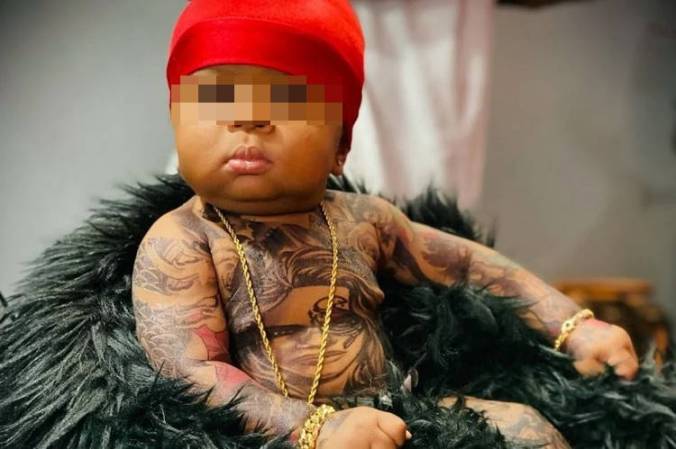
Shamekia Morris, a fashion designer from West Palm Beach, started putting temporary tattoos on her son Treylin when he was six months old. Now she shares photos of her decorated baby with thousands of fans on social media.

She is, as you would guess, covered with tattoos herself. To her critics, she replies that it’s her lifestyle and her baby, and she’ll do with both as she pleases.

You know. Choice!

It may be icky, but this is definitely unethical. She’s using her baby as promotion, an involuntary human canvas, and a means to the end of getting web traffic, all without his consent or understanding. Her exploitation of her child is dehumanizing and disrespectful, as well as selfish.

The question such a parent should ask herself is, “How will my child feel about so many strangers seeing these photos when he’s old enough to understand?” The answer is that there is no way to tell, which means that the only ethical course is to err on the side of caution, minimizing the likelihood of harm.

__________________

Source: Oddity Central

Facial Recognition Software Isn’t Unethical, And Neither Is Clearview

New technology that is called “unethical” because of how it might be used unethically in the future, or by some malign agent, illustrates an abuse of ethics or, more likely, a basic misunderstanding of what ethics is. Technology, with rare exceptions, is neither ethical not unethical. Trying to abort a newly gestated idea in its metaphorical womb because of worst case scenarios is a trend that would have murdered many important discoveries and inventions.

The latest example of this tendency is facial recognition technology. In a report by Kashmir Hill, we learn that Clearview AI, an ambitious company in the field, scraped social media, employment sites, YouTube, Venmo—all public—to create a database with three billion images of people, along with links to the webpages from which the photos had come. This dwarfed the databases of other facial recognition products, creating a boon for law enforcement. The report begins with the story of how a child sexual abuser was caught because he had inadvertently photo-bombed an innocent shot that had been posted on Instagram.

This episode resulted in wider publicity for Clearview, which had attempted to soft-pedal its database and methods because it was afraid of the typical “unethical” uproar.

Continue reading

Ann Althouse Meets Spuds: On Althouse Saturday, Two Canine Ethics Questions From The Blogger I’ve Been Meaning To Answer

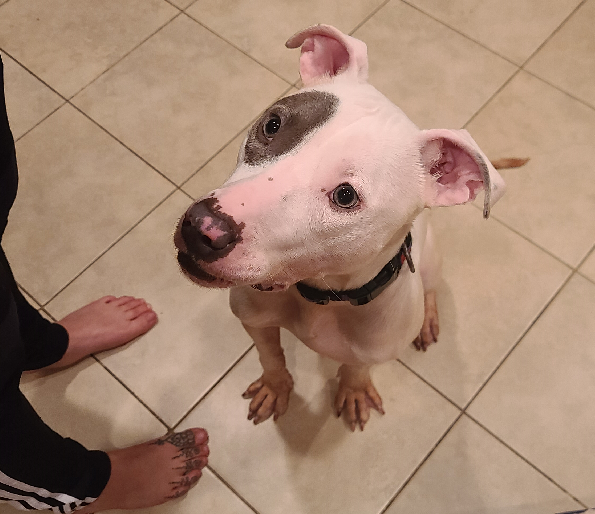
Our rescue dog Spuds is gradually coming into his own now: after being starved by his previous owner, he finally is secure enough to leave some food in his dish and finish it later. He’s also finding his inner puppy at 2 and a half, which is both challenging for us as he gets stronger, and fun. I honestly don’t know how we went so long without a dog in our home after Rugby left us.

Ann Althouse, whose opinions have been unusually visible on Ethics Alarms today,  raised two dog-related ethics issues since we adopted Spuds last month, and since the dog left me panting by running me over hill and dale this morning as I allowed him to run off leash for the first time, addressing them now seems like a timely task.

(As I type this, Spuds is trying to climb onto my desk…)

1. On August 23, Althouse wrote,

Why don’t the people who think you should get a “rescue” dog when you want a dog also think you should get a “rescue” child when you want a child? In fact, isn’t the argument for adopting an older child with special needs even stronger than the argument for adopting an older dog that hasn’t had the advantages of a loving home and careful training? After all, many dogs are euthanized, but we strive to keep all our children alive even when they have terrible behavioral problems. And dogs are kept under the control of owners all their lives, while children become adults and are allowed to move about freely in the world even when they are quite dangerous. It’s therefore especially important to take great care of all of the children who have been born into this world.

People will say that they want their own biological offspring, but what makes you think what you have to give genetically is so wonderful? Dog breeders have much higher standards selecting which dogs to use for breeding. People just decide to use themselves. When you have your own biological children, you’re picking yourself because you are yourself. I’m not saying that’s wrong. In fact, I think it’s quite beautiful, making something out of your own body and the body of a person you love. So I’m beginning to see the answer to my question. When you have your own child, you’re not being a eugenicist, looking for the ideal baby. You’re accepting the randomness of who you happen to be and who you’ve found to love. The baby grows out of that is more like a rescue dog than a breeder’s dog.

I do think Althouse answered her own question., at least the human part. Having a child (or many) with someone you love is part of the human experience, helps bind couples and society together, and is a spiritual as well as a natural biological act. Of course, that description assumes a lot: that the child was planned, that the parents love each other, that they are married, and that there are no known toxic hereditary traits to avoid. Continue reading

“Fertility Equality”

This ethics topic has been lying around on my office floor—literally—for more than a month now. I have not known what to do with it. The New York Times—it is for occasional articles like this that I subscribe to that habitually unethical paper—published an article in July headlined (in the print version) “The Right To A Baby?” It appeared in its “Thursday Styles” section, which specializes in elite trivia (the other piece on that section’s front page was about tattoo artist and dog groomers who make house calls).

Here is the first part of the article:

While plenty of New Yorkers have formed families by gestational surrogacy, they almost certainly worked with carriers living elsewhere. Because until early April, paying a surrogate to carry a pregnancy was illegal in New York state.

The change to the law, which happened quietly in the midst of the state’s effort to contain the coronavirus, capped a decade-long legislative battle and has laid the groundwork for a broader movement in pursuit of what some activists have termed “fertility equality.”

Still in its infancy, this movement envisions a future when the ability to create a family is no longer determined by one’s wealth, sexuality, gender or biology.

“This is about society extending equality to its final and logical conclusion,” said Ron Poole-Dayan, the founder and executive director of Men Having Babies, a New York nonprofit that helps gay men become fathers through surrogacy. “True equality doesn’t stop at marriage. It recognizes the barriers L.G.B.T.s face in forming families and proposes solutions to overcome these obstacles.”

The movement is led mostly by L.B.G.T.Q. people, but its potential to shift how fertility coverage is paid for could have an impact on straight couples who rely on surrogates too.

Mr. Poole-Dayan and others believe infertility should not be defined as a physical condition but a social one. They argue that people — gay, straight, single, married, male, female — are not infertile because their bodies refuse to cooperate with baby making.

Rather, their specific life circumstances, like being a man with a same-sex partner, have rendered them unable to conceive or carry a child to term without medical intervention. A category of “social infertility” would provide those biologically unable to form families with the legal and medical mechanisms to do so.

“We have this idea that infertility is about failing to become pregnant through intercourse, but this is a very hetero-centric viewpoint,” said Catherine Sakimura, the deputy director and family law director of the National Center for Lesbian Rights. “We must shift our thinking so that the need for assisted reproductive technologies is not a condition, but simply a fact.”

Fertility equality activists are asking, at a minimum, for insurance companies to cover reproductive procedures like sperm retrieval, egg donation and embryo creation for all prospective parents, including gay couples who use surrogates. Ideally, activists would also like to see insurance cover embryo transfers and surrogacy fees. This would include gay men who would transfer benefits directly to their surrogate….
Observations:

  • I see this as an excellent example of how a threshold decision in an ethical analysis of any new idea is whether bias and the automatic prejudice human beings tend to have against any new concept—basically the “Ick Factor”—is making a fair analysis impossible. It’s hard to do; our tendency with such ideas is to think, “That’s ridiculous!” and  stop there. But of course, that was the original majority reaction to many ideas that were revolutionary at one time but that represented the progress of ethics, which is evolutionary by nature and necessity. We always are learning that there are things we thought were right and “natural” that were, in fact, wrong, and that some concepts that society viewed as wrong for centuries were either neutral or benign.

That process is what ethics is. Continue reading