Ethics Observations On The GOP New Hampshire Debate

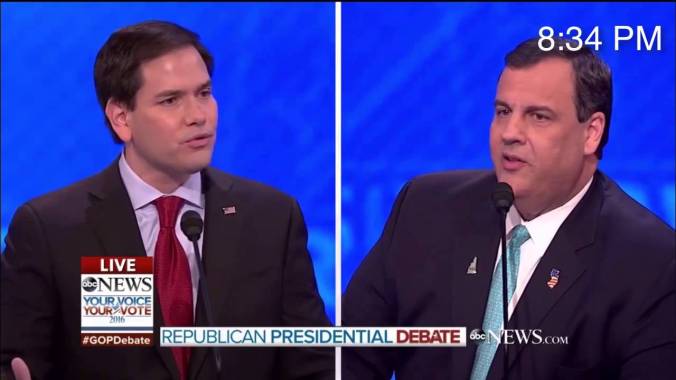
Rubio meltdown

Two ethics controversies occurred before the ABC debate (transcript here) even began.

  • DNC chair Debbie Wasserman Schultz really is a shameless and audacious hack. Does anyone seriously defend her? After being justly criticized in the news media for unabashedly hiding the Democratic candidates debates, staging them on weekends and against football games to smooth the road for Hillary, she actually had the epic gall to accuse the GOP of doing the same thing in a tweet yesterday, which read:

“Hmmm, wondering why @GOP trying to hide their #GOPdebate on the Saturday of #SuperBowl weekend no less?!”

Is she that lacking in self-awareness? Was she mocking herself? Is she an idiot? After she was blasted left and right for the tweet, she either revealed her real objective or concocted a face-saving retort:

“.@TheDemocrats debates set viewer records. Both parties’ broadcast network debates on wknds. Replies to SuperBowl #GOPdebate make my point,”

Whether this was her original intent of a U-Turn, it was also her trademark, a ridiculously transparent lie. “TheDemocrats debates set viewer records” is deceit: all the debates by both parties have exceeded previous viewer levels, but the Republican debates have significantly out-drawn the Democrats. There is no doubt that the Democrats would have drawn more had they avoided weekends like Republicans did, and that the fact that they did not was entirely intentional.

Why do Democrats tolerate a sleaze like Wasserman Schultz? It is natural to judge a party by its leadership, and she is neither bright, nor honest, nor effective,  nor appealing.

The other issue was the unfairness of leaving Carly Fiorina out of the debate. I don’t pretend to understand the formula used to demote the candidates, but since all of the other potential debaters–Gilmore, Graham, Huckabee, Santorum, Paul—had dropped out, either Fiorina should have been given a chance to debate herself for two hours, which would have been fun, or be in the main debate. Her New Hampshire poll numbers are equivalent to several who debated last night.

Debate observations: Continue reading

Fetuses In Landfills: “Ick” or Unethical?

"Rest in Peace, my potential son"

“Rest in Peace, my potential son”

From the a press release from Ohio’s Attorney General, Mike DeWine:

(COLUMBUS, Ohio)—Ohio Attorney General Mike DeWine today announced that his office has concluded its investigation into the alleged sale of fetal tissue by Planned Parenthood affiliates. While the investigation did not find any indication that fetal tissue was sold by Planned Parenthood affiliates in Ohio, the investigation did reveal that that aborted fetuses from Planned Parenthood facilities are ultimately disposed of in landfill sites.

…Mike DeWine directed his Charitable Law Section to investigate whether Planned Parenthood affiliates … were violating Ohio law by selling fetal tissue…in violation of Ohio Revised Code 2919.14….The investigation showed that the disposal methods documented by the Planned Parenthood affiliates violate Ohio Administrative Code 3701-47-05, adopted in 1975, which requires that a “fetus shall be disposed of in a humane manner.” Specifically:

  • All three Ohio Planned Parenthood affiliates have sent fetal remains to companies which disposed of the fetuses in landfills.
  • Additionally, the Planned Parenthood facility in Bedford Heights stated it uses only one company for disposal. However, that company stated to investigators it does not accept fetal remains for disposal as a corporate policy.

Interesting! Continue reading

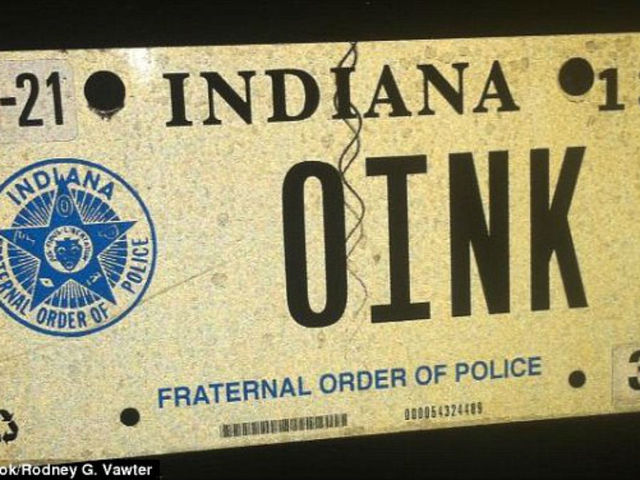
Law vs. Ethics: A Snatched Bar Mitzvah Gift, A Leaky AG, An Embarrassing Scoreboard, and”OINK”

Oink

I try to keep my legal ethics seminars up-to-the-minute, so while preparing for yesterday’s session with the Appellate Section of the Indiana Bar, I came across a bunch of entertaining stories in which the ethics were a lot clearer than the law, or vice-versa. All of them could and perhaps should sustain separate posts; indeed, I could probably devote the blog entirely to such cases.

Here are my four favorites from the past week’s legal news, involving a mother-son lawsuit, a brazenly unethical attorney general, a college scoreboard named after a crook, and police officer’s sense of humor: Continue reading

Death Throes Of The Death Penalty: Dumb Expert, Dumb Advocates, Dumb Debate

“Next!”

As I recently concluded, the death penalty is beyond saving, not because it can’t be defended ethically and morally, but because the issues are tangled beyond repair.

The controversy over the legality of the so-called drug cocktails that somehow became our execution method of choice is a perfect example. The battles over capital punishment trapped policy-makers into this kinder, gentler, ridiculously complicated method of execution that has suffered snafus ranging from unavailable drugs to ugly extended deaths. The problem is the floating definition of “cruel and unusual punishment,” prohibited by the Constitution, but almost entirely subjective. Many judges think killing a killer is itself cruel by definition, and the more reluctant Western Europe becomes to execute the worst of the worst, the easier it is to make the argument that the death penalty is also unusual.

I don’t get it. I never have. India once executed condemned criminals by having the subject place his head on a stump under the raised foot of  trained elephant, which on a command would smash the head like a grape. Quick, painless–messy!—but virtually fool-proof. A pile-driver would be an acceptable equivalent.  Ah, but ick! In this stupid, stupid, intellectually dishonest debate, ick always equals “cruel and unusual,” because to opponents of the death penalty, killing people, even horrible, dangerous people, is inherently icky.

(Oddly, ripping unborn babies out of the womb is not, but I digress.)

I’ve admitted it, and I will again. (This lost Ethics Alarms Luke G., one of its best commenters the last time.*) It is obviously wrong to intentionally prolong an execution or deliberately cause pain, but if the occasional execution is botched and the condemned suffers, that should be cause for great rending of garments, nor should it be used to discredit capital punishment. As I wrote here about Clayton Lockett’s execution in Oklahoma

“There was no question of Lockett’s guilt, and his crime was inhuman. Such wanton cruelty and disregard for innocent life warrants society’s most emphatic rebuke, and the most emphatic rebuke is death. It is essential that any healthy society make it clear to all that some crimes forfeit the continued right to not just liberty, but also life. Anyone who weeps because this sadistic murderer experienced a few extra minutes of agony in the process of being sent to his just rewards has seriously misaligned values. No method of execution will work every time, and to make perfection the standard is a dishonest way to rig the debate. If the death penalty is justified, and it is, then we should expect and accept the rare “botch.” Meanwhile, if the concern really is efficiency, reliability, speed of death and minimal pain, there are literally dozens, maybe hundreds of methods of swift execution that would accomplish this. They just won’t pass the standards of death penalty opponents, because no method will.”

Today the Supreme Court heard oral arguments on the question of whether Oklahoma’s use of the common surgical sedative midazolam did not reliably make prisoners unconscious during lethal injections, thus violating the Eighth Amendment’s protection against “cruel and unusual punishment.” It’s a ridiculous case, which arises out of the botched April 2014 execution of Lockett that sparked the post I just quoted. It is a ridiculous case because the method of execution isn’t worth arguing over. Elephant. Head. Problem solved. Why is Oklahoma fighting about which cocktail to use? This is the anti-capital punishment team’s game, and sooner or later, the result is preordained.  Continue reading

“Ick Factor” At Its Worst: No, The Bystander Who Took The Video Of Walter Scott’s Shooting Isn’t “Cashing In”

Q. "Oh, ICK! Why would you take money for THAT?" A. Because it's valuable, they want it, and I own it, you idiot.

Q. “Oh, ICK! Why would you take money for THAT?”
A. Because it’s valuable, they want it, and I own it, you idiot.

Slate Magazine’s Josh Voorhees seems to think there is something unseemly about Feidin Santana, the bystander who recorded the film on his smartphone showing North Charleston police officer Michael T. Slager shooting and killing Walter Scott on April 4, seeking payment from news outlets who use his video.

In an article revealing that Santana’s lawyers are making the case that he is entitled to compensation, Voorhees writes, “While it may seem opportunistic to try to make money off a video of someone’s death…” and later,

“Regardless of how you feel about Santana trying to cash in, if nothing else it provides another incentive—albeit a less noble one—for bystanders to whip out their phones and start filming when they see a police confrontation.”

Let me be uncharacteristically blunt: anyone who sees anything unethical, unseemly, ignoble or opportunistic about Santana seeking fair payment for his property when it is being used by news outlets all over the country as if the video was shot by their own employees is either… Continue reading

Boycotting Dolce And Gabbana: Gays Becoming What They Once Hated Most

After centuries of oppression, Gays have finally achieved the right to openly be who they are as long as they don't piss of Elton John.

After centuries of oppression, Gays have finally achieved the right to openly be who they are as long as they don’t piss of Elton John.

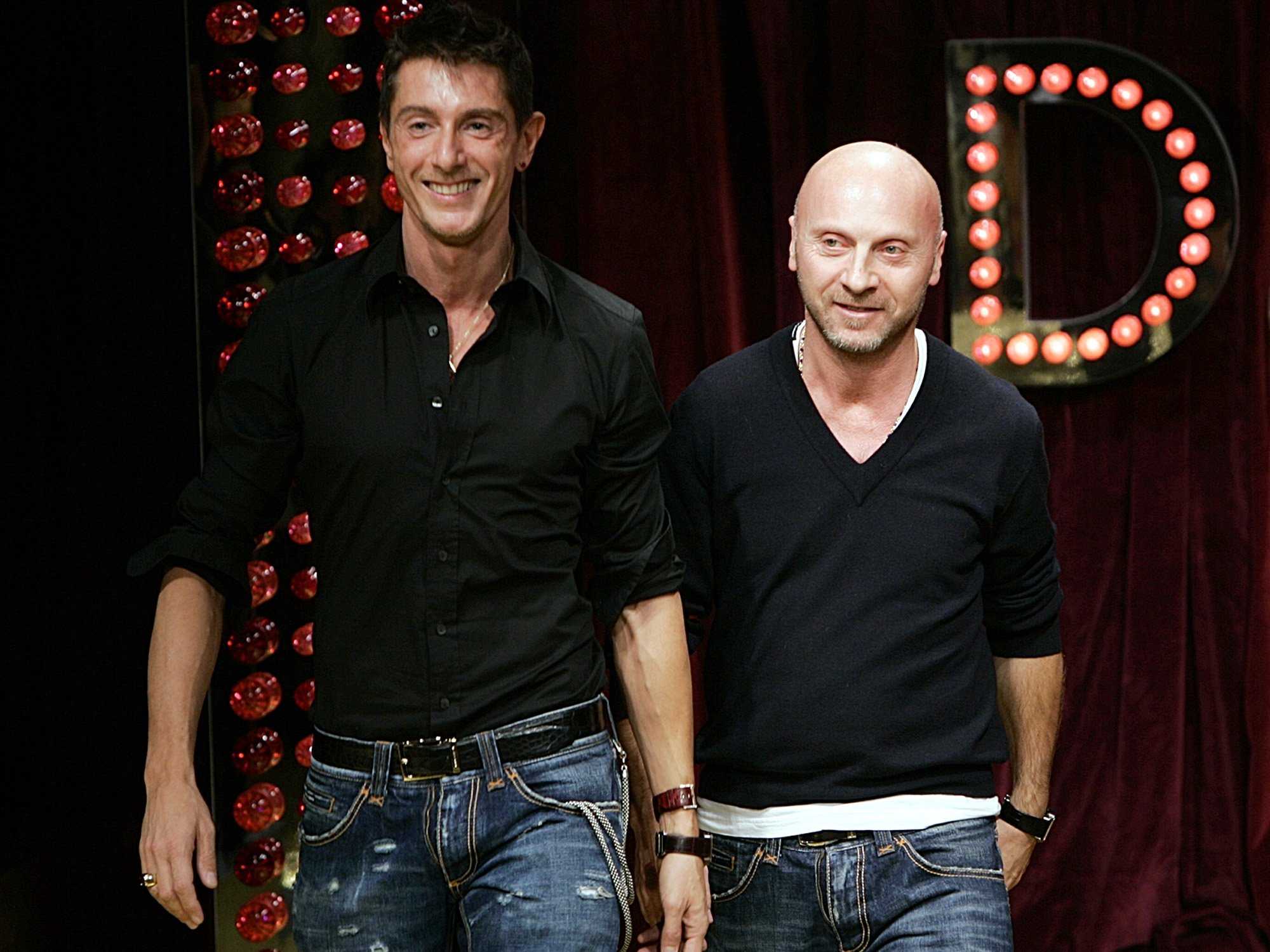
Stefano Gabbana and Domenico Dolce are Italian fashion design superstars, meaning that I pay no attention to them whatsoever, and don’t understand the priorities of anyone who does. Nonetheless, they have a rich and famous international clientele.. The two men were once romantic partners, but no longer; how they are just business and artistic partners, and continue to thrive.

Their thriving, however, has suffered from a self-inflicted setback. In an interview with the Italian magazine Panorama, the pair declared their lack of support for same-sex families with children created by in vitro fertilization.  “I am not convinced by those I call children of chemicals, synthetic children,” Dolce told the magazine. “Rented uterus, semen chosen from a catalog.” Gabbana added, “The family is not a fad. In it there is a supernatural sense of belonging.”

The Horror: a non-conforming opinion from prominent gay fashion icons! Can’t have that! Lapsed pop superstar Elton John, who has two sons through in vitro fertilization with his husband, David Furnish, took the remarks as a personal attack and proclaimed a boycott of the Gabbana & Dolce label. “How dare you refer to my beautiful children as ‘synthetic,’ ” Mr. John wrote on social media. “Shame on you for wagging your judgmental little fingers at I.V.F. Your archaic thinking is out of step with the times, just like your fashions. I shall never wear Dolce & Gabbana ever again.” Thus was born the hashtag #BoycottDolceGabbana.”
Continue reading

Ethics Alarms On The Air!

onair

I have been on the radio a lot recently. The opinions expressed there will not surprise anyone who is a regular reader of Ethics Alarms, but for those curious about whether I speak with a British accent or a bi-lateral lisp, or those who are aurally inclined, below are links to three radio shows that had me as a guest of late, and one that interviewed me as background, and included some of my comments.

Here you go:

1. This is WGAN’s examination of the Hillary Clinton e-mails scandal, delivered by me while in shock after listening to Karen Finney spin herself sick on CNN, ably hosted as always by Arthur King…

2. Here is national host for the Local Job Network, Tim Muma, a terrific interviewer, on a podcast chatting with me about the “Ick!” and “Awww!” Factors and their relationship to ethics.

3. Tim again, this time cross-examining me about the Brian Williams mess and related issues.

4. Finally, NPR reporter Hawes Spencer’s report on the Sweet Briar closing.

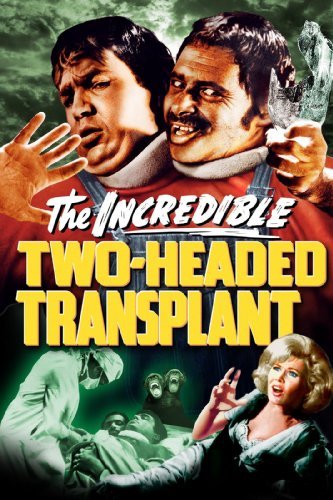
Ick, Not Ethics: The Incredible Head Transplant

OK, this looks unethical...

OK, this looks unethical…

I adore stories that clarify ethical distinctions, and this is the third one we’ve had recently. First we had the classic “Awww! Factor” case of the Down Syndrome cheerleader. Then, close on its heels, we got “Downton Abbey’s” finale, which illustrated the ethics fallacy of Consequentialism as deftly as any textbook.

Now we have the startling report of impending head transplants:

The world’s first attempt to transplant a human head will be launched this year at a surgical conference in the US. The move is a call to arms to get interested parties together to work towards the surgery.

The idea was first proposed in 2013 by Sergio Canavero of the Turin Advanced Neuromodulation Group in Italy. He wants to use the surgery to extend the lives of people whose muscles and nerves have degenerated or whose organs are riddled with cancer. Now he claims the major hurdles, such as fusing the spinal cord and preventing the body’s immune system from rejecting the head, are surmountable, and the surgery could be ready as early as 2017.

Canavero plans to announce the project at the annual conference of the American Academy of Neurological and Orthopaedic Surgeons (AANOS) in Annapolis, Maryland, in June.

Predictably, this news prompted a wave of “Futurama” jokes and bad puns. It also prompted dozens of hysterical stories online and in print pronouncing the yet-to-be performed operation as “a terrible idea” and obviously unethical. A Daily Beast “expert” with the trust-inspiring name “Docbastard” condemned the practice with this wisdom:

That’s the funny thing about ethics—it may be impossible to say why something is wrong, but can be easy to see that it isn’t.

Yeah, that is funny. It is also false, and incredibly stupid. If one cannot say “why” something is wrong–you know, things like interracial marriage, interracial adoption, homosexuality, gay marriage, plastic surgery, income tax, integration, eating meat on a Friday…gee, let’s see how far back into cultural history we need to go to get the list up to a thousand! My guess: no further than 1900, if that far—there’s an excellent chance that it only seems wrong because 1) nobody’s bothered to analyze it thoroughly and objectively, and 2) the Ick Factor, which is when we mistake strangeness, shock and surprise, all visceral, emotional reactions, for ethics.

Let’s actually think about the “Doc’s” provocative questions about the theoretical procedure that he seems to think clinch the argument that head transplants are “easy” to identify as unethical. He writes, Continue reading

Comment of the Day: “Three Breasted Ethics”

Alexander Cheezem contributed an informative and well-argued comment challenging my ethical conclusions in the case of “Jasmine Tridevil,” who supposedly had a surgically constructed third breast attached between her two natural ones in an effort to become a reality TV star. Her story turned out to be a scam, but the ethical analysis is still worthy of consideration. Ethics Alarms doesn’t have many medical ethics dilemmas to ponder, and it is a fascinating area. As I considered  Jasmine’s titillation, I suspected it might be a hoax, but from the standpoint of honing ethics alarms, it doesn’t matter. I’m kind of relieved, frankly. Continue reading