When Is Human Cloning Unethical? When You Do THIS, For Starters…

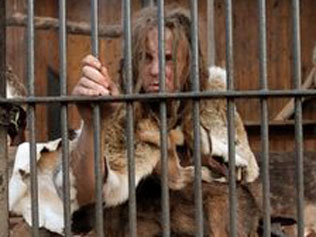
Coming attraction at the San Diego Zoo.

Coming attraction at the San Diego Zoo.

Much of the ethics debate over cloning is and has always been pure “ick factor” confusion. Cloning is strange and unnatural, and to many people, that means it is immoral and wrong, as in, “If God had wanted us to be created from nose hairs, he wouldn’t have given us sex organs!” But there is nothing intrinsically unethical about cloning. The problem is that there are many theoretical applications of cloning that are monstrous (See: “The Island”), and too many scientists whose attitude is, “Why not?”

It is difficult to imagine a more perfect example of this than the news that Harvard Medical School geneticist George Church is plotting to create a Neanderthal human, if he can find, in his words, “an adventurous female human” willing to be Mommy to Alley Oop. Continue reading

The NRA’s New Video Game: Maybe Bad Tactics, Not Bad Ethics

Oh, the humanity!!!

Oh, the HUMANITY !!!

Me, I was always taught not to taunt angry dogs, or aggravate bullies who have good left hooks, or make faces at teachers who were mad at me for not turning in my homework. Thus I think the National Rifle Association may have been, if not foolish, needlessly provocative by choosing this moment in time to tweak its intractable and largely unhinged opposition by releasing a new smart phone app for iPhones and iPads, a 3D shooting range game.

Nevertheless, there is nothing unethical about it. This is a classic example of the ick factor at work. (The ick factor is the common phenomenon in which conduct that is unusual,strange, new, surprising or shocking are seen by many as unethical, when in fact they are just unusual, strange,new, surprising or shocking.) Continue reading

The Colin Kaepernick Tattoo Controversy: “Ick,” Not Ethics

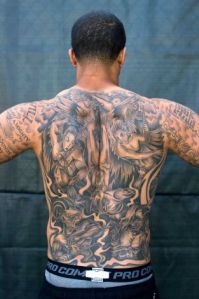
How can he pass with a back that looks like that?

How can he pass with a back that looks like that?

The new star San Francisco 49ers quarterback Colin Kaepernick is tattooed all over. Does this mean that he is unqualified to be a leader, a role model, an ethical exemplar, as NFL quarterbacks are supposed to be? The Sporting News’ columnist David Whitley argued in a column that indeed Kaepernick’s tattoos do mean that, and as you would expect, the number of coherent points he could mount in support of that position equaled exactly zero. He did, however, give everyone a terrific example of how people who don’t comprehend ethics make what they think are ethical arguments.

His column is about ethics, because ethics is central to leadership. Whitley believes that Kaepernick’s tattoos undermine his ability to lead by compromising the values he represents to those who must follow him. And those values that tattoos undermine are??? Well, Whitely doesn’t really explain that. He says that tattoos on a quarterback send the wrong message because prisoners get tattoos in the Big House. This is a man who is hostage to cognitive dissonance. Presumably if Stephen Hawking or Barack Obama showed a tat, he’d be fine with Kaepernick’s decorations. When I was kid, it wasn’t prisoners but sailors who we identified with tattoos. I knew a Pearl Harbor survivor with a big one—this neither convinced me that he was a rotter instead of a hero or made me want to get a giant anchor needled into my arm. Popeye had a tattoo, and we all loved Popeye. He also ate spinach. We didn’t. Continue reading

CNN and the Ambassador’s Journal: Unethical or Ick?

Answer: Ick

Ambassador Chris Stevens, murdered in Libya in what is now finally being described as a planned terrorist attack (and not spontaneous film criticism, as the Obama Administration successfully persuaded the media to claim for more than a week), left a brief hand-written journal behind that somehow was retrieved by CNN instead of the U.S. government. When Anderson Cooper revealed that the journal had been reviewed by reporters and used to cover the story of the Benghazi attack, both the slain diplomat’s family and the State Department criticized the network, which said,

“We think the public had a right to know what CNN had learned from multiple sources about the fears and warnings of a terror threat before the Benghazi attack which are now raising questions about why the State Department didn’t do more to protect Ambassador Stevens and other US personnel.Perhaps the real question here is why is the State Department now attacking the messenger.”

Well, there are interesting theories about that, since what the late Ambassador had written suggests that there was fear of a terrorist attack in the vicinity of the 9/11 anniversary, yet both Secretary Clinton and President Obama went to great lengths to characterize the Benghazi violence as prompted by spontaneous and legitimate rage over an American’s exercise of his right of free speech. There is a rebuttable presumption that the State Department was prepared to bury the implications of what Stevens wrote, since everything else it has done in relation to his murder has been misleading or pusillanimous. In the latter category is using Stevens’ family as its excuse for bashing CNN for delivering on its duty to provide what the public “has a right to know.” Continue reading

The Ethics Verdict on the Homeless Hotspot Project

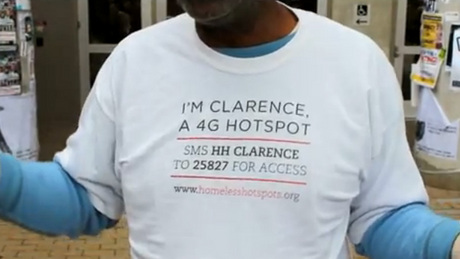
BBH Labs, the innovation unit of the international marketing agency BBH, hired members of the Austin, Texas homeless population to walk around carrying mobile Wi-Fi devices, offering high-speed Internet access in exchange for donations. Thirteen volunteers from a homeless shelter were hooked up to the devices, given business cards and put in shirts with messages that designated them as human connections. “I’m Rudolph, a 4G Hotspot” read the label on the homeless man on the New York Post’s front page with the lead, “HOT BUMS!

The Walking Hotspots—now there’s a new horror series for AMC when they run out of zombies— were told to go to the most densely packed areas of the South by Southwest high-tech festival in Austin, Texas, where the technology trend-devouring conventioners often overwhelm the cellular networks with their smart phones. Attendees were told they could go up to a Homeless Hotspot and log on to his 4G network using the number on his T-shirt. A two-dollar contribution to the homeless man was the suggested payment for 15 minutes of service. BBH Labs paid  the wired-up homeless $20 a day, and they were also able to keep whatever customers donated.

What BBH called its “charitable  experiment” ended yesterday with the conference, and with all participants seemingly thrilled. The “Homeless Hotspot” gimmick got nationwide publicity, thirteen homeless men made some money, and conference participants got great connectivity…so why were so many people upset? Continue reading

Matrix Chicken Ethics

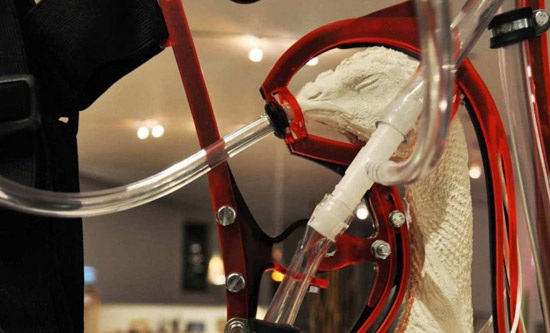
Yum-yum!

Architecture Student and artist André Ford has sparked an ethics debate after proposing that chickens be raised for meat in vertical racks after  their frontal cortexes have been severed, rendering them brain-dead and essentially growing meat. The question is, would this practice be more ethical than current factory farming, less ethical, or does it make no difference?

Ford’s system would have the chickens suspended and immobile, with their feet removed. Tubes would supply water and nutrients directly into them while other tubes would carry away their waste. The chickens, of course, wouldn’t feel a thing, which one could argue is a superior state to the well-documented stress and misery they would experience in traditional chicken farms. Meanwhile, the costs of raising chickens would be (theoretically) reduced, in part because far less space would be required, and the process would also be cleaner—again, theoretically. Continue reading

Ethics Quiz: Let’s Play “Icky… or Unethical?” !

Hi everybody! It’s time to play everyone’s favorite play-at-home ethics quiz show, 

“Icky or Unethical?”

…where you, the audience, have to decide whether our guest’s conduct is truly unethical, or just so disgusting, strange or creepy that it just seems like it!

Ready to play? Great! Let’s all welcome our special guest, Dr. Michael Niccole, founder of the CosmetiCare Plastic Surgery Center in Newport Beach, California! Thanks for being here, doctor! Now let’s show our studio audience and those playing at home what you have done to bring you to the show! Here it comes:

“Dr. Niccole gave his daughter Brittani breast implants when she was just 18. He also gave her a nose job. Dr. Niccole performed surgery on his other daughter, Charm,* to turn her “outtie” belly button into an “innie ”when she was 10. Now that both daughters are 23, he regularly gives them Botox injections to prevent wrinkles as well as performing other cosmetic procedures on them!”

All right, there you have it!

Show that picture of Brittani, Don Pardo!

What a lovely young woman! You sure did right by her, Doc!  Hubba-hubba!  And now, it’s time to answer:

Is Dr. Niccole’s work on his daughters just icky, or is it unethical? Continue reading

Dwarf Tossing Is Back. So What?

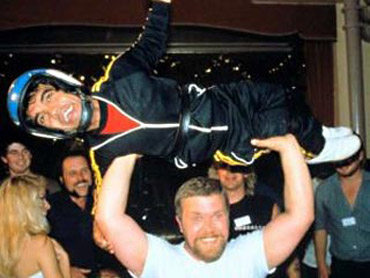
The traditional "throwing out the first dwarf" ceremony....

Dwarf tossing, a bar sport or spectacle or satire or something, was briefly in the news early last decade. Helmeted and padded little people were used as discuses or bowling balls by large, burly, often intoxicated men. It was weird; it could arguably be funny. Advocates for the unusually small got the activity banned in Florida and New York, and in Canada, while bills to ban it failed, public opinion opposing the games pretty much made dwarf tossing obsolete, like making fun of Paris Hilton.

Now comes the news that a strip joint in Ontario is reviving the sport, and  has scheduled a competition. Critics are horrified and outraged, because, well, they are horrified and outraged. Dwarf tossing, they say, is unethical.

Why? Continue reading

Affronts to Animal Dignity

"Boy, will you look at those idiots watching this? Where is their sense of dignity?"

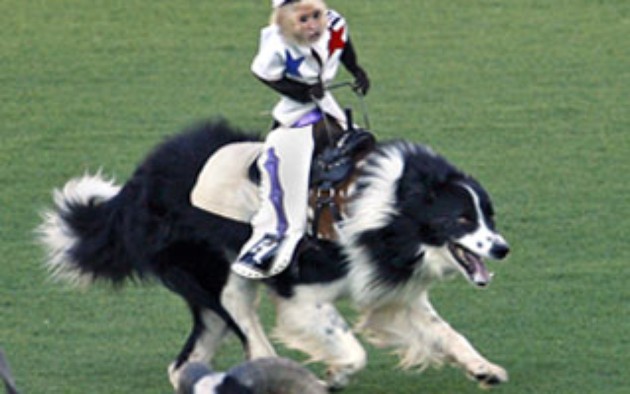
The Washington Post recently published a photo of an oddball attraction at a minor league baseball game in Harrisburg, PA. A capuchin monkey, garbed in jockey attire, was riding a border collie—really, really stupid, though “really stupid” is the frequent standard of minor league baseball promotions generally. This means that when a club executive suggests, “Hey, howzabout we have some monkeys riding on dogs, like in little saddles?” and the response from the management team is, “That’s really stupid, Ed,” he’ll say, “Great! Then it’s a go!”

I found the picture rather grotesque, but it never occurred to me that the gimmick was unethical. Oh, I assumed that PETA would find it unethical, but PETA believes it’s unethical that animals aren’t allowed to vote.  Several indignant readers wrote to the Post, however, protesting that the photo was “offensive” because it celebrated unethical conduct, the conduct being, apparently,“insulting the natural identity of these animals.” “Monkeys riding boarder collies is just wrong,” wrote one of the outraged. Continue reading

“Grow Your Own Marrow Donor” Ethics and Consequentialism: The Ayala Family Saga

Anissa Ayala and her custom-made bone marrow donor

Once again, the fans of that ethically corrosive twin of  “the ends justifies the means,” consequentialism, were holding court in the mass media, as the “Today Show” revisited a two-decade old ethical outrage to declare that it was all perfectly fine after all…because it worked.

Thus does television, itself dominated by ethically-dim writers, producers and stars, corrupt the public. So here we go again:

Does the fact (if it indeed is a fact) that Osama bin Laden capture and execution was facilitated by torture make torture less ethically wrong?

No.

Do the fortuitous results of any action that was unethical from its inception change the nature of that conduct from unethical to ethical.

Again, no.

Is conceiving a child solely to provide donor bone marrow to her cancer-stricken older sister ethically acceptable as long as the sister’s cancer is cured?

Absolutely not!  But to listen to the “Today Show,” and revoltingly, the “Today Show’s” resident medical correspondent Dr. Nancy Snyderman, it is not only ethically acceptable but laudable. Because it worked.

Twenty years ago, Abe and Mary Ayala were desperate because Anissa, their 16-year-old daughter, had been diagnosed with leukemia. Chemotheraphy proved ineffective, and neither the Ayalas nor their son was a compatible bone marrow donor. The Ayalas had long before decided that two children were enough; Abe had a vasectomy. But then Mary came up with the idea of having another child in the hopes that it would be a bone marrow donor who could save Anissa’s life. Continue reading