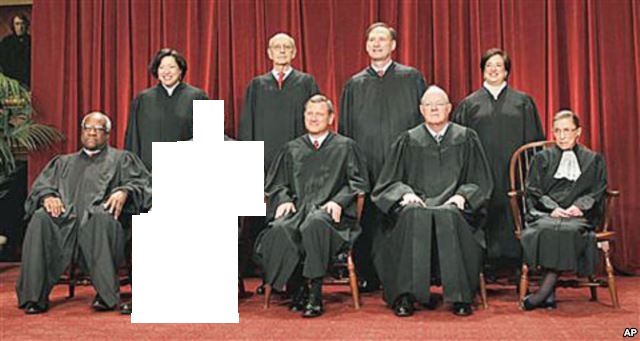
Ethics Review Of “Supreme Court Vacancy Theater”

Court vacancy

The short review would be “Yecchh.”

The reason that the earlier Ethics Alarms post about the death of Justice Scalia expressed the wish that President Obama on his own declare that he would defer the almost certainly futile appointment of a successor to the tender care of the next President was precisely because it was obvious that any other course was just going to create more ugly partisan name-calling and hypocrisy, accomplishing nothing positive and wasting a lot of energy and time. I also knew that this most divisive of POTUS’s would no more do that than he would deliver his next speech in a duck voice. Thus we have the theater, with people who should know better acting like the Republican Senate’s announcement that it would not be voting on President Obama’s nominee, should he make one, is some  kind of gross breach of duty and ethics, and people who don’t know better acting as if being one Justice short is some kind of Armageddon. Neither is true.

Nor is there any reasonably similar set of circumstances and conditions that makes the GOP’s entirely political decision, and Obama’s entirely political decision to test it, some kind of breach of precedent. There is no precedent—not with these factors in play:

A Democratic President with both Houses controlled by the Republicans

An ideologically and evenly divided Court, with the new Justice potentially having a momentous and nation-changing effect on the determination of many looming cases

An unusually partisan and ideological President who has proven unwilling and unable to seek legitimate input from the opposing party, and who, in fact, has been personally and bitterly insulting toward it

A rebellion against the “establishment” in both parties, from the extreme reaches of both parties, on the grounds that neither is extreme or combative enough

A lame duck, not especially popular President and an approaching national election that is currently being molded by unpredictable personalities and events, and is likely to be hotly contested..

The Supreme Court unusually central to the government of the country.

The vacancy on the Court being created by the death of one of the Court’s most influential, ideological and powerful members.

A degree of political division in the public not experienced since the Civil War.

These are all material factors, made more material in some cases because of the other factors. Thus accusations that the Republican have engaged in some kind of grand, historical crime against democracy is, to the extent the accusers believe it, crap, and to the extent that they don’t, ignorant. Continue reading

Ethics Quote of the Month: Illya Somin

“Democracy is supposed to be rule of the people, by the people, and for the people. But in order to rule effectively, the people need political knowledge. If they know little or nothing about government, it becomes difficult to hold political leaders accountable for their performance. Unfortunately, public knowledge about politics is disturbingly low. In addition, the public also often does a poor job of evaluating the political information they do know. This state of affairs has persisted despite rising education levels, increased availability of information thanks to modern technology, and even rising IQ scores. It is mostly the result of rational behavior, not stupidity. Such widespread and persistent political ignorance and irrationality strengthens the case for limiting and decentralizing the power of government.”

Illya Somin, Professor of Law at George Mason University School of Law, from his paper and 2013 book of the same name, “Democracy and Political Ignorance.”

Those were the days...

Those were the days…

Somin, who writes frequently on the mostly libertarian law wonk blog The Volokh conspiracy, is a political scientist, but big government progressives should restrain themselves from dismissing his statement (and my endorsement of it) as right wing or partisan rhetoric. Facts and logic should not be partisan or ideological, and it seem inarguable to me that Somin’s statement is correct, and that certain ethical truths follow. If one is going to dispute his conclusion, one must be able to fairly contest the assertions leading up to it. Let’s examine them in that light:

  • “Democracy is supposed to be rule of the people, by the people, and for the people.” Yes, we can agree on that, can’t we?
  • “But in order to rule effectively, the people need political knowledge.” True… at least this was the conviction of Madison, Adam Smith and virtually all of the political philosophers who championed democratic government. I have never heard it seriously questioned. Continue reading

Ethical Jobs Plan: Let’s Put Lawyers in the 99%

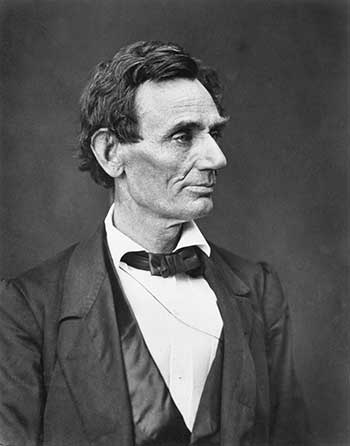
19th Century American lawyer without law degree or bar exam credentials. Reputed to be effective, honest.

Despite the fact that such a change might be ruinous for me personally, since a large portion of ProEthics income comes from providing bar association-mandated continuing legal education courses on ethics, I have to endorse the arguments made by Brookings Fellow Clifford Winston and George Mason Law Professor Illya Somin for eliminating barriers to entry in the legal profession, such as mandatory law school attendance, the bar exam, and bar membership.

Winston writes:

“For decades the legal industry has operated as a monopoly, which has been made possible by its self-imposed rules and state licensing restrictions — namely, the requirements that lawyers must graduate from an American Bar Association-accredited law school and pass a state bar examination. The industry claims these requirements are essential quality-control measures because consumers do not have sufficient information to judge in advance whether a lawyer is competent and honest. In reality, though, occupational licensure has been costly and ineffective; it misleads consumers about the quality of licensed lawyers and the potential for non-lawyers to provide able assistance. Continue reading