After he left Plaskett’s office, McCullum created a Hotmail account and “sent at least eleven e-mail messages to multiple persons, including politicians, members of the media, and other persons known to [Plaskett].” The e-mails contained “one or more of the nude images and videos,” according to this week’s indictment against McCollum. He also created a Facebook account, uploaded the visual content, and then Facebook-friended people in Plaskett’s district to spread the nude images far and wide.
1. It is a matter of constant fascination to me how all of President Trump’s personal lawyers appear to be flaming jerks, whatever their legal skills may be. Here’s an example from this week: Marc Kasowitz, President Trump’s personal attorney on the Russia conspiracy theory investigation, was contacted by a stranger, a retired public relations professional, who had read ProPublica’s unflattering story on Kasowitz. He sent the lawyer an email with the subject line: “Resign Now.’’
“I’m on you now. You are fucking with me now Let’s see who you are Watch your back , bitch/”
“Call me. Don’t be afraid, you piece of shit. Stand up. If you don’t call, you’re just afraid.”
“I already know where you live, I’m on you. You might as well call me. You will see me. I promise. Bro.”
Nice.
This isn’t a legal ethics violation, though it almost certainly would be if Kasowitz were addressing an opposing counsel in such a manner. It’s just generally unethical as outrageous, inexcusable, gratuitous incivility, reflecting poorly on him, his profession and his client. A client who was minimally concerned about ethics would fire him.
2. Speaking of a minimal concern for ethics, Trump’s defense of his son’s dumb but legal meeting with the Russian lawyer promising dirt on Hillary included the statement that “most people would have taken that meeting.” Once again, we have evidence that Donald Trump literally doesn’t know what ethics is. Oh, his rationalizations are the same ones the average ethically-retarded citizen uses—this is why he is President. They are still rationalizations. Yes, Mr. President, and most people would accept extra money from an ATM and not tell the bank about it. And most people lie to get out of trouble. And most people do all sorts of unethical things, which doesn’t make them ethical, responsible or appropriate.
He is the President, though, and this is how we will inevitably become a nation of assholes.
3. And speaking of assholes, there is Nancy Pelosi. Because a female journalist was blocked from access to the House of Representative by a Sergeant of Arms who properly pointed out that she was wearing a sleeveless dress, always forbidden according to Congress’s dress code, we were suddenly subjected to the false narrative that those mean, sexist Republicans were abusing women again, as well as being typically antediluvian in their ideas about propriety. (Men can’t go sleeveless either, but never mind.) Paul Ryan was the target here, as the Speaker is officially charged with enforcing such rules. The narrative was not really about the dress code, but just part of the over-all “Get Republicans” news media strategy to make the party as unpopular as possible. Yesterday Paul Ryan plausibly said that he wasn’t aware of the rule in question, and was happy to amend it. Then Nancy Pelosi piled on, tweeting, “Glad to see [Speaker Ryan] is updating the dress code for the House Floor. These unwritten rules are in desperate need of updates.”
Pelosi was Speaker for four years, her tenure ending just six years ago. The same rule Ryan is being attacked for was in place during her entire tenure. Why didn’t she fix it herself, dedicated feminist that she is? Her tweet is such obvious hypocrisy that it calls attention to the double standards employed by Democrats, the news media and women. Pelosi could have cheered the change without appearing to duck her own responsibility for their continuation. Instead, she acted as if she was an innocent bystander.
Nancy Pelosi is a major reason the Democratic Party has become a party of assholes. Who but an asshole would tolerate a national leader like this as the face of his or her party in Congress? Are Democrats proud of this woman? Do they endorse her tactics and rhetoric? We have to assume so, don’t we? Continue reading →
1. I owe Robin Meade an apology. The astoundingly bright-eyed, bushy-tailed HLN morning host has been used here as an an example of the sexism of broadcast news media producers, and it is true that she is uncommonly attractive even by “news babe” standards. However, I have come to realize that she is also a unique talent, and more than just a pretty face and figure. Meade has natural presence and charisma, projects genuine optimism and and an up-beat nature, and most unusual of all, doesn’t spin the news or tilt her delivery to signal her own opinion. She’s really good at what she does. I’m sorry Robin; I was biased against you because you are attractive, which is just as wrong as being biased for you. You’re a pro, through and through.
2. Constitutional law expert Eugene Volokh (who is also my favorite candidate for a Supreme Court post if one opens up) published what I consider to be a definitive refutation of the claim that receiving opposition research, as in “damaging information about Hillary Clinton,” is a crime under current law. He also makes a case that it couldn’t be criminalized under future law:
“It would raise obvious First Amendment problems: First, noncitizens, and likely even non-permanent-residents, in the United States have broad First Amendment rights. See Bridges v. Wixon, 326 U.S. 135 (1945) (“freedom of speech and of press is accorded aliens residing in this country”); Underwager v. Channel 9 Australia, 69 F.3d 361 (9th Cir. 1995) (“We conclude that the speech protections of the First Amendment at a minimum apply to all persons legally within our borders,” including ones who are not permanent residents).
Second, Americans have the right to receive information even from speakers who are entirely abroad. See Lamont v. Postmaster General, 381 U.S. 301 (1965). Can Americans — whether political candidates or anyone else — really be barred from asking questions of foreigners, just because the answers might be especially important to voters?”
The professor concludes not. I hadn’t even considered the First Amendment issue in determining that the election law prohibition against receiving “anything of value” benefiting a candidate from a foreign nation or individual was not intended to preclude mere information, but Volokh’s argument seems air tight. Continue reading →
1. Preet Bharara, the ex-U.S. attorney fired by the Trump Administration, tweets…
Quick reminder: something doesn’t have to be illegal for it to be foolish, wrong and un-American.
True. When Donald Trump, Jr. was informed that a Russian lawyer wanted to meet with him to pass along damaging information about Hillary Clinton, he should have gone to the FBI immediately, because this could have been indicative of a national threat. Instead he said “Whoopie!” or words to that effect. Moron.
But we knew that.
*Notice of Correction: In the original post, I erroneously stated that Bharara had joined Mueller’s team investigating Russian interference with the election. That was incorrect. I apologize. I was confused by this headline from the Washington Examiner: Special counselor adds former Preet Bharara prosecutor to Russia probe: Reports. It’s a bad headline, but I should have read the whole article. Careless.
2. Similarly, if Danny Jr told Kushner and Manafort what he was told the meeting would be about, THEY should have told him that the meeting was a bad idea, and to report it. They are slime-bags, and none too bright either.
We knew that, too.
3. It may be pure moral luck that this didn’t turn into a serious breach of election laws. But the fact is that no information changed hands, as far as we know. There was no “collusion,” which isn’t a legal term anyway.
4. The New York Times, from its good side, actually detailed the legal realities of the case, which ironically show how absurdly over-heated and misleading its own coverage is. The Times consulted with legal experts who said,
The events made public in the past few days are not enough to charge conspiracy. Renato Mariotti, a former federal prosecutor said the revelations are important because if further evidence of coordination emerges, the contents of the emails and the fact of the meeting would help establish an intent to work with Russia on influencing the election…at least on Donald Trump Jr.’s part.
But as has been the situation throughout, the episode is still waiting for real evidence of genuine collusion between the Russians and the Trump campaign, and this wasn’t it. The anti-Trump mob, in the news media and out of it, is so, so eager, so desperate, to prove sanctionable wrongdoing that it is pouncing on everything that contains a shred of hope.
There has to be an underlying federal offense that is being conspired to be committed. So far, there is no evidence of that, and the aborted meeting with the Russian lawyer didn’t come close.
If the e-mails released yesterday specified that what was being offered had been obtained by an illegal computer hack, that would be enough. They didn’t. Continue reading →
Once famous American radio news commentator Gabriel Heatter (September 17, 1890 – March 30, 1972) sued to begin his World War II-era broadcasts by saying, “There’s good news tonight!” I’ve been trying to find an equivalent up-beat introduction for the Warm-Up from an ethics perspective. The problem is that this requires there to be some genuinely good ethics news. Not today. Maybe tomorrow…
1. The furor over President Trump’s pathetic attack tweets on two pretty awful MSNBC cable TV hosts continues, with “the resistance”—you know, like the New York Times—citing it as proof of madness, and right-wing media and bloggers increasingly rationalizing that it’s high time someone slapped down “media bullies” like silly Joe and biased Mika. The Left’s reaction is disingenuous, and the Right’s is incompetent.
Yesterday on the progressive echo chamber end of my Facebook spectrum, they were going nuts over the tweets, and one woman posted that she had voted for Trump but she regretted it now. She never would have voted for him, she said, if she thought he would act like this. I don’t know this idiot, but I had to reply:
“What? Trump tweeted and talked exactly like that for the whole campaign, and had been similarly gross and boorish publicly for thirty years! Remember Trump talking about blood coming out of Megyn Kelly’s “wherever” after the very first debate in 2015? “Little Marco”? Mocking Carly Fiorina’s face?”
One could reasonably hope that being President might cause Trump to curb this habit, but one could not reasonable vote for him and not realize that similar conduct was a distinct possibility. On the news media and political side, the tweets prompted a re-run of the exact same (undemocratic, unethical) arguments they have made from the beginning for trying to overturn the election, as if something was new. This isn’t new. That’s part of what’s wrong with it. It also is the predictable conduct of the man elected by voters who were well aware he acted this way. I know you think they are cretins, Good People in Progressive Land, but that’s not a justification for invalidating their votes, and you are not going to get away with it if you try.
As for defenses of Trump like the opinion piece at Mediaite (“President Trump Deserves Credit For Taking On Bullies Like Mika Brzezinski“), how silly can you be? He’s the President of the United States: you can’t “bully” him. Even powerful media figures can’t bully him. He has all the power. They are punching up (more like slapping and griping and sneering up), and he is punching down, provoked by mites, lowering himself and his office by doing so.
….Monalisa Perez and her dead boyfriend, Pedro Ruiz III! Yes, we should blame the victim. And his girl friend.
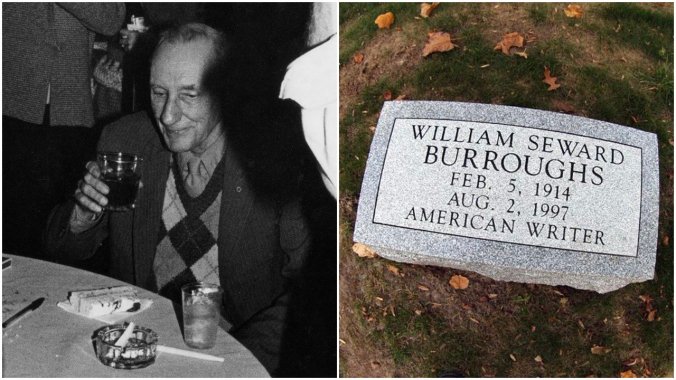
Clarence Darrow said, “History repeats itself. and that’s one of the things that’s wrong with history.” If Monalisa and Pedro had been students of stupid moments in literary history, they would have encountered the ridiculous tale of novelist William Burroughs (“Naked Lunch”), who on September 6, 1951, was at a drunken party at a bar in Mexico City. For no apparent reason, Burroughs suddenly shouted to his equally drunk wife that it was time to show everyone their “William Tell trick.”
They had never performed their trick before.
Joan Vollmer (well, they held themselves out as married, though they were not) balanced a highball glass on her head and Burroughs, playing Tell, tried to shoot the glass off with his revolver. William Tell wasn’t drunk, however, and Burroughs was. He aimed too low and shot Vollmer right between the eyes.
Believe it or not, Perez and Ruiz were even less sympathetic than Burroughs and his wife. They weren’t drunk, just cretinous and greedy. They were making a YouTube video. A few hours before Monalisa shot Pedro, a posting on her Twitter account read: “Me and Pedro are probably going to shoot one of the most dangerous videos ever. HIS idea not MINE.” The stunt he had talked her into involved Ruiz holding up a hardcover encyclopedia volume in front of his chest as she shot a .50-caliber Desert Eagle pistol at the book from about a foot away “to see if it would go through.”
Well, waddya know! It did!
This was part of Pedro’s plan to become rich and famous via viral YouTube videos. Now he’s dead, Monalisa is charged with murder, and their yet-to-born child will be off to terrible start in life, in addition to carrying some dubious genes.
Yes, it’s a tragedy…a tragedy born of astounding recklessness, inadequate life competence, irresponsibility, and a poor understanding of risk-reward ratios.
Ethically challenged left-wing website Salon somehow found an ethically challenged law professor, Cassandra Burke Robertson, to justify the leaks in the Trump Administration. Robertson, despite being a Distinguished Research Scholar and the Director of the Center for Professional Ethics at Case Western Reserve Law School, advocates unethical and sanctionable conduct in a jaw-dropping post, “When is a leak ethical?”
Here, professor, I’ll fix your misleading and dishonest article for you: It’s NEVER ethical to leak.
Never.
She begins by noting “I am a scholar of legal ethics who has studied ethical decision-making in the political sphere.” Wow, that’s amazing….since she apparently is hopelessly confused about both, or just pandering to Salon’s pro-“resistance” readers.
Robertson writes:
“Undoubtedly, leaking classified information violates the law. For some individuals, such as lawyers, leaking unclassified but still confidential information may also violate the rules of professional conduct.”
1. It is always unethical to break the law, unless one is engaging in civil disobedience and willing to accept the consequences of that legal breach. By definition, leakers do not do this, but act anonymously. Thus leakers of classified information, lawyers or not, are always unethical, as well as criminal.
This morning, my mind is occupied by one long-standing ethics issue, and the rest seem trivial in comparison. Let’s warm up by trying to find some way out of this mess.
The ethical problem seems increasingly beyond our ability to solve. Yesterday there was second mistrial in the retrial of Raymond M. Tensing, the former University of Cincinnati police officer who has been charged with the 2015 murder and voluntary manslaughter for fatally shooting Samuel DuBose, an unarmed motorist. This is the third example of a police officer shooting a black man under questionable circumstances being found short of being criminally responsible in a week:
In St. Paul, police dashboard video showed Officer Jeronimo Yanez shoot into the car where Philando Castile was sitting with his fiancée and her daughter, and acquitted the officer. In that case, the officer appeared to have panicked after Castile reached into his pocket for his wallet after telling the officer, unasked, that he was carrying a firearm. In Milwaukee, jurors acquitted Officer Dominique Heaggan-Brown after watching frame by frame as he shot once at fleeing armed suspect, Sylville K. Smith, then fired a second time after Smith tossed the gun he was holding and lay on the ground. Now, in Cincinnati, jurors couldn’t agree on the proper culpability of Officer Tensing. He stopped DuBose for a missing license plate, then asked him for his driver’s license. Instead of producing it, DuBose pulled the door closed with his left hand and restarted the car with his right hand. The officer reached into the car with his left arm, yelled “Stop!” twice, and used his right hand to fire his gun directly, into Mr. DuBose’s head, killing him.
What can we say about these scenarios, and many others? Continue reading →
1. No, there is nothing “ironic” about Rep. Steve Scalise being shot. I finally lost my restraint and pointed out to a gaggle of left-wing Facebook friends that their writing that Scalise’s shooting was “ironic” because he opposes gun control, or because one of his rescuers was gay (because he opposes gay marriage) was as much a of a hateful comment as saying that it was “karma” (another popular sentiment from progressive friends) or that he “reaped what he sowed” (yet another). They protested loudly and angrily that this was an unfair rebuke on my part, that they were not cheering the crime, just observing that the shooting was “ironic” which, they insisted, it was.
Disingenuous and evasive.
The seriousness, criminal, hateful and absolutely inexcusable nature of Scalise’s shooting had absolutely nothing to do with his political beliefs unless you agree with the shooter, who used those beliefs as his motive. Karma, “reaped what he sowed” and irony (which implies an amusing or humorous nature) all signal and are intended to signal the same sentiment in the Facebook echo chamber—“It’s a shame that he got shot, but in a way he asked for it.” Oh, how those who sought to signal their virtue and their dislike of Scalise just hated to be called on the ugly impulses behind their words, and how they wriggled and spun to deny it.
What made the shooting ironic? Why, Scalise opposes gay marriage, I was informed. That’s neither a logical nor a justified answer. Although gays find it satisfying and expedient to automatically attach the label of homophobia to those who haven’t yet adapted to one of the fastest cultural paradigm shifts in U.S. history, there is no evidence that Rep. Scalise believes that LGBT individuals cannot or should not be medical or law enforcement professionals. Scalise’s position on gay marriage is irrelevant to his shooting, unless that position—the same position Barack Obama and Hillary Clinton held for a very long time—makes you think his shooting and the subsequent assistance of gay citizens is somehow deserved and funny. Similarly, the fact that Scalise was shot does not undermine the justification for his support of the Second Amendment, except in the closed minds of Second Amendment opponents. Nor does that make his shooting “ironic,” except to those whose gut reaction was “He was shot? Serves him right. Let’s see how he likes it.”
So many progressives have become so instinctively hateful and bitterly partisan that they are incapable of realizing it.
2. Are there any ethics takeaways from last night’s Republican victory in Georgia’s 6th District? Pundit Charles Glasser wrote that “Ossoff raised $23.6 million to make a symbolic run against President Trump, most of it from Marin County, California and Martha’s Vineyard in Massachusetts. Running the numbers, Democrats might have been better off considering that same amount would have bought 855,072 school lunches (at $2.76 each); 236,000 elementary school textbooks (at $100 each) or even 956 Priuses (at $24,685 each). Max Weber said that the purpose of a bureaucracy is to maintain or expand its own power. Who cares about children, education or the environment when there’s power to be grabbed?”
As a rule I object to the “spending money on A is unethical because you could have spent it on B” line of reasoning, since it can be applied to almost any purchase. Nonetheless, that’s a lot of money to be used by outsiders to influence a local election, particularly when the donors also decry the effect of money in politics. And as with Hillary Clinton’s defeat, this result suggest that money isn’t nearly as decisive as those who want to constrain political speech think it is. Continue reading →
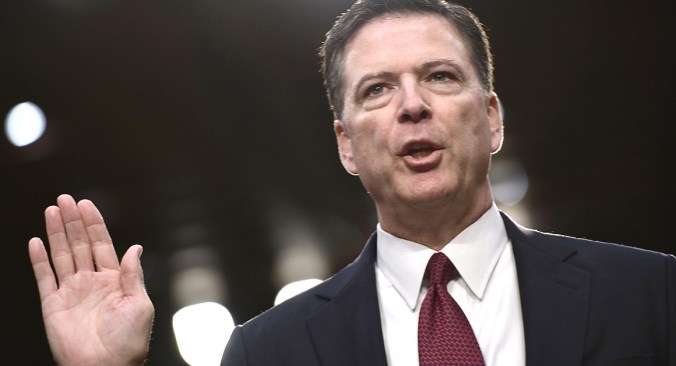
1. “Even though I was appointed to a ten-year term, which congress created in order to underscore the importance of the FBI being outside of politics and independent, I understood that I could be fired by a president for any reason or for no reason at all. And on May 9th, when I learned I had been fired for that reason, I immediately came home as a private citizen. But then the explanations, the shifting explanations, confused me and increasingly concerned me. They confused me because the president that I had had multiple conversations about my job, both before and after he took office, and he had repeatedly told me I was doing a great job and he hoped I would stay. And I had repeatedly assured him that I did intend to stay and serve out the remaining six years of my term. He told me repeatedly that he had talked to lots of people about me. Including our current attorney general. And had learned I was doing a great job. And that I was extremely well-liked by the FBI work force. So it confused me when I saw on television the president saying that he actually fired me because of the Russia investigation. And learned, again, from the media that he was telling privately other parties that my firing had relieved great pressure on the Russian investigation. I was also confused by the initial explanation that was offered publicly, that I was fired because of the decisions I had made during the election year. That didn’t make sense to me for a whole bunch of reasons, including the time and all the water that had gone under the bridge since those hard decisions had to be made. That didn’t make any sense to me. And although the law required no reason at all to fire an FBI director, the administration then chose to defame me and more importantly the FBI by saying that the organization was in disarray. That it was poorly led. That the workforce had lost confidence In its leader. Those were lies, plain and simple. And I am so sorry that the FBI workforce had to hear them and I’m so sorry the American people were told them. I worked every day at the FBI to help make that great organization better. As a help, because I did nothing alone at the FBI. There are no indispensable people at the FBI. The organization’s great strength is that its value and abilities run deep and wide. The FBI will be fine without me. The FBI’s mission will be relentlessly pursued by its people and that mission is to protect the American people and uphold the constitution of the United States. I will deeply miss being part of that mission, but this organization and its mission will go on long beyond me and long beyond any particular administration. I have a message before I close for the — for my former colleagues of the FBI. First I want the American people to know this truth. The FBI is honest. The FBI is strong. And the FBI is and always will be independent. And now to my former colleagues, If I may, I am so sorry I didn’t get the chance to say good bye to you properly. It was the honor of my life to serve beside you, to be part of the FBI family and I will miss it for the rest of my life. Thank you for standing watch, thank you for doing so much good for this country. Do that good as long as ever you can. And senators, I look forward to your questions.”
Observations: This entire statement is unworthy of the emphasis that has been placed on it by the wildly spinning news media, The key piece of information to frame the entire episode is “I understood that I could be fired by a president for any reason or for no reason at all.” Comey also presumably understood that a sub-fact within that understanding is that he could be told some of the reasons he was fired, no reasons, or the reasons the President felt like talking about. He was told he was doing a great job and then fired? Welcome to the work force. Telling an employee that he is doing a great job when he isn’t may be good management, usually isn’t, but is still well within the range of management discretion, and certainly not illegal.
Comey said that he also concerned that the President was saying that firing “had relieved great pressure on the Russian investigation.” As we learn later, the President was not being targeted in that investigation, and we know that he regards it as a politically motivated effort to distract and derail his administration and its agenda. There was nothing sinister about the President’s desire that the investigation go away as quickly as possible. I would argue that he has an obligation to do whatever he can to speed it along. If he didn’t trust Comey’s judgment—and who would?—seeing his exit as a plus is reasonable. Naturally, Comey wouldn’t see it that way.
It is amazing to me that a fired employee saying that his superior’s assessment that his organization was in disarray, that he was a poor leader and that his staff had “lost confidence In its leader” is given any weight at all. What fired employee doesn’t think his firing is unjust and the criticism of him is unfair? Comey calls it a lie: how does he know what Trump had been told or heard? How does Comey know what his agents say behind his back?
Your opinion that someone’s negative opinion about you is wrong and based on erroneous information does not make that opinion a lie. As a lawyer, Comey should know that, and should not have thrown the word “lie” around to be misunderstood by people who don’t know what a lie is—that is, most of the public. Continue reading →



 Ethics Alarms