Iconic Movie Hero Ethics: The Humiliation Of Indiana Jones

One upon a time, Hollywood showed respect to its greatest movie heroes. They deserved it, after all. We never had to see what became of Rick Blaine as he battled the Nazis. We never had to watch Scarlet chase Rhett. Nobody made as watch the plucky Hickory High School basketball team try to hold on to its title the next year after its miracle triumph. Hollywood got greedy (greedier), though, as imaginations ran out and audiences looked elsewhere for their entertainment. And thus the sublime ending of “Rocky” (“There ain’t gonna be no rematch!” “Don’t want one!”) was eroded and superseded by endless inferior sequels. “Star Wars” ended with a jubilant celebration of victory over the Empire and the characters happy, safe, and young, but studio finances dictated that it all had to be diluted with inferior and derivative prequels and sequels, with audiences being tortured by aging husks of Leia, Luke and Han Solo, instead of allowing them to be preserved in our memories as immortal, like legends should.

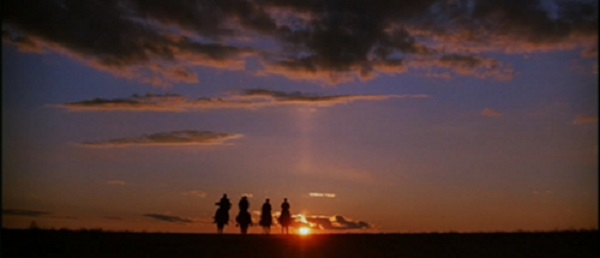
Now it’s Indiana Jones’ turn. Spielberg and Lucas already set up the perfect farewell for Indy in the third of the original trilogy, flawed as it was. We saw him ride off with his father and Marcus Brody into the sunset after drinking from the Holy Grail, which should have conferred eternal youth. Perfect!

They couldn’t let it go, though, or the studio couldn’t, or Spielberg’s alimony, or something. So we had to watch, many years later, an over-the-hill Indy in a jumping-the-shark fourth film that George Lucas signaled would stretch out the franchise ad infinitum by symbolically passing The Hat on to Indiana’s newly discovered son, the then young and promising Shia LaBeouf.

Continue reading

My Mother’s Funeral and the Kindness of Strangers

Few things are sadder than a long life commemorated by a sparsely attended funeral. The sadness is based more on illusion than reality, I know: the best way to ensure a good crowd at your funeral is to die young. Still, no son or daughter wants to deliver a eulogy to an empty chapel, even if the attendance figures at a love one’s funeral often say little about the richness of the life being remembered.

Most of the mourners at my mother’s funeral yesterday afternoon at Arlington National Cemetery barely knew her. Many had never met her; I doubt that she would have been able to name half of them if she had encountered them on the street. Yet they came, in the middle of a workday, to make sure that my mother’s family, including my sister and me, did not have to endure the sadness of the empty chapel. It was an amazing group. Among those whose connection to my mother was solely that they knew me, there were several whom I had not seen or spoken with in years, and others whose presence immediately made me feel guilty for being out of touch with them for too long. There were colleagues from jobs I had left long ago, and old friends who had, through the relentless roadblocks that family, work and assorted crises and priorities of living, had receded into names on a Facebook list. A former fiancee…a cast member of a show I had directed long ago. They were all expending time, their most precious resource, to be kind.

I’ve been going to a lot of funerals lately, something I once avoided with a passion. I’m going to start going to a lot more, and not merely just because, to paraphrase a line from the last Indiana Jones movie, I’ve reached the time when life stops giving you things and starts taking them away. As Yogi Berra reputedly said, “You should always go to other people’s funerals, otherwise, they won’t come to yours.” I appreciate the joke, but I’m pretty sure what Yogi was talking about was The Golden Rule.