Anti-Trump Brain Virus Case Study: The Washington Post’s Jennifer Rubin

Not all of the unrestrained anti-Trump zealots are progressives and Democrats. There are a lot of conservatives who detest him sufficiently to surrender their integrity, fairness and common sense as well. The Federalist’s Sean Davis has chronicled a revealing example: Washington Post pundit Jennifer Rubin.

Blogger Rubin is one of the rare in-House Post conservatives. Her 2016 columns regarding Trump were only slightly less vehement than mine, and once he was elected, she threw restraint to the wind. Before that, however, Rubin was one of the few reliably critical voices regarding President Obama and his feckless and bumbling Presidency.

One of the more frequent targets of her acid pen was the Paris climate deal. In a column mocking Obama’s “phony accomplishments,” Rubin wrote  that a Supreme Court decision on environmental regulations proved “how ephemeral Obama’s Paris climate change deal is.” Before that, Rubin  suggested  the accord was a cynical and transparent effort to take attention away Obama’s failure to deal effectively with radical Islamist terrorism, writing, “The president has no answer, so he goes to Paris to talk about climate change.”  Then she cited  the climate change pact as evidence that Obama and former Secretary of State John Kerry lived in a “fantasy world” where “a piece of paper”was a signature accomplishment “even if it achieves nothing.” Rubin accused them of selling the progressive base a “bill of goods” on the Paris deal, while Rubin called it “footprints in the sand.” Still later, Rubin cited approvingly Oklahoma’s Senator Jim Inhofe , the most infamous climate change skeptic in the the U.S. Senate, when he said that the Paris climate change deal was “devoid of substance.”

But Rubin really detests President Trump. For a man she hates to embrace her opinion is so unbearable that her only way out is to reverse the opinion. Before Trump announced that he was quitting the 2015 deal but had hinted that he would, Rubin transformed into a Paris accord booster, and declared that such a move would be a disaster. She wrote:

No, Trump’s pullout from the international accord would be a political act — one that signals solidarity with his climate-change denial, right-wing base that revels in scientific illiteracy. Being a climate-change denier — which entails dogmatic opposition to the Paris agreement — is a dog whistle to the far right, a snub to “elites,” who in this case include academics, government and private scientists, technology chief executives and others whose livelihood depends on accurate data. (Between “2013 and 2014, only 4 of 69,406 authors of peer-reviewed articles on global warming, 0.0058% or 1 in 17,352, rejected AGW [anthropogenic, or man-made, global warming]. Thus, the consensus on AGW among publishing scientists is above 99.99%, verging on unanimity.”)

This would also be an international dog whistle, reflective of Trump’s rejection of the Atlantic Alliance and the bonds of cooperation that tie Western democracies together. R. Nicholas Burns, a career diplomat, is quoted as saying, “From a foreign policy perspective, it’s a colossal mistake — an abdication of American leadership. The success of our foreign policy — in trade, military, any other kind of negotiation — depends on our credibility. I can’t think of anything more destructive to our credibility than this.”

How could President Obama be so wrong to sign what Rubin termed a phony pact, yet President Trump such a villain and a fool to repudiate it?

Simple: if Donald Trump does it or says it, it’s horrible by definition, and previous conclusions and analysis is inoperable.

Writes Davis,

What changed that could possibly explain Rubin’s complete reversal on the necessity of a deal she once said was “ephemeral,” “phony,” “fantasy,” and “devoid of substance?” Nothing. It’s the same deal today as it was when it was agreed to in 2015. The only difference between then and now is that Trump eventually endorsed Rubin’s take in its entirety. And because Rubin now calibrates her political compass to the opposite of whatever Trump is doing, she feels compelled to vociferously support a vapid agreement she at one time opposed on the merits.

Bias makes you stupid. It also makes pundits untrustworthy, and it’s stunning that neither Rubin nor her editors noticed her sudden reversal sufficiently to recognize that some explanation was mandatory. Maybe they think “Trump” is explanation enough.

They probably do.

A Close Call at Integrity Junction


What might have been...

It’s so easy to violate your integrity. It also can become a habit. I just had a close call at Integrity Junction myself, and, of all things, another blogger saved me. In part, this account is to thank him.

It was inevitable that the daily task of highlighting and discussing ethical issues and the ethical choices of others would generate some backlash, and it certainly has. As a lawyer, I know where most of the landmines are, but the danger of a deep-pockets corporation that has been properly chastised budgeting enough money to ruin you with a spurious lawsuit is always a possibility. In eight years of writing online about ethics, I have only been successfully bullied into taking down one post, that one regarding a viatical settlement company that was even more sleazy than the industry generally. The article relied heavily on direct quotes from the company’s own website, yet I received a stern “cease and desist” letter from the company’s toady of a general counsel, accusing me of libel and defamation.

2005 was a tough year at ProEthics, which was just getting established; the mortgage was a monthly challenge, and we had several financial emergencies. It was no time to spit in the wind, especially in defense of a web post that would probably get a total readership approaching the roster of a weekend bowling team. I pulled the article. It has bothered me ever since. But as a remarkable number of commenters on the “Mike McQueary and Me” post seem to be unable to comprehend, real world, pragmatic and yes, selfish considerations do factor into ethical decisions. The trick is to know how to do the factoring, and even more important, to have prepared yourself to do the analysis quickly when the time comes.

I recently received another cease-and-desist letter, demanding that I take down a post I wrote a few months ago, based on an AP story about the mismanagement of several 9-11 charities. One of the operators of the charities mentioned in the story and in my post has hired a reputation-cleaning outfit that is doing all of the dubious tasks such companies do, including complaining, harassing and threatening websites and blogs that include negative opinions or facts about their clients. The hit-group assigned to me has added bogus comments to the post (failing to mention that their opinions were bought and paid for), and repeatedly sent me ominous e-mails hinting at impending legal action. Continue reading

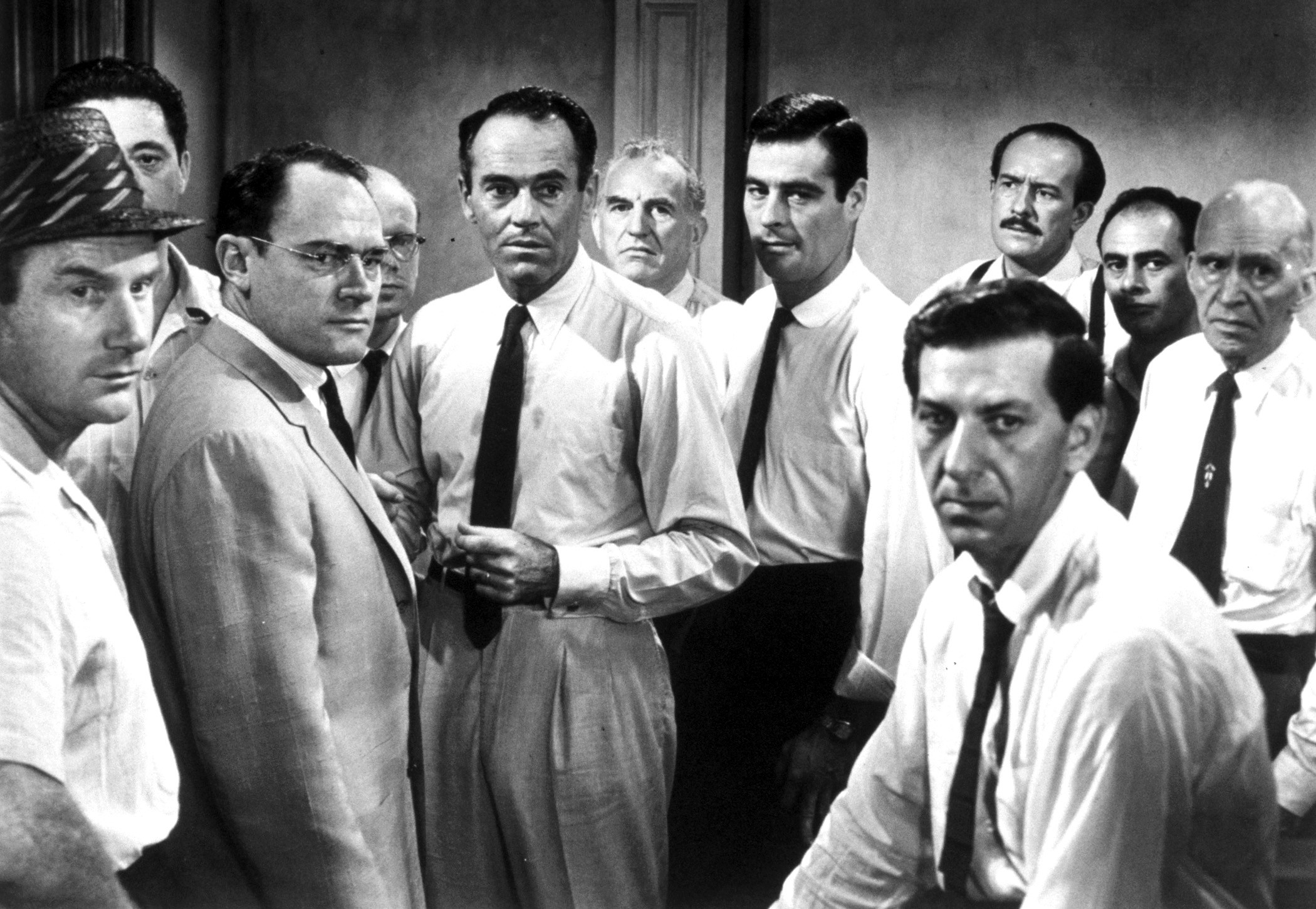
“Twelve Angry Men,” A Million Angry Fools, and the Jury System

Their defendant was probably guilty too.

Ethics Alarms All-Star Lianne Best sent me this link about a member of the Casey Anthony jury who is going into hiding because of all the hate and criticism being directed at jury members and their controversial verdict. Her plight, which must be shared by other members of the much-maligned jury, highlights the unethical, not to mention ignorant, reaction of the public to the Florida ex-mother’s narrow escape from a murder conviction she almost certainly deserved.

The problem begins with publicity. We may need to re-examine the logic behind broadcasting high-profile cases. The combination of live courtroom feeds and quasi-semi-competent commentary gives viewers the mistaken belief that they are qualified to second guess the jury, and they are not. They are not because the jury is in the courtroom, and the viewers aren’t. The jury and TV watchers see different things; individuals communicate different emotions and reactions in person than they do on camera. There is only one fair and sensible way to answer those on-line instant polls that ask, “Do you think Casey Anthony should be found guilty?”, and that is “I don’t know.”

Most of all, the viewers and pundits are not present in the jury room. Continue reading

Ethics Heroes: The Casey Anthony Jury

America saved Casey Anthony, and we should be glad it did.

A Florida jury pronounced Casey Anthony not guilty of murder, aggravated child abuse or aggravated manslaughter in connection with the 2008 death of her two-year-old daughter, Caylee. It did find that she had lied to investigators and police, which was well-established during the trial.

Did she murder her daughter, as the prosecution claimed? Oh, sure she did; I don’t think any of the jury members will be asking Anthony to babysit for their kids any time soon. But the case against her was circumstantial. She was proven to be a liar, irresponsible, feckless, self-centered, deluded and callous, and the prosecution’s theory made a lot more sense that the defense’s alternative scenario. Still, there was not enough evidence to find Casey Anthony guilty of murder beyond a reasonable doubt. That’s the standard, not “it’s almost certain that she did it.” Despite all the media pundits who said it would be a slam-dunk conviction, despite all the community sentiment to make the party girl mother pay with her life for killing her child, the evidence to meet the intentionally tough standard of American justice just wasn’t there.

Already, reporters and commentators are comparing the verdict to the O.J. Simpson trial. Wrong. Continue reading

Welcome to The Nursing Blog! Next?

Dr. Chris MacDonald, the articulate Canadian ethicist who is already the proprietor of the best business ethics blog on the Web, is apparently on a mission to bring ethics to every corner of the professional landscape, and all power to him. He is already a collaborator on the useful Research Ethics Blog , a co-writer of The Food Ethics Blog, and the primary force behind the Biotech Ethics website. Now, along with Dr. Nancy Walton, his partner on the research ethics site, he is launching a new ethics blog, on the topic of nursing. The Nursing Blog is a great idea, for a profession that faces persistent, difficult, and daily ethical issues. As Dr. Walton says in the debut post, there is a need. Whenever I learn about professional blogs, I pass on the links in seminars with those professionals: nothing strengthens ethical instincts and conduct better than a daily dose of thoughtful discussion or debate on ethical issues related to one’s own field. Bravo and brava, Doctors McDonald and Walton! And thanks.

While I’m thinking about it, I have some other ethics blog ideas for Chris to consider as he broadens his ethics blogging empire.

How about a horny lawyers ethics blog, for example? Clearly one is needed. Another need: a New Jersey Turnpike employees ethics blog….and fast. There is also a pressing need for a prosecutors ethics blog, since California’s bar is investigating 130 of them for wrongdoing. I know there are a few such blogs already, but clearly, they are not enough. And, of course, we are waaay overdue for a Public Broadcasting fairness and integrity blog.

So congratulations, Chris…but you still have a lot of work to do.

Sec. Geithner’s Dead Ethics Alarm

The ethics problems in the financial sector are rooted in conflicts of interest, some willful, some systemic, some naive. The presumption of the Obama administration when it chose Timothy Geithner to be Treasury Secretary at this time of collapsing trust in bid business was that Geithner, a supposedly canny insider, would bring to the job an invaluable understanding of the systemic problems, and perhaps he has. But the fact that he also brought a stunning insensitivity to basic conflicts principles is disturbing. Continue reading