Ethics Quiz: “Fixing” “Elf Ears”

ears

6-year-old Gage Berger was being bullied by his first grade classmates because he had protruding ears, and was often derided as “Elf  Ears.” His Salt Lake City parents decided to address the problem here and now, before, they say, his self-esteem (I almost wrote elf-esteem…) was  permanently damaged, so they had his ears de-elfed to look like everyone else’s.

Now he’s bullying other funny-looking kids.

Kidding.

I hope.

But seriously, folks, the story has aroused a controversy over societal and medical ethics. Did the parents choose plastic surgery too early and for the wrong reasons? Is that how we want society to be, where bullies and critics can pressure individuals to conform to a narrow standard of acceptible appearance? Doesn’t this give them power? Does it not encourage bullying? Is a first-grader old enough to meaningfully weigh these issues? Isn’t this a choice he should make, when he’s old enough to make it?

Your Ethics Alarms Ethics Quiz for today is…

Was it ethical to clip Gary’s ears?

Continue reading

Another TV Doctor, Another Breach: Dr. Sanjay Gupta’s Heroic And Self-serving Ethics Blindness

Are TV doctors entertainers, journalists or doctors? In a way the question doesn’t matter: if they are doctors, then they are obligated to follow medical ethics and the standards of their profession at all times, no matter what else they may be taking compensation for. This is why “Dr. Oz” is ducking the issue when he tries to avoid accountability for pushing quack remedies on his TV show (if it ducks like a quack…) by arguing that he isn’t practicing medicine, but engaging in entertainment. He’s still a doctor, every second of his life, once he takes that oath.

CNN’s Dr. Sanjay Gupta has largely steered clear of ethical issues in his tenure as the network’s medical expert. Not entirely, however; for example, in 2009, he was prominently mentioned as a possible Surgeon General, and was in discussions with the White House while continuing his reporting on the air, raising real and potential conflict of interest concerns. The most recent controversy is more serious. Continue reading

Ick, Not Ethics: The Incredible Head Transplant

OK, this looks unethical...

OK, this looks unethical…

I adore stories that clarify ethical distinctions, and this is the third one we’ve had recently. First we had the classic “Awww! Factor” case of the Down Syndrome cheerleader. Then, close on its heels, we got “Downton Abbey’s” finale, which illustrated the ethics fallacy of Consequentialism as deftly as any textbook.

Now we have the startling report of impending head transplants:

The world’s first attempt to transplant a human head will be launched this year at a surgical conference in the US. The move is a call to arms to get interested parties together to work towards the surgery.

The idea was first proposed in 2013 by Sergio Canavero of the Turin Advanced Neuromodulation Group in Italy. He wants to use the surgery to extend the lives of people whose muscles and nerves have degenerated or whose organs are riddled with cancer. Now he claims the major hurdles, such as fusing the spinal cord and preventing the body’s immune system from rejecting the head, are surmountable, and the surgery could be ready as early as 2017.

Canavero plans to announce the project at the annual conference of the American Academy of Neurological and Orthopaedic Surgeons (AANOS) in Annapolis, Maryland, in June.

Predictably, this news prompted a wave of “Futurama” jokes and bad puns. It also prompted dozens of hysterical stories online and in print pronouncing the yet-to-be performed operation as “a terrible idea” and obviously unethical. A Daily Beast “expert” with the trust-inspiring name “Docbastard” condemned the practice with this wisdom:

That’s the funny thing about ethics—it may be impossible to say why something is wrong, but can be easy to see that it isn’t.

Yeah, that is funny. It is also false, and incredibly stupid. If one cannot say “why” something is wrong–you know, things like interracial marriage, interracial adoption, homosexuality, gay marriage, plastic surgery, income tax, integration, eating meat on a Friday…gee, let’s see how far back into cultural history we need to go to get the list up to a thousand! My guess: no further than 1900, if that far—there’s an excellent chance that it only seems wrong because 1) nobody’s bothered to analyze it thoroughly and objectively, and 2) the Ick Factor, which is when we mistake strangeness, shock and surprise, all visceral, emotional reactions, for ethics.

Let’s actually think about the “Doc’s” provocative questions about the theoretical procedure that he seems to think clinch the argument that head transplants are “easy” to identify as unethical. He writes, Continue reading

Unethical Website Of The Month: OKCupid…The First Corporate Fick!

cupid5af

The ignominy of mere Ethics Dunce status is too good for OKCupid CEO Christian Rudder and his online dating service, and Unethical Website of the Month doesn’t do it justice either. The online dating website has revealed itself as an ethics outlaw, and a smug one. It is lying to its customers,  toying with the lives of vulnerable people who trust it, and doesn’t see anything wrong with its conduct.

That qualifies OKCupid as a Corporate Fick, the first ever so-identified here. As stated in the blog glossary of terms and concepts, a fick is someone who openly and blatantly violates social norms of responsibility, honesty or fairness without shame or remorse. That description fits OKCupid to a fare-thee-well.

In case you missed the story, the website revealed—proudly, in fact—that it intentionally set up users with bad dates, or mismatched by its own compatibility formulas, to see how people would behave. The uproar over Facebook’s undisclosed manipulation of users’ moods prompted the disclosure.Facebook’s experiment violated research ethics standards, and the company was misrepresenting both law and ethics when it claimed that they had Facebook user’s consent to use them as cyber lab rats. That was bad. This is infinitely worse. Continue reading

Ethics Strike Three And Four Against Facebook In Its Creepy Mood Manipulation Study

Facebook is so out.

"Meh. Look at this neat picture of my dog!"

“Meh. Look at this neat picture of my dog!”

Ethics Strike One was the research itself, using its own, trusting users as guinea pigs in a mad scientist experiment to determine whether their moods could be manipulated by secretly managing the kind of posts they read from Facebook friends.

Ethics Strike Two was the lack of its subjects informed consent for the study, violating the basic standards of human subject research. A boilerplate user agreement that makes a vague reference to using data for “research” in no way meets the requirements of informed consent for this kind of study.

This brings us to Ethics Strike Three.  In justifying the legality and ethics of the research, Facebook’s researchers explained that leave to perform such experiments was consistent with the user agreement (See Strike Two):  “[the experiment] was consistent with Facebook’s Data Use Policy, to which all users agree prior to creating an account on Facebook, constituting informed consent for this research.” As I pointed out above and in my previous post on this topic, this isn’t informed consent as the research field and various ethics codes define it. But even if it was, this statement is a lie. Continue reading

Obnoxious, Offensive, And Unethical: Facebook “Research” Turning Users Into Guinea Pigs

guinea-pig

Facebook apparently has been manipulating the feeds that some users get to see in order to measure how it the content affects the tone of their own posts.

You can read about the research here; I’m not publicizing it, because the Facebook’s research is an abuse of users and their trust. I don’t mind them reading my posts, for they own the service, and the service is in their name. I assume they will use my data and content to make money, but I didn’t agree to allow them to manipulate me, or what I write, feel, or think. I’m also not especially optimistic about the uses the results of such research might be applied to.

The researchers claim that the research is ethical because a computer program scanned for words that were considered either “positive” or “negative,” but the Facebook content wasn’t actually read. Facebook  terms of service state that user data may be used “for internal operations, including troubleshooting, data analysis, testing, research and service improvement.”

Since Facebook users agree to the terms of service, the researchers argue that this constitutes “informed consent” for their experiment.

Wrong.

Also ridiculous.

Continue reading

The Unforgivable Conflict of Interest: Sports Agents, Robbing Their Ignorant Clients

The ethical course is to choose.

The ethical course is to choose.

Sports agents are rich, powerful, and ethically handicapped by inherent conflicts of interest. The first two qualities so far have insulated them from dealing fairly and openly with the second. This is wrong, and has got to stop. For it to stop, it would help if the players, their unions, the sports leagues and the sports media didn’t either intentionally pretend not to see the obvious, or weren’t too biased and ignorant to realize what’s going on.

Four years ago, I wrote about this problem in a long piece for Hardball Times, a baseball wonk blog of consistent high quality.  The specific agent I was writing about was Scott Boras, the king of baseball player agents, but the egregious conflict I flagged isn’t confined to that professional sport; it’s present in all of them. In the article, I argued that Boras, a lawyer, is engaged in the practice of law when serving as an agent and was therefore violating the legal ethics rules, which prohibits having clients whose interests are directly adverse to each other, specifically in the so-called “Zero-Sum Conflict” situation.

A lawyer can’t assist two clients bidding for the same contract, because the better job he does for one, the worse his other client fares. A lawyer can’t sue a defendant for every penny that defendant has on behalf of one client when he or she has another client or two that have grievances against that same defendant—if the lawyer is successful with the first client, he’s just ruined his other clients’ chances of recovery. There is some controversy over whether the legal ethics rules automatically apply to a lawyer-agent like Boras, but never mind—whether he is subject to the legal ethics rules or not when serving as an agent, the conflict of interest he is blithely ignoring still applies, still harms his clients, still puts money in his pockets, and still should not be permitted. Continue reading

Gabrielle Giffords:The Helpless Pawn On The Ethics Train Wreck

Pawn

Ex-Rep. Gabrielle Giffords


James Taranto, the witty conservative commentator on the Wall Street Journal’s “Best of the Web” blog, properly takes aim at the New York Times op-ed supposedly authored by former Congresswoman Gabrielle Giffords, and shoots it full of holes, quite accurately finding the piece guilty of almost every ethical violation that has characterized the shameless, and deservedly unsuccessful, effort to exploit the Sandy Hook massacre for gun reform. “Giffords’s 900-word jeremiad should be included in every textbook of logic and political rhetoric, so rife is it with examples of fallacious reasoning and demagogic appeals,’ he writes, noting that she is a “practitioner of incivility and unreason.”  Some of Taranto’s indictments:

  • “The argumentum ad passiones, or appeal to emotion. She leads with this one: “Senators say they fear the N.R.A. and the gun lobby. But I think that fear must be nothing compared to the fear the first graders in Sandy Hook Elementary School felt as their lives ended in a hail of bullets. The fear that those children who survived the massacre must feel every time they remember their teachers stacking them into closets and bathrooms, whispering that they loved them, so that love would be the last thing the students heard if the gunman found them.” Continue reading

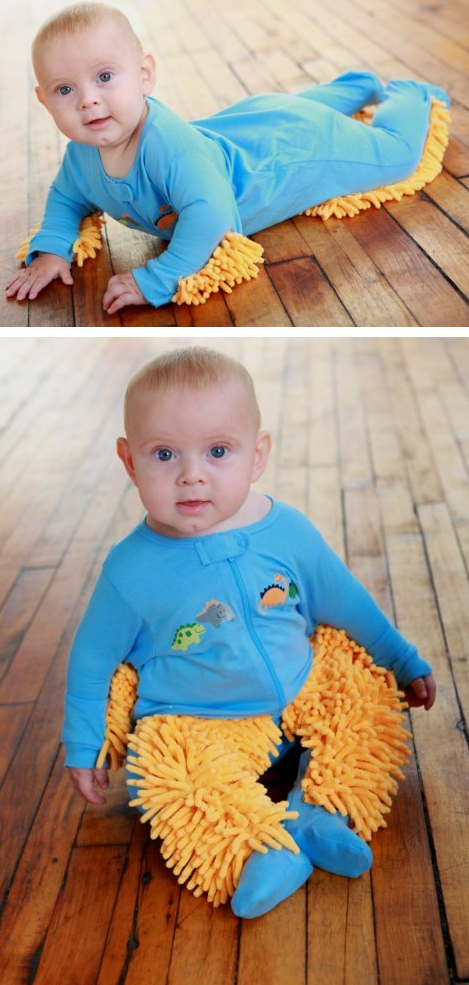
Really? The Baby Mop?

No.

One of the Kantian categorical imperatives is that no human being should ever use another for his or her own selfish objectives. Another ethical principle that is close to absolute is that one should never  exploit children. A third is not to treat human beings as objects, or to denigrate, diminish or humiliate them without their informed consent. A fourth principle is that forced child labor is inherently unethical, and a fifth is that making individuals do work that benefits you without compensation is theft.

HEY! I’ve got a brilliant idea! Let’s help parents turn their babies into living, breathing, drooling mops! Continue reading

Genome Sequences, Consent, and Scientist Ethics

What...you don't trust this guy???

Few things are scarier than when scientists start debating ethics.

A current debate in the scientific community involves whether it is ethical to publish your genome sequence without asking permission from family members. It is increasingly common for people to pay to have their genome scanned for the presence of traits, including genetic diseases. Scientists agree that releasing this information without the permission of the individual whose genes are described would be a clear ethical breach. The controversy involves whether an individual is ethically obligated to get consent from family members before publishing his or her own genome sequence, since to some extent that means publishing theirs as well.

The argument proceeds from the unauthorized release of someone’s genome sequence by a third party to the plight of an identical twin whose sibling wants to publish his own sequence, which, of course, also describes his twin’s.  This is ethically clear too: it would be wrong not to seek permission. But what about the rest of the family? Continue reading