Ethics Quote of the Week: Charles Krauthammer

Let's see...nope! Still too good for Gaddafi!

“Under the normal rule of law, truth is only a means for achieving justice, not an end in itself. The real end is determining guilt and assigning punishment. But in war and revolution one cannot have everything. Justice might threaten peace. Therefore peace trumps full justice. Gaddafi could have had such a peace-over-justice compromise. He chose instead to fight to the death. He got what he chose. That fateful decision to fight — and kill — is the prism through which to judge the cruel treatment Gaddafi received in his last hours. It is his refusal to forgo those final crimes, those final shellings of civilians, those final executions of prisoners that justifies his rotten death.”

—- Charles Krauthammer, revered conservative columnist and pundit, in his column rebutting the complaints of human rights activists regarding the rebel execution that took Moammar Gaddafi’s life.

Krauthammer is right, and he is wrong. He is right that no one should feel any pity for Gaddafi, a brutal and inhuman despot who had it entirely within his own power to both save his own life and refrain from killing even more of his countrymen than he had killed already. He is wrong that Gaddafi’s crimes and cruelty suspend civilization’s principles of justice and ethics. Continue reading


Donna Brazile Opens An Ethics Can Of Worms On “The Good Wife”

Is this the real Donna Brazile or the fake one?

The increasingly common practice of using real political figures playing themselves in dramas made me queasy from the beginning, and now I know why.

“The Good Wife,” CBS’s excellent legal drama now highlighting that network’s Sunday nights, has made such blurring of the real and fictional something of a trademark, featuring such real-life political power-player as Fred Thompson and Vernon Jordan in past episodes, not merely in cameos, but participating in substantive scenes as their real-life selves. Last night, Democratic Party strategist Donna Brazile, who had earlier in the day participated in Christiane Amanpour’s roundtable on ABC, played herself in the episode’s fictional meeting between her and  Eli Gold (Alan Cumming), the ethics-free campaign manager for the Good Wife’s Creepy Husband, Peter Florrick (Chris Noth). I must say, Donna Brazile made an extremely convincing Donna Brazile. She has a future in acting, as long as she can play herself. The problem is what fictional Donna Brazile told fictional Eli Gold, and the immediate, and confusing real life ethical issues it raises. Continue reading

Herman Cain’s Unethical Abortion Doubletalk

Republican presidential contender Herman Cain’s explanation of his position on abortion while chatting with CNN’s Piers Morgan is causing his growing legion of fans and supporters discomfort, and with good reason. It was ethically incoherent at best, unethical at worst. In either case, his comments show that he hasn’t devoted sufficient serious analysis to the issue to allow him to have a responsible and consistent approach. That is status quo for most Americans. It is not acceptable for a President of the United States.

Here is the relevant section of the interview (emphasis mine):

PIERS MORGAN: Abortion. What’s your view of abortion?

CAIN: I believe that life begins at conception. And abortion under no circumstances. And here’s why —

MORGAN: No circumstances?

CAIN: No circumstances. Continue reading

Comment of the Day: “Dear AIG: I’m Not Going To Be Able To Keep Criticizing Occupy Wall Street For Destructive Class Warfare If You Act Like This”

Michael, who now leads the field in Comments of the Day, picks up another with his commentary on my post about AIG’s continuing habit of living large on taxpayer funds. Here are his reflections on the post  Dear AIG: I’m Not Going To Be Able To Keep Criticizing “Occupy Wall Street” For Destructive Class Warfare If You Act Like This:

“A company can allow any expenses they want. That being said, since they are now majority owned by the US government, we need to ask who is giving the go ahead to things like this? Why haven’t they been fired? The Wall Street culture is so entitled and so out of touch with the reality of the common Americans that it is almost beyond belief.

“The Occupy Wall Street group could have a lot of legitimate gripes, but they don’t seem to have anyone with half a brain in the group. Instead of hearing “I want them to take the money from rich people and give it to me” form a college aged girl wearing $500 worth of clothes or “I have gone to every protest I can find for the last 40 years” from the aging hippies, why not try one of the following angles: Continue reading

Dear AIG: I’m Not Going To Be Able To Keep Criticizing “Occupy Wall Street” For Destructive Class Warfare If You Act Like This.

Pelican Hill...where wealthy insurance executives can spend taxpayer funds like it was Monopoly money!

American International Group Inc. (AIG), the huge insurer—too big to fail!— that is now majority-owned by the U.S. after a 2008 bailout of $85 billion, has resumed its arrogant, irresponsible habit of living like sultans on the money of taxpayers, many of whom are getting kicked out of their homes and who can’t find jobs.

Back in October 0f 2008, the House Oversight Committee nearly had a collective stroke when it discovered that, just one week after the federal government bailed out AIG because it was too vital a part of the shaky world financial markets to let go belly-up as it richly deserved, company executives went on a wildly-expensive retreat to a luxury resort. The executives “spent nearly $500,000 on manicures, facials, pedicures, and massages,” among other things.  Rep. Elijah Cummings (D-MD) was incredulous, and he wasn’t alone: Continue reading

“The 48 Laws of Power”: Robert Greene’s Recipe for Power, Greed and Misery

“The 48 Laws of Power” is a 1998 book by Robert Greene, a best-seller, and a re-packaging of ideas from multiple sources, including “The Prince” and “The Art of War.” Those who wonder why it is that certain sub-cultures in the United States—business, Hollywood, the entertainment industry, politics, finance— appear to be incurably cynical, amoral, corrupt and untrustworthy would do well to read it, provided they are able to resist being persuaded by its brutal philosophy.

Greene, who has other similarly-oriented best-selling books on business success, is considered a guru by the music industry, and has been embraced with special enthusiasm by hip-hop moguls. What is remarkable about his 48 laws is how completely they discard all ethical virtues, as if fairness, honesty, integrity, responsibility, respect and trustworthiness were irrelevant to the topic of power. In fact, the five most important laws of power are…

1. You must prove your worthiness to hold power by your manner of acquiring it.

2. Power without competence, wisdom and good will lead to tragedy.

3. Do not use power to restrict the welfare, autonomy, freedom, and pleasure of  others, but to enhance them.

4. Regard power as a means, not an end.

5. When retaining power itself becomes the goal, it is time to surrender it. Continue reading

The Dubious Ethics of Andy Rooney

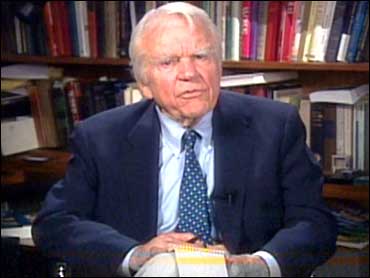
A few words about the trustworthiness of Andy Rooney...and CBS News

“60 Minutes” curmudgeon Andy Rooney makes his cranky farewell this week, and the CBS newsmagazine can be expected to make a big deal over his retirement; after all, Rooney is the network’s last remaining link to the halcyon days of Edward R. Murrow. In his blog, journalist Paul McNamara recalls an encounter with Rooney 20 years ago that provides some insight into the regard a broadcast icon has for the truth, and perhaps the culture of news reporting at CBS.

McNamara, you see, was working at a newspaper that ran a syndicated Rooney column, and one day he discovered that one of the columns Rooney filed included his eye-witness report of something that occurred after he wrote the piece… Rooney had intentionally fabricated a scene he never saw. It was a minor misrepresentation in the context of the column, but a misrepresentation nonetheless. Continue reading

Ethics Hero: Yankees Manager Joe Girardi

I don't believe I'm posting this.

It has come down to the final day of the season, with the (or as they are known in these parts, MY) Boston Red Sox tied with the Tampa Bay Rays for the final spot in the American League playoffs. The Yankees have been dominated by the Red Sox, their long-time rivals, most of the season, while the Rays have been easier pickings. Lo and behold, it is the Yankees playing the Rays, in a game that could determine who will be the Yankees’ opponents in the League Championship series.

The game is otherwise meaningless to New York, which has already clinched a play-off berth. At this point, a play-off bound manager’s job is to decide which marginal players will be on the post-season roster, to line up his pitching, and to steer clear of injury. Asked if he was bothered that Yankee manager Joe Girardi was surely not going to oppose the Rays with his best team, Boston Manager Terry Francona shrugged. He had earned the right to use the game to prepare for the play-offs, Francona answered.

Yet here was Girardi, starting a team made up of most of his regulars, replacing his pitchers as soon as they were in peril, and generally managing the game against the Rays as if it were the final game of the World Series. Continue reading

President Obama’s Integrity Collapse

It is one of the Ethics Alarms truths that “When the going gets tough, the tough get unethical.” That is not universally true, however, for there are individuals, in public and private life, who manage to maintain their ethical values even under pressure, even when unethical tactics appear to be an inviting way out of peril, even when maintaining ethical integrity can lead to failure and defeat.

I once thought Sen. John McCain was such a man, but I was proven wrong when he defeated a conservative rival for his Senate seat by embracing unethical policies and positions that he had once decried. I once thought that Barack Obama, despite his other deficiencies as a leader, had a strong claim to being more honest and ethical than his likely Republican rivals. He is now proving me wrong again. Continue reading

Can a Lying Journalist Be a Trustworthy Lawyer?

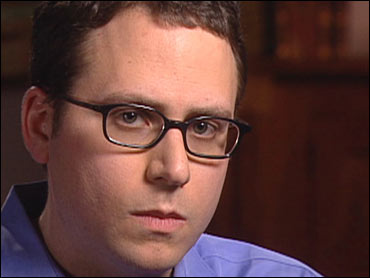
Stephen Glass: Would you trust this man?

When New Republic Editor Charles Lane fired Stephen Glass, the infamous journalist for that and other magazines who in 1998 was exposed as having fabricated many articles he had represented as true, he was quoted as saying,  “Glass is a man without honor who operated out of hostility and contempt; he has no place in journalism.”

Now the question is whether such man now has a place in the law.

A petition for review has been filed by the California Commission of Bar Examiners contesting the  State Bar Court’s finding that Glass is now morally fit to practice law. He passed the California bar exam in 2007, but the committee blocked his admission, finding that his previous record of professional dishonesty, though in another profession, showed such a deficiency of character that it disqualified him from legal practice as unfit. Then a hearing judge over-ruled the Commission, and found that Glass had reformed sufficiently to render trustworthy. The opinion was upheld 2-1 by the State Bar Court. Continue reading