Good Morning!
1 On feminist integrity. The reader poll on the post about the interesting silence of US women’s rights organizations and their component feminists as their Iranian sisters protest oppression in Iran has already had more participation that the last four Ethics Alarms polls combined. Why is that? In more news related to that post, some determined spinners here claimed that the feminists have been burning up the blogs and websites with supportive essays and blog posts, so the radio silence is a myth. No, THAT was a myth: there is nothing on those sites, or if there is, it didn’t surface when I checked Ms., Jezebel, NOW and four prominent blogs. (Update: Reader Humble Talent has checked two more. Also nothing.)
Please don’t make up stuff or assume facts you haven’t checked when you don’t want to accept reality, friends. It’s not fair, and it’s not ethical debating practice. Because I trust and respect the commenter in question, I just assumed she was right, because I assumed she had checked. No, it appears she had assumed, and was not right. And you know what Felix Unger proved happens when you assume..
2. This is why they give actors scripts. I enjoy actress Meryl Streep as an artist, but for me she is fast entering Alec Baldwin territory, a performer whose personal character deficits are becoming so overpowering that even her undeniable talent can’t make watching the performer on screen endurable. Streep is in a deep hole she keeps digging. Being a Harvey Weinstein acolyte and beneficiary for years (and a Roman Polanski apologist), she is denying culpability as an enabler of his serial sexual predation because, she says, she didn’t know. Almost nobody finds her denial credible. Yesterday the Times published a joint interview with Streep and her “The Post” co-star, Tom Hanks. Told by the interviewer that in light of the doubts about what she knew, the public wants to hear more from her, she responded,
“I don’t want to hear about the silence of me. I want to hear about the silence of Melania Trump. I want to hear from her. She has so much that’s valuable to say. And so does Ivanka. I want her to speak now.”
Streep locks up the 2018 Whataboutism of the Year title with that one, along with adding a ridiculous sentence into my personal collection of statements that deserve note because they had never been said before in the history of the English language. I started my collection decades ago at a family Thanksgiving dinner, when my sister said, “You know, the fish looks so good, I think I’ll wear my bra on my head.” And a collection was born.
“I don’t want to hear about the silence of me” has an elegant simplicity about it. In addition to being a strange sentiment, Streep also misses the whole concept of an interview—surprising, since she has done so many of them. See, Meryl, these questions are about what the public wants to hear about, not what you want to hear about. Was that really unclear to you until now? This was not an open invitation to announce all the things you’d like to hear about that have absolutely nothing to do with Harvey Weinstein. This is “Look! Squirrel!” carried to a demented extreme. Streep revealed herself as seriously Trump Deranged, as she thinks that the way out of every personal crisis is to declare, “But what about TRUMP????”
Looks like I won’t be watching “The River Wild” again. Pity. (I won’t watch “The Dear Hunter” again either, but then you never could have made me watch that thing a second time, not under torture or extortion.)
3. Now THIS is a frivolous law suit. From CNN:
Continue reading


 Ethics Alarms
This comment by Humble Talent, one of several COTD entries he has made lately, has to get up today before the ick that was the Alabama Senate Race subsides, and the comment feels moot—though it would not be.
But first, my epiphany about investigative reporting…
Humble’s comment made me realize something that was right in front of my eyes, and has been for a long time, and yet I never before connected the dots. This is especially galling because it involves distrust of the news media, and as you know, I think about this a lot.
What I only now realize, thanks to Humble Talent, is that investigative reporting is virtually always partisan or agenda-driven one way or the other. It isn’t the highest form of journalism, as we of the post-Watergate era have been taught to believe. It may be the most sinister.
Journalists can’t investigate everything. They have to choose what to investigate, and when, and those choices are inevitably determined by biases and political agendas. If choices are made, and they have to be—what do we investigate, about who? When do we know we have something worth printing? When do we run it? What will happen if we do?—the choices will reflect biases, unless coins are flipped and lots are drawn.
I never thought about whether the timing of the Roy Moore teen dates stories the Post ran were timed to come out when they did. But Humble makes me think: did the Post bother to look for dirt on Jones? I doubt it. I think an editor said, “This guy Moore is horrible. I bet there’s some scandal out there that can take him down, maybe a sex scandal. Let’s dig.” The Post sees that as a public service—Moore is objectively horrible—but the “investigative reporting” is essentially opposition research to benefit the Democratic candidate. Then the damning results of the investigation were published when they were deemed to be able to cause the most chaos in the campaign.
Why didn’t this occur to me when I was watching “Spotlight”? We see, in that film about the Boston Globe’s investigation into child abuse in the Boston Catholic Diocese, how the story was held up for months as a mater of tactics and politics. The story almost wasn’t run at all. Now, why did I just assume that it was random chance that…
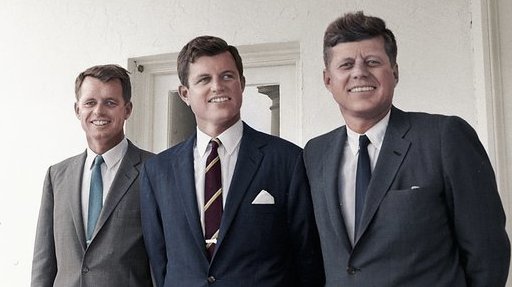
I’m an idiot. Was I the only one this gullible? I knew that the press could have ended JFK’s Presidency almost at will, but was intimidated out of doing so and wasn’t that unhappy about it. I knew the press intentionally kept the Clinton rape allegation from the public, for fear it would affect the impeachment outcome. I knew that CBS and Dan Rather’s investigative reporting about President Bush’s National Guard conduct was devised and timed (and falsified) to give Kerry the election.
Investigative reporting regarding politics is always politically driven. It has to be.
Duh.
I am completely dedicated to the Bill of Rights’ guarantee of a free and unencumbered press. A democracy without a free press is doomed. I am also convinced that a free press that abuses its power and influence is as great a threat to democracy as no free press at all.
Here is Humble Talent’s Comment of the Day on the post, “The Popeye,” From The Ethics Alarms Ethics Estoppel Files: I Can Say The Republican Party Is Rotting, Democrats, But You Can’t: Continue reading →