Baseball, The Play-Offs, And Integrity

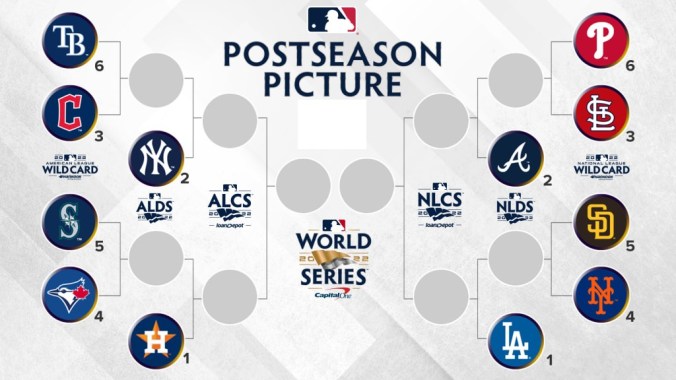
If the New York Yankees lose to the Cleveland ‘What’s Their Names?’ —Oh, right, “Guardians”…I forgot—tonight, it will eliminate New York and mean that only one of the teams proven by the 162 game regular 2022 season to be the best in Major League Baseball will have survived the early rounds of the play-offs to have a chance at the World Series. Over the weekend the L.A. Dodgers, owners of a record-tying 111-51 record in winning the National League West, were eliminated by the San Diego Padres, who finished a distant second in that division, not even winning 90 games. It took just three defeats (out of four games played) to sink L.A. Before that, the Philadelphia Phillies, a team that had been so mediocre for the bulk of the season that its manager was fired, eliminated last year’s World Series Champions and the winner of the Phillies’ division (over a 100 game winning runner-up: Philadelphia was a distant third).

If the Yankees go down (I’m rooting for that to happen, but I shouldn’t be), only the Houston Astros of the five teams that were objectively baseball’s best will have a chance to make the World Series, and that’s an ethical disaster. The World Series was devised to decide the best baseball team in the game, and for about seven decades, that’s what it did. Unlike all the other professional sports teams that polluted their post-season with multiple play-off levels, baseball alone had integrity. The teams with the best records in the American and National Leagues met for the first and only time in a season at the very end, in a best of seven, winner take all series. The system was meaningful, it was exciting, and it had integrity. Continue reading

Ethics Villains: Documentary Maker Ken Burns And PBS

What, you well may ask, is a photograph of Dylann Roof doing in Ken Burns’ latest documentary, “The US and the Holocaust”? Good question.  The answer is, frankly, disgusting.

In the last of three parts in the film, shown tonight on PBS stations nationwide, the now familiar Burns historical story-telling is converted into a partisan, negative, political campaign ad, and not even a fair or respectable one compared to the ugliest attack ads you will see in the coming month. Apparently the tax-payer funded pubic broadcasting corporation decided that the perils facing of its patron Democratic Party in the upcoming election were dire enough to justify turning a legitimate and mostly admirable piece of documentary craft into supplementary material to Joe Biden’s indefensible attack on Republicans as fascists and “clear and present dangers” to democracy.

Burns, to his eternal shame—I will not watch any future Burns works—agreed to betray the trust of his viewers and the integrity of his art by using the last 10 minutes of “The US and the Holocaust” to draw an intellectually dishonest and virtually libelous analogy between the anti-Semites in Roosevelt’s State Department that blocked European Jews from escaping to the U.S. before Hitler sent them to the showers, the Nazis themselves, and those who oppose pro-illegal immigration policies in the U.S. today. Continue reading

Baseball Ethics: MLB Changes The Rules Because Its Players Can’t Compete Under The Old Ones

I feel like I can’t let baseball off the hook while I’m being hard on the NFL today.

Of course, football’s ethical problem (well, one of the many) is that it allows too many players on the field who are killers, rapists and thugs, while baseball’s ethical problem is that it habitually changes the rules of the game rather than make the players accept the consequences of their own flaws.

You know, like Democrats…

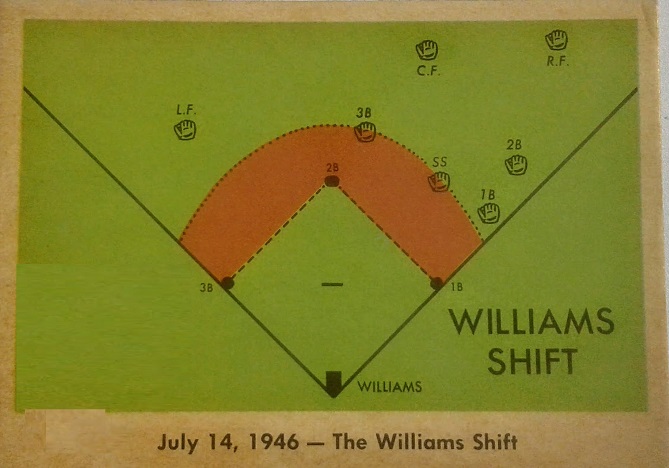
Beginning in 2023, Major League Baseball will enforce a set of restrictions it claims “will return the game to a more traditional aesthetic” by outlawing extreme defensive shifts. The goal is to encourage batters to put more balls in play rather than swing for the fences, a trend that has led to record numbers of strikeouts. The theory is that once they feel they have a better chance of getting a hit without knocking the ball out of the park, batter will try to make contact and thus hit more ground balls and line-drives,  giving players in the field more opportunities to showcase their athleticism. The changes are: Continue reading

Ethics Hero: Dolly Parton [UPDATED]

It seems that Dolly has integrity even if the Rock and Roll Hall of Fame does not.

Looking for publicity, or glitz, or something, the Cleveland-based Rock and Roll Hall of Fame nominated Parton for the Class of 2022 even though she hasn’t ever recorded a song that could be classified as “rock” by any definition however loose. She has been, first and foremost, a country singer. She occasionally has crossed the line, whatever it is, into pop.

Parton withdrew her name from consideration, tweeting,

“Even though I am extremely flattered and grateful to be nominated for the ROCK & ROLL HALL OF FAME, I don’t feel that I have earned that right. I really do not want votes to be split because of me, so I must respectfully bow out. I do hope that the ROCK & ROLL HALL OF FAME will understand and be willing to consider me again – if I’m ever worthy. This has, however, inspired me to put out a hopefully great Rock ‘N’ Roll album at some point in the future, which I have always wanted to do! My husband is a total Rock ‘N’ Roll freak, and has always encouraged me to do one. I wish all of the nominees good luck and thank you again for the compliment. Rock on!”

It’s embarrassing that a nominee is more aware of the perils of an institution’s honor being contrived than the institution itself. Barack Obama could have saved the Nobel Peace Prize from a massive reduction in prestige if he had taken the same approach as Parton when he was absurdly nominated before he had done anything but get elected President. I can think of several admittees to the Baseball Hall of Fame who should have turned down that honor—Tony Perez and Harold Baines immediately come to mind.

Continue reading

When Jack Palance Stood Up For Ukraine Against Putin

Over at The Bulwark, culture editor Sonny Bunch reminded me of a tale of some relevance to current events, though like most pieces in The Bulwark, his account is missing crucial details.

It involves one of my mother’s favorite Hollywood villains, Jack Palance. Younger readers probably remember him only in his long, lucrative late-career self-parody period (Watch “Shane”: what’s the matter with you?), which got him one of those weird Best Actor Oscars for just doing what he had done naturally for decades, but hammier, in “City Slickers.” (He was also aided by lines like “I crap bigger than you.” (To Billy Crystal.)

The actor was born in Pennsylvania as Volodymyr Palahniuk, the son of Ukrainian immigrants. In 2004, after Palance’s final film and just two years before his death, a Hollywood celebration  of “Russian Nights” in Los Angeles ended with an awards ceremony. “Russian Nights” was a week-long film festival that celebrated “Russian contributions to the world of art,” and was sponsored in part by the Russian Ministry of Culture. Russian president Vladimir Putin endorsed the propaganda event. Scheduled to receive “narodny artyst” awards ( translated as “the Russian People’s Choice Award”) were Dustin Hoffman and Jack Palance. Hoffman, like Palance boasted of Ukrainian heritage.

Continue reading

Baseball Hall Of Fame Ethics: This 2016 Post Just Became Ripe And Moot At The Same Time

The sportswriters who decide who is admitted to the Major League Baseball Hall of Fame voted in David Ortiz yesterday. The Red Sox and Boston icon (Carl Yastrzemski once said that while Ted Williams was the greatest Boston baseball player, Ortiz was the most important, and he was right) sailed into the Hall in his first year of eligibility, an honor few players have ever been accorded.

It was no surprise. In addition to having unquestionable statistical qualifications, “Big Papi” is also personally popular. That matters, a lot; the writers this year rejected Boston pitching ace Curt Schilling who also has impeccable Hall qualifications, because they don’t like him. Schilling is opinionated, combative, religious, and worst of all, politically conservative. Can’t have that. On the plus side, the writers also rejected steroid cheats Barry Bonds, Alex Rodriguez and Manny Ramirez, as well as almost certain steroid cheats Roger Clemens, Sammy Sosa and Gary Sheffield.

In 2016, anticipating and dreading yesterday’s news, I wrote a post titled, “The Wrenching Problem Of David Ortiz, The Human Slippery Slope.”

Here it is again.

Ethics conflicts force us to choose when multiple ethical principles and values point to diametrically opposed resolutions.  Often, a solution can be found where the unethical aspects of the resolution can be mitigated, but not this one. It is a tale of an ethics conflict without a satisfactory resolution.

I didn’t want to write this post. I considered waiting five years to write it, when the issue will be unavoidable and a decision mandatory. Today, however, is the day on which all of Boston, New England, and most of baseball will be honoring Red Sox designated hitter David Ortiz, who will be playing his finale regular season game after a 20 years career.  His 2016 season is quite possibly the best year any professional baseball player has had as his final one; it is definitely the best season any batter has had at the age of 40 or more. Ortiz is an icon and a hero in Boston, for good reason. Ortiz was instrumental in breaking his team’s infamous 86-year long “curse” that saw it come close to winning the World Series again and again, only to fail in various dramatic or humiliating ways. He was a leader and an offensive centerpiece of three World Champion teams in 2004, 2007, and 2013. Most notably, his record as a clutch hitter, both in the regular season and the post season is unmatched. You can bring yourself up to speed on Ortiz’s career and his importance to the Red Sox, which means his importance to the city and its culture, for nowhere in America takes baseball as seriously as Beantown, here.

That’s only half the story for Ortiz. Much of his impact on the team, the town and the game has come from his remarkable personality, a unique mixture of intensity, charm, intelligence, generosity, pride and charisma. After the 2013 terrorist bombing of the Boston Marathon, which shook the city as much as any event since the Boston Massacre, Ortiz made himself the symbol of Boston’s anger and defiance with an emotional speech at Fenway Park. Then he put an exclamation point on his defiance by leading the Red Sox, a last place team the year before, to another World Series title. Continue reading

Baseball Integrity Flash! Automated Ball and Strike Calls Are On The Fast Track

If they ever play Major League Baseball again—the sport is in the middle of a lock-out over the distribution of billions of dollars between owners and players, among other contested issues—it looks like games being ruined by bad pitch calls will soon be history.

 MLB officials announced that computer umpires that use an automated system for determining ball and strike calls will now be employed in Triple-A baseball for the 2022 season. I had predicted that robo-umpires at home plate would arrive in five years, considering how resistant baseball is to change, but this puts the Automated Ball and Strike (ABS) system, which was used with success last season in some of the lower minor leagues,  just one level below the major leagues. Absent unforseen problems, this could mean that the days of batters being called out on strikes with the bases loaded in the bottom of the 9th by pitches six inches off home plate could end after the 2022 season.

This is a grand slam for integrity. Once games were universally televised and broadcasts could show exactly where a pitch crossed the plate (or didn’t), umpires’ mistakes, in some games with the worst umpires nearing 20% of all pitches, became intolerable. Replay systems already allow reversals of the most egregious calls on the bases, making far fewer games determined by “the human factor,” also known as “lousy umpiring.”

When there was no way to fix bad calls, it was fair to call human error “part of the game.” Now it’s just an unnecessary and annoying part of the game. There was no excuse for letting it continue.

I’m thrilled.

Stephen Sondheim (1930-2021): Integrity Was Everything

Sondheim2

There’s not too much I can add to the many tributes and essays about Stephen Sondheim, who died yesterday at the age of 91, but I feel I owe him a special salute for his ethics. Ethics is not a common trait in theater, or in show business generally. Sondheim, one could argue (and I will) built his career on ethical values.

The Times has three excellent pieces: a front page obituary, a report on a final interview, and an appreciation by critic Jesse Green. I don’t disagree with any of them, nor do I dispute Sondheim’s importance to musical theater and the culture, which justifies his superstar send-off. None of them come right out and say what I believe to be obvious, if inconvenient: for all his influence, Sondheim represented a fascinating, elitist, dead-end for musical theater, which he was determined to elevate whether it was healthy for the genre or not.

Musical theater arose from humble, populist origins like the British music hall, and it was generally accepted to be a way for ordinary people to have a good time without having to think too much. That model served the genre, and the industry, well until Sondheim’s mentor, Oscar Hammerstein II took off from where only scattered experiments like “Lady in the Dark” and “Pal Joey” had previously ventured to bring serious topics and dilemmas into song while still sending the crowd home humming. Sondheim, once he had freed himself from writing words to established composers’ tunes in “West Side Story” and “Gypsy,” deliberately sought darker, more complex stories to musicalize than even Oscar would dare attempt.

Continue reading

The New York Times Has An Outbreak Of Integrity In The Midst Of Its Progressive Bias Fever!

books

The Times has compiled its list of the “best books of the last 125 years” as part of the celebration of the 125th anniversary of its Book Review Sunday supplement. Readers are invited to vote for their favorite on the list of twenty-five.

Here is the list:

Continue reading

Return To”Field Of Dreams”

Field of Dreams2

Baseball had a rare PR triumph earlier this month when it held a regular season game between the New York Yankees and the Chicago White Sox in the Iowa cornfield diamond that was the setting for the cult movie favorite “Field of Dreams.” The TV ratings were the best for any regular season broadcast in 16 years. That’s amazing, but maybe it shouldn’t be. Despite rumors of its demise, baseball still has a cultural bedrock of tradition, nostalgia and history unmatched by any other sport, professional or amateur. So many Americans would not tune in to a baseball game if they didn’t still have a flicker of affection for the sport, and if your argument is, “Yeah, but that’s just because of the movie,” the movie wouldn’t have become iconic if a lot of people didn’t care about baseball. As Terrence Mann said,

Now my confession: I’m not a wild fan of the film, nor that scene. The scene in particular is unforgivably stagey and artificial: it’s right out of the (much better) book, “Shoeless Joe,” and not even the great James Earl Jones could make it sound like anything but a recitation. I got annoyed, during the hype for the game broadcast, with “Field of Dreams” being repeatedly called “The greatest baseball movie.” I don’t regard it as that; I think it just barely makes the top five, and I could be talked out of ranking it that high.

For good reasons, many baseball writers, fans and bloggers have criticized the film over the years, and not just because it is shamelessly manipulative. But it is that. Baseball writer Craig Calcaterra, a vocal debunker of the film, writes,

“I will fully admit that a story about a father and son repairing a longstanding rift over a game of catch — with or without the magical realism elements — could form the basis of a MAJOR chills moment in an absolutely fantastic movie. The problem, as I’ve said in the past, is that “Field of Dreams” does not earn its chills moment. It is lazy in that it does not sketch out the dispute between Ray and his dad in anything approaching realistic terms — it’s dashed off in the rushed intro with almost no details — and it does nothing to explain why Ray’s moving the Earth and the Heavens to bring his dad back to that ball field is so important or why it serves as the “penance” Ray must pay for whatever reason. With no buildup or backstory, there’s no payoff.”

But worse, for me and others, is the slipshod handling of baseball history. “Shoeless Joe” Jackson was not innocent of taking a bribe to throw the 1919 World Series, he was guilty. He was not a thoughtful, wise-cracking Ray Liotta, he was just north of being a moron. He batted left-handed, and famously so, not right-handed like Liotta. When Frank Walley’s character, a magically reincarnated and youthened old ballplayer named Archie “Moonlight” Graham, whose single appearance in the major leagues was in 1905, is nearly beaned by a close pitch, he says “Hey ump, how about a warning?” Umpires didn’t warn pitchers for throwing at batters in 1905, and not for more than a half-century after that. Sloppy.

Continue reading