CNN Asks, “Why do we ignore Mayweather’s domestic abuse?” Here’s Why…

Floyd uses the pink gloves on his girl friends...

Floyd uses the pink gloves on his girl friends…

CNN’s Paul A Reyes writes,

“The wait is over,” proclaims the copy on Showtime TV’s website. The cable channel is heavily promoting Saturday night’s boxing match in Las Vegas between Floyd Mayweather Jr. and Manny Pacquiao. The cable network is going all-out to raise interest to a fever pitch for what it is billing as “one of the most anticipated fights in boxing history.” There is something missing here: Amid all this hoopla, as corporations and promoters line up for their big pay-per-view payday, there is a resounding silence on Mayweather’s documented history of domestic violence — no mention of any accountability or responsibility….That Mayweather is a serial batterer of women cannot be disputed. According to the sports website Deadspin, Mayweather has had at least seven assaults against five women that resulted in arrest or citations in addition to other episodes in which the police were called but no charges filed. …Questioned by CNN reporter Rachel Nichols last year about his abusive behavior, Mayweather showed little remorse. He noted that there were “no pictures … just hearsay and allegations.” He has previously said he should not be compared to O.J. Simpson or Chris Brown because there are no pictures of the women he has allegedly abused — as if the lack of video or photographic evidence is equal to exoneration. In fact, Mayweather spent several months in jail in 2012 after pleading guilty to misdemeanor assault charges….Mayweather, whom Forbes has named the highest-paid sportsman in the world, is set to take home $180 million for the fight.

Such collective indifference by the public of Mayweather’s domestic abuse is curious considering other incidents involving football players. After video surfaced of Ray Rice punching his then-fiancée (now wife) in an Atlantic City, New Jersey, elevator, he was temporarily suspended by the NFL and later dropped by the Baltimore Ravens. Adrian Peterson was likewise suspended by the Minnesota Vikings for harshly disciplining his son. These punishments occurred amid widespread outrage among fans and the public over what was deemed unacceptable behavior by athletes. Such outrage seems to be absent when it comes to Mayweather.

CNN (and ESPN, and other commentators) are perplexed and amazed by this. Let me explain it to them. It’s not hard.

1. This is boxing, in which two men, and sometimes women, try to beat each other into unconsciousness, sometimes permanently injuring the other. It is a thoroughly discredited, completely unethical sport, whose biggest celebrity, most honored figure and most admired practitioner, Mohammud Ali, is a brain damaged shell as a direct result of his participation in it. The most famous recent champion, Mike Tyson, is a self-confessed vicious brute, a rapist, and a domestic abuser who in his last championship fight bit off a piece of his opponent’s ear. Continue reading


Death Throes Of The Death Penalty: Dumb Expert, Dumb Advocates, Dumb Debate

“Next!”

As I recently concluded, the death penalty is beyond saving, not because it can’t be defended ethically and morally, but because the issues are tangled beyond repair.

The controversy over the legality of the so-called drug cocktails that somehow became our execution method of choice is a perfect example. The battles over capital punishment trapped policy-makers into this kinder, gentler, ridiculously complicated method of execution that has suffered snafus ranging from unavailable drugs to ugly extended deaths. The problem is the floating definition of “cruel and unusual punishment,” prohibited by the Constitution, but almost entirely subjective. Many judges think killing a killer is itself cruel by definition, and the more reluctant Western Europe becomes to execute the worst of the worst, the easier it is to make the argument that the death penalty is also unusual.

I don’t get it. I never have. India once executed condemned criminals by having the subject place his head on a stump under the raised foot of  trained elephant, which on a command would smash the head like a grape. Quick, painless–messy!—but virtually fool-proof. A pile-driver would be an acceptable equivalent.  Ah, but ick! In this stupid, stupid, intellectually dishonest debate, ick always equals “cruel and unusual,” because to opponents of the death penalty, killing people, even horrible, dangerous people, is inherently icky.

(Oddly, ripping unborn babies out of the womb is not, but I digress.)

I’ve admitted it, and I will again. (This lost Ethics Alarms Luke G., one of its best commenters the last time.*) It is obviously wrong to intentionally prolong an execution or deliberately cause pain, but if the occasional execution is botched and the condemned suffers, that should be cause for great rending of garments, nor should it be used to discredit capital punishment. As I wrote here about Clayton Lockett’s execution in Oklahoma

“There was no question of Lockett’s guilt, and his crime was inhuman. Such wanton cruelty and disregard for innocent life warrants society’s most emphatic rebuke, and the most emphatic rebuke is death. It is essential that any healthy society make it clear to all that some crimes forfeit the continued right to not just liberty, but also life. Anyone who weeps because this sadistic murderer experienced a few extra minutes of agony in the process of being sent to his just rewards has seriously misaligned values. No method of execution will work every time, and to make perfection the standard is a dishonest way to rig the debate. If the death penalty is justified, and it is, then we should expect and accept the rare “botch.” Meanwhile, if the concern really is efficiency, reliability, speed of death and minimal pain, there are literally dozens, maybe hundreds of methods of swift execution that would accomplish this. They just won’t pass the standards of death penalty opponents, because no method will.”

Today the Supreme Court heard oral arguments on the question of whether Oklahoma’s use of the common surgical sedative midazolam did not reliably make prisoners unconscious during lethal injections, thus violating the Eighth Amendment’s protection against “cruel and unusual punishment.” It’s a ridiculous case, which arises out of the botched April 2014 execution of Lockett that sparked the post I just quoted. It is a ridiculous case because the method of execution isn’t worth arguing over. Elephant. Head. Problem solved. Why is Oklahoma fighting about which cocktail to use? This is the anti-capital punishment team’s game, and sooner or later, the result is preordained.  Continue reading

The Clinton Foundation’s OTHER Ethics Problem—And An Ethics Trainwreck Update

clinton_foundationEven if it weren’t being used for what looks like influence peddling…even if the foreign contributions to it didn’t create a textbook “appearance of impropriety,” which is prohibited for a Secretary of State…even if Hillary Clinton’s unilateral destruction of thousands of e-mails makes her surrogates’ (and imagine: one of those surrogates is an ABC new show host, and the network sees nothing wrong with that) argument that there’s no “smoking gun” evidence of wrongdoing a shining example of gall for the ages…there is another ethics problem with the Clinton Foundation, one that is beyond reasonable debate, and one that even the most shameless Clinton acolytes won’t be able to deflect by attacking the messenger.

It’s an unethical foundation, by well-established non-profit standards, and that has nothing to do with politics. Continue reading

KABOOM! ABC’s George Stephanopoulos’ Mind-Blowing Hypocrisy

Why this didn't happen to George this morning, I'll never know....

Why this didn’t happen to George this morning, I’ll never know….

I honestly don’t know why this one didn’t make  GEORGE’S head explode. For most people, there is only so much hypocrisy one can engage in without breaking down and screaming, “All right! ALL RIGHT! I admit it! I’m accusing someone of doing exactly what I’m doing THE VERY SECOND I’M ACCUSING HIM!!”

I will be discussing some of the more blatant efforts by the Hillary Clinton Shameless Rationalizers Brigade to spin away the fact of her unethical creation of a serious conflict of interests and appearance of impropriety once I have put my brains back into my skull. Meanwhile, I must briefly point out one of the most shocking examples of hypocrisy I have ever witnessed from a journalist, or anyone, for that matter.

On This Week With George Stephanopoulos this morning (that was Sunday, 4/27) the opening interview was with Peter Schweizer, a conservative reporter and author of the soon to be published book, “Clinton Cash: The Untold Story Of How And Why Foreign Governments And Businesses Helped Make Bill And Hillary Rich.”  He is in the news because the New York Times and the Washington Post will be using his book, notes and sources to bolster their own investigative reporting, and one of its revelations regarding donations to the Clinton Foundation from foreign interests is already making waves for the Hillary Clinton campaign.

Stephanopoulos executed what I would call an adversarial interview, fair, but skeptical and hostile. It was also misleading, though not necessarily intentionally. George, like most journalists, isn’t too conversant in government ethics, or ethics generally. He kept hammering at the fact that no evidence of a crime had surfaced, as if that made everything fine and the story trivial. This is a classic Compliance Dodge: sneaky, dishonest, corrupt people are often expert at doing bad things without breaking the law. In fact, I just described the Clintons, and, sadly, a lot of lawyers. The fact that they didn’t break laws, or covered their tracks sufficiently not to leave evidence of law-breaking, does not mean that what they did wasn’t unethical, and seriously so. This is the case with the foreign contributions that just happen to have arrived in conjunction with matters where Clinton’ State Department had a decisive say that could benefit the donors. Accepting undisclosed contributions from such interests, in violation of a signed agreement that was a condition precedent to her confirmation as Secretary of State, is seriously unethical whether it was illegal or not. Because of this, it creates the appearance of impropriety, which officials in the Executive Branch, like Clinton, are prohibited by law from creating. This is a fact. Nothing more needs to be proved.

Stephanopoulos may not understand this, and I’ll give him the benefit of the doubt and assume he does not. If so, however, he is incompetent to perform the interview with Schweizer, who does understand it, because George should be trying to enlighten his audience, not confuse them. Harping on whether a law was broken does confuse his audience, and also abets the Clintons’ denial and confound efforts.

Schweizer was prepared; he anticipated all of the questions and the attempts to undermine his findings. He was patient and clear. Then Stephanopoulos suggested that his research was unreliable because he had worked for the Bush Administration and had ties to Republicans in the past.

Kaboom!

George Stephanopoulos was a long-time, close political aide and confidante of Bill and Hillary Clinton! Continue reading

Re The Latest In The Stream Of Clinton Scandals: If Hillary Clinton Really Cared About The U.S., She’d Drop Out Now

"..and in US public officials!"

..and in US public officials!

Has any American politician voluntarily and sincerely given up power or the quest for it in the best interests of the nation? I’m searching through my American history materials, and so far, I can’t find one since George Washington, who knew he could have been President for Life, and also knew it was a terrible idea. President Nixon and Johnson both said that they were giving up the Presidency for the good of the nation, but Nixon was toast and knew it, and Johnson, the consummate politician, knew that he faced an ugly rejection by the public and the destruction of his party as a result.  I can point to one president who definitely refused to give up power in the best interests of the nation, and thus set us on the divisive and dysfunctional path we are on now: Bill Clinton.

What a coincidence!

Hillary is not Bill, but it is already clear that she is willing to reduce American politics to new lows in blood warfare and polarize the nation even more than it is now, corrupting the news media and her supporters beyond recognition if the carnage can take  her to the White House. Surely she realizes that the months between now and November 2016 will consist of a river wild of revelations, accusations, scandals,  and search and destroy operations by her opponents as well as objective supporters of honest and responsible government. She also knows that there is plenty of substance—as in evidence of her duplicity and untrustworthiness—to discover. And she knows that she will respond, as the Clintons always have and always will, with carefully worded denials, ad hominem attacks on her critics, dark theories about conspiracies, accusations of sexism, and, of course, cover-ups and lies.

Next to a terrorist attack or a national police announcement that yes, they are hunting down African Americans, this is the last thing the United States needs….which means, in turn, that the next to last thing is the candidacy of Hillary Clinton.

The latest controversy is instructive. Continue reading

No, Craig, Barry Bonds Wasn’t A “Great” Baseball Player. Bernie Madoff Wasn’t A “Great” Investment Manager, Either

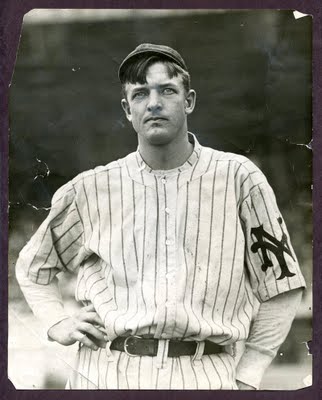
Christy Mathewson, a genuine hero. Barry Bonds would have made him want to throw up.

Christy Mathewson, a genuine hero. Barry Bonds would have made him want to throw up.

I like and admire Craig Calcaterra, who blogs entertainingly and perceptively about baseball on the NBC Sports website. I suppose I’m a bit jealous of him too: he’s a lawyer who now earns his living blogging about something he loves.

But Craig has always been a bit confused about how to regard baseball’s steroid cheats (they are cheats, which should answer any questions, but somehow doesn’t for a lot of people), and predictably, I suppose, he couldn’t resist reacting to the early results of Major League Baseball’s “Franchise Four” promotion, in which fans vote (until mid-May) for “the most impactful players who best represent each Major League franchise” as well as some other categories, including “Four Greatest Living Players.” The early results have Hank Aaron, Willie Mays, Sandy Koufax and Tom Seaver leading in the “Greatest Living Players” category, so Craig snarked that this is sad, because “it must mean Barry Bonds has died in a tragic cycling and/or Google Glass accident and no one thought to tell me.”

No, Craig, this is what someone failed to tell you: cheaters in any profession are not “great” by definition. Great baseball players, like great lawyers, writers, doctors, scientists and Presidents, bring honor on their profession, don’t corrupt everyone around them, don’t force people who admire them to embrace unethical conduct and turn them into aiders and abetters, and accomplish their great achievements while obeying the law, following the rules, and serving as role models for everyone who follows them. Barry Bonds was not a great baseball player. He had the ability to be one, but not the character.

Hank Aaron, Willie Mays, Sandy Koufax and Tom Seaver never once disgraced their game while they wore a uniform, and indeed made baseball stronger and better while they played. Good choices all.

The disgrace is that San Francisco fans voted Bonds as one of that team’s “Franchise Four,”  dishonoring great Giants of the past like Juan Marichal, as well as New York Giants greats like Christy Mathewson, Bill Terry, Carl Hubbell, and Mel Ott, Hall of Famers  and lifetime Giants who played with honesty and sportsmanship. But Giants fans warped values are among the casualties of Bonds’ career…and one more reason he can’t be rated anything but a great villain.

Inevitable, Unethical, Technological Incompetence By Our Governments

Hey, what could go wrong?

Hey, what could go wrong?

The legal profession is in the midst of an ethics crisis not of its own making. New technologies, including social media, have created opportunities for vastly improved legal services, to such an extent that the American Bar Association has decreed that an ethical, competent lawyer, must use them. It has also made it clear that using them carelessly to the detriment of clients is unethical as well. It all sounds reasonable, except for this: few lawyers are equipped by education, training or nature to be adept at technology. Worse, technology is now changing so fast that few lawyers can keep up with it.

Thus they make mistakes. Costly mistakes, disastrous mistakes, stupid mistakes, and there is no learning curve, because by the time lawyers understand and master a new technology, it is no longer new, and it has taken on a different form that requires them to start all over again. The ABA and other bar associations have acknowledged this through inaction. After numerous instances where their ethical guidelines regarding the use of technology were obsolete or wrong from the moment they were issued, these bodies have resorted to general edicts only, essentially saying, “You must master available legal practice technology, and you must not screw it up. Don’t ask us how, we’re as confused as you are.”

Gee, thanks.

Unfortunately, it is not just the legal profession that is in peril from technological overload, unrealistic expectations and the speed of innovation. Our various levels of governments are, if anything, in even worse peril from the same phenomenon.

One week ago, the Virginia State Board of Elections frantically voted to  decertify use of the AVS WinVote touch-screen Direct Recording Electronic voting machine, meaning that the machines, which were used by dozens of cities and towns in Virginia, are effectively banned. Virginia is holding primaries  just two months from now, so this has thrown those local governments into a panic. The decision was unavoidable, however, after a shocking a report that demonstrated that the machines could be hacked, and elections rigged, by a 12-year-old…that is, anyone with more technological expertise than local government officials.

Continue reading

The Irony Of Wikileaks: Yes, It Is Despicable…But It’s Still Useful To Know That PBS, Ben Affleck And Prof. Henry Lewis Gates Are Despicable Too.

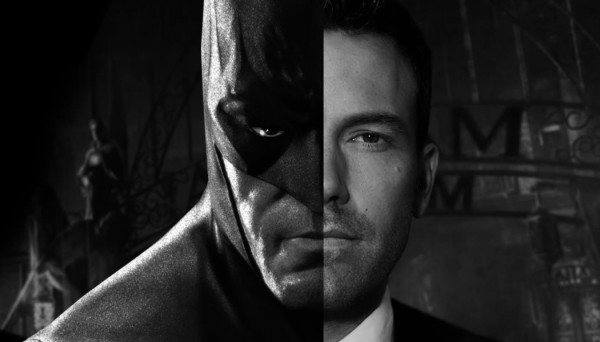
Batman is ashamed of you, Ben...

Batman is ashamed of you, Ben…

Once a secret is out, it isn’t a secret any more. Once privacy is shattered, it’s gone: that egg can’t be put back together again. I wish Sony’s e-mails hadn’t been hacked: everyone who isn’t operating under a policy that mandates that their communications must be archived and available for media and public examination, like, oh, say, Hillary Clinton, has a right to have private business and personal communication.

Julian Assange is a fick, and an uncommonly arrogant one. He encourages, aids and abets the theft of proprietary information in the interests of world anarchy, which is in the interests of nobody. So let’s see now…North Korea hacks Sony to chill our First Amendment rights, and Wikileaks helps magnify the damage by spreading private e-mails and documents far and wide.

Yechhh.

But it’s all out there now, and there is no virtue in averting our eyes and plugging our ears. There is a lot of unethical conduct exposed in those 30,000 documents and 170,000 emails hacked from Sony, and while the means by which it was exposed was illegal and wrong, we should still learn from what is now public information.

The fact that PBS and Harvard prof Henry Louis Gates Jr. can’t be trusted, for example, is good to know. Continue reading

The Legal Profession’s Failure Of Professionalism Regarding Gay Marriage

blind_justice

Charles Green helpfully sent me the link to today’s New York Times piece documenting how…

“the imbalance in legal firepower in the same-sex marriage cases resulted from a conviction among many lawyers that opposition to such unions is bigotry akin to racism. But there were economic calculations, too. Law firms that defend traditional marriage may lose clients and find themselves at a disadvantage in hiring new lawyers.”

“Am I right that something’s quite amiss here?” he asks. Indeed he is, and I’ve touched on it before.

There are several factors at work here, but the result is deplorable, and indictment of the corrupt values of the legal profession. One of the factors is bias, and it is a bias that the lawyers themselves are either unaware of,  or are unwilling to avoid its effects as their professional codes of ethics require.

The majority of high-powered lawyers hail from urban centers where liberal culture flourishes among the wealthy, the powerful and the influential. These are cosmopolitan lawyers, sophisticated and urbane, who have gay colleagues, gay friends and gay children. They are less likely to be religious, and more likely to have contempt for those who are. Combine with them the legal academics who drive consensus on legal ethics matters—like most academics, they have marinated in the extreme leftist attitudes of U.S. academia—and it becomes clear why, as Michael W. McConnell, a former federal appeals court judge who teaches law at Stanford, tells the Times, “The level of sheer desire to crush dissent is pretty unprecedented.”

I noticed this in 2011, when the legal ethicists I follow, know and debate with decreed virtually en masse that a judge who was not only gay himself but in a long term domestic relationship with his partner had no ethical obligation to recuse himself before he issued the decision on the constitutionality of California’s anti-same sex marriage Proposition 8. Nor did they feel he was ethically obligated to disclose his situation before ruling. I wrote: Continue reading

Proof Of Evolving Ethics Enlightenment: Bert The Cop Would Have Shot Walter Scott In The Back Too

For those who think that our ethical sensitivities don’t evolve for the better over time, I prescribe a careful viewing of that family classic, “It’s A Wonderful Life.”

At the film’s climax, George Bailey, the self-sacrificing hero who has been granted his inadvertent wish to see what the world would be like if he had never been born, finds the love of his life and (in the life he has given up for this dystopian hell) the mother of his children now unmarried, alone and working as a librarian despite the fact that she looks like Donna Reed. He embraces her, and since she’s never met him in this alternate reality, she screams, believing she is being sexually assaulted by a madman. Kind, jovial police officer Bert is summoned to quell the ruckus, and George, who is a bit upset, punches him in the face to avoid arrest, and runs away. Bert then takes out his pistol and fires it at George repeatedly.

He’s a lousy shot.

In 1946, when audiences first saw this film, nobody thought there was anything unusual about Bert’s professional conduct. Many, many films right through the 1960s show police officers, “good guys,” even ones not trapped in a strangely mean alternate reality like Ward Bond’s Bert, shooting at fleeing suspects or criminals. That was considered appropriate police procedure then, and the public, society and U.S. culture saw nothing amiss. You were expected, as a good citizen, to submit to a police officer’s lawful authority. If you resisted arrest and ran, then it was fair and reasonable for the officer to shoot you, ideally after a “Stop or I’ll shoot!” warning. Indeed, many people were shot, and killed, this way. If it was news, it wasn’t on the front page, and it wasn’t considered any kind of an outrage.

Now consider the public and media reaction to Michael T. Slager’s shooting of Walter Scott. We now know that Scott was resisting arrest: he had a bench warrant out on him for non-payment of over $18,000 in child support, and Slager was trying to bring him into custody. Instead of doing as the officer demanded, Scott resisted and ran. Burt would have shot at his back too; the difference is that Slager is a better shot, and George was faster. Slager, however, is completely reviled across the country; even his own lawyer found him so repugnant that he refused to represent him.

That represents a massive shift in cultural values in a little over half a century. Continue reading