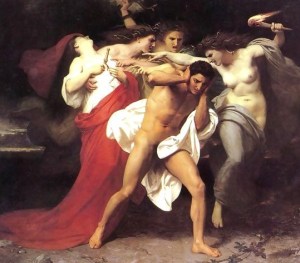
Judge Ken Anderson: A Judge With An Ethical Obligation To Resign

Ken Anderson

Regret isn’t enough.

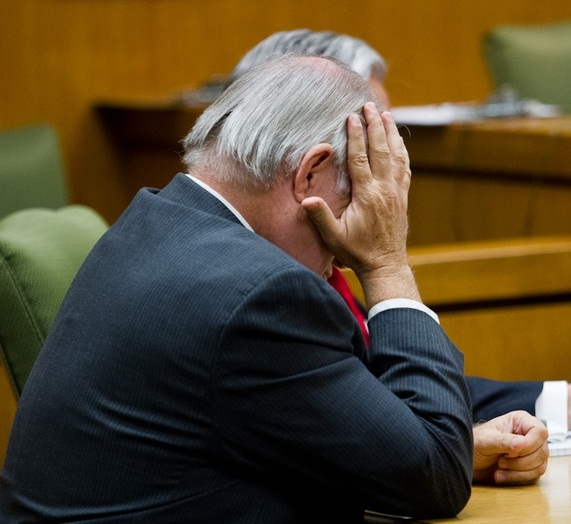
Ken Anderson has been a Williamson County (Texas) district judge since 2002, but in 1987  he was the district attorney who prosecuted Michael Morton for fatally beating his wife to death. Morton was convicted and served 25 years in prison before DNA tests proved he was innocent. (This is yet another triumph of The Innocence Project.) Another man has been arrested for the murder of Morton’s wife Christine, as well as a second woman he allegedly killed in similar fashion while Morton was behind bars.

Last week, a five day hearing examined Judge Anderson regarding his conduct in the case, in a special court of inquiry to determine whether he engaged in criminal wrongdoing as well as unethical prosecution. Among the questions raised was why Anderson never divulged to Morton’s defense team a police report that Morton’s neighbors had said that they saw a suspicious man walking into the woods behind the Morton home shortly before the murder, and why Morton’s three-year-old son’s statement that “a monster,” not his father, beat the child’s mother to death was similarly withheld. On the stand enduring five hours of questioning, a tearful Anderson could only say that he didn’t remember not turning over the evidence to the defense, while defense attorneys adamantly insisted that they never received it. The hearing also revealed that Anderson kept his lead investigator from testifying at trial, when his testimony would have ensured that the child’s statement and the report about the stranger were raised in court, as well as allowing defense attorneys to cross-examine the investigator regarding his peculiar theory of the case.The theory, which was subsequently endorsed by DA Anderson, was that Morton become homicidal after his wife fell asleep when he sought to have sex with her, and donned his scuba wet suit so his son wouldn’t know it was him beating her to death. Continue reading

And Speaking of Grading Ethics…

.

Grrrrrrrrr!

Grrrrrrrrr!

..I am reminded of a grading traumatic experience of my own, involving a famous professor whose curve was the opposite of Prof. Frölich’s.

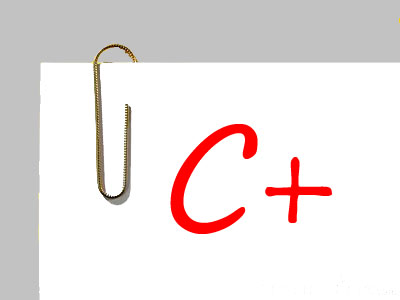
But first, an aside. Many readers have asked my views on the weird story of  Megan Thode, the grad student who sued to have her C+ grade changed, alleging that it was the result of bias and will cost her 1.3 million dollars in lost income. The judge was understandably annoyed at having to decide the case, and has suggested a compromise between the parties to relieve him of the responsibility of perhaps having to change the grade himself. There was no good result possible here. If the school really had a bias against Megan and she could prove it, then the law suite was valid. She shouldn’t have her career disrupted because of unfair grading. If, on the other hand, her grade was within the range of proper discretion, the law suit was a threat to the education system, and had to be be fought until the last dog died. Nor should the school compromise, as it would create a system in which grades have no integrity and where anyone could buy an inflated grade by threatening court action. Ultimately, the judge decided that the grade had to stand. What I see here is an educational system on all levels collapsing from a toxic combination of warped objectives (education for monetary payoffs, not for its own sake) and a dearth of trust in the competence and integrity of the educators.

Now the story of my own disputed C+, starring the renowned Chester James Antieau. Continue reading

Ethics Quiz: The Professor, the Plot, and the Prisoner’s Dilemma

Prisoner's Dilemma

The Prisoner’s Dilemma

Professor Peter Frölich teaches “Intermediate Programming,” “Computer Science Fundamentals,” and “Introduction to Programming for Scientists and Engineers” at Johns Hopkins University. He uses a grading system in which the top score in any exam defines an A, and all other scores are graded down from that point (I like that system, by the way).

His students in all three courses hatched an ambitious conspiracy to ensure A’s for everyone.  They all agreed to refuse to enter the exam rooms, so the top score, and only score, anyone could get would be zero. Since the grading curve would have to start with that, they reasoned, everyone would have to get the top grade. The students stringently enforced their plot, apparently, and nobody broke ranks. Continue reading

Now THIS Is Hypocrisy: Jack Lew Edition

cayman-islandsI know it pains many of you to hear it, but integrity has not been one of President Obama’s evident virtues, and the nomination of  his Chief of Staff Jack Lew to replace Timothy Geithner as Secretary of the Treasury is a particularly vivid example. The nomination demonstrates either hypocrisy or dishonesty (or both) no matter how one chooses to look at it.

This has nothing to do with Lew’s qualifications for the job: I’m certain he is sufficiently qualified, and is as likely as anyone else to help lead the nation through the fiscal wilderness, which is to say “not very.” The problem with Lew’s nomination, in the context of the President’s integrity, is two-fold. Although Obama and his campaign’s successful strategy was to demonize Mitt Romney as a grasping and venal corporate raider who accumulated big corporate bucks while doing little of value, Jack Lew’s resume includes receiving a $945,000 bonus in January 2009 after a short time working at Citigroup, which was in the process of collapsing financially and seeking (and receiving)a massive taxpayer bailout.  Obama also made hay during the campaign by implying there was something shady about Romney’s investments in Cayman islands-based institutions. Jack Lew. meanwhile, oversaw Cayman island investment funds while at Citigroup. In his 2008 campaign, Obama took special aim at one of them known as Ugland House, and a Senate hearing on the subject designated it as a facilitator of tax evasion. Jack Lew had investments in the Cayman islands, and, like Mitt Romney, had them with Ugland House. Continue reading

Jonah Lehrer Shows Us A Level One Apology: Remorse, Regret, Contrition. Sincerity? Who Knows…

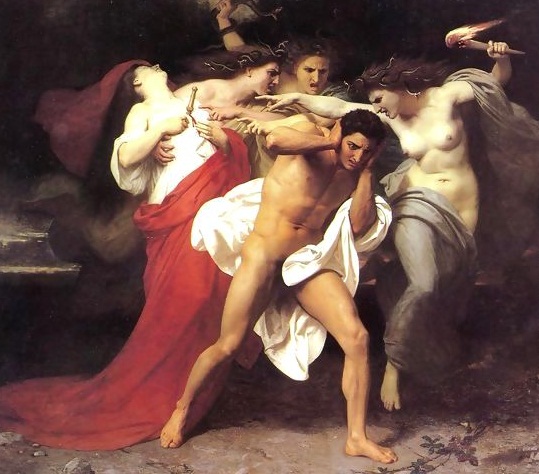
The-Remorse-Of-OrestesWhen we last looked in on writer Jonah Lehrer last summer, he had detonated his career and credibility with a series of incidents of serious professional misconduct that led to his ignominious firing from The New Yorker, where he once was regarded as a rising star. First he was caught plagiarizing himself, recycling a previously published work as an original  essay for the magazine. That led to an investigation showing that this was not the first time he had taken such an unethical short-cut. Finally, it was discovered that he had fabricated Bob Dylan quotes in his best-selling book about, ironically enough, creativity. When confronted about this, Lehrer lied. Soon he was out of a job and condemned to the limbo reserved for writers who deceive their readers: Jason Blair, Stephen Glass, James Frey, Janet Cooke, and others. It is not a pleasant or profitable place to be.

Lehrer was recently invited to speak to a gathering at the Knight Foundation, and chose the forum to deliver an apology for his conduct. It would be difficult, I think, to deliver a better one. On the Ethics Alarms Apology Scale, the most ethical apology, at the top of the scale, is this one:

1. An apology motivated by the realization that one’s past conduct was unjust, unfair, and wrong, constituting an unequivocal admission of wrongdoing as well as regret, remorse and contrition, as part of a sincere effort to make amends and seek forgiveness.

That is exactly what Lehrer delivered to the Knight Foundation, and through his blog, the rest of us. He said…

“..I am the author of a book on creativity that contained several fabricated Bob Dylan quotes. I committed plagiarism on my blog, taking, without credit or citation, an entire paragraph from the blog of Christian Jarrett. I also plagiarized from myself. I lied to a journalist named Michael Moynihan to cover up the Dylan fabrications.

“My mistakes have caused deep pain to those I care about. I am constantly remembering all those people I’ve hurt and let down – friends, family, colleagues. My wife, my parents, my editors. I think about all the readers I’ve disappointed, people who paid good money for my book and now don’t want it on their shelves.I have broken their trust. For that, I am profoundly sorry. It is my hope that, someday, my transgressions might be forgiven.

“I could stop here. But I am convinced that unless I talk openly about what I’ve learned so far – unless I hold myself accountable in public – then the lessons will not last. I will lose the only consolation of my failure, which is the promise that I will not fail like this again. That I might, one day, find a way to fail better.

“The lessons have arrived in phases. The first phase involved a literal reconstruction of my mistakes. I wanted to have an accounting, in my head, of how I fabricated those Dylan quotes. I wanted to understand the mechanics of every lapse, to relive all those errors that led to my disgrace. I wanted to understand so that I could explain it to people, so that I could explain it in a talk like this. So that I could say that I found the broken part and that part has a name. My arrogance. My desire for attention. My willingness to take shortcuts, provided I don’t think anyone else will notice. My carelessness, matched with an ability to excuse my carelessness away. My tendency to believe my own excuses.

“But then, once I came up with this list of flaws, and once I began to understand how these flaws led to each of my mistakes, I realized that all of my explanations changed nothing. They cannot undo what I’ve done, not even a little. A confession is not a solution. It does not restore trust. Not the trust of others and not the trust of myself. What’s more, I came to see that my explanations were distracting me from the more important reality I need to deal with.

“Because my flaws – these flaws that led to my failure – they are a basic part of me. They are as fundamental to my self as those other parts I’m not ashamed of. This is the phase that comes next, the phase I’m in now. It is the slow realization that all the apologies and regrets are just the beginning. That my harshest words will not fix me, that I cannot quickly become the person I need to be. It is finally understanding how hard it is to change.

“Character, Joan Didion wrote, is the willingness to accept responsibility for one’s own life. For too long, I did not accept responsibility. And by not accepting responsibility – by pretending that all of my errors were accidents, that my carelessness was not a choice – I kept myself from getting better. I postponed the reckoning that was needed.

“There is no secret to good decision-making. There is only the obvious truth: We either confront our mistakes and gain a little wisdom, or we don’t and remain a fool.”

You can read the whole speech here. Continue reading

Chris Dorner Capture Reward Ethics

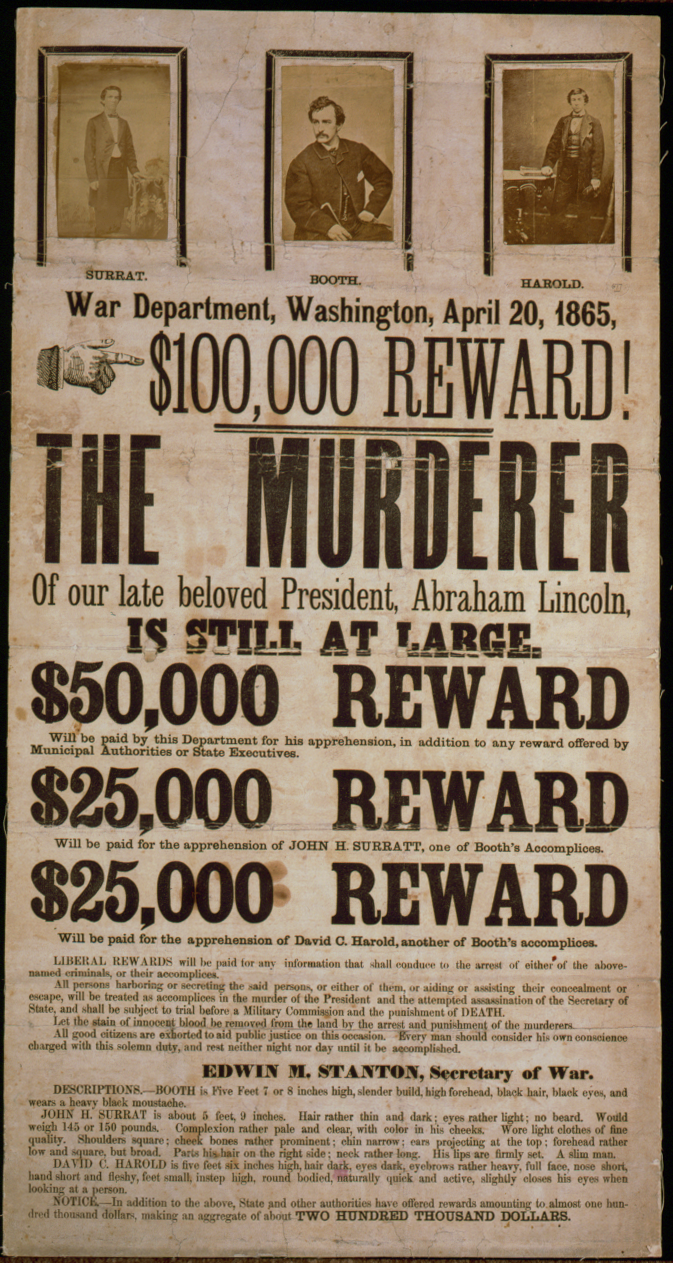
John_Wilkes_Booth_wanted_poster_colourThe gossip site TMZ often has horrible ideas, but for once it has come up with a horrible idea that is worth discussing seriously.

Several citizens provided information that led to renegade killer Chris Dorner being trapped and ultimately killed in a stand-off with police. This should put them in line for three rich rewards offered for information leading to the end of Dorner’s rampage, but TMZ identified catches in all three:

 “The Mayor of L.A. announced a $1 million reward — funded by private groups — for information leading to the “capture and conviction” of Dorner.  Big problem — technically speaking, Dorner must be both captured AND convicted to trigger the reward. The L.A. City Council offered a $100,000 reward for information leading to “the identification, apprehension, and conviction” of Dorner.  Again … no conviction.  City Council sources tell us there’s already a disagreement between the Legislative Analyst and the City Attorney over how to interpret the reward language. And finally … the L.A. County Board of Supervisors offered a $100,000 reward for information “leading to the capture of Christopher Dorner.”  One source at the Board of Supervisors tells TMZ,  “Dorner was cornered but not captured.”

Could TMZ possibly be correct? Would the offerers of these rewards weasel out of their obligations, citing the fact that Dorner burned to death before he could be captured and convicted?

Legally it’s possible, but barely. Ethically, it would be unfair and a breach of public trust. Pragmatically, it would be stupid beyond all imagining. Continue reading

“Free Wi-Fi” And Journalism’s Flagrant Untrustworthiness

You’ve probably memorized that State Farm TV commercial where the woman tells her friend that she believes everything on the internet because it has to be true, and introduces her “French model” date—a grotesque geek wearing a belly pack who can barely manage “Uh..Bonjour!”—whom she met on the internet. Well, last week we were treated to a lesson in how the mainstream media, even its most prestigious and trusted members, are about as trustworthy as her date.

None other than the exalted Washington Post breathlessly reported last week, in a front page story, that “the federal government wants to create super Wi-Fi networks across the nation, so powerful and broad in reach that consumers could use them to make calls or surf the Internet without paying a cellphone bill every month…If all goes as planned, free access to the Web would be available in just about every metropolitan area and in many rural areas.”

The story was stunning and worrisome–Why is the government competing with private enterprise? How can it undertake such a sweeping discretionary initiative with the Treasury deep in debt? Wait, what??—and rapidly spread all over the 24-hour news media, including cable, radio and the internet (Uh..Bonjour!). It is there still, largely uncorrected. The story, meanwhile, was essentially untrue, a mistake. Yet as of yesterday, it was still being reported and argued about as fact on such respectable and trusted websites as Salon, Reason, UPI, Business Investor, The Daily Caller, NPR and many more. The Post, meanwhile, has still not published a clear and prominent retraction, and the reporter who wrote the erroneous story is still spreading misinformation. Continue reading

If Only The Profession Was This Strict AFTER Admitting A Lawyer To The Bar…

No, surprisingly in light of last week's revelations from Cambridge, the applicant who cheated on her bar exam did NOT go to Harvard. I'm as stunned as you are!

No, surprisingly in light of last week’s revelations from Cambridge, the applicant who cheated on her bar exam did NOT go to Harvard. I’m as stunned as you are!

One of the legal profession’s ethics anomalies is that its character standards for entering legal practice are far more unforgiving than the standards for keeping one’s license to practice after being admitted. For while John Edwards continues to be a North Carolina lawyer in “good standing,” an Ohio bar applicant was held to lack the requisite good character to be a trustworthy lawyer (Ohio Supreme Court opinion here) because of the following set of facts.

When Jasmine Shawn Parker of Covington, Kentucky was taking the Ohio bar exam, a test monitor reported that she had continued to write for up to 30 seconds after “time” was called on a set of two exam questions, and then again for 45 to 60 seconds on two sets of two exam questions. The Board of Bar Examiners investigated, and asked Parker’s tablemates about their observations or her actions, if any, after time had been called. They reported that Parker had continued writing for maybe a second or two past the declared deadline on Day 1 of the exam, and on the second day, had continued to write past the stopping point “long enough to get at least two lines of writing on paper.” As a penalty after these findings, the Ohio Board of Bar Examiners gave Parker no credit on the exam question with the highest point value. Never mind: Parker’s score was high enough to pass the bar exam anyway. Her alleged cheating, however, led the Board of Commissioners on Character and Fitness to recommend her license be denied, with the opportunity to reapply.  Continue reading

Yes, Putting Underpants on Michaelangelo’s “David” Is Unethical.

japan-David

So is putting a bikini on the Venus de Milo, in case you’re wondering.

The issue has been raised because a huge replica of the nude male statue was unexpectedly donated to a Japanese town, where it is unsettling some people and frightening others. Clothing “David” in a big Speedo or something has been suggested as a way to make the artwork more viewer-friendly.

Uh, no. Not all art will be welcome in every culture, and it may be that a mega-“David” in a Japanese park was a mistake. It is a work of visual art, however, and it is wrong for anyone other than the artist to alter or censor that artist’s creative work, especially when such a change renders the work of art risible. Putting underwear on “David” is as unfair and disrespectful as putting Groucho glasses on the “Mona Lisa.”

The town of Okuizumo has precisely two ethical choices, and no more: remove the statue and give it to someone else who will take care of it and appreciate it, or leave it alone.

Fruit of the Loom is not an option.

________________________________

Pointer: Lianne Best

Facts and Graphic: News.com.au


If Self-Plagiarism in Editorial Cartoons Is Bad, How About NY Times Editorials?

Times recycledA couple of weeks ago, Ethics Alarms gave political cartoonist Ted Rall an Ethics Hero designation for calling out his own profession for the practice of lifting the work of other cartoonists, as well recycling their previous cartoons as new. I hadn’t been aware of the problem, but apparently Rall wasn’t the first in his field to condemn it. Now James Taranto of the Wall Street Journal blog “Best of the Web” has found evidence of self-plagiarism in actual editorials…those of the New York Times! Taranto, who has been on a real roll lately, reveals of the Times editors…

“In a Jan. 8 editorial in praise of Hagel’s nomination, they wrote:

“On national security policy, there is much to like about Mr. Hagel, one of a fading breed of sensible moderate Republicans.”

“In a  Feb. 1 editorial after the hearings, they had a slightly different take:

“There is much to like about the approach to national security policy taken by this decorated Vietnam veteran and former senator who is among a fading breed of sensible, moderate Republicans.”

“The Jan. 8 editorial also included this trenchant observation:

“The opponents are worried that Mr. Hagel will not be sufficiently in lock step with the current Israeli government and cannot be counted on to go to war against Iran over its nuclear program if it comes to that.”

“And here’s what they said after the hearing:

“Mr. Hagel’s opponents fret that he will not be sufficiently in lock step with the current Israeli government and cannot be counted on to go to war over Iran’s nuclear program if it comes to that.” Continue reading