The Media’s Gun Control Ethics Train Wreck Gets Its Engineer: David Gregory

Gregory and clip

The blatant abandonment of journalistic ethics in U.S. mainstream media, well underway during its coverage of the 2012 election, finally exploded into a full-fledged ethics train wreck with television journalists’ astounding and shameless advocacy of tighter gun control laws following the Newtown elementary school massacre. Can anyone recall a previous public policy controversy in which so many telejournalists decided that it was appropriate, rather than to report on a story, to engage in full-throated advocacy for a particular position? I can’t. Rather than communicate relevant facts to their audiences and allow responsible and informed advocates for various positions to have a forum, one supposed professional journalist after another has become an openly anti-firearms scold, as if the need for new gun restrictions was a fact, rather than a contentious, and often partisan point of view.

It isn’t just the hacks, like Piers Morgan.  CNN anchor Don Lemon sounded like a candidate for office, and a rhetorically irresponsible one, when he exclaimed in one outburst, “We need to get guns and bullets and automatic weapons off the streets. They should only be available to police officers and to hunt al-Qaeda and the Taliban and not hunt elementary school children.” The reliably presumptuous Soledad O’Brien decided to reprimand Florida Republican Gov. Rick Scott when he refused to commit to seeking tougher gun laws in his state, telling him she hoped the gun conversation would become “meaningful” (that is to say, anti-gun ownership) before she was forced to “cover another tragedy.” In another interview, when a conservative academic argued for making guns more easily available among law-abiding citizens, O’Brien again turned advocate, telling him, “I just have to say, your position completely boggles me, honestly.”

Yes, well the fact that Soledad is “boggled” isn’t news: she’s easily boggled, and her opinion on gun control is no more worthy of broadcast than that of any random citizen on the street. Whether you agree with these amateur anti-gun zealots isn’t the point. Using their high-visibility positions as television reporters to expound on what they think are reasonable legislative initiatives isn’t their job, isn’t their role, is a direct violation of their duty of fair and objective reporting, and undermines effective public discourse. It’s unethical journalism.

Jumping into the engineer’s seat as this media ethics train wreck developed was “Meet the Press” host David Gregory. Part of the open agenda of the left-biased media is to demonize the National Rifle Association, which, again, is not their job, and is an unethical objective. Give the public the facts, let them hear the arguments, and allow them to come to an informed decision, not a media-dictated consensu constructed by people who are neither especially bright nor sufficiently informed, and who have no special expertise regarding guns and gun violence. Gregory, in full-anti-gun mode, brandished a gun magazine as a prop last Sunday to make a dramatic debating point against the vice-president of the National Rifle Association. In Washington, D.C., where “Meet the Press” is recorded, the magazine he held is illegal, and anyone apprehended while possessing one faces prosecution and jail time. NBC had been informed by D.C. police that Gregory could not use the magazine on the air, and Gregory went ahead and used it anyway.

He broke the law. Continue reading

Musings on the Strange Case of the Call Girl Olympian

Favor Hamilton, Olympian, call girl. in a recent promotional shot for browsing johns. "Faster, Higher, Stronger!"

Favor Hamilton, Olympian, call girl. in a recent promotional shot for browsing johns. “Faster, Higher, Stronger!”

The Smoking Gun, in what has to constitute the most ready-made plot for a cheesy movie in history, has obtained documents showing that three-time Olympian runner Suzy Favor Hamilton spent the last year living a secret life as a Las Vegas call girl. The entire story is jaw-dropping, including Hamilton’s comments about it once she was confronted with imminent exposure. It also raises some vivid ethical issues, as you might expect.

Beginning last December, the 44-year-old Hamilton  started working under the fake name “Kelly Lundy” with one of Las Vegas’s premier escort services, booking what the Smoking Gun terms as “scores of ‘dates'” in Vegas, where prostitution (I was surprised to learn) is illegal (though it is legal in other parts of Nevada), as well as Los Angeles, Chicago, Houston and other cities, where it is also against the law. She apparently was outed after she told one of her clients who she really was, and he couldn’t keep a secret.

Hmmmm.

A few observations: Continue reading

Of Course Barry Bonds Doesn’t Belong In The Hall Of Fame

Buy a ticket, Barry.

Buy a ticket, Barry.

A full complement of baseball’s steroid class is among the 37 players on the 2013 Hall of Fame ballot, so it was predictable that a new round of arguments would surface claiming that it is unfair, illogical, inconsistent or otherwise unseemly to exclude Barry Bonds and others from enshrinement. Predictable but frustrating: the arguments in favor of Bonds are arguments against maintaining ethical values, in baseball, sports, and American society.  It is also an annoying debate to engage in, and I have been engaging in it in various forms for many years, because Bonds’ defenders typically represent themselves as modern, reasonable, and realistic, while anyone making the quaint argument that cheating on a grand scale should earn shame rather than honors is mocked as judgmental, sanctimonious and naïve.  As ever, I am a glutton for punishment, and since otherwise wise and perceptive commentators like NBC Sports’ Craig Calcaterra choose to ally themselves with Bonds, I really am obligated to point out what a corrupt, illogical and unethical position it is.  If I and people like me don’t persist in this, we’ll have cheating approved as a cultural norm before we know what hit us.

Calcaterra has been supporting Bonds as a Hall of Fame candidate for a while now, but the title of his latest essay, “It’s Lunacy To Keep Barry Bonds and Roger Clemens Out of the Hall of Fame” is a gauntlet that begs to be picked up.  “Bonds and Clemens,” Craig writes, “ are two players who, in a just world, would be unanimous selections for induction…”  I find this an indefensible, even shocking, statement, both before and after the writer attempts to defend it. In a just world, a member of a profession who achieved his prominence in part by breaking the law and the rules, as well as lying about it, should be accorded the highest honor that profession has!  What an astounding point of view.

For simplicity’s sake, I’m going to leave Clemens out of this, in part because I can see a Hall of Fame voter credibly deciding that there isn’t enough evidence to conclude that The Rocket really did use performance enhancing drugs on the way to forging one of the top five pitching careers of all time, and in part because I suspect Craig of pairing Bonds and Clemens to make his various rationalizations more pallatable than they would be in defense of Bonds alone.  Belief in Roger’s steroid cheating rests entirely on the testimony of a proven liar and slime-ball, his former trainer. MLB’s Mitchell Report sided with the trainer, and I’m inclined to as well, but Clemens’ unfitness for the Hall of Fame, unlike Bonds (and Mark McGwire, Rafael Palmeiro, and some others), is not an open-and-shut case.

I give credit to Craig for not raising my least favorite of the Bonds defenses, that he has to be regarded as innocent because he has not been “proven guilty.” Calcaterra is a lawyer, and he understands the over-use and misuse of that cliché, as well as how it only applies when “guilty” means “you’re going to jail.” Indeed, he begins by conceding the obvious, that the evidence that Barry Bonds used steroids is overwhelming, which it is.

His first argument, however, is terrible. Under the ironic heading “Baseball Bonafides,” Calcaterra begins by reciting Bonds’ (and Clemens’) impressive list of achievements, which taken at face value show Barry Bonds to be one the best of the best, not just a qualified Hall of Fame baseball player, but an epitome of a Hall of Fame player along with such legends as Babe Ruth, Walter Johnson , Ted Williams and Willie Mays. “Put simply,” Craig says in conclusion, Bonds is an “immortal.” But he’s not-–not if he cheated, not if he achieved his historic status by corrupting his sport and lying to team mates and fans. And, as Calcaterra admits at the outset, this he did. As a result, the fact that Bonds won a record seven Most Valuable Player Awards is irrelevant. He cheated to win some of those awards. He gets no credit for them.  In Bonds’s case, “baseball bonafides” are not bona fide at all. Continue reading

Judge Norman’s Dilemma Becomes The ALCU’s Problem

Cruel and unusual punishment? Guess again…

You’re a judge. You have power, in your sentencing, to make various miscreants suffer all sorts of creative punishments, as long as they fall well short of the rack and wheel. For example, a judge in Cleveland recently sentenced a woman (who had driven her car up the side-walk to get around a stopped school bus carrying special-needs children) to carry a sign proclaiming herself an idiot. You are faced with a troubled young man who appears to have received almost no instruction, in his 17 years, in the particulars of right and wrong. You see no productive purpose in locking him up and throwing away the key, for what he needs is a transfusion of ethics. What do you do?

In the throes of this very dilemma, Oklahoma district judge Mike Norman was sentencing Tyler Alred  for DUI manslaughter. Alred was driving his Chevrolet pickup drunk in  2011 when he hit a tree, ending the life of his passenger and friend, 16-year old John Dum. The judge gave Tyler a deferred prison sentence provided that he attend church every Sunday for the next ten years, as well as graduate from high school and welding school. Both Alred’s attorney and the victim’s family agreed to the terms of the sentence. Continue reading

The Assumption Church in Barnesville, Minn: Wrong On Belief, Right On Integrity

“Oh, what the hell. Sign him up.”

In Barnesville, Minnesota, the Catholic Church has denied the religious sacrament of confirmation to two students who posted their support for gay marriage on Facebook.

Good.

The Catholic Church has been barely holding on to a dwindling membership by adopting the strategy of becoming an organized religion for hypocrites. Being a member of any church should mean the full acceptance of its core teachings. The students involved publicly expressed their disagreement with the Catholic Church’s opposition to gay marriage, and the Church was right to deny them confirmation.

Is the Catholic Church dead wrong to oppose same sex marriage as a sin? Of course. The way to make the Church enter the 21st Century is for double-talkers like John Kerry, Joe Biden and Mario Cuomo to show some backbone and integrity, and reject the Church or their upbringing because it doesn’t accept same sex marriage and abortion, while they obviously do. Instead, these and other faux-Catholics absurdly claim in public that they support diametrically opposed positions simultaneously. All three have piously stated that as Catholics they believe that life begins at conception (ergo, abortion is the sinful taking of innocent human life), but that as elected officials they feel it is inappropriate to “impose their beliefs” on the public. Of course, what elected leaders do is to impose their beliefs on the public, wherever those beliefs come from. What Cuomo, Biden and Kerry, as well as many others, have done, is to aggressively and pro-actively support policies, like abortion-on-demand, that they and their Church say they believe are wrong. Liars or hypocrites, take your pick. Continue reading

NOW You Tell Us? Rep. Scott DesJarlais (R-Tenn) Is Not What What He Appeared To Be

Unconfirmed photo of Tennessee Rep. Scott DesJarlais caught out of his man suit.

In 2010, physician Scott DesJarnais ran to represent Tennessee’s Fourth Congressional District on a pro-life, anti-abortion platform, and won. He also ran as an honest, trustworthy, honorable individual, as all members of the U.S. House of Representatives ought to be.  He is an MD; integrity, intelligence and professional standards of conduct should be assumed. Little more than week after he was re-elected by Tennessee’s voters this year, however, the court records of his 2001 divorce were released. The Democratic Party in the state had fought to have them released before the election with the support of his ex-wife, but DesJarnais successfully persuaded a judge to wait—after all, why spoil a good surprise? When the transcripts were finally revealed, Tennesseans learned that their re-elected, pro-family Representative:

  • Supported his ex-wife’s two abortions before they were wed
  • Helped arrange abortions for a mistress and a patient he impregnated after they were married.
  • Had multiple sexual affairs with co-workers, subordinates and patients
  • Prescribed recreational pills for at least one of his sex partners
  • At one point, put a pistol barrel in his mouth for two hours and threatened suicide
  • Engaged in multiple actions that are violations of medical ethics, workplace ethics, and laws. Continue reading

Ethics Dunces: The Petraeus Defenders

I know I have touched on this before regarding the Petraeus scandal (and elsewhere), but it bears emphasizing—especially since so many seem to be unable to process the concept. Leaders cannot be seen as willing to violate their own rules, principles and those of the organizations they represent. Arguing that the rules violated are foolish, or outdated, or too restrictive does not rebut this fact of leadership in any way, but making that argument does show beyond question that the pundit making it doesn’t comprehend the most basic facts of leadership and the building of ethical cultures.

Today’s Sunday papers are awash in editorials and op-ed pieces by former intelligence personnel, lawyers, social scientists and other pundits blaming the widening Petraeus scandal ( now focusing on Gen. John Allen, the U.S. commander in Kabul, and the significance of his exchanging thousands of inappropriate emails with Jill Kelley, the Tampa socialite who is apparently the military equivalent of a rock-and-roll groupie, only older) on antiquated morals and political opportunism. There are too many of these bewildered commentators to count, but their views all ooze from the same basic, shockingly facile, and in some cases intentionally misleading theory, which is that Petraeus’s and Allen’s conduct are irrelevant to their ability to do their jobs. The Washington Post’s David Ignatius, usually one of the more rational and objective of that paper’s leftward chorus, actually reprints verbatim an e-mail he received from an Arab diplomatic source as if it contains illumination rather than naiveté:

“He needs to resign cause he has an affair? What da hell??? He is brilliant!!!! Why like this????” Continue reading

Welcome To The World Of “Expert Witnesses”

Then there’s the arrow that reads, “Willingness to say what we need to win the case.”

It doesn’t happen often, but it does pay well and can be interesting: occasionally I accept an engagement as a testifying ethics expert in a law suit. I have a rule, however, that surprisingly (or not) seems to come as a shock to many potential clients. They may be buying my opinion, but they are not necessarily buying the opinion they want. After I review the facts, documents and issues involved, I will render my opinion, but no promises. I won’t take a case unless I generally agree that the theory of the side hiring me is plausible, but after all the facts are in and I’ve done my analysis, if the case of the client whose lawyer hired me is weak, I will say so.

Strangely, some lawyers seem to have a problem with this, even when the expert insisting on integrity is an ethics expert. I am currently in settlement mode with a law firm that hired me to render my opinion regarding the billing submitted by another firm to the law firm’s client. Part of their argument, in claiming malpractice against the billing firm, was that its billing was excessive, unreasonable and inflated, a violation of  Rule 1.5 of the Rules of Professional Conduct governing lawyers. I reviewed the billing statements, and they could have been inflated—some of the methods of stating who did what work was vague, and there sure was a lot of work billed on the matter, by an astounding number of lawyers—-but I could only assess that to a level of certainty sufficient to be certain in my own mind, much less state it under oath, if I could examine what all that work produced. This the law firm that hired me refused to produce, perhaps because the time it would have taken me to review it thoroughly would have been very expensive. But how could I decide whether the amount of money billed for a product was unreasonable without being able to determine what the product was? I couldn’t. Thus my written opinion stated what I could say honestly and with authority: based on the billing statements and the materials I was allowed to review,  I could only speculate on whether the billing was proper or not. It was possible. More than that, I could not say.

The law firm was not happy, although they never spoke to me about it. The firm just settled the case, and never paid me. (My very reasonable fee for services was $6,000, and if you’ve ever spent much time reviewing legal billing statements, you would know that they got off cheap.) You see, it didn’t really want an ethics expert, or an independent expert, or an honest, informed, professional analysis. They wanted a pre-determined opinion, bought with cash, delivered to specifications. Well, they won’t get that from me.

Welcome to the world of “expert witnesses.”


Lance Armstrong As The Status Quo: An Unethical Essay From An Ethics Expert

Don’t worry, Lance. Braden Allenby understands you. You were just ahead of your time, that’s all.

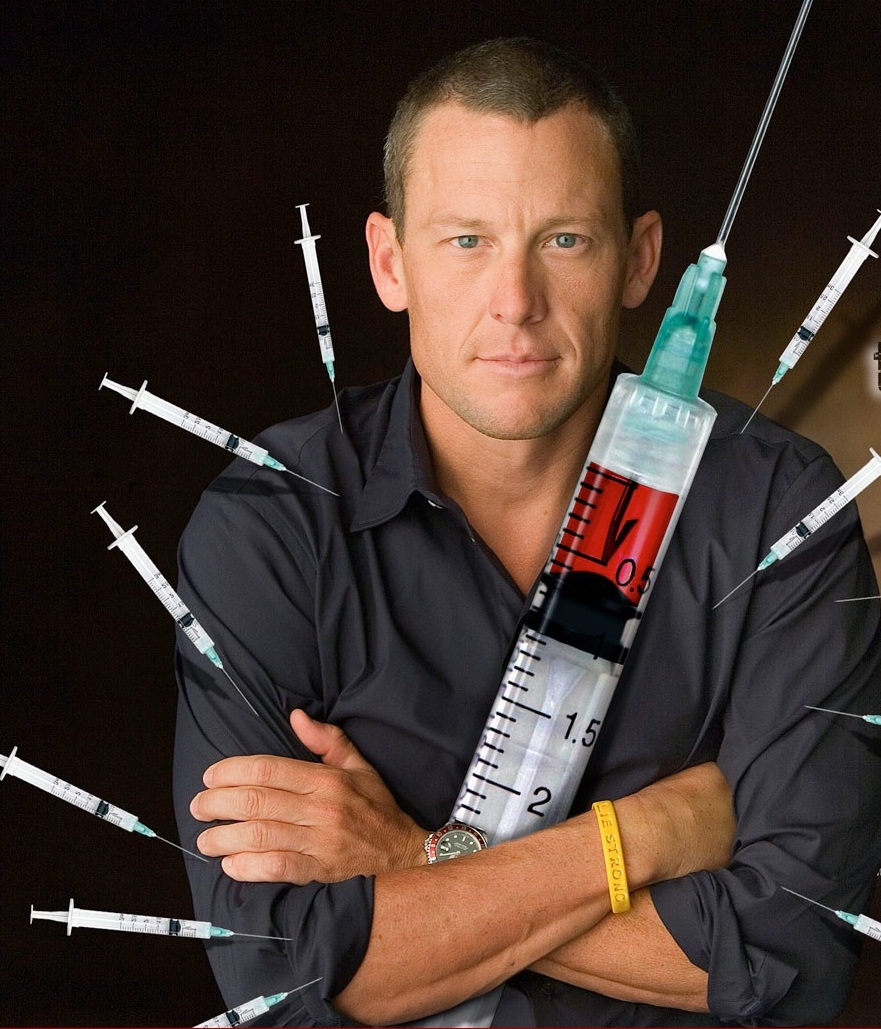
There are many things to learn from Prof. Braden Allenby’s Washington Post essay, “Lance Armstrong’s fall: A case for allowing performance enhancement,” none of which have anything to do with Lance Armstrong. Among the lessons:

  • “Everybody does it “really is the most seductive and sinister rationalization for unethical conduct.
  • Someone really shouldn’t write about sports ethics when they know nothing about sports.
  • If you only understand an author’s bias after reading the short biographical sketch at the end of the article, then he wasn’t responsibly correcting for his bias in his article.
  • When someone uses the worst of all rationalizations, the deplorable, “It’s not the worst thing,” neither their judgment nor their argument can be trusted.
  • Some ethics experts have appalling judgment in regarding ethics.

Allenby’s essay takes the position that all sports should allow athletes to take whatever performance enhancing drugs that become available, beginning with the tragedy of Lance Armstrong’s final disgrace as a cheater and corrupter of his sport. Seldom do you see an argument clothesline itself so quickly: here is Allenby’s opening sally:

“In the past month, cyclist Lance Armstrong has been stripped of his seven Tour de France titles. His commercial sponsors, including Nike, have fled. He has resigned as chairman of Livestrong, the anti-cancer charity he founded. Why? Because the U.S. Anti-Doping Agency and the International Cycling Union say he artificially enhanced his performance in ways not approved by his sport and helped others on his team do the same. This may seem like justice, but that’s an illusion. Whether Armstrong cheated is not the core consideration. Rather, his case shows that enhancement is here to stay. If everyone’s enhancing, it’s a reality that we should embrace.” Continue reading

A Choice, A Doubt, and One of a Million Moments

In the end, a life is made up of more than a million choices, large and small, that we make according to a witch’s brew of factors. There is timing, and how we are feeling at the moment, and there are random factors, our emotions, past experiences and needs, and, just maybe, some ethical analysis involving altruism, the Golden Rule, a careful balancing of outcomes, and solid principles of right and wrong. We hope to make good choices, and yet even a good one can have disastrous effects, leaving us illogically hesitant to make the same choice the next time. We hope, if we strive to be ethical and learn from our mistakes while not learning the wrong lessons—cowardice, fecklessness, self-obsession, fear of responsibility and risk, procrastination—from our failures, to reach the finish line having made existence better for more of our fellow human beings than we made miserable, and having been a net benefit to civilization while we were part of it.

Yet there really are a million or more such choices,  many of them present themselves without any warning, and the results of the choice are often unknown. The only one keeping score is you, most of the time. I was presented with such a choice tonight, and I fear that I chose badly. Continue reading