Integrity Failure: Rubio and Obama Show How Unserious Our Leaders Are About Taxes

“The Hopeless Dawn” by Frank Bramley (1888) This is what this story makes me feel like….

If you pay attention, and most American won’t, the evidence that our elected leaders are not serious about being consistent, responsible, or even governing competently is delivered every day in packages large and small. The most recent depressing example was the bi-partisan tag-team of Sen. Marco Rubio and President Obama backing tax-exempt status for medal-winners on the U.S. Olympic team.

Sen. Rubio concocted his Olympic Tax Elimination Act on the theory that “athletes representing our nation overseas in the Olympics shouldn’t have to worry about an extra tax bill waiting for them back at home.” This is spin and nonsense. There is no “extra tax bill,” any more than there is an “extra tax bill” when your boss gives you a bonus for job well done. It’s just a regular, old-fashioned,  tax bill for income, that’s all. Medal-winning Olympic athletes get bonus payments from the U.S. Olympic team. Is their income—that’s what it is, just income—-somehow less fair to tax than your income? No, of course not. Rubio’s  “representing our nation overseas” justification for special treatment is naked and offensive pandering. How about people who represent our nation here, in the United States? They don’t get to travel to London, all expenses paid, like the pampered athletes—why are they less deserving of a tax break? Or why isn’t Rubio arguing, then, that all federal employees who work abroad shouldn’t be taxed? What is his logic, exactly? Continue reading
Unethical Quote of the Week: Men’s Breast Stroke Olymipic Gold Medal Winner Cameron van der Burgh

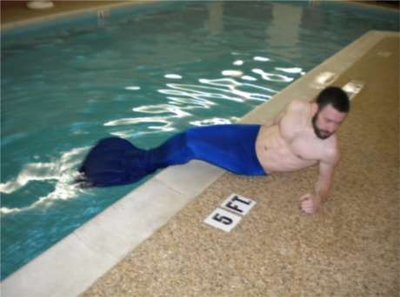
“If you’re not doing it, you’re falling behind. It’s not obviously – shall we say – the moral thing to do, but I’m not willing to sacrifice my personal performance and four years of hard work for someone that is willing to do it and get away with it.”

—– South African Olympic swimmer Cameron van der Burgh, admitting that he cheated in his gold medal winning race because, you understand, everybody else cheats too.

Yechhh.

Maybe they won’t notice…

The commercialism is blatant, the nationalism is sickening, the warping of the lives of the young athletes as they prepare for the Games is disturbing. The one constant that has made the Olympics worth our attention is the opportunity to see great athletes in fair and intense competition with the most capable rivals in the world, and to see the best of the best triumph in the various sports by dint of superior effort, skill, training and character.

Who wants to see who the most effective cheater is? If you do, what’s the matter with you? The most disturbing aspect of van der Burgh’s admission is that there was no shame in it. He matter-of-factly explained that he cheated, how he cheated and why, and apparently believes that this doesn’t diminish his victory at all. And, also apparently, he’s right. Despite the fact that a gold medal winner blandly declaring that he cheated robs the Olympics of any pretense of integrity, it appears unlikely that anything will happen to the swimmer or his prize.

See? Cheating works!

And nobody cares!

Well, if the Olympics are going to stand for the cultural standard that cheating is acceptable as long as enough competitors do it, I have better things to do with my time, like making dust bunny sculptures under my bed. Just about everything we see and read about these days is corrupting and cynicism-producing; if the Olympics are just going to add one more toxic lesson to the array, what good are they? What’s the point?

Higher, faster, sneakier?

Wonderful.

_____________________________________

Pointer: Rick Jones

Facts: NBC

Graphic: Deviant Art

Ethics Alarms attempts to give proper attribution and credit to all sources of facts, analysis and other assistance that go into its blog posts. If you are aware of one I missed, or believe your own work was used in any way without proper attribution, please contact me, Jack Marshall, at  jamproethics@verizon.net.


Unethical Quote of the Week: Progressoverpeace’s “Fool’s Golden Rule”

“There is nothing more ethical and fair than reciprocity.”

—- Conservative web pundit “progressoverpeace,” one of the approximately 300 commenters who attempted to make the ethically impossible argument that spreading the falsehood on the internet that “Harry Reid is a pederast (or pedophile)” is “ethical and fair” in opposition to my post, Funny! But Wrong: “The Harry Reid is a Pederast” Rumor.

This is, of course, a profoundly unethical distortion of the real ethical principle of reciprocity, as embodied by the Golden Rule and its many similar ethical systems from various cultures, philosophies and faiths. The Golden Rule is benign, and urges prospective and aspirational reciprocity, advising us to treat others as we would want to be treated ourselves, were we in the other individual’s circumstances. Progressoverpeace—let’s call him “Pop”—embraces a punitive form of reciprocity—I’ll dub it the Fool’s Golden Rule— that endorses retribution, and precludes generosity, kindness, forbearance, perspective, peace—and civilization.

Pop’s “reciprocity” holds that once someone has treated another human being badly, it is ethical for that person to treat him or her just as badly in the same manner, presumably on the false assumption that this will teach him better “ethics.” Of course, what it is more likely to teach him was that he was correct to mistreat that individual in the first place. Such warped reciprocity seeds a perpetual cycle of hatred and escalating feuds, because it begins a cycle that can never stop short of death, terror, or surrender. Continue reading

Olympics Ethics, Fair Competition and Ick

Try as I might, I can’t find anything unethical about  the U.S. basketball team throttling Nigeria by the humiliating score of 156-73, the worst wipe-out in Olympic history.

Was the U.S. running up the score, which would be poor sportsmanship? No. As USA coach Mike Krzyzewski pointed out, he held back his best players once the outcome was certain. Every player he put in was hitting the basket with frightening consistency. Should the team have let up, gone through the motions, or allowed the Nigerian players some easy hoops? No. That would be an insult, and a breach of the integrity of the game. The U.S. Olympians had a duty to play their best. Continue reading

Twitter Ethics: The Guy Adams Affair

Twitter has come under fire from ignorant free speech advocates—essentially the same people who accuse me of “censorship” when I refuse to allow an anonymous comment, in violation of Ethics Alarms policies, on my own blog —because it removed a journalist Guy Adams’ account after he violated Twitter’s privacy rules by tweeting the email address of NBC executive Gary Zenkel over various Olympics coverage controversies. The main complaint is that apparently someone at Twitter notified Zenkel and alerted him to the process whereby he could get the tweet and the account taken down according to Twitter’s policies. Here is a representative reaction, from blogger Matt Honan at Wired:

 “Here’s an interesting thought experiment. Imagine that instead of going after an NBC executive, Adams’ target was a dictator. Imagine that Adams tweeted, say, Syrian president Bashar al-Assad’s email address, along with a call to action to protest his policies. Had Twitter worked back-channel with the Syrian government, showing it how to have Adams’ account taken down on a technicality, it would clearly be an indefensible act of censorship. Heads would roll.”

Heads might roll, but Honan is wrong. It would not be “an indefensible act of censorship.” It would not be censorship at all. Continue reading

Signature Significance, Jonah Lehrer, and That Sinking Feeling

Yes, uh, a little TOO MUCH creativity there, Jonah…

At the New Yorker, star writer Jonah Lehrer has resigned after it was shown that he fabricated quotes from Bob Dylan for his well-reviewed book “Imagine: How Creativity Works.”

This was the final shoe dropping that began with one untied shoelace, the discovery in June that Lehrer had plagiarized from himself, lifting a section of a piece published earlier in one publication to include in a piece written for The New Yorker. This is a minor ethical incursion—-Lehrer had represented the second essay as original, so using prior published material was dishonest even if he was the author—but it launched his employers on a mission of scrutiny, investigating to see if the one transgression was part of a trend.

When it comes to professional ethics, you see, it often is. The principle of signature significance holds that in some pursuits just one episode can be enough to make certain conclusions. A writer of true integrity never borrows from his own published work without flagging the fact. Doing so even once indicates shaky integrity, and a willingness to cut corners. It may well indicate a proclivity to cheat in more egregious ways. Continue reading

Bob Nightengale’s Rationalization Orgy

“OK, he got caught, but it doesn’t mean he isn’t still the BEST at Rubik’s Cube…”

I was interviewed on a radio news show early this morning, and one of the questions I was asked was whether what the host called “the decline of ethics in the country” could be reversed. I’m not convinced there has been such a decline, but if there is, it sure doesn’t help to have so many  journalists with big microphones displaying infantile analysis of ethics-related issues on a regular basis.

Today’s case was USA Today sportswriter Bob Nightengale, who took the occasion of the annual induction of new members into baseball’s Hall of Fame in Cooperstown this weekend to trot out nearly every rationalization and ethical invalid argument imaginable to explain why he would be voting for all the proven or suspected steroid cheats  for the Hall when their time comes:

“There, I said it. I will vote for Bonds. And Clemens. And Sosa. And Piazza. I’ll think about Bagwell. And will continue voting for Rafael Palmeiro, who tested positive in his final season when he reached 3,000 hits.”

And then come the rationalizations:

  • “Hey, it’s OK to admit racists, criminals, drunks and recreational drug abusers, but let’s not tarnish the sacredness of the Hall of Fame.” This is essentially a “there are worse things” argument with an overlay of ignorance and stupidity. This is a baseball Hall of Fame with very clear character requirements: “Voting shall be based upon the player’s record, playing ability, integrity, sportsmanship, character, and contributions to the team(s) on which the player played.” No other sports Hall of Fame has such standards: just wait for the fight over admitting Joe Paterno into the College Football Hall of Fame (O.J. is a member in good standing.). Continue reading

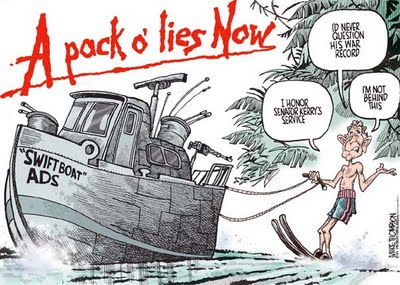
Obama Resorts To Swiftboating

“It was despicable what they did to John Kerry. Hey! Maybe it will work on Romney!”

I didn’t see this coming from the Obama campaign, and I suppose I should have. The President has shown a willingness to abandon virtually every one of the principles his piously stood for during his “transformational” 2008 campaign; the unifying, bi-partisan, President-of -all-Americans has meticulously worked to seed distrust and enmity between black and white, Anglo and Hispanic, business owners and labor, rich and poor, non-Catholic and Catholic, young and old, men and women, and, of course, Republicans and Democrats, as a desperate and cynical strategy to stay in power, disregarding the inevitable harm such a scorched earth strategy will do to the nation. If anyone can recall in our history such a total breach of integrity by a major American political figure, please enlighten me. The closest I can find is President Obama’s 2008 opponent, John McCain, who thoroughly disgraced himself to fend off a tea party challenger in his 2010 Senate bid in Arizona….and it really isn’t close.

Still, I didn’t expect the President to resort to Swiftboating, the political tactic that derives its name from the attacks on John Kerry’s military heroics from some of his fellow Vietnam swift boat commanders (“Swift Boat Veterans for Truth”) who financed a devastating series of negative campaign ads alleging that Kerry’s decorations for valor were based on fraud. Though the ads were based on rumor, hearsay and animus, they put Kerry on the defensive in his 2004 campaign against President Bush. I doubt that the smear really lost Kerry the election—he was a terrible candidate—but Democrats have continued to cite the Swiftboat ads as proof of conservative perfidy and ruthlessness. They, of course, would never stoop so low. Continue reading

Liars For President

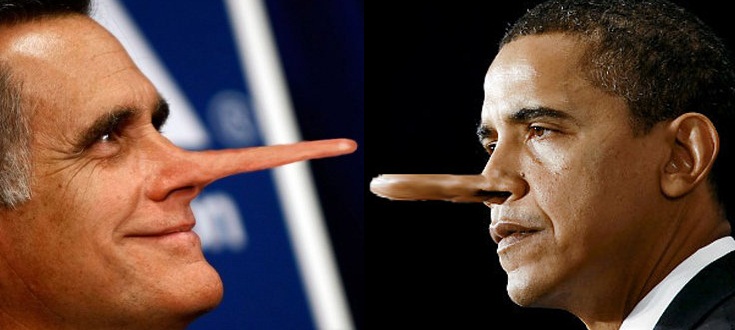
I don’t know about you, but I don’t want a liar as President. I’m not talking about the kind of lies that are periodically unavoidable in leadership and governance, as much as we would like to pretend they are not. I’m talking about “I did not have sexual relations with that woman” type of lies, intentional falsehoods designed to deceive the public for  political advantage with no benefit to the nation or its occupants whatsoever. Unfortunately, we are about to elect a liar as President, because lying in political campaign ads, and particularly negative ads, is sunk deep into the system like an inoperable brain tumor. It is fair to say that every President since George Washington has done it, and thus the public accepts it, and the news media shrugs it off. Continue reading

Why Journalists Can’t Shoot Straight

George probably wasn’t lying, but Bill sure was.

The issue in the Washington Post’s weekly Outlook section concerned the virtues and dangers of honesty in a Presidential campaign, a matter that interests me from the perspective of ethics, presidential history, and citizenship. Two Post reporters were given the assignment of creating sidebars to the main article, one on candidates who told the truth and were punished for it, the other on campaign lies that came back to haunt the Presidents involved.

These are not difficult assignments, by any means. Either would be a legitimate term paper topic for a high school senior’s history class; both would be rejected as a history major’s thesis topic as overly simplistic. Yet both Rachel Weiner and Aaron Blake botched their tasks, and would have earned D’s at best in high school history, and that’s only because of grade inflation. The reasons for their failures exemplify the inadequacy of the mainstream media for the job we need it to do during a Presidential election.

Continue reading