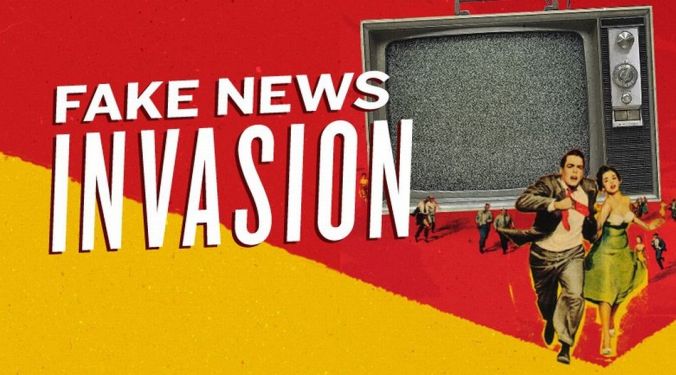
Poynter is a serious and justly respected nonprofit school for journalism and journalism ethics organization. Naturally, it has been drawn into the “fake news” debate, which is unfortunate, since the issue itself has arisen not so much as part of a much-need effort to purge the new and old news media of biased and misleading news reporting, but as part of partisan attempt by the mainstream news media and others to find some explanation, any explanation, for Donald Trump’s election that doesn’t involve a genuine public rejection of Barack Obama and Hillary Clinton. Poynter, as far as I’ve been able to determine, is scrupulously non-partisan, or perhaps hides its Democrat tilt better than the rest of its profession. Now it is being used by those who are not so trustworthy.
Poynter was in the news yesterday as a result of Facebook’s announcement that it will start “fact-checking, labeling, and burying fake news and hoaxes in its News Feed. Mark Zuckerberg announced that his social media platform will collaborate with a small list of media organizations, including Snopes, Factcheck.org, ABC News, and PolitiFact to accomplish this, and noted that these are part of an international fact-checking network under the guidance of Poynter.
Here’s a fact to check: Snopes, Factcheck.org, ABC News, the Associated Press, and PolitiFact are all partisan-biased operations to a greater or lesser extent. Facebook itself is a partisan biased organization. That Facebook would blandly cite three of these four to reassure anyone but the Democratic National Committee is proof positive that this is a cynical, untrustworthy exercise. Continue reading
 Ethics Alarms