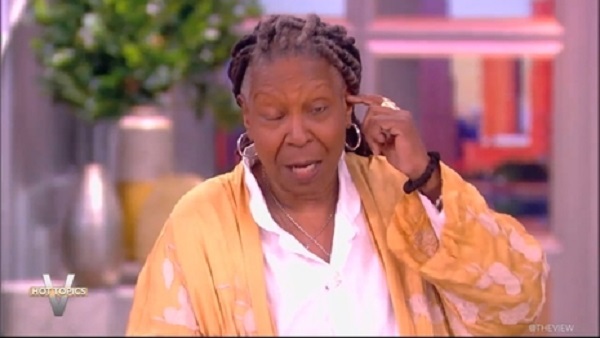
Back in 2024, I posited, only half in jest, that “The View’s” resident lawyer on the all-female idiot panel, Sunny Hostin, had made such a stupid assertion on the program that it should trigger legal ethics Rule 8.3, which mandates that a lawyer who has knowledge of another lawyer’s conduct that substantially calls into question that individual’s fitness to practice law must—must—report that unfit lawyer to bar authorities for professional discipline. Hostin had surmised that “climate change” causes earthquakes and eclipses, and stated this cretinous conclusion on national television, on an ABC News program, which is what “The View” purports to be.
I wrote in part (and in disgust):
“[S]ome people with law licenses are demonstrably too stupid to be trusted by clients. Hostin is screaming proof of the validity of this conclusion, yet there is nothing in the disciplinary rules governing the minimal ethics requirements of lawyers that mentions basic, personal intellectual competence as a mandatory component of professional, legal competence.
There should be. One would think that the challenge of graduating from law school and passing the bar exam would be sufficient to ensure that a lawyer is at least smart enough to come in out of the rain, but in extreme cases like Sunny, one would be wrong….believing that climate change causes solar eclipses is signature significance. You can’t come to such an idiotic conclusion and not be an idiot. This delusion [shows] a crippling deficit in critical thinking skills. One cannot be a trustworthy lawyer without minimal critical thinking skills. When a lawyer demonstrates such a deficit beyond a shadow of a doubt, that ought to be considered a legitimate reason for disbarment.”
Remember, professionals are special members of society whose important roles require that they be trustworthy. True professionals include the clergy, doctors, lawyers, judges, law enforcement officials, military leaders, public servants, accountants, psychiatrists, and teachers, and though it sounds absurd today, journalists. Really, really stupid people are not trustworthy, in fact it is dangerous to trust them. If they are sufficiently stupid, they should not hold any of those societal roles and positions.
Ethics Alarms, as those of you who have read the commenting rules here know, has among its provisions that the moderator, that’s me, may at his discretion ban a commenter who has demonstrated to my dissatisfaction that said commenter is too intellectually deficient to contribute substantively to the discussions. I believe that I have only had to invoke it twice.
Which brings me back to “The View”…

 Ethics Alarms