“Mild Pedophilia” and Richard Dawkins’ Ethical Blind Spot

"Bobby, do you thinkthere's anything wrong with mild pedophilia?"

“Bobby, do you think there’s anything wrong with mild pedophilia?”

When you are a public intellectual and your primary mission is using reason and scholarship to enlighten the public, you have an obligation to guard scrupulously against making careless,  irresponsible or easily misunderstood statements that will be accepted as inspired wisdom by the less analytically able. Or to be more direct, if you are Richard Dawkins and because of some serious neural malfunction you really think that there is such a thing as “mild pedophilia,” you want to ever to be taken seriously again, shut up about it.

Dawkins, for reasons only known to himself, used a wide-ranging  interview to airily wax on about what he regards as his contact with a harmless child-molester.  Reminiscing about his  days at a boarding school,  he recounted how one of his schoolmasters “pulled me on his knee and put his hand inside my shorts.” Noting that other children in his school peer group had been molested by the same teacher, he concluded: “I don’t think he did any of us lasting harm.”
The world’s most famous atheist explained, “I am very conscious that you can’t condemn people of an earlier era by the standards of ours. Just as we don’t look back at the 18th and 19th centuries and condemn people for racism in the same way as we would condemn a modern person for racism, I look back a few decades to my childhood and see things like caning, like mild pedophilia, and can’t find it in me to condemn it by the same standards as I or anyone would today.”

What (in the name of Holy Hell) is “mild pedophilia”? Dawkins went on to say that the most notorious cases of pedophilia involve rape and even murder and should not be bracketed with what he called “just mild touching up.”

“Mild pedophilia”?Just mild touching up’? This from one of the most respected minds in the cosmos? Continue reading

Two New Rationalizations Added To The List: “Success Immunity” and “The Tortoise’s Pass”

The Ethics Alarms Rationalizations List keeps growing, and proof that it will eventually be much, much longer is in the fact that the most recent additions are old, common, and popular. Human beings are so talented at concocting lies that make them feel better about doing the wrong thing, or continuing to support friends, family members, colleagues or personal heroes who do the wrong thing. I have been meaning to include The Tortoise’s Pass for quite a while, and then a commenter on the post about the charter school that banned dreadlocks used “They must be doing something right!” as a cornerstone of her comment defending the rule. I realized that I had neglected a classic. Well, “Better late than never!”

The whole list, now 34 strong, is here. Here are the new entries:

33.  Success Immunity, or “They must be doing something right!Continue reading

“Don’t Worry! We’ve Got Your Back!” Markey’s Indefensible Cowardice and Cillizza’s Inexcusable Bias

Some Senators are Red, and some are Blue. Then there's Ed Markey...

Some Senators are Red, and some are Blue. Then there’s Ed Markey…

Massachusetts Senator Ed Markey, who is at least temporarily filling John Kerry’s seat in the U.S. Senate, listened to the testimony and questioning regarding President Obama’s embarrassing plan to attack Syria just enough to kill a few people and be annoying (to prove he really, really meant what he said about that red  line), and then cast his vote on the Senate Foreign Relations Committee’s compromise resolution approving the attack as “present.” Why? Well…

1. He’s a long-time Democratic loyalist from the House, and would no more oppose a Democratic president than fly…

2. He’s from peacenik Massachusetts (just like me!), and he knows that in the only state to give George McGovern its electoral votes, voting to drop missiles on foreign land that haven’t attacked us first is very unpopular, and…

3. He’s a lily-livered coward and a disgrace to his state.

Markey is also a liar, as his ridiculous “explanation” for his abdication of responsibility shows: Continue reading

Unethical Quote of the Month: Rep. Marcia Fudge (D-OH)

“It is a shame that anytime something goes wrong, they pick on women and minorities..All of the things they have disliked about things that have gone on in the administration, they have never called a male unqualified, not bright, not trustworthy. There is a clear sexism and racism that goes with these comments being made by unfortunately Sen. [John] McCain and others . . . How do you say that a person with Susan Rice’s background is not qualified? I wonder what your qualifications are for your job. Where did you finish in your class? You know, I know one of them finished in the bottom of their class. Susan Rice was a Rhodes scholar. How do you say a person like Susan Rice is not qualified?…I mean, Susan Rice’s comments didn’t send us to Iraq and Afghanistan. Somebody else’s did. But you’re not angry with them.”

—-Rep. Marcia Fudge (D-OH), accusing GOP Senators John McCain, Lindsay Graham, and Kelly Ayotte (a woman) of sexism and racism for their harsh criticism of UN Ambassador Susan Rice for her repeated assertion on multiple news shows that the Benghazi attack that killed the American ambassador in Libya was a spontaneous demonstration over a YouTube video after the Obama Administration had been told otherwise.

It must be comforting to be able to rationalize all criticism arising from your own conduct and to attribute it to the biases of your critics. Crippling, but comforting. If one cannot regard criticism as legitimate, then one can never assess one’s own mistakes and weaknesses and work to improve.

Fudge is one of the habitual race-card players in Congress: earlier this year, she accused the bi-partisan House ethics committee of racism because a disproportionate number of the Congressional Black Caucus’s members were under investigation. (This was, of course, because a disproportionate number of  the Congressional Black Caucus’s members, like Fudge, have engaged in dubious practices that indicate a weak grasp of ethics.) This time, she had lots of company, including Rep. James Clyburn (D-NC), who later said that the word “incompetent” was racist code. Brilliant! This means that no black public official can ever be called incompetent! Sure to be added to the code book if this theory sticks: inept, ineffective, corrupt, careless, irresponsible, and unqualified. Fudge, Clyburn and their colleagues propose to make legitimate criticism of black and female officials—those who are Democrats, that is—impossible, one word at a time. Continue reading

Lance Armstrong As The Status Quo: An Unethical Essay From An Ethics Expert

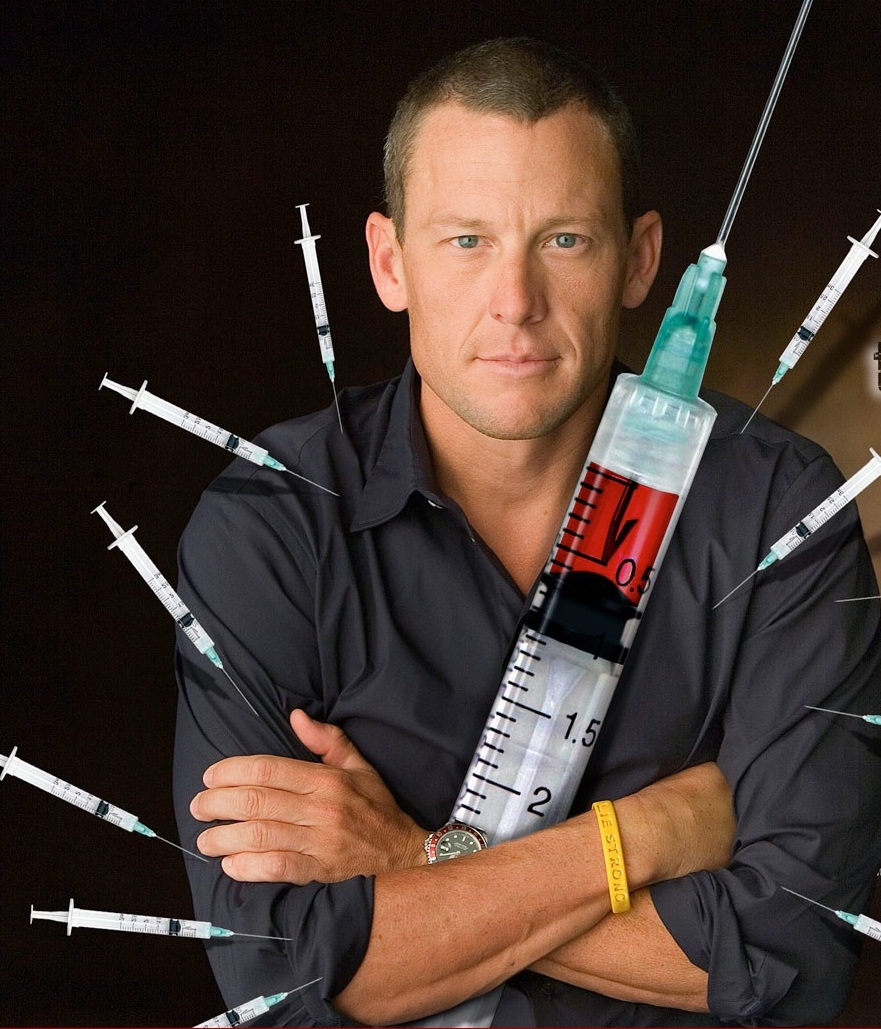
Don’t worry, Lance. Braden Allenby understands you. You were just ahead of your time, that’s all.

There are many things to learn from Prof. Braden Allenby’s Washington Post essay, “Lance Armstrong’s fall: A case for allowing performance enhancement,” none of which have anything to do with Lance Armstrong. Among the lessons:

  • “Everybody does it “really is the most seductive and sinister rationalization for unethical conduct.
  • Someone really shouldn’t write about sports ethics when they know nothing about sports.
  • If you only understand an author’s bias after reading the short biographical sketch at the end of the article, then he wasn’t responsibly correcting for his bias in his article.
  • When someone uses the worst of all rationalizations, the deplorable, “It’s not the worst thing,” neither their judgment nor their argument can be trusted.
  • Some ethics experts have appalling judgment in regarding ethics.

Allenby’s essay takes the position that all sports should allow athletes to take whatever performance enhancing drugs that become available, beginning with the tragedy of Lance Armstrong’s final disgrace as a cheater and corrupter of his sport. Seldom do you see an argument clothesline itself so quickly: here is Allenby’s opening sally:

“In the past month, cyclist Lance Armstrong has been stripped of his seven Tour de France titles. His commercial sponsors, including Nike, have fled. He has resigned as chairman of Livestrong, the anti-cancer charity he founded. Why? Because the U.S. Anti-Doping Agency and the International Cycling Union say he artificially enhanced his performance in ways not approved by his sport and helped others on his team do the same. This may seem like justice, but that’s an illusion. Whether Armstrong cheated is not the core consideration. Rather, his case shows that enhancement is here to stay. If everyone’s enhancing, it’s a reality that we should embrace.” Continue reading

Cruelty and the Comers: At a Certain Point, Being Nice Just Makes It Worse

Meet the Comers

The nauseating news story of the week comes from L.A., where 18-year-old Mitch Comer was seen looking emaciated and confused in a downtown Greyhound bus station. A hundred pounds and 5’3″ tall, the boy seemed lost, and a security guard questioned him. Comer explained that he had just arrived from Georgia, where he had been imprisoned in his parents’ basement since his father pulled him out of an 8th grade class four years ago. Then, on his 18th birthday, they released the boy, and his stepfather took Mitch to the bus station, where they had a touching goodbye

“The story we got was that the stepfather took the kid to the bus depot, said ‘Here’s $200, here’s a list of the homeless shelters in Los Angeles, you’re a man now and don’t come back,'” said LAPD Commander Andrew Smith. This won Paul and Sheila Comer, who live in an affluent Georgia suburb, child abuse and false imprisonment charges as well as a nomination as 2012’s Monstrous Parents of the Year. Continue reading

Actor Ethics: Welcome to Colombia!

Yes, Sarah Bernhardt was probably unethical too. Actors!

I just blacklisted an actor, at least as far as my theater company is concerned, and I feel badly about it, because I don’t like banishing artists even when they deserve it. This individual did deserve it, however.

I held auditions a couple of months ago for a very difficult and complex production requiring special talents and a large cast. The turn-out was excellent, and the quality of talent was superb, with the actors obviously excited about the project. Since the script needs to be tailored to individual performers, the fear of an actor dropping out after being cast was especially strong (the maxim in the theater community is “cast early, cast often…”), so I took the unusual step of asking every auditioner who had a good chance of being cast to be honest about their commitment to the show. “If you want to be considered for this project,” I said, “I need to have your assurance that you are serious about it and will not tell me, after we have decided to cast you, that you have changed your mind. The show is like a big jigsaw puzzle, and casting you will affect whether we cast other actors, not just in your role but in roles that interact with yours. And I definitely do not want to cast someone who is going to turn around in a week or a month and say, ‘Sorry, I got a better offer.’ This is a commitment, and if we are committing to you, I need to know that you are committing to us.”

When the offers went out, a few actors nonetheless refused. One had just learned that she needed to seek more lucrative employment because her husband had been laid off; another had union problems. Over the next several months, there was another major loss, as an actress whom I had cast even before auditions—right before the delivery of her first child—told me that parenthood was more involving in reality than she had predicted when she committed to jumping into a major role so soon. I had thought this might happen, and, frankly, now felt that she was making the right decision.  I told her: “As a director, I was happy to let you be irresponsible for the benefit of my show, but as a parent, I’m glad your priorities are straight.”

The other day, however, one of the actors who had gladly accepted a role sent our producer a terse e-mail saying:

“Unfortunately, I can no longer do the show.  Thank you so much for all your help with everything; I’m very sorry for the inconvenience.” Continue reading

Ethics Dunces: Joe Klein and Chris Matthews

John Edwards agrees with Chris Matthews

Journalist Joe Klein has been a candidate for an Ethics Dunce award for a long time, because he has been ethically suspect or worse for a long time. His defining integrity moment came when he lied about his authorship of the Bill Clinton roman-a-clef, “Primary Colors.” Since that time, Klein has gradually evolved into a shamelessly biased and ethically muddled political commentator from the left. Too bad. He’s a perceptive guy and a wonderful writer, but he makes his living now shooting from the hip, so we seldom get the benefit of his best qualities.

It was inevitable that the Chris Matthews Show would allow Klein’s ethical blindness to reach full flower.  Matthews has been on his own journey of self-diminishment since MSNBC decided to become the anti-Fox; where once he could be counted on to treat the issues of the day fairly and avoid partisan cheerleading, the Obama years have seen him abandon any effort at objectivity or even-handedness. Matthews’ Sunday morning panel show now eschews ideological balance and has Matthews posing questions to a rotating group of reliable conservative-bashers, with an occasional straight journalist mixed in who at least pretends to be neutral.  On Sunday, Matthews asked his panel about the appropriateness of the Justice Department’s prosecution of uber-cad John Edwards for violations of the federal election laws. It’s not a bad question, and reasonable people can disagree about the answer. The charges against Edwards stem from solicitation of large cash gifts from two long-time friends and supporters while he was simultaneously running for president and trying to cover up the existence of his love-child with Rielle Hunter and the adulterous affair that spawned her.  The money was given directly to Hunter, raising a legal question as to whether it was really a campaign contribution at all. Continue reading

Unethical Quote of the Month: Tim Gannon

The choice came down to Greg Anderson or Jack the Ripper...

“Some parents have a problem with him being a coach, but it’s not like he was caught stealing or did some bad things with children.”

Tim Gannon, a real estate broker and father, explaining why he has no problems with Barry Bonds’ steroid-pushing trainer, Greg Anderson, serving as an assistant coach for his son’s Capitol Electric team in the Burlingame Youth Baseball Association, according to an article in Sunday’s New York Times.

It’s seldom that one sees in print a more perfect example of my least favorite rationalization for unethical conduct, “It’s not the worst thing.” This popular and despicable rationalization seeks to excuse bad conduct by comparing it to worse conduct, an intellectually dishonest device that can be used to try to minimize the seriousness of literally any behavior, no matter how heinous. (“Sure, Jack the Ripper did some bad things, but he was no Hitler!” ) It is the ethics embodiment of the dishonest rhetorical technique of the false choice. Continue reading

The Uncommon Common Dilemma

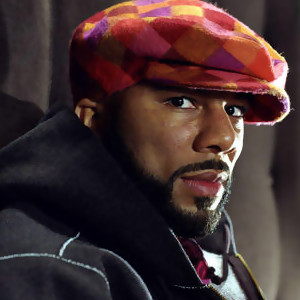
Emily Dickinson, he's not.

It is unusual to encounter a situation where there is no course that doesn’t violate some legitimate ethical principle. The dilemma involving rapper Common’s controversial invitation to the White House is one of them. None of the options are strictly ethical, and this has led advocates both for and against his inclusion in Michelle Obama’s poetry event, “An Evening of  Poetry at the White House,” to behave unethically themselves. Let’s see: what comes closest to being ethical conduct of the possible outcomes?

Option A: Michelle has her poetry event, but doesn’t invite any mainstream rapper. Ethical breaches: Incompetence, bias, censorship, dishonesty.

Rap is the most dynamic and popular form of poetry in America today. Having an event to “showcase the impact of poetry on American culture” at the White House that excludes popular rappers is absurd on its face; it would be like the White House celebrating the influence of sports in American culture and omitting football. Continue reading