Comment of the Day: “Notes on ‘Misinformation’”

Sarah B. submitted this Comment of the Day over the weekend, and it dovetails neatly with today’s post on the immediate politicizing of the Baltimore bridge disaster. Of course, that most recent incident is but a fractal of the Wuhan Virus Ethics Train Wreck, which saw both misinformation spread by the news media and our supposedly non-partisan, trustworthy health organizations, agencies and institutions, cripple the economy, damage our children, turn large swathes of the population into fearful, mask-clutching weenies, and damage the integrity of a national election. That’s where Sarah’s cautionary tale begins.

Here is Sarah B.’s Comment of the Day on the post, “Notes on ‘Misinformation’”

***

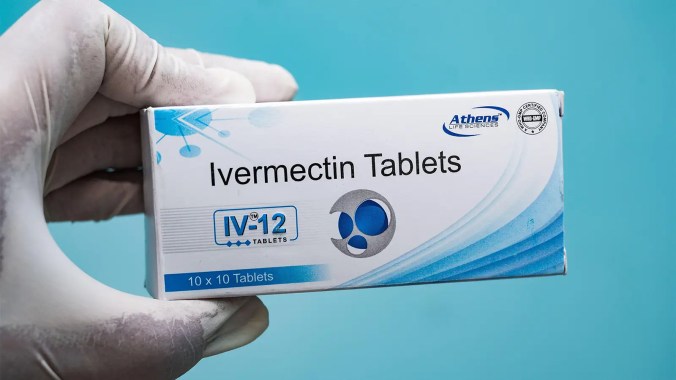
My mother, an RN (and massage therapist) became livid at all her TDS suffering friends and patients repeatedly calling Ivermectin a “horse drug”. She went and got documents discussing the usage of Ivermectin in certain patients with various types of issues, and how the drug was routinely used to treat certain infections.

But despite the high usage of the drug on humans in these papers from reputable medical journals dated over decades, she was told that she was too simple to understand that this was misinformation and that Ivermectin was only a conspiracy theorist’s solution. She was told that she needs to check with people with real medical degrees, not just crunchy folks in massage therapy school. Her bachelors in nursing with decades of experience was ignored in this discussion.

My mother’s insistence that people should look at the evidence lost her friends and clients, many of whom no longer contact her at all and haven’t since 2020, despite being friends for decades prior.
Continue reading

Notes on “Misinformation”

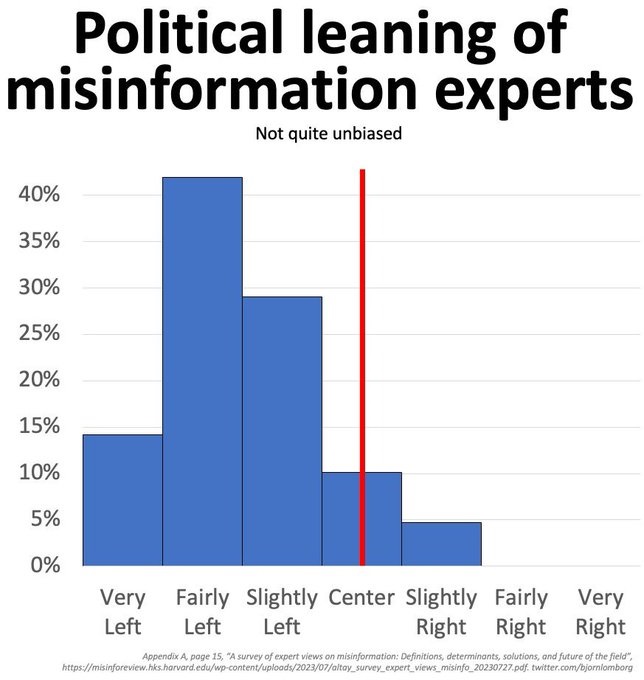
Note #1: See the chart above? Gee, what a surprise. Researchers found that the “factchecking” business is overwhelmingly biased toward progressives, Democrats, and the whole Axis agenda. I suppose research was needed to prove the obvious; so many people denied this because they were a) gullible, b) stupid, or c) lying. Yes, the study is from Harvard, but I think you can trust the rotting university this time.

Continue reading

Ethics Hero, Corporate Division: Merck

Sometimes, though their implacable foes would refuse to acknowledge it, big corporations do the right thing even without a metaphorical gun at their heads. This week’s Economist magazine relates an amazing example that the public needs to know about, especially since it challenges popular stereotypes about Big Pharma.

The Economist begins by horrifying us with a deadly aspect of life in third world countries that are hot and wet: “neglected tropical diseases,” or NTDs. These are neglected because the populations that suffer from them are poor and far away, but they affect more than a billion people. Among the scourges, all parasitic, are Buruli ulcer, Chagas disease, guinea-worm disease, leishmaniasis, river blindness, trachoma and yaws. There are 18 pernicious maladies currently listed as NTSs.

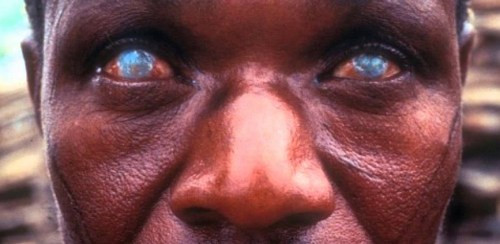
In the 1970s, mega-pharmaceutical firm Merck developed the drug ivermectin after tests on animals with parasitic infections. William Campbell, one of the firm’s parasitologists,told company executives that the new drug might be effective against the parasite that caused onchocerciasis, or river blindness, which  afflicts populations in in parts of Africa, Latin America, and  Yemen.  He was given the green light to find out.

The first human trial of ivermectin as treatment for river blindness took place in Senegal in 1981, on patients who had the early stages of the disease—itching, rashes— but no damage to their eyes yet. The results were encouraging,  indicating that ivermectin was safe for humans and highly effective at stopping the disease before it blinded its victims.  Merck, however, now faced the problem that has impeded cures for all the neglected tropical diseases: those who needed ivermectin were too poor to buy it, and so were the nations where they lived. Big corporations are not charities; they have investors, stockholders and a bottom line. They are not accustomed or programmed to give away their products.

Yet Merck made a corporate decision that Bernie Sanders and Elizabeth Warren say is impossible. Starting in 1987, it made an open-ended commitment to distribute as much ivermectin as was needed to eradicate the river blindness worldwide. In the next ten years, it swallowed the cost of 100 million doses. Continue reading