“War Is Peace”: Kareem Abdul Jabbar on D.E.I…

On the 78th anniversary of Jackie Robinson’s breaking of Major League Baseball’s color barrier, the Los Angeles Dodgers, successors to the Brooklyn Dodger franchise that brought Robinson into the big leagues, hosted its traditional annual commemoration of the culture-altering event. For some reason Kareem Abdul-Jabbar, L.A. Lakers legend, was on hand to give a speech, and as a smart and articulate social commentator instantly proved that bias makes you stupid by saying,

“Trump wants to get rid of DEI. And I think it’s just a ruse to discriminate. So I’m glad that we do things like this, to let everybody in the country know what’s important. They also tried to get rid of Harriet Tubman. But that didn’t work. There was just uproar about that. But you have to take that into consideration when we think about what’s going on today.”

Oh.

A few points: D.E.I. is explicit discrimination, just of the anti-white male variety. How could banning clear discrimination be a “ruse to discriminate?” Would Kareem support DEI in the NBA when he was playing, which would have meant inferior white players taking the jobs of better black players in the interests of diversity? Why would a smart individual say something so self-evidently Orwellian?

Continue reading

The Unethical Obscurity of Larry Doby

Yesterday was “Jackie Robinson Day” in baseball, with every player wearing the civil rights and baseball icon’s retired uniform number 42. April 15, 1947 is the day Robinson, following the bold plan of Brooklyn Dodgers General Manager Branch Rickey to desegregate baseball, officially broke the game’s color barrier in an event with national, cultural and societal significance. (I’ve written a lot about Jackie, a great man as well as a great baseball player.) Baseball is justly proud of its role in advancing civil rights (and justly ashamed of its long exclusion of black players before and after Robinson’s trailblazing), but commenter “Old Bill” reminded me this morning of the undeserved and unfair relative obscurity of Cleveland Indians great Larry Doby, the second black man to play Major League Baseball.

“It was 11 weeks between the time Jackie Robinson and I came into the majors. I can’t see how things were any different for me than they were for him,” Doby once said. Well, they weren’t. Doby’s courage and fortitude while battling bigotry and hostility to integrate what had been a white man’s game were no less than what Robinson displayed.

Lawrence Eugene Doby was born on December 13, 1923, in Camden, South Carolina. Larry’s father, David, was a stable hand, grooming the horses of many wealthy New Jersey families. When Larry was eight years old, his father died in a tragic accident. After that the boy was cared for by his aunt and uncle as well as his mother and moved from locale to locale, finally settling in Patterson, N.J. Even before graduating from high school, Doby was playing second base in the Negro Leagues under the assumed name of Larry Walker for the Newark Eagles. Despite is tender years, he was considered a rising star. He entered college, where he was a basketball stand-out, and was drafted and joined the Navy during W.W. II. Doby was honorably discharged from the military in January 1946, and inspired by the news that the Dodgers had signed a black player, Robinson of course, he changed his career plans from teaching to baseball. Doby sensed that the times they were a-changing. He rejoined the Negro League Eagles, believing that might be a path to the Major Leagues.

When his team went on to win the Negro Leagues World Series in 1946, Doby attracted the attention of maverick Cleveland Indians owner Bill Veeck, now best known as the man who sent a midget up to bat. Veeck, like Rickey, had long sought to integrate baseball, which for Veeck was the American League. He became convinced that Doby was the right player to do it. Veeck decided that he would purchase Doby’s contract and bring him up to join Cleveland right after the 1947 All-Star break. Doby’s white team mates on the Indians refused to look at or speak to him. Doby told an interviewer in 2002, “I knew it was segregated times, but I had never seen anything like that in athletics. I was embarrassed. It was tough.” 

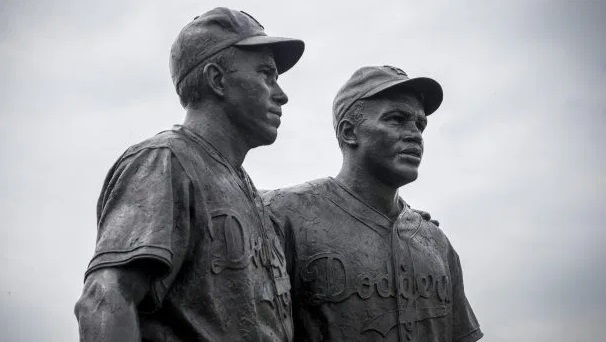
He didn’t win a place in the Indians regular line-up until the next season, when the Indians won the AL pennant with him playing the outfield every day. That fall Doby became the first black player to hit a home run in the World Series, winning Game Four 2-1 and sending the Indians to a World Series victory the next day. A remarkable photo taken after Game Four showed Doby embracing white Cleveland pitcher Steve Gromek. (I was told that this photo is famous: I’ve followed baseball and baseball history most of my life, and I had never seen it. But there is a statue of Pee Wee Reese with his hand on Jackie Robinson’s shoulder! ) in what was supposedly a watershed for race relations.

Continue reading

Tales Of The Great Stupid, Baseball Division: Incredibly, The Josh Donaldson /Tim Anderson/”Jackie” Fiasco Gets Worse

Unbelievable.

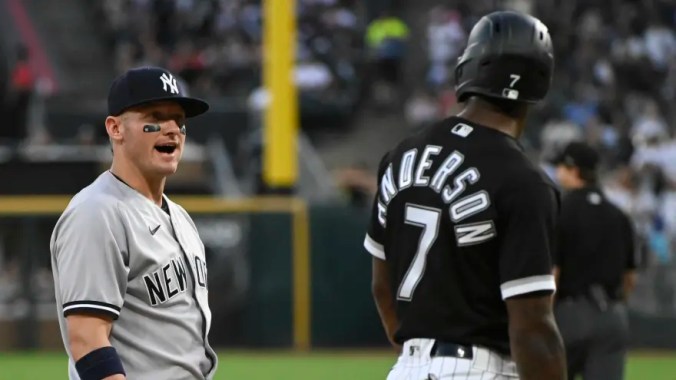
In Act One of this fiasco, covered here, narcissist African-American star White Sox shortstop Tim Anderson implied that Yankee third-baseman Josh Donaldson called him a racist slur—which turned out to be “Jackie,” a slur never before recognized as such. (My late mother used to call me “Jackie.” I can never forgive her… ) You see, Anderson had referred to himself as the current day Jackie Robinson in an interview a few years back, an example of hubris that would have gotten him eaten by a three-headed something if he was in a Greek myth, and Donaldson chose to rub it in when Anderson was tagged out at third. Deserved mockery is not racism, but Anderson’s manager, Tony LaRussa, claimed it was. Tony can read the room: today any criticism of a prominent black American is “racism.”

Continue reading

Oh, Fine: Now Baseball Players Are Looking For Excuses To Cry Racism

Today’s contrived controversy shows what a bang-up job Barack Obama and race-baiting progressives have done “improving” race relations in the U.S.

A week ago, black White Sox shortstop Tim Anderson and white Yankee third baseman Josh Donaldson got into a small confrontation when the latter appeared to push Anderson off third base, prompting Anderson to shoving Donaldson in return and the two exchanging words. Coaches got between the two before anything further occurred. The two crossed paths again today twice, in the seventh inning after Donaldson walked and was forced at second on a double play ball. Anderson turned and seemed to say something to Donaldson, who seemed to be laughing as he ran back to the dugout. Earlier, in the fifth, Anderson had run toward the Yankee at home plate as benches emptied.

What was going on? Anderson claimed that Donaldson had directed a “racist comment” his way. The accusation was picked up by White Sox manager Tony La Russa and White Sox catcher Yasmani Grandal. For once, the news media told us what the “racist comment” was.

Guess.

Continue reading

Baseball Ethics Batting Practice, Part 1: The Historic and The Good

The Historic

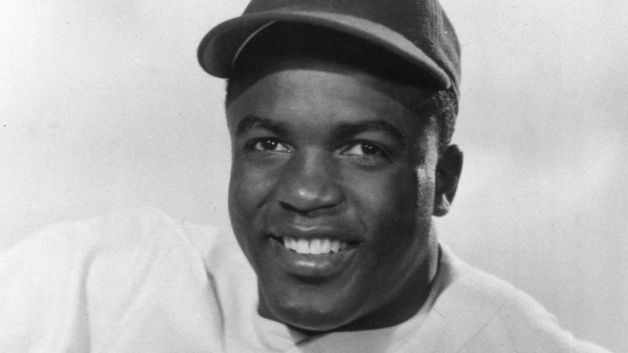
Not only is April 15, 2022, Opening Day for the Boston Red Sox at Fenway Park, it is also MLB’s Jackie Robinson Day, commemorating the date  baseball’s apartheid was ended forever when Jack Roosevelt Robinson (1919-1972) took the field for the National League’s Brooklyn Dodgers. It was the most important of baseball’s many influences on the national culture and society at large, by far. As for Robinson, a remarkable man and exactly the athlete for the difficult role assigned to him, he was among the first admittees to the Ethics Alarms Heroes’ Hall of Honor, with this post from 2012.

In 1997, Major League Baseball retired Robinson’s number, 42, and has dedicated all games on April 15 to Robinson. On this date all players wear 42 instead of their usual number, making for mass confusion for fans who don’t know the individual players on sight. It will be especially strange in Fenway Park today, for Opening Day and Jackie Robinson Day have never coincided before. The tradition individual introductions in the pre-game ceremonies, as the whole Red Sox team lines up along the first base foul line—“Playing left field, #8, Carl Yastrzemski!”—will be weird, as every player will be wearing 42.

There have been a lot of posts here about or relating to Jackie Robinson, which you will find at the Jackie Robinson tag.

The Good (and also historic!)

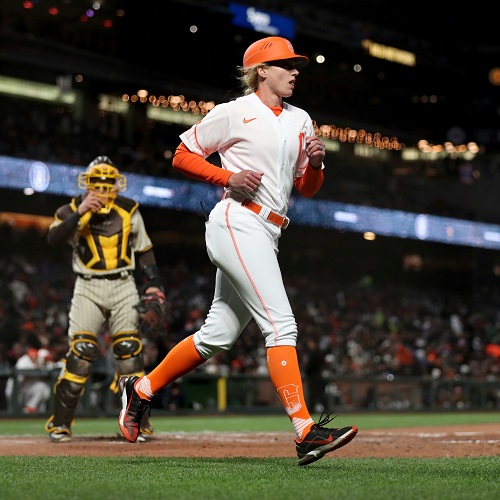
Alyssa Nakken became the first woman to take the field as a coach in a Major League baseball game this week. She coached first base after one of the San Francisco Giants coaches was ejected in a game against the San Diego Padres. The Baseball Hall of Fame in Cooperstown, New York now has her helmet, which will soon go on display.  Continue reading

Fake History Ethics, Baseball Division.

Yesterday was the anniversary of a famous day in baseball and American race relations history. From Nationalpastime.com:

May 13, 1947: During the pregame infield practice, a barrage of racial slurs is directed at Jackie Robinson by the Cincinnati fans during the Dodgers’ first visit to Crosley Field this season. Brooklyn shortstop Pee Wee Reese, a Southerner from Kentucky with friends attending the game and captain of the team, engages the black infielder in conversation, and then put his arm around his teammate’s shoulder, a gesture that stuns and silences the crowd.

This  episode in the well-known saga of Jackie Robinson breaking the color line in baseball has taken on the status of legend. It is in the (excellent) biopic about Robinson, “42.” It was re-told in Ken Burns’ documentary “Baseball.” Most enduring of all, the moment is memorialized forever in the statue outside Dodger Stadium—well, forever until Robinson or Reese is cancelled because something unforgivable is unearthed in their past, whereupon UCLA students will pull the thing down as progressives cheer.

I’m preparing a program for the Smithsonian Associates on how baseball has influenced American values, culture, politics, language and society, so it is of special interest to me that there is considerable controversy over whether Reese’s mid-game gesture ever happened. Writes much-lauded baseball essayist Joe Posnanski,

“There is no mention at all of the embrace in the newspapers. Quite the opposite, in fact. The Cincinnati Enquirer wrote that very day that Robinson “was applauded every time he stepped to the plate.” Meanwhile, there is no mention of it in the black press either; Burns insists that the embrace had happened, the black papers “would have done 15 related articles.” There is no photo of it. Robinson’s 1948 book about his first season called “Jackie Robinson: My Own Story” does not mention any such incident….There isn’t a single contemporary account of the embrace in any of the newspapers or magazines.”

Theories abound. The episode happened on a different date. It happened, but not in view of the fans. It is a story that accurately describes what Reese’s support of Robinson—Reese was a white southerner and a team leader, and he and Robinson did become close friends—meant to the black rookie as he battled abuse and racism in that first season of 1947, but there was no literal arm around the shoulder.  Craig Calcaterra, recycling  the controversy yesterday on his NBC blog, theorized, Continue reading

Morning Ethics Warm-Up, 4/15/2019: Patriots Day! Jackie Robinson Day!

Good morning!

It’s funny: over at Ann Althouse’s blog, she’s complaining about how there’s nothing to write about. From an ethics perspective, I am finding too much to write about, especially since, unlike Ann, I still have to work for a living.

1. Quick: what does Patriots Day commemorate (and no, it’s not Tom Brady)? My home state of Massachusetts, Connecticut, Maine (which was once part of the Bay State), and Wisconsin observe the holiday, which honors the twin battles of Lexington and Concord, the confrontations with the British (on April 19, 1775, the day after “The Midnight Ride of Paul Revere”) that launched the Revolutionary War. I visited both battlefields more times than I could count when I was living in Arlington, Mass., right next to Lexington. That battlefield, what’s left of it, is in the middle of busy streets on all sides; it’s hard to imagine the scene as described in the song above from “1776.” Concord’s battlefield, in contrast, is almost exactly as it was in 1775.

All the publicity, even in Boston, about today will be dominated by the running of the Boston Marathon, but attention should be paid to the inspiring story of how ragtag groups of volunteers faced off against the trained soldiers of the most powerful country on Earth, sending the message that this rebellion would not be so easy to put down.  49 Colonists died, 39 were wounded, and five were unaccounted for. The British lost 73, while 174 were wounded,and 26 were missing.

2. It’s also Jackie Robinson Day. In every MLB game today, every player will wear Jackie’s number 42. The best way to honor Jackie for the rest of us is to tell his story to someone who doesn’t know who Jackie Robinson was, and it is shocking how many such people there are. The film “42” does an excellent job of dramatizing how Jackie broke the color barrier in baseball, simultaneously weakening segregation everywhere. The Ethics Alarms post about Robinson is here. Continue reading

Roberto, Jackie, And The Irresistible Urge To Devalue Honors

Eventually almost all possible ethics issues will be explored in baseball commentary, if you wait long enough. They will also be explored incompetently, since the average athlete or sports journalist isn’t much more astute in the field than the average citizen, which means that the analysis will be dominated by emotion, rationalizations, logical fallacies, historical ignorance, and a vacuum in ethics generally.

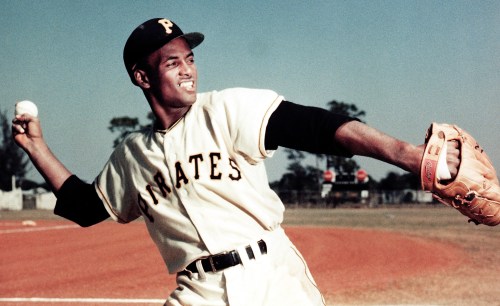
This phenomenon was on display yesterday, which was Roberto Clemente Day in Major League Baseball. There is no doubt that Clemente was one of baseball’s all-time greats, and 18-year veteran who played his entire career with the Pittsburgh Pirates. He was inducted into the National Baseball Hall of Fame in 1973,  the first Latin American and Caribbean player to be so honored. Clemente’s legacy and reputation is burnished by the fact that he died in a plane crash while trying to bring humanitarian relief to earthquake victims in Nicaragua. He was 38 years old.

Yesterday, in an orgy of Clemente love, sportswriters and players on the MLB satellite radio channel were arguing that Clemente’s uniform number, 21, should be retired by all teams like Jackie Robinson’s number, 42, was retired. The theory: Clemente was as much of a trail-blazer for Latin players as Robinson was for blacks.

This is, to be blunt (I’m feeling blunt today) crap. Continue reading

Pundit Malpractice: NBC Sports Defends Colin Kaepernick By Misrepresenting Jackie Robinson

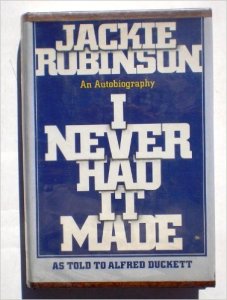
What does Jackie Robinson's autobiography have to do with Colin Kaepernick, you ask? Well...nothing at all, really.

What does Jackie Robinson’s autobiography have to do with Colin Kaepernick, you ask? Well…nothing at all, really.

It also represents a rationalization for unethical conduct that is not currently represented on the Ethics Alarms Rationalization List.

Someone sent Craig this quote, from Jackie Robinson’s  autobiography,  as baseball’s color-line breaker thought back to the first game of the 1947 World Series:

“There I was, the black grandson of a slave, the son of a black sharecropper, part of a historic occasion, a symbolic hero to my people. The air was sparkling. The sunlight was warm. The band struck up the national anthem. The flag billowed in the wind. It should have been a glorious moment for me as the stirring words of the national anthem poured from the stands. Perhaps, it was, but then again, perhaps, the anthem could be called the theme song for a drama called The Noble Experiment. Today, as I look back on that opening game of my first world series, I must tell you that it was Mr. Rickey’s drama and that I was only a principal actor. As I write this twenty years later, I cannot stand and sing the anthem. I cannot salute the flag; I know that I am a black man in a white world. In 1972, in 1947, at my birth in 1919, I know that I never had it made.”

This naturally made Craig, whose mind sometimes cannot help itself from shifting into progressive cant autopilot, think about Colin Kaepernick’s incoherent grandsitting as he refuses to stand on the field with his team for the National Anthem. He wrote,

“Colin Kaepernick is not Jackie Robinson and America in 2016 is not the same as America in 1919, 1947 or 1972. But it does not take one of Jackie Robinson’s stature or experience to see and take issue with injustice and inequality which manifestly still exists…the First Amendment gives us just as much right to criticize Kaepernick as it gives him a right to protest in the manner in which he chooses. But if and when we do, we should not consider his case in a vacuum or criticize him as some singular or radical actor. Because some other people — people who have been elevated to a level which has largely immunized them from criticism — felt and feel the same way he does. It’s worth asking yourself, if you take issue, whether you take issue with the message or the messenger and why. Such inquiries might complicate one’s feelings on the matter, but they’re quite illuminative as well.”

Let’s begin with the fact that there is nothing similar about Jackie Robinson and the 49ers quarterback, except their race and the broad occupation of “sports” that they shared. Continue reading

Maybe The Best Reason To Remember April 15…Number 42

jackie-robinson

A lot has happened on April 15.

Leonardo De Vinci was born…Abraham Lincoln died…Apollo 13 had the accident that almost destroyed it, but that triggered one of the great triumphs of the space program…Lee surrendered, ending the Civil WarThe Beatles disbanded…I didn’t get my taxes in on time….

I would argue however, and will, that as culturally important as any of these events was that sixty-eight years ago, in 1947, Jackie Robinson became the first black man to play major league baseball in the modern era. This represented a cultural change that allowed the United States to take a giant step forward toward healing the self-inflicted and almost fatal wound of slavery, and it took a man of surpassing courage and character to do it. (Two men, really: the other was Dodgers GM Branch Rickey.)

Today all MLB players will wear Robinson’s number 42 to honor him. If you haven’t seen the movie “42, or if your children haven’t seen it, this is a good day to get a sense of what Jackie went through as he broke the color line.  You can check out Robinson’s baseball stats here,  and learn about the civil rights work he did after his playing career, in the too-short life that was left to him here. He’s in the Ethics Alarms Heroes Hall of Honor, of course, and his entry there has more about his life as well as some good links.

The main thing is, remember him.

Many years ago, I had a conversation with a close friend—smart, accomplished, engaged, educated, about 26 years old at the time. She had no idea who Jackie Robinson was. Nobody, then, now or ever, should reach adulthood in the United States without knowing and understanding what Robinson did, and our nation’s debt to him. There is an ethical  duty to remember, and to respect.

Thank you, Mr. Robinson.

Thank you.