“Fans, for the past two weeks you have been reading about the bad break I got. Yet today I consider myself the luckiest man on the face of this earth.”
—-Baseball great Lou Gehrig, beginning his farewell speech to Yankee fans on July 4, 1939, as they filled Yankee stadium to say farewell to “the Iron Horse,” who was retiring from the game after being diagnosed with the incurable disease, amyotrophic lateral sclerosis (ALS), known forever after as “Lou Gehrig’s Disease.”
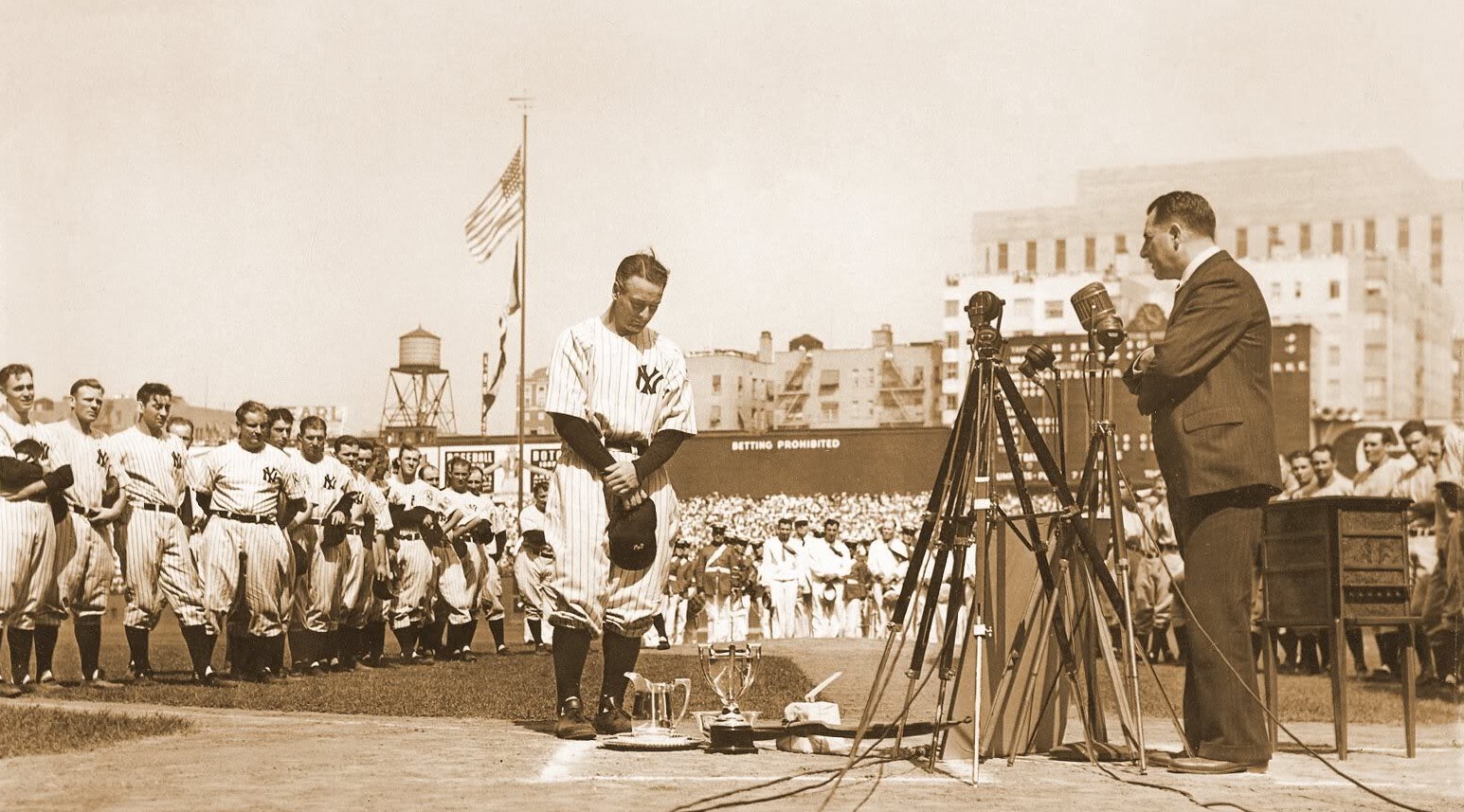
Lou Gehrig was only 36 years old when he learned that he was dying. ALS is a terrible wasting disease that has no cure, and in 1939 there was little treatment or assistance that could be offered to a victim as his body slowly ceased to function. It is an especially cruel disease for a professional athlete to face, and even more so one, like Gehrig, who was renowned for his endurance and seemingly indestructible body. When the progress of the illness, still then undiagnosed, caused Gehrig to remove himself from the New York Yankees line-up on May 1, 1939, it ended his amazing streak of 2,130 consecutive games, a baseball record that stood until broken by Cal Ripken, 56 years later.
Gehrig’s speech was from his heart. He was an educated and articulate man, but he had not planned on speaking at the moving ceremony to bid him farewell, as current former team mates, some of the greatest players ever to take the field, gathered to pay their respects. But the Yankee Stadium crowd of more than 60,000 began chanting his name, and after initially refusing, Gehrig moved to the microphone. Continue reading
 Ethics Alarms