Encore! Presidents Day Ethics: The Presidents of the United States on Ethics and Leadership

It’s President’s Day, and I see that it has been five years since the most popular Ethics Alarms President’s Day post was published. That one, from 2011, reminds us of the ethics wisdom and leadership acumen of the remarkable men who have served their country in the most challenging, difficult, and ethically complicated of all jobs, the U.S. Presidency.

In the middle of a campaign season littered with some disturbingly unethical candidates, it seems especially appropriate to re-post that entry now….with some updates. In 2011, I left out three Presidents, including the current one. Now all are represented, most of them well.

So…

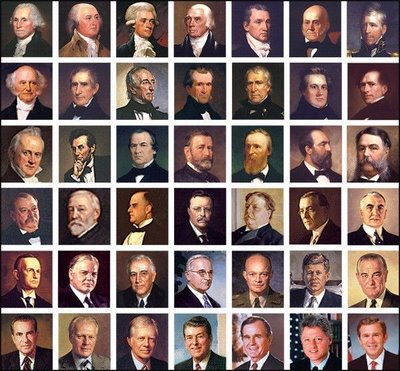
Ladies and Gentlemen, the Presidents of the United States of America:


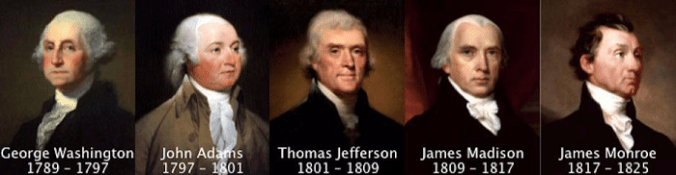
George Washington: “I hope I shall possess firmness and virtue enough to maintain what I consider the most enviable of all titles, the character of an honest man.”

John Adams: “Because power corrupts, society’s demands for moral authority and character increase as the importance of the position increases.” 

Thomas Jefferson: “On great occasions every good officer must be ready to risk himself in going beyond the strict line of law, when the public preservation requires it; his motives will be a justification…”

James Madison: “No government any more than any individual will long be respected without being truly respectable.”

James Monroe: “The best form of government is that which is most likely to prevent the greatest sum of evil.”

John Quincy Adams: “Always vote for principle, though you may vote alone, and you may cherish the sweetest reflection that your vote is never lost.”

Andrew Jackson: “One man with courage makes a majority.”   (Attributed)

Martin Van Buren: “No evil can result from its inhibition more pernicious than its toleration.”

William Henry Harrison: “There is nothing more corrupting, nothing more destructive of the noblest and finest feelings of our nature, than the exercise of unlimited power.” Continue reading

A Presidents Day Celebration (PART 1): I Love These Guys, I Really Do. Yes, Every One Of Them.

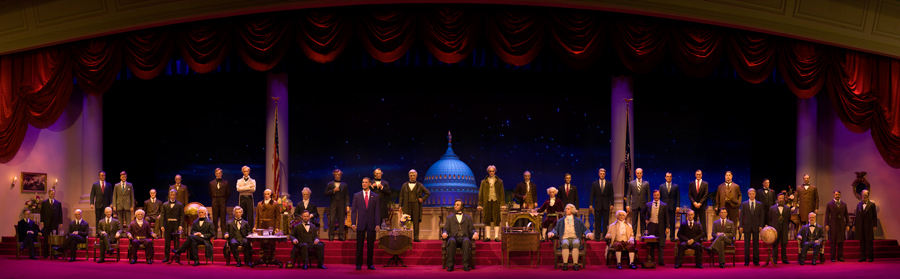
Hall of the Presidents

I have a lifetime love affair with the Presidents of the United States.

I love these guys, every one of them. The best of them are among the most skilled and courageous leaders in world history; the least of them took more risks and sacrificed more for their country than any of us ever can or will, including me. Every one of our Presidents, whatever their blunders, flaws and bad choices, was a remarkable and an accomplished human being, and exemplified the people he led in important ways. Every one of them accepted not only the burden of leadership, but the almost unbearable burden of leading the most dynamic, ambitious, confusing, cantankerous and often unappreciative nation that has ever existed. I respect that and honor it.

I have been a President junkie since I was eight years old. It’s Robert Ripley’s fault. My father bought an old, dog-eared paperback in the “Believe it or Not!” series and gave it to me. It was published in 1948. One of Ripley’s entries was about the “Presidents Curse”: every U.S. President elected in a year ending with a zero since 1840 (William Henry Harrison) had died in office, and only one President who had dies in office, Zachary Taylor, hadn’t been elected in such a year. The cartoon featured a creep chart—I still have it—listing the names of the dead Presidents, the years they were elected, and the year 1960 with ???? next to it. When Jack Kennedy, the youngest President ever elected, won the office in 1960, my Dad, who by that time was sick of me reminding him of the uncanny pattern, said, “Well, son, so much for Ripley’s curse!”

You know what happened. (John Hinckley almost kept the curse going, but Ronald Reagan, elected in 1980, finally broke it.) That year I became obsessed with Presidential history, devising a lecture that gave an overview of the men and their significance in order. My teacher allowed me to inflict it on my classmates.  Much later, Presidential leadership and character was the topic of my honors thesis in college. When I finally got a chance to go to Disneyland, the first place I went was the Hall of Presidents. When the recorded announcer said, “Ladies and Gentlemen, the Presidents of the United States!” and the red curtain parted to show the audio-animatrons of all of them together, it was one of the biggest thrills of my life.

Today I will honor our past Presidents with some of my favorite facts about each of them, trying hard not to get carried away. Is it ethics? It’s leadership, which has always been the dominant sub-topic here, but yes, it’s ethics.  I know I’m hard on our Presidents, as I think we all should be: supportive, loyal, but demanding and critical. I am also, however, cognizant of how much they give to the country and their shared determination to do what they think, rightly or wrongly, is in the country’s best long-term interests. File this post under respect, fairness, gratitude, and especially citizenship. And now…

“Ladies and Gentlemen, the Presidents of the United States!

Continue reading

Anderson Cooper’s Reflections on Inheritance: Not Unethical, Perhaps; Just Ignorant, Self-Serving and Presumptuous

I was going to let this go, but it kept gnawing at me, and nobody in the news media called out Anderson Cooper on his outrageous misrepresentation of history and human character. I guess it’s up to me.

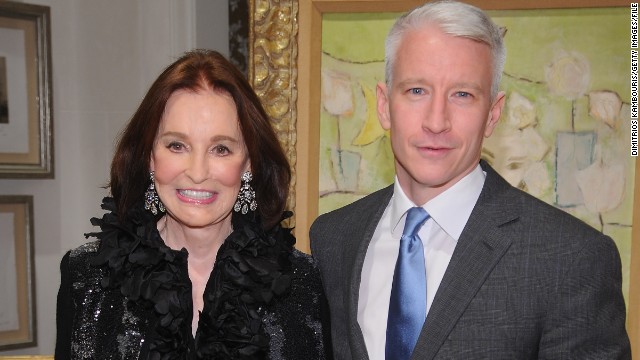
gloria-vanderbilt-anderson-cooper

“Thanks for nothing, Mom!”

Cooper is the son of fashion designer Gloria Vanderbilt, and thus an heir to one of the most storied of American family fortunes. Apparently Cooper has known for some time that he’s getting none of his mother’s estimated 200 million dollar estate, and he told Howard Stern recently that he was fine about it, an had no bitterness or regrets.

“I don’t believe in inheriting money, ” he told Stern. “That’s a total fantasy … I think it’s an initiative-sucker, I think it’s a curse. Who’s inherited a lot of money who’s gone on to do things in their own life? If I felt that there was some pot of gold waiting for me, I don’t know that I would have been so motivated.”

As for his mother, who inherited many millions and who still made a name for herself by launching a  line of designer jeans, Cooper told Stern, “I think that’s an anomaly.”

Cooper is free to adopt whatever myths and rationalizations that help him get over the fact that his mother is cutting him off. He is not free to misinform the historically ignorant that a tendency exists which may describe his own mental state but which is far from the presumptive norm with others throughout the centuries. “Who’s inherited a lot of money who’s gone on to do things in their own life?” The answer to that question is “Too many to mention, Anderson. Are you kidding? Do you know anything about history?”

Just counting U.S. Presidents, which I think even in this period of reduced stature among White House occupants, would still qualify as “doing something with your life,” we have Washington, Madison and Monroe, all of whom inherited substantial property and assets from their families, as did William Henry Harrison and his grandson, Benjamin Harrison. Both Roosevelts inherited substantial wealth; so did William Howard Taft, whose family was (and is) one of the richest in the U.S. Both Bush’s managed not to let the curse of inherited wealth undermine their wills to succeed. Continue reading

Presidents Day Ethics: The Presidents of the United States on Ethics and Leadership

In commemoration of President’s Day, Ethics Alarms presents the ethics wisdom of the remarkable men who have served their country in the most challenging, difficult, and ethically complicated of all jobs, the U.S. Presidency.

Ladies and Gentlemen, the Presidents of the United States:

George Washington: “I hope I shall possess firmness and virtue enough to maintain what I consider the most enviable of all titles, the character of an honest man.” Continue reading